














Summary:
Nintendo has encountered another setback in its long-running patent dispute with Pocketpair after the Japan Patent Office rejected a touchscreen-focused monster-catching patent application. The application was related to the same broader patent family behind parts of Nintendo and The Pokémon Company’s lawsuit over Palworld, but it placed particular emphasis on gameplay performed through a touch panel. That focus made the filing especially relevant to the mobile gaming market, including the Palworld Mobile project being developed by PUBG Studios.
The examiner concluded that Nintendo’s proposed combination of touchscreen controls, creature battles, capture items and success-or-failure capture mechanics did not involve a sufficient inventive step. Several earlier examples were considered during the examination, including established Pokémon mechanics, mobile control systems, third-party games and a 2013 gameplay video for the unofficial project Pokémon Generations. Nintendo argued that the fan-made project should not qualify as prior art because it allegedly infringed copyrights connected to Pokémon, but that position did not persuade the examiner.
The refusal ends the application’s regular examination process, although Nintendo still has procedural options. It can seek an appeal before a panel at the Japan Patent Office or attempt to pursue revised claims through another divisional filing. The decision does not directly cancel the patents already being asserted against Pocketpair, nor does it automatically decide the lawsuit. However, it adds to the challenges surrounding Nintendo’s attempts to secure broad control over familiar monster-catching systems. Meanwhile, the court case has reportedly been narrowed to older versions of Palworld, leaving the current game and Palworld 1.0 in a far less vulnerable position.
Nintendo Suffers Another Patent Setback in the Palworld Dispute
Nintendo’s legal battle with Pocketpair has taken another unfavorable turn after the Japan Patent Office issued a decision of refusal for a touchscreen-focused monster-catching patent application. The filing was not simply an unrelated experiment sitting in a dusty cabinet somewhere. It belonged to a patent family closely connected to patents already involved in the Palworld dispute, which makes the examiner’s reasoning worth watching. Nintendo and The Pokémon Company originally sued Pocketpair in Japan in 2024, alleging patent infringement rather than copyright infringement. Since then, the conflict has revolved around gameplay systems such as capturing creatures, summoning companions and using creatures for transportation. Pocketpair has changed several mechanics in response, while Nintendo has continued seeking additional patent protection. This latest refusal suggests that expanding that protection may be harder than Nintendo expected.
The Rejected Patent Focused on Touchscreen Monster-Catching
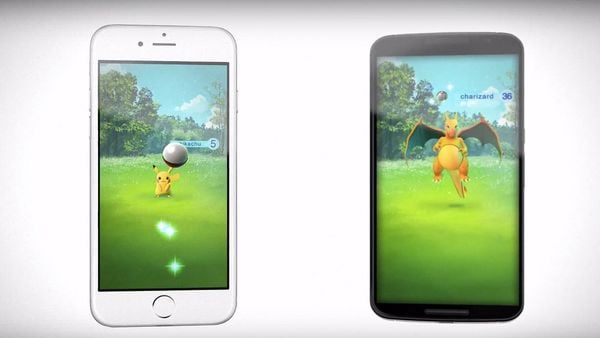
The rejected Japanese application focused on a combination of monster-catching mechanics and touchscreen controls. In broad terms, the proposed system involved moving a player character through a virtual environment, encountering field creatures, entering battles, selecting commands and using a capture item during or outside combat. The application also described determining whether the attempted capture succeeded and, when successful, adding the creature to the player’s collection. None of those ideas will sound particularly alien to anyone who has played a creature-collecting game. The added touchscreen element was the part that distinguished this application from some of Nintendo’s earlier filings. That detail also raised questions about whether the company was preparing a legal tool that might eventually be directed at mobile games using similar systems.
The Filing Could Have Been Relevant to Palworld Mobile
The timing and wording of the application made Palworld Mobile an obvious point of interest, even though Nintendo did not publicly identify a specific target. Krafton announced that PUBG Studios would adapt Palworld for mobile devices, creating a version intended to reinterpret the original game’s main features for smartphones. A touchscreen-specific patent covering monster capture, combat commands and creature ownership could potentially have been useful against such a release. Games Fray also identified Tencent’s Roco Kingdom: World as another possible target because it uses creature-focused gameplay on mobile platforms. Still, possible strategic intentions should not be confused with confirmed legal action. Nintendo’s filing showed an interest in securing touchscreen-specific claims, but the examiner’s refusal means the company did not obtain that protection through the regular examination route.
Why the Japan Patent Office Found No Inventive Step
The examiner’s objection centered on the requirement known as an inventive step. A patent claim does not necessarily survive merely because no single older product contains every claimed detail in precisely the same arrangement. An examiner may also consider whether a skilled developer could have reached the same result by combining known techniques in an obvious way. In this case, the Japan Patent Office concluded that Nintendo’s touchscreen controls and monster-catching rules were built from familiar ideas that could be combined without genuine technical ingenuity. Touch interfaces had already been widely used for controlling mobile games, while capturing creatures during or outside battles was well established in Pokémon and other titles. Put those pieces together and the result looked less like a new machine and more like assembling furniture with parts already sitting on the floor.
Prior Games and Familiar Touch Controls Weakened the Claims
The examiner considered multiple examples when assessing whether Nintendo’s proposed system crossed the inventive-step threshold. The cited material included information about ARK: Survival Evolved on mobile devices, PUBG Mobile, earlier Pokémon games, existing Japanese patent documents and other publicly available demonstrations. These references did not all need to show the entire proposed system by themselves. Instead, they helped establish that touch-based movement, command selection, capture attempts, success calculations and creature ownership were already known concepts. The core problem for Nintendo was the combination. The application sought protection for bringing familiar creature-catching rules into a touchscreen environment, but adapting established input methods to established gameplay rules was considered an obvious step rather than a patent-worthy breakthrough.
Older Pokémon Mechanics Also Worked Against Nintendo
Some of the strongest prior-art material came from Pokémon itself. Earlier Pokémon games had already demonstrated that players could attempt to catch creatures during battle, that capture attempts could succeed or fail and that successful captures could add those creatures to a player’s collection. Because those ideas were publicly known before the relevant priority date, they could be used when evaluating Nintendo’s later application. That creates an awkward situation in which a company’s previous work becomes evidence against the breadth of its newer claims. It is not a punishment for having created an influential series. It simply reflects how patent examination works. Once an idea has entered public knowledge, later applicants cannot usually reclaim the underlying concept by attaching a common control method or rearranging familiar components without adding something meaningfully inventive.
Pokémon Generations Was Accepted as Relevant Prior Art
One of the most eye-catching references was a 2013 YouTube video showing Pokémon Generations, an unofficial three-dimensional Pokémon fan project. The footage demonstrated monster-catching ideas before Nintendo’s later patent priority date, making it potentially relevant to the question of what was publicly known. Nintendo challenged the use of this material, reportedly arguing that the project infringed copyrights associated with Pokémon and therefore should not qualify as prior art. The examiner rejected that position. For patent examination, the critical issue was whether the video publicly demonstrated the relevant ideas at a particular time. Its unofficial status did not erase the fact that people could see the gameplay. Once the demonstration was publicly accessible, it could help establish that the claimed concepts were already in circulation.
Public Availability Mattered More Than the Project’s Legal Status
The examiner’s approach highlights an important distinction between copyright law and patent law. Copyright concerns whether protected creative expression has been reproduced or adapted without permission. Patent examination asks whether a claimed invention is new and sufficiently inventive when compared with information already available to the public. A video does not need to come from an officially licensed game to show that a particular mechanic had previously been demonstrated. The legality of the underlying project may be debated separately, but that debate does not automatically make the public demonstration invisible. Nintendo’s argument effectively asked the examiner to disregard potentially relevant technical evidence because of an alleged copyright issue. The refusal indicates that the Japan Patent Office did not see that allegation as a valid reason to remove the video from the prior-art analysis.
Nintendo’s Copyright Argument Failed to Change the Decision
Nintendo’s effort to exclude the Pokémon Generations footage did not rescue the application. The examiner maintained that allegations of copyright infringement were misplaced when determining novelty and inventive step. That conclusion makes practical sense. Patent systems rely on an honest record of what the public could access before an application was filed. Ignoring an earlier demonstration simply because it may have used protected characters or imagery would create a strange loophole. A mechanic could be shown clearly in an unauthorized project, yet a later applicant might pretend the demonstration never happened. The examiner instead focused on the information revealed by the footage. The video showed certain gameplay concepts in public, and that was enough for it to remain relevant during examination, regardless of whether Nintendo approved of the fan project.
The Refusal Ends the Patent’s Regular Examination Process
The latest action is more serious than an initial objection. Earlier in 2026, the examiner had already raised concerns about the application and given Nintendo an opportunity to respond. Nintendo continued pursuing the claims, but the Japan Patent Office has now issued a decision of refusal. That means the regular examination procedure has ended and the examiner assigned to the application is finished with the matter. This does not mean every possible route has vanished, but Nintendo cannot continue exchanging ordinary arguments and amendments with the same examiner indefinitely. The application has reached a procedural fork in the road. Nintendo must either accept the refusal, challenge it through an appeal process or explore whether revised subject matter could be separated into another filing.
Some Narrower Claims May Still Offer Nintendo Another Route
The refusal applied to the application as a whole because Nintendo continued pursuing the full claim set, but the examiner did not identify specific reasons for rejecting every individual claim. Games Fray reported that several narrower claims were not independently rejected at this stage. Nintendo could therefore attempt to place aspects of those claims into a new divisional application. Such a move would not guarantee success. A new examiner review could uncover additional prior art, and third parties might submit further examples showing that the remaining ideas were already known. Still, the distinction matters because the refusal is not necessarily a declaration that every sentence in the application lacked merit. It means the complete package, as pursued by Nintendo, could not be granted through the concluded examination.
What Nintendo Can Do After the Latest Rejection
Nintendo has several possible responses. It can abandon the application and concentrate on its existing patent portfolio, which would prevent further time and money from being poured into this particular filing. It can request an appeal trial before a panel of administrative judges at the Japan Patent Office within the applicable three-month period. It may also attempt another divisional application containing narrower or differently worded claims. An appeal would give Nintendo another opportunity to challenge the examiner’s reasoning, but it would need to overcome a detailed prior-art analysis and the finding that the proposed combination lacked an inventive step. Nintendo’s legal team is unlikely to enjoy that hill, because it is rather steep and someone has scattered several old Pokémon games across the path.
An Appeal Would Not Guarantee a Different Outcome
Appealing a patent refusal is not the same as pressing a reset button. Nintendo would need to persuade a reviewing panel that the examiner misunderstood the claims, applied the wrong legal standard or combined prior-art references in a way that a skilled developer would not realistically have considered. The company could argue that its precise arrangement of battle commands, touch controls and capture systems produces a distinct result. However, the examiner has already treated the underlying mechanics as familiar and their combination as straightforward. Even a successful procedural challenge might only return the application for further consideration rather than produce an immediate patent. Nintendo must therefore weigh the possible strategic value of the claims against the cost and uncertainty of continuing the process.
The Decision Does Not Automatically Resolve the Lawsuit
The touchscreen application is connected to the broader family of patents surrounding the Palworld dispute, but its rejection does not automatically invalidate the patents Nintendo and The Pokémon Company are already asserting in court. Patent applications and granted patents each have their own claims and procedural histories. The Tokyo District Court is also not legally required to treat this refusal as the answer to every question in the infringement case. Still, the reasoning could have persuasive value. When related applications are rejected because familiar game mechanics lack an inventive step, Pocketpair may point to those findings while challenging the validity or scope of Nintendo’s existing patents. A court can reach its own conclusion, but the technical assessment of a patent examiner is unlikely to be ignored as meaningless background noise.
Related Patents May Face Greater Scrutiny
The rejected touchscreen application shares elements and ancestry with patents involved in the litigation. That relationship does not doom the granted patents, but it places more attention on their foundations. If the same creature-catching ideas appear throughout the family, the prior art used against one application may also raise questions about others. Pocketpair has already relied on examples from older games, publicly available videos and user-created projects to argue that Nintendo’s claimed mechanics were known before the relevant filings. Each refusal gives those arguments additional weight, even when it lacks direct legal force in the lawsuit. Nintendo must defend not only whether Palworld used the patented systems, but also whether the patents should remain enforceable when measured against everything developers and players had already seen.
Pocketpair’s Gameplay Changes Have Narrowed Nintendo’s Claims
Pocketpair did not wait for the lawsuit to reach a final judgment before adjusting Palworld. The studio altered mechanics that could potentially fall within Nintendo’s patent claims, including how captured Pals are summoned and how certain movement systems work. These workarounds have changed the practical shape of the dispute. According to reports examining the Tokyo District Court record, Nintendo and The Pokémon Company narrowed their requested relief so the case now focuses on older Palworld versions released before Pocketpair’s changes. That makes the remaining battle much smaller than the original confrontation suggested. Nintendo may continue seeking a finding related to earlier versions and a limited damages period, but an injunction aimed at the current game would have little practical purpose if the disputed mechanics are no longer present in the same form.
The Remaining Financial Stakes Appear Relatively Limited
The lawsuit’s narrowed timeframe may also restrict the amount of damages Nintendo could recover, even if it succeeds on validity, infringement and causation. The relevant Japanese patents were granted after Palworld’s explosive initial release, meaning much of the game’s earliest commercial success occurred before Nintendo could enforce those specific rights. Pocketpair then introduced changes that further shortened the period in which the older mechanics remained available. Games Fray estimated that the maximum realistic recovery could be around 5 million yen, or roughly $30,000, although the court has not made such an award. That amount would be small for either company and tiny compared with the likely cost of a prolonged patent battle. The dispute may now carry more strategic and reputational weight than direct financial importance.
Palworld 1.0 Appears Beyond the Reach of Nintendo’s Current Patents
Palworld 1.0 officially launched in July 2026, and the available reporting indicates that Nintendo does not currently have a patent capable of threatening that version in a meaningful way. The court dispute has reportedly been confined to older builds, while the touchscreen application that might have created new pressure has been refused. That does not make Pocketpair permanently immune from future claims. Nintendo can pursue appeals, seek narrower patents or file another lawsuit if it obtains enforceable rights covering current mechanics. Based on the present situation, however, Palworld 1.0 appears able to operate without the immediate danger of being removed through the existing Japanese case. For players, that is the practical point that matters most: the current release is not standing on a trapdoor controlled by the lawsuit.
Pocketpair’s Workarounds Have Become a Crucial Defense
The outcome demonstrates why designing around a patent can be as important as challenging it. Pocketpair continues disputing Nintendo’s claims, but it also reduced its exposure by changing the game itself. A defendant does not necessarily need to wait years for a court to decide that a patent is invalid. It can alter the accused feature so that the patent no longer applies, leaving the claimant to fight over an older product with declining commercial relevance. That appears to be what happened here. Nintendo may still pursue its historical claims, but Pocketpair has moved the current game further away from the alleged infringement. It is the legal equivalent of shifting the tracks while the other side’s train is still heading toward the old station.
What the Setback Could Mean for Palworld Mobile
The refusal is particularly notable because the application emphasized touchscreen input. Palworld Mobile is expected to adapt the original game for smartphones, where tapping, swiping and touch-based commands will naturally replace many controller or keyboard inputs. Nintendo’s application could have created a direct concern if it had produced broad claims covering touch-controlled creature capture during combat and exploration. Without that patent, Nintendo currently lacks the additional touchscreen-specific protection it appeared to be seeking. The company may still appeal or pursue revised claims, so the risk has not disappeared completely. Nevertheless, the decision gives Krafton and PUBG Studios more breathing room as they build their mobile interpretation of Palworld’s systems.
The Mobile Version Still Needs to Navigate Existing Rights
A rejected application does not give Palworld Mobile permission to copy every feature found in another game. Its developers must still consider existing patents, trademarks, copyrights and other intellectual property rights across every market where the game may launch. They will also need to ensure that the mobile adaptation does not revive mechanics Pocketpair deliberately changed to reduce exposure in the Japanese lawsuit. The key difference is that Nintendo has not secured the broad touchscreen claim described in this particular application. That removes one possible obstacle, but it does not eliminate the need for careful legal and technical design. Mobile controls can look simple on the surface, yet a single tap may carry several layers of intellectual property analysis behind it.
The Wider Debate Around Patenting Familiar Game Mechanics
The refusal feeds into a larger debate about how far video game patents should extend. Patents can protect genuine technical inventions, such as new rendering methods, hardware systems or unusual approaches to processing data. Trouble begins when claims appear to cover broad rules that players recognize as ordinary parts of a genre. Catching creatures, selecting commands during battle and controlling a character through a touchscreen are all familiar concepts. Granting one company sweeping control over their combination could discourage developers from building on shared design traditions. Genres grow because studios borrow basic structures, change them and add their own personality. Platformers need jumping, racing games need steering and monster-taming games generally need some way to tame monsters. Otherwise, everyone is just admiring them from a safe distance.
The Refusal Shows That Public Gameplay Footage Can Matter
The use of Pokémon Generations also sends a message about the value of publicly available gameplay demonstrations. Prior art does not have to come from a blockbuster release, a peer-reviewed engineering paper or an official patent database. A dated video showing how a mechanic worked may help prove that an idea was already known. That possibility gives indie projects, prototypes, mods and fan creations an unusual role in later patent disputes. Their commercial status may be limited, but their public existence can influence what larger companies are allowed to claim as an invention. Developers seeking patents must therefore investigate more than famous products. The internet has a long memory, and an obscure gameplay clip uploaded years earlier can become a surprisingly sturdy banana peel.
How the Palworld Dispute Could Shape Future Patent Strategies
Nintendo’s difficulties in Japan and the United States may encourage game companies to draft narrower, more technically specific patent claims. Broad claims built around familiar rules are easier to challenge with examples from older games and public demonstrations. Companies may instead focus on particular technological implementations that produce measurable effects beyond the rules of play. The Palworld dispute could also motivate studios to document their development work and preserve dated prototypes, videos and design materials. Such records may later serve as defensive evidence when another company claims ownership over a familiar mechanic. Whatever the final result of the lawsuit, the proceedings have already shown that game design history is messy, interconnected and difficult to squeeze into a single corporate patent portfolio.
Conclusion
The Japan Patent Office’s refusal of Nintendo’s touchscreen monster-catching application is another meaningful setback in the company’s efforts to expand its patent position around Palworld. The examiner found that the proposed system lacked an inventive step when compared with older games, established Pokémon mechanics, common touchscreen techniques and the publicly available Pokémon Generations video. Nintendo’s attempt to dismiss that fan-made footage on copyright grounds was unsuccessful because its public disclosure remained relevant to the patent analysis. Nintendo can still appeal or pursue narrower claims, and the refusal does not automatically decide the existing lawsuit. Even so, the wider picture increasingly favors Pocketpair’s current products. The court case has been narrowed to older versions, Palworld 1.0 appears outside the reach of Nintendo’s presently asserted patents and the company has not secured the touchscreen protection that could have placed immediate pressure on Palworld Mobile.
FAQs
- Why did the Japan Patent Office reject Nintendo’s touchscreen patent?
- The examiner concluded that the claimed combination of touchscreen controls, monster battles and creature-catching mechanics lacked an inventive step. The individual concepts were already known from earlier games, mobile interfaces, Pokémon material and publicly available gameplay demonstrations.
- What did Pokémon Generations have to do with the rejection?
- A 2013 gameplay video for the unofficial Pokémon Generations project showed relevant creature-catching ideas before Nintendo’s application priority date. The examiner treated the publicly available footage as prior art when evaluating whether Nintendo’s claims were inventive.
- Can Nintendo appeal the refusal?
- Yes. Nintendo can request an appeal trial before a Japan Patent Office panel within the applicable three-month period. It may also consider a divisional application containing narrower or revised claims, although neither route guarantees that a patent will be granted.
- Does the rejection end Nintendo’s lawsuit against Pocketpair?
- No. The rejected application is separate from the granted patents already being asserted in the Tokyo District Court. However, its reasoning may support Pocketpair’s broader arguments that related monster-catching claims rely on familiar or obvious gameplay ideas.
- Can Nintendo’s lawsuit affect Palworld 1.0?
- Current reporting indicates that Nintendo’s claims have been narrowed to older Palworld versions released before Pocketpair introduced its workarounds. Nintendo does not presently appear to have a patent that poses a direct threat to Palworld 1.0.
Sources
- Japan Patent Office Rejects Nintendo’s Touchscreen Monster Capture Patent and Its Attack on Use of Indie Gameplay Video as Prior Art, Games Fray, July 16, 2026
- Taking Aim at Palworld Mobile: Nintendo Trying to Obtain Touchscreen-Specific Patent on Monster Capturing – and Thus Far Failing, Games Fray, May 14, 2026
- Ahead of October 1 Court Hearing, Nintendo Has Zero Chance of Prevailing Over Current Palworld Versions, Games Fray, June 11, 2026
- Nintendo and The Pokemon Company Update Palworld Lawsuit, Limited to Older Versions Only, Nintendo Everything, June 11, 2026
- The Nintendo/Palworld Patent Suit Appears to Be Heading for a Muted Conclusion, Techdirt, July 2, 2026