














Summary:
Nintendo’s latest financial figures have given fans another reason to put on their detective hats, and this time the focus is not a trademark, rating board listing, or mysterious developer quote. The spotlight is on research and development spending, which rose from 143.7 billion yen in FY25 to 177.8 billion yen in FY26. That marks a 23.7 percent increase, and naturally, fans have started asking what Nintendo could be building behind the curtain. The timing is especially interesting because Nintendo has already moved into the Switch 2 era, meaning any major increase in development spending now invites questions about follow-up hardware, accessories, manufacturing improvements, software technology, or unexpected side projects. Still, the important detail is that spending alone does not confirm a brand-new device. Nintendo’s R&D budget can cover many areas, from game technology and system features to platform services, hardware revisions, accessories, and production refinements. What makes the discussion exciting is Nintendo’s history of surprising people. This is the same company that turned cardboard into a playful hardware concept with Nintendo Labo, made collectible figures part of its ecosystem through amiibo, and brought classic systems back as Mini Consoles. So while the numbers do not prove anything on their own, they do suggest that Nintendo is still investing heavily in what comes next.
Nintendo’s R&D increase raises fresh hardware questions
Nintendo fans have a habit of spotting patterns in places most people would scroll past without a second thought. This time, the conversation started with a noticeable rise in Nintendo’s research and development expenses, which has sparked fresh discussion about whether the company is preparing another hardware move. The idea is easy to understand. When a company like Nintendo spends more money on R&D, people naturally wonder what is being built, tested, refined, or prototyped behind closed doors. Nintendo is not exactly known for taking the most predictable path either. One moment it is focusing on traditional consoles, and the next it is selling cardboard construction kits, interactive figures, or tiny nostalgia-packed systems that make collectors clear shelf space in record time.
What Nintendo’s latest financial figures actually show
Nintendo’s latest financial materials show that research and development expenses increased from 143.7 billion yen in FY25 to 177.8 billion yen in FY26. That is a 23.7 percent rise year-on-year, which is a large enough movement to catch attention. The same financial material also notes that selling, general and administrative expenses increased, partly because of advertising tied mainly to the launch of Nintendo Switch 2 and partly because of higher R&D expenses. That gives the numbers a broader business context. Nintendo is not only spending more on development work, it is also operating in a period where a major hardware transition has already happened. That matters, because increased spending during a platform shift can be tied to many moving parts at once.
Why fans are looking at past R&D patterns
The reason this spending jump has gained traction is not just the size of the increase. Fans are also comparing it to past periods when Nintendo’s R&D expenses rose sharply and new hardware followed soon after. That kind of pattern hunting is common in gaming circles, especially with Nintendo, because the company tends to keep its cards pressed tightly against its chest until it is ready to show something properly. Still, patterns are not promises. A previous increase followed by hardware does not mean every similar increase will lead to the same outcome. It is a bit like seeing dark clouds and assuming rain. Often, yes, but sometimes the sky is just being dramatic for no reason.
Nintendo’s history makes hardware speculation difficult to ignore
Nintendo has earned its reputation as one of the most unpredictable companies in gaming. That unpredictability is why even a financial line item can become a conversation starter. The company has released traditional consoles, handheld systems, motion-control devices, fitness accessories, NFC figures, cardboard-based experiences, retro Mini Consoles, and hybrid hardware that changed how millions of people think about playing games. So when R&D spending climbs, fans do not only think about a more powerful console or a routine hardware revision. They also think about strange, charming, left-field ideas that sound unlikely until Nintendo shows them on stage and suddenly everyone wants to try them. That is the Nintendo effect in a nutshell.
Labo, amiibo, and Mini Consoles show why Nintendo is hard to predict
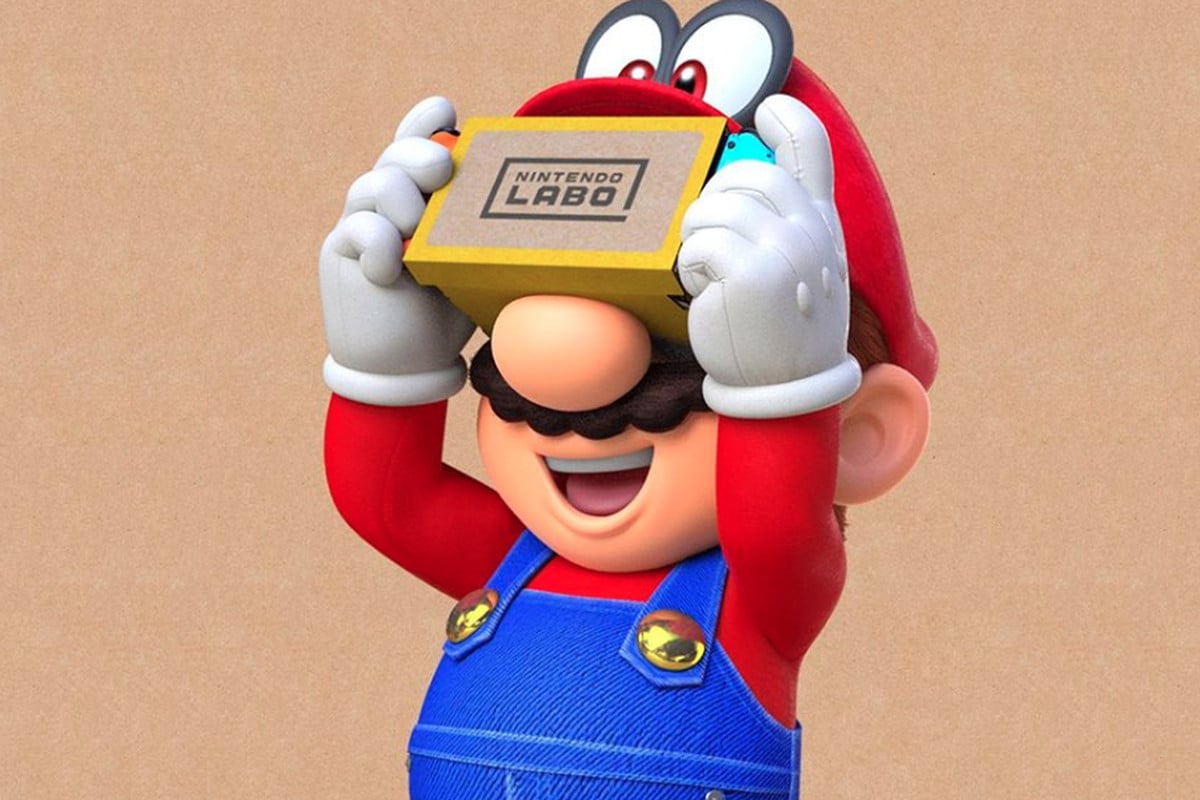
Nintendo Labo, amiibo, and the Classic Mini systems are useful examples because they show how wide Nintendo’s hardware thinking can be. Labo turned cardboard, Joy-Con sensors, and software into buildable play experiences. amiibo connected collectible figures with games through NFC support. Mini Consoles took nostalgia and packaged it into compact plug-and-play hardware. None of those products followed the same formula, yet all of them fit Nintendo’s broader style: take familiar play habits, twist them slightly, and make people smile before they have finished asking how it works. Because of that history, a rise in R&D spending does not only point people toward a console successor. It opens the door to accessories, platform features, hardware experiments, or ideas that do not fit neatly into one category.
Why R&D spending does not confirm a new device
It is tempting to treat a large R&D increase as a giant neon sign flashing “new hardware incoming,” but that would be too simple. Research and development spending can cover many things that never become a separate retail product. It can include early prototypes that get shelved, system software improvements, developer tools, manufacturing research, online infrastructure, chip-related planning, controller revisions, battery testing, accessibility features, and work related to future game development. Companies also invest in improving cost efficiency after a system launches, especially when they want to streamline production or prepare different models later. So yes, the increase is interesting. No, it is not confirmation of a surprise box waiting to appear in a Nintendo Direct.
The difference between evidence and speculation
The cleanest way to read this situation is to separate the facts from the excitement around them. The confirmed fact is that Nintendo’s R&D expenses rose by 23.7 percent year-on-year. The speculation is that this could point to new hardware or another physical product. Those are not the same thing, and keeping them separate makes the discussion much more useful. Fans can absolutely enjoy the guessing game, because half the fun of following Nintendo is wondering what weird little trick it has hidden in the workshop. But a financial increase should be treated as a clue, not a conclusion. The number starts the conversation. It does not finish it.
The Switch 2 era changes the context around Nintendo investment
The timing of this discussion is especially important because Nintendo has already entered the Switch 2 era. That makes the R&D increase feel different from a period before a major console launch. During a new hardware cycle, spending can remain elevated for many reasons. Nintendo may be supporting launch-window software, refining operating system features, improving developer support, researching future revisions, or exploring accessories that work with the new platform. Hardware does not stop evolving the moment it reaches store shelves. In many ways, launch is just the public starting line. Behind the scenes, teams keep tuning, testing, and preparing the next set of moves while players are still unboxing the system.
Why post-launch spending can still be meaningful
Post-launch R&D spending can be just as important as spending before a platform arrives. Once hardware is in the market, companies can gather real-world data, listen to developer needs, study production challenges, and decide which features need improvement. That can lead to better tools, smoother firmware updates, new accessories, revised models, or changes that make manufacturing more efficient. For Nintendo, this could also involve research tied to backward compatibility, online services, performance optimization, battery behavior, display technology, storage solutions, or controller design. None of those possibilities are as flashy as an entirely new system, but they can still shape the player experience in a big way. Sometimes the quiet work matters most.
What the increase could realistically be funding
The most grounded answer is that Nintendo’s R&D increase could be funding a mix of projects rather than one mystery device. Large companies rarely place all development money into a single basket. It could involve continued Switch 2 platform work, future software technology, hardware accessories, internal tools, production improvements, new experiments, and long-range planning for whatever comes after the current cycle. Nintendo may also be investing in ways to support larger games, smoother development pipelines, or new forms of player interaction. The company’s own history shows that its R&D activity is not limited to raw processing power. Nintendo often thinks in terms of play concepts, and that makes the possibilities much broader.
Accessories, revisions, and platform features may be more likely than a sudden successor
A sudden full successor would be the most dramatic interpretation, but it is not necessarily the most realistic one. In a fresh hardware era, accessories, system refinements, alternate models, or feature expansions often make more sense. Nintendo has a long history of extending platforms through add-ons, controller ideas, special editions, and software-driven features. A major spending increase could support those kinds of developments without pointing to a completely separate console. That may not sound as explosive as “Nintendo is making a secret new system,” but it is still worth paying attention to. A clever accessory or revision can change how people use a platform, especially when Nintendo finds a simple idea with broad appeal.
Why Nintendo’s experimental side still matters
Nintendo’s experimental streak is one of the main reasons fans are reading so much into the R&D increase. Plenty of companies spend more money on technology, but Nintendo tends to spend in ways that can produce odd, playful, family-friendly, or surprisingly practical ideas. The company has never been purely about chasing the highest specs. It often looks for a hook, something that makes a product feel different in your hands. That hook might be motion control, dual screens, hybrid play, collectible interaction, or a cardboard piano that somehow makes sense once you actually use it. That is why even a corporate expense line can feel like the first breadcrumb on a trail.
Nintendo’s best ideas often look strange before they click
Many Nintendo concepts sound strange before people try them. A handheld with two screens sounded unusual. A remote-shaped controller sounded risky. A hybrid console sounded bold. Cardboard accessories sounded like a punchline until players saw how Labo used Joy-Con sensors in clever ways. This is why fans give Nintendo more room for weirdness than most companies. When R&D rises, the imagination runs wild because Nintendo has trained its audience to expect the unexpected. Of course, not every experiment becomes a hit. Some ideas stay niche, some vanish quickly, and some become collector curiosities. But even the odd projects help explain why Nintendo’s spending patterns attract so much attention.
Small experiments can become bigger signals
Sometimes Nintendo’s smaller hardware ideas reveal larger priorities. A controller experiment can show how the company is thinking about input. A collectible product can show how it wants to connect physical and digital play. A retro system can show how it values nostalgia as part of its brand. That is why even accessories and side projects should not be dismissed as minor. They can point toward larger themes in Nintendo’s strategy, especially when they arrive during a major platform cycle. If the latest R&D increase is connected to hardware, it may not be about one massive reveal. It could be about several smaller ideas that support Nintendo’s next few years.
How fans should read the hardware speculation
The healthiest way to approach this story is with curiosity, not certainty. The numbers are real, and the increase is notable. The hardware speculation is understandable, especially given Nintendo’s track record and the fan observation about previous R&D jumps. But there is a gap between “this is interesting” and “this proves a product is coming.” That gap matters. Nintendo could be working on something physical, something software-related, something production-focused, or something experimental that never sees retail shelves. For now, the R&D increase is best viewed as a sign that Nintendo is investing aggressively in its future. What shape that future takes is the fun part we do not know yet.
Why careful wording matters with Nintendo rumors
Nintendo speculation can spread faster than a blue shell on the final lap, so careful wording is important. Saying that higher R&D expenses “confirm” new hardware would go too far. Saying they “raise questions” or “fuel discussion” is much more accurate. That distinction keeps expectations grounded while still allowing room for excitement. Fans have every reason to be curious, especially because Nintendo’s financial reports often provide rare glimpses into the scale of its planning. But until Nintendo announces a device, accessory, revision, or feature itself, this remains a conversation built around financial data and historical comparisons. That does not make it boring. It simply keeps it honest.
What to watch next from Nintendo’s financial updates
The next clues will likely come from Nintendo’s future financial materials, investor Q&A sessions, product announcements, and any unusual language around development priorities. If R&D expenses remain high, fans will keep asking whether Nintendo is preparing something beyond standard platform support. If spending levels change, that may also tell part of the story. Watch for references to hardware development, production investment, software environment improvements, new play experiences, or platform expansion. Nintendo often reveals very little until it is ready, but financial documents can still show where pressure and priority are building. For now, the safest takeaway is simple: Nintendo is spending more on future-facing work, and that is always worth watching.
Conclusion
Nintendo’s 23.7 percent rise in research and development expenses is a fascinating detail, especially in the early stretch of the Switch 2 era. It naturally raises questions about future hardware, accessories, revisions, and experiments, but it does not confirm any single product. The most realistic view is that Nintendo is investing across multiple areas, from platform support and development tools to possible hardware ideas and long-term planning. Given the company’s history with Labo, amiibo, Mini Consoles, and other unexpected projects, fans are right to stay curious. Just keep one foot on the ground while the other taps impatiently under the desk. Nintendo may be building something interesting, but until it says so, the numbers remain a clue rather than a reveal.
FAQs
- Did Nintendo’s R&D expenses really increase by more than 23 percent?
- Yes. Nintendo’s financial material lists research and development expenses rising from 143.7 billion yen in FY25 to 177.8 billion yen in FY26, which is shown as a 23.7 percent year-on-year increase.
- Does the R&D increase confirm that Nintendo is making new hardware?
- No. The increase has sparked speculation, but R&D spending can cover many areas, including software tools, system updates, accessories, manufacturing improvements, prototypes, and long-term research.
- Why are fans connecting the R&D increase to hardware?
- Fans are comparing the increase to past periods when Nintendo’s R&D expenses rose sharply before new hardware arrived. It is an interesting pattern, but it should not be treated as proof.
- Could the spending be related to Nintendo Switch 2 instead?
- Yes. Since Nintendo is already in the Switch 2 era, higher R&D expenses could be tied to platform support, performance improvements, developer tools, accessories, revisions, or future software technology.
- What should fans watch for next?
- Future financial reports, investor Q&A comments, Nintendo Direct announcements, hardware registrations, and official product reveals will be the most useful signs of what Nintendo is preparing.
Sources
- Financial Results Explanatory Material – Fiscal Year Ended March 31, 2026, Nintendo, May 8, 2026
- Nintendo R&D expenses increase 23% from last fiscal year suggesting new hardware could be in works, My Nintendo News, May 9, 2026
- Nintendo Announces 2025-26 Fiscal Results And Guidance For 2026-27, Nintendo World Report, May 8, 2026
- Annual Report 2025, Nintendo, June 30, 2025
- Nintendo unveils more ways to make, play and discover with Nintendo Labo, Nintendo, February 15, 2018