








Summary:
Ken Kutaragi, widely known as the father of PlayStation, recently pushed back against the long-running myth that Sony entered the console business to get revenge on Nintendo. Speaking after his appearance at Game Republic New Horizons, Kutaragi described the collapse of the SNES CD-ROM partnership as a shock that quickly became an opportunity – not a motivation to crush Nintendo. He explains that the prototype he built was intended as a subsystem for Nintendo, not the seed of a rival console, and that the breakup freed Sony to pursue its own hardware ambitions. Beyond the origin story, Kutaragi also commented on the modern industry, arguing that multi-year, thousand-person projects are increasingly hard to justify and that hardware costs and AI are changing the landscape. We explain what he actually said, why the SNES CD split matters, and what Nintendo fans should take away from his remarks.
What Kutaragi Actually Said About Nintendo
Ken Kutaragi made a clear, measured statement that challenges the tidy revenge narrative so many people have repeated for decades. He recalled designing the sound chip for the Super Famicom and working on a CD-ROM add-on that was meant to live as a subsystem attached to Nintendo hardware. When Nintendo pivoted away from Sony and partnered with Philips, Kutaragi described that moment as a “bad shock,” not a call to arms. Over time he said the shock became “a good shock,” because Sony was suddenly free to build its own platform without needing to fit someone else’s roadmap. The headline-friendly revenge story turns the nuance of corporate decisions and engineering passion into a simplistic tale of spite. Kutaragi’s own words make it clear he never set out to “crush Nintendo”; instead he saw lost constraints and new creative freedom, which led Sony down a different path. For Nintendo fans who’ve heard the revenge myth repeated, this reframing restores the complexity of the moment and highlights that great products often arise from changing constraints rather than vengeance.
Why the SNES CD-ROM Split Matters
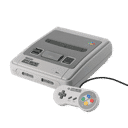
The SNES CD-ROM episode is an important piece of gaming history because it explains how different company strategies produced diverging platforms, and why one technical partnership ending can reshape the whole market. The add-on concept would have let Nintendo expand the Super Nintendo’s capabilities, but the split — driven in part by contract terms and concerns over control — meant Sony kept the prototype work in-house. That switch turned an engineering project into the seed of an independent console. For context, if you want to explore Nintendo’s hardware legacy and how the Super Nintendo fit into it, check out our Super Nintendo overview on NintendoReporters. The pivot to Philips and the eventual standalone PlayStation launch changed development expectations, licensing, and third-party relationships across the industry. Fans should remember this wasn’t simply corporate theater: it altered how game makers planned storage formats, budgets, and development pipelines. The split also set the stage for the dramatic 1990s competition that produced many of the franchises and business norms we still live with today.
How the Breakup Freed Sony to Build PlayStation
When a project intended to plug into someone else’s hardware becomes independent, the design rules change. Kutaragi’s prototype needed to match Nintendo’s specifications when it was a subsystem; once Nintendo withdrew, Sony could pursue a different design philosophy and target different markets. Kutaragi described the loss of the partnership not as defeat but as an opportunity: without constraints set by another company, engineers could pick priorities that best suited a standalone console. That freedom influenced everything from the choice to embrace CD media to the ways Sony approached third-party developers. The result was a platform engineered to be flexible and attractive for a broad range of software partners. Over time the PlayStation matured into a system that fostered different development economics and creative opportunities than Nintendo’s cartridge-focused model. For players and historians, the lesson is practical: constraints shape outcomes, and losing one set of constraints can open the door to entirely new solutions.
Kutaragi’s View on Today’s Game Development Scale
Kutaragi didn’t stop at history; he offered a critique of modern development and platform economics. He argued that the era of single projects taking multiple years and thousands of people to complete looks increasingly unsustainable, pointing to spiralling hardware prices and production costs as reasons the old model may not scale. From his perspective, massive teams and ballooning budgets create a fragility where only a handful of giant projects can justify the cost, and that narrows creative risk-taking. He also suggested AI and new delivery models could change what it means to build and play games, potentially reducing the industry’s dependence on expensive, tightly controlled hardware. Whether you agree or not, Kutaragi is asking developers and players to think about viable alternatives to the current blockbuster treadmill — options that could bring more varied, affordable, and accessible experiences to the market.
What This Means for Nintendo Fans and Players
If you’re a Nintendo fan, Kutaragi’s comments are interesting but not threatening. Nintendo’s strength has long been its first-party franchises and hardware choices that emphasize gameplay over raw specs. Kutaragi’s story reinforces that the PlayStation rose from different priorities rather than personal vendettas. For players this is a reminder to focus on the games themselves: company strategies and corporate drama are part of the backdrop, but what endures are memorable titles and systems built around player experience. NintendoReporters exists to help fans follow those games and understand hardware history, from classic systems to current-gen releases. The takeaway is simple: respect the realities of corporate decisions, but keep your eyes on how those decisions shape what you actually play and enjoy.
Photos and Proof: The Nintendo PlayStation Prototypes
Physical artifacts from this era — prototype hardware, development units, and early press shots — are invaluable for understanding the story. Photos of the so-called Nintendo PlayStation prototypes surfaced years ago and remain useful visual records that show how close the collaboration once was. Seeing the hardware helps you imagine how the device would have fit into Nintendo’s ecosystem as an add-on, and comparing that to the finished PlayStation hardware highlights the design shift that followed Nintendo’s withdrawal. If you want to explore the SNES era and its hardware milestones, our Super Nintendo overview covers the system’s role in gaming history and why that partnership mattered. Those images and developer recollections together make the narrative richer than the revenge myth, showing engineering choices, contract tensions, and the messy, human side of technology development.
Why ‘Revenge’ Became the Dominant Myth
Simple narratives are easy to tell and even easier to remember; revenge is dramatic and frames a story with a clear antagonist and motive. Over the years journalists and storytellers chose the revenge angle because it explains complex corporate maneuvering in a way that’s satisfying and simple to repeat. But as Kutaragi’s remarks remind us, the real story often involves technical constraints, shifting contracts, and opportunistic engineering rather than personal grudges. Myths grow when complex events are retold without primary-source nuance, and the PlayStation origin story became a convenient shorthand for dramatic change. Kutaragi’s recent clarifications help correct that shorthand by returning the focus to engineering decisions and company strategy, not personal animus. Understanding how myths form is also useful: it nudges readers to prefer primary accounts and direct quotes when possible, and to treat dramatic summaries with a bit of skepticism.
Industry Takeaways from Kutaragi’s Comments
There are practical industry lessons embedded in Kutaragi’s reflection. First, technical freedom can be an engine for innovation: losing a partner can lift constraints and allow teams to pursue different, sometimes better, solutions. Second, the scale and cost of modern development demand new thinking about sustainable production models, especially as hardware becomes pricier and AI reshapes tooling. Finally, narratives matter: how we tell origin stories influences public perception, stock prices, and recruitment. For anyone working in games today — whether on indie teams or at larger studios — Kutaragi’s perspective is a nudge to focus on solvable constraints, choose realistic scopes, and keep curiosity alive even when budgets are tight. NintendoReporters will keep tracking these shifts so fans can see how they affect the games they care about.
Conclusion
Kutaragi’s comments don’t erase the drama of the early 1990s, but they do reframe it: PlayStation was born from changing constraints and engineering ambition, not a calculated plan to crush Nintendo. For Nintendo fans, historians, and developers alike, that nuance matters. It keeps the focus on how decisions shape platforms and games and invites us to question dramatic simplifications. As the industry evolves, hearing from the engineers who were there gives perspective — and a reminder that the story behind every console is more than a headline.
FAQs
- Did Ken Kutaragi say he wanted revenge on Nintendo?
- No. Kutaragi explicitly said the revenge narrative is incorrect and that he didn’t aim to “crush Nintendo.” He described the breakup as an initial shock that later opened creative opportunities for Sony.
- What was the SNES CD-ROM project?
- It was a planned CD-ROM add-on for the Super Famicom that Sony worked on as a subsystem. Nintendo later partnered with Philips instead, and the project did not ship as originally planned.
- Where can I see photos of the Nintendo PlayStation prototype?
- Photos have circulated in the press and on collector sites; many coverage pieces reference those images to show how close the hardware came to existing. Our Super Nintendo overview also provides historical context.
- Does this change how I should view PlayStation vs Nintendo history?
- It encourages nuance. Instead of a revenge tale, view the split as a turning point where different strategies and technical priorities led to divergent platforms and distinct library choices.
- Will this affect how NintendoReporters covers Nintendo-related history?
- We’ll keep reporting facts, quotes, and context that matter to Nintendo fans, linking to primary interviews and archival material so readers get both the narrative and the evidence behind it.
Sources
- “Taking several years with several thousand people… It’s almost impossible” – PlayStation creator Ken Kutaragi on the current state of gaming, GameDev.net, October 28, 2026
- Ken Kutaragi Says Losing Nintendo’s CD Deal Felt Like Freedom, and He Never Built the PlayStation for Revenge, LockerGnome, October 30, 2026
- PlayStation Creator Ken Kutaragi Challenges the Famous Story That Sony Entered Gaming to Take Revenge on Nintendo, Retro Gameforce, October 30, 2026
- PlayStation creator talks Nintendo, says getting revenge wasn’t on his mind, NintendoEverything, October 31, 2026