














Summary:
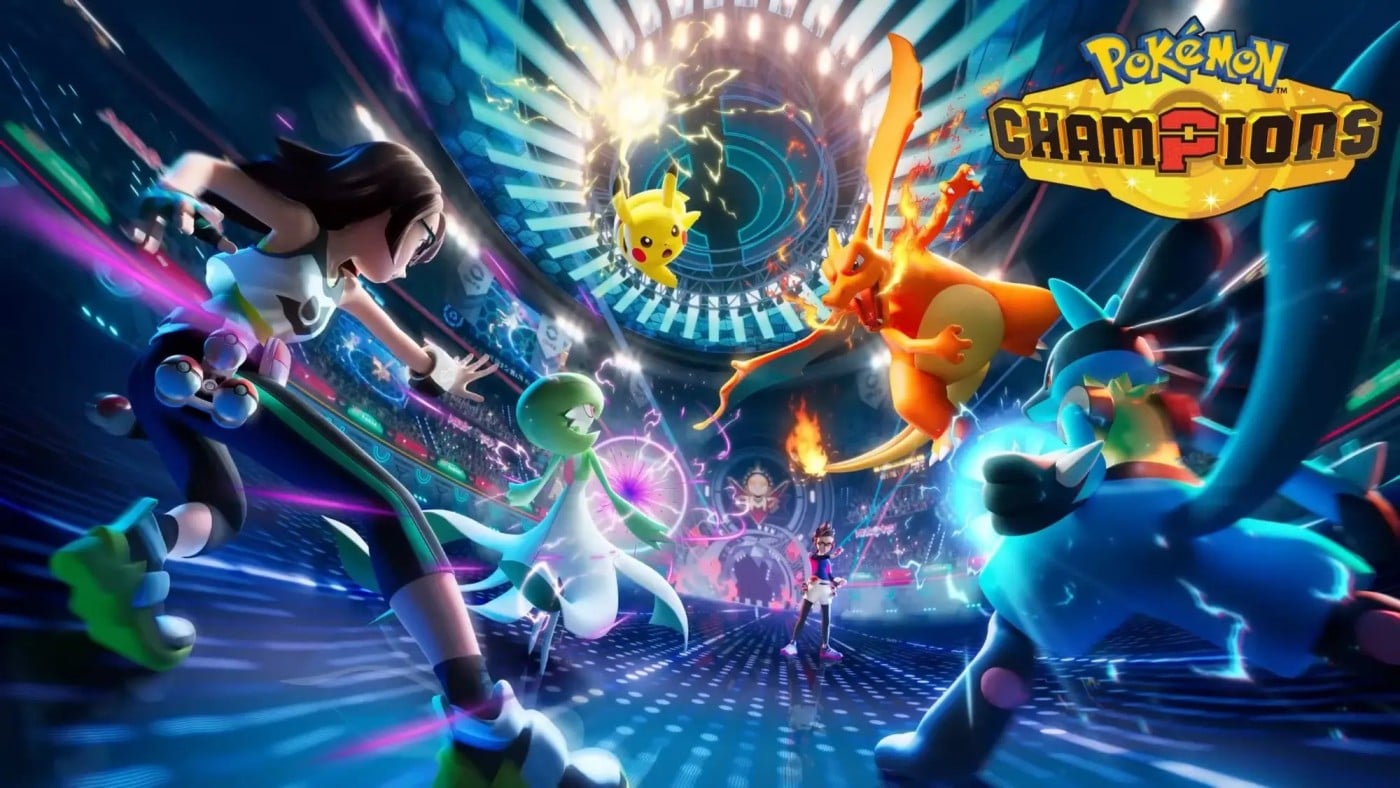
Pokémon Champions was built around a straightforward but ambitious goal: let players enjoy meaningful Pokémon battles without demanding a large block of their day. Producer Masaaki Hoshino has explained that reducing the length of individual matches was one of the development team’s priorities from the earliest stages of the project. The original target was an average battle time of five minutes, but the finished game has gone one step further. Current matches last approximately four minutes on average, although early forfeits can influence that figure.
Reaching that result involved much more than simply placing a stricter timer above the battlefield. The developers examined animations, ongoing move effects, pauses between turns, text presentation, and the way multiple Abilities are displayed. Their challenge was to remove unnecessary waiting while preserving the lively presentation that makes Pokémon feel like creatures taking part in a real contest rather than numbers moving through a battle simulator.
The team also added the ability to surrender at any point, even though supporting that feature created additional technical work. Timer rules received similar attention. Ranked Battles currently end in a tie when time expires, while official Competitions can use a ruling to determine the result. Hoshino said timeout draws remain rare across the wider player base, particularly in Double Battles. Together, these choices reveal a design philosophy focused on momentum, accessibility, and that dangerously tempting thought every competitive player knows well: perhaps there is time for just one more match.
Pokémon Champions was designed around faster battles
Pokémon Champions approaches competitive battling with a clear understanding of how people play games now. Some players have an entire evening available, while others are squeezing in a battle during a commute, a lunch break, or the mysterious five-minute gap before they really should go to bed. Producer Masaaki Hoshino explained that shorter playing sessions were considered from the beginning of development rather than being added as a late adjustment. The objective was not to weaken the strategy of Pokémon battles. Instead, the team wanted to remove the moments in which nothing meaningful was happening. That distinction matters. A shorter battle does not necessarily need fewer decisions, just as a shorter conversation does not need fewer ideas. Pokémon Champions attempts to preserve prediction, team composition, type matchups, Abilities, moves, and tactical risk while cutting delays that can make a match feel slower than it truly is. The result is a format designed to invite another battle quickly, regardless of whether the previous result brought victory, defeat, or the sudden realisation that your opponent had predicted every move like a psychic Alakazam.
A five-minute target became a four-minute average
The development team initially aimed for an average match duration of five minutes. That was already a bold target for a turn-based battle system in which players need time to read the situation, choose moves, anticipate switches, and respond to opposing strategies. According to Hoshino, the current average has fallen to approximately four minutes, meaning the team surpassed its own objective. That number should not be interpreted as a guarantee that every battle will end after exactly four minutes. A tense match between evenly matched Trainers may continue for longer, while a decisive opening can encourage one player to surrender much earlier. Hoshino acknowledged that quick forfeits probably pull the overall average downward. Even so, the figure shows how strongly the game has been shaped around speed. Four minutes is brief enough to fit into an everyday pause, yet it is long enough for a battle to establish its own story. One clever switch, an unexpected Ability, or a perfectly timed defensive move can completely reshape those few minutes.
Pokémon Unite helped shape the team’s approach
Hoshino’s previous experience as a producer on Pokémon Unite influenced the thinking behind Pokémon Champions. Pokémon Unite reduced the match length commonly associated with similar team-based games, bringing standard battles down to ten minutes. That made individual sessions far easier to fit into a busy schedule, but feedback showed that ten minutes could still feel too long for part of the audience. It is a useful reminder that accessibility is not limited to control schemes, tutorials, or difficulty settings. Time itself can be a barrier. A player may enjoy competitive games but avoid starting one when there is a risk that a single match will demand half an hour. Pokémon Champions responds by making the commitment feel smaller. Losing a four-minute battle is easier to accept than watching a much longer contest unravel, and winning one naturally creates the temptation to queue again. The lesson taken from Pokémon Unite was not simply that shorter is always better. It was that players are more willing to begin a match when they know the experience will respect the time available to them.
Battle animations were shortened without losing personality
Reducing battle length created an artistic challenge as well as a technical one. Pokémon Champions is not intended to look like a plain simulation in which creatures remain still while damage calculations appear on a screen. Pokémon need to feel active, expressive, and physically present in the arena. Their moves should carry weight, particularly when a powerful attack becomes the turning point of a close contest. The developers therefore avoided solving the timing problem by stripping away the spectacle altogether. Instead, they examined which visual moments strengthened the battle and which ones merely delayed the next decision. Stat changes, repeated attacks, lingering effects, and pauses between actions were all opportunities for refinement. The process resembles editing a film scene. Cutting every quiet moment would make the sequence confusing, but leaving every movement untouched could drain its energy. Pokémon Champions tries to keep the impact while tightening the rhythm, allowing an attack to look impressive without making both players feel as though they have enough time to prepare a sandwich before the next turn begins.
Simultaneous effects keep Double Battles moving
Double Battles can become especially busy because several Pokémon, Abilities, stat changes, and field effects may activate within the same turn. In a traditional sequence, each activation might be displayed individually. That approach is easy to follow, but it can create a long procession of messages before either player regains control. Pokémon Champions addresses this by allowing certain effects to occur simultaneously. Hoshino used Intimidate as an example, since multiple Pokémon can be affected when the Ability activates during a Double Battle. Presenting related changes together shortens the sequence without removing the information players need. This adjustment is particularly important in a format that wants to support serious competitive play. Experienced Trainers still need to recognise what happened and understand how the battlefield changed. At the same time, nobody wants every opening turn to feel like they are waiting in a supermarket queue while each stat reduction receives its own formal announcement. Combining effects helps the match flow like a single exchange rather than a collection of disconnected notifications.
Readability remained an important design requirement
Speed only improves a competitive game when players can still understand what is happening. If text disappears before it can be read or several effects overlap without clear visual feedback, a quicker presentation becomes frustrating rather than convenient. Hoshino indicated that the spaces between turns were reduced until the text remained just about readable, revealing how carefully the developers tested that boundary. They were not merely pressing a fast-forward button. They were balancing urgency against clarity. That balance is particularly important for newcomers who may not immediately recognise every Ability, move, or status condition by animation alone. Experienced players can often process familiar information almost instantly, but a new Trainer may need an extra moment to connect a name with its effect. Pokémon Champions therefore needs to serve two audiences at once. The action must move quickly enough for regular competitors while remaining understandable to someone still learning why a seemingly harmless switch caused several stat changes before the first attack was even selected.
Fast presentation cannot replace clear information
The distinction between fast and rushed becomes crucial here. Fast presentation removes dead space. Rushed presentation removes the player’s opportunity to understand the battle. Pokémon Champions appears to recognise that the second outcome would undermine its wider goal of making competitive Pokémon easier to approach. A new player who loses because of a clever strategy may become curious and learn from it. A new player who loses because the interface flashed several unreadable messages across the screen is more likely to feel excluded. Every shortened animation and combined effect therefore needs to preserve cause and consequence. Players should know which Ability activated, which Pokémon was affected, and how the tactical situation changed. When that information is delivered cleanly, the faster rhythm can actually help learning because the relationship between a decision and its result remains fresh in the player’s mind. The battlefield becomes energetic rather than chaotic, which is precisely where a focused competitive game wants to be.
Players can surrender whenever a battle feels decided
Pokémon Champions allows players to forfeit at any time, giving them control over when a match has reached its practical conclusion. This may sound like a small interface option, but Hoshino explained that it created additional work for the server engineers. Online battles need to handle the decision correctly, communicate it between players, record the result, and avoid creating opportunities for errors or abuse. The team nevertheless regarded unrestricted surrendering as necessary. Competitive players often recognise when a position has become impossible long before the final Pokémon faints. Requiring them to play through every remaining turn would clash with the goal of quick, repeatable sessions. A surrender option lets the losing player move on without wasting time and allows the winner to receive the result without performing several inevitable actions. It also helps explain why the average match length can be lower than players might expect from their own experience. Some battles end before they have the chance to develop into long exchanges, particularly when an opening strategy succeeds spectacularly or fails with the elegance of a Magikarp using Splash.
Short matches encourage players to battle again
The most revealing response to the shortened format may be the feedback that players do not know when to stop. Hoshino presented that reaction as a positive sign that the team’s efforts had worked. It makes sense. Short matches reduce the emotional weight of pressing the battle button. A defeat does not consume a large part of the evening, while a victory produces an immediate burst of confidence that can make another attempt irresistible. This creates a loop in which players can test a strategy, observe its weaknesses, make an adjustment, and return to battle without a long delay. That rhythm is well suited to Pokémon because team-building improves through repetition. A move that looked brilliant on paper may prove too situational, while an overlooked defensive option may repeatedly save a match. Faster battles provide more opportunities to gather that practical experience. There is a playful danger, of course. “One more match” has ended many sensible bedtime plans throughout gaming history, and a four-minute average makes that excuse sound almost responsible.
Timer strategies created a difficult competitive question
Shortening matches also forced the developers to consider what should happen when the clock expires. Playing around the timer can be a legitimate competitive strategy. A Trainer who gains an advantage may choose safer moves, preserve key Pokémon, and allow the remaining time to disappear. Yet the Pokémon Champions team believed that a strategy built around intentionally reaching the limit conflicted with the game’s central idea of quickly moving from one battle to the next. Hoshino said the subject prompted intense internal debate, which is understandable because timer management sits at the intersection of fairness, strategy, and accessibility. Removing it entirely could upset experienced players who regard the clock as another resource. Allowing it to dominate could make matches feel slow and discouraging, particularly for newcomers who may not understand why an opponent is deliberately avoiding a direct conclusion. The final solution separates ordinary Ranked Battles from Competitions, recognising that a public ladder and an organised tournament do not always need identical methods for resolving every situation.
Ranked Battles end in a tie when time expires
In the release version of Pokémon Champions, a Ranked Battle that reaches the time limit results in a tie. This decision reduces the incentive to build an entire ladder strategy around securing a narrow advantage and then deliberately exhausting the clock. Neither participant receives a conventional win simply because time ran out. For newer players, that rule can make the outcome feel easier to understand, even if it removes a tactical route familiar to some long-time competitors. Hoshino acknowledged that top-level players have expressed different opinions about the system. That reaction is hardly surprising. Skilled Trainers naturally analyse every possible win condition, and changing how timeout situations are resolved can affect team choices and endgame planning. However, the producer also noted that many players who previously struggled against timer-focused tactics welcomed the change. The rule therefore reflects a broader design choice. Pokémon Champions is willing to adjust established competitive expectations when the team believes doing so makes repeated battles more approachable for a larger audience.
Competitions use a separate ruling system
Official Competitions need a way to produce decisive results, especially when advancement, standings, or prizes depend on identifying a winner. Pokémon Champions therefore uses a ruling system in those environments rather than applying the Ranked Battle tie outcome universally. This separation gives organised events the structure they need while keeping the everyday ranked experience aligned with the game’s faster philosophy. It also demonstrates that timeout rules cannot be judged without considering where a match takes place. A tie may be acceptable on a ladder where a player can immediately search for another opponent. It becomes far more complicated during an elimination round in which only one Trainer can continue. Maintaining different solutions gives the developers room to support both situations. Players will still need to understand the rules before entering a Competition, since endgame decisions may change when a ruling can determine the winner. The clock remains strategically relevant, but the surrounding format decides how much influence it ultimately has over the result.
Battle data suggests timer ties are uncommon
Player concerns about timeout draws can be compared with the data collected after release. Hoshino said ties across every rank in Double Battles were almost nonexistent, accounting for less than 0.1 percent of matches. Single Battles showed a slightly higher rate among players in the top tier, although the overall number remained low. These figures suggest that the tie rule does not regularly prevent battles from reaching a natural conclusion. Double Battles tend to develop quickly because four active Pokémon can create major swings within a single turn, while focused attacks can remove a threat before it has another opportunity to act. Single Battles may be more likely to produce cautious endgames involving defensive Pokémon, recovery moves, switching, or resource preservation. That helps explain why highly skilled Single Battle players encounter timeout questions more often. Even then, the broader data indicates that most matches finish without requiring the tie rule. It functions more like an emergency exit than a doorway everyone is constantly using.
Fast battles could make competitive Pokémon more approachable
Competitive Pokémon can appear intimidating from the outside. Players need to consider types, moves, Abilities, stats, team roles, switching, predictions, and the possibility that an opponent is predicting their prediction. Shorter matches do not remove that complexity, but they lower the cost of experimenting with it. A newcomer can enter a battle, make mistakes, and try again without feeling that each lesson requires a major time investment. That is valuable because knowledge in Pokémon is often built through repeated encounters. Reading about a strategy can help, but seeing it unfold makes the idea far easier to remember. Pokémon Champions creates a faster feedback loop between choice and consequence. Did the opening plan work? Was the defensive switch too obvious? Could a different move have covered both likely responses? When answers arrive within minutes, players can remain curious rather than exhausted. The format does not magically make every advanced tactic simple, but it gives people more chances to learn without turning a single defeat into a lengthy lecture delivered by six extremely well-trained monsters.
Pokémon Champions is available across consoles and mobile devices
Pokémon Champions is available on Nintendo Switch and Nintendo Switch 2, with the console version having launched on April 8, 2026. The game also arrived on iOS and Android devices on June 17, 2026. Cross-platform play allows mobile users to battle Trainers playing on Nintendo’s systems, broadening the potential competitive community rather than separating players by device. The official game information describes Pokémon Champions as a battle-focused experience that brings together familiar elements such as types, moves, Abilities, and established mechanics including Mega Evolution. Players can participate in Ranked Battles, Casual Battles, and Private Battles, while selected Pokémon from earlier games and Pokémon GO can be connected through Pokémon HOME when supported. Its free-to-start model further lowers the initial barrier. Combined with an average match length of around four minutes, that availability supports the team’s wider aim: making Pokémon battles easy to begin while leaving enough tactical depth for players who want to keep improving.
Conclusion
Pokémon Champions shows that speeding up a turn-based battle is not as simple as shortening a timer. The developers reviewed animation lengths, text timing, repeated effects, Ability presentation, surrender options, and the rules used when a match reaches its limit. Their original goal was an average of five minutes, yet current battles last approximately four minutes on average. The more important achievement is that the core identity of Pokémon battling remains visible within that smaller window. Players still need to predict opponents, manage their teams, recognise threats, and decide when to attack or switch. The game simply tries to return control sooner and remove pauses that do not add meaningful strategy. Timer ties will remain a topic of discussion among experienced competitors, particularly in top-level Single Battles, but existing data suggests that they are rare overall. For many players, the faster format may provide exactly what competitive Pokémon needed: a welcoming invitation to start, learn, lose, adapt, and immediately convince yourself that there is enough time for another battle.
FAQs
- How long does an average Pokémon Champions match last?
- Producer Masaaki Hoshino said the current average match time is approximately four minutes. The development team initially targeted an average of five minutes, so the final result came in below its original goal. Individual matches can still be longer or shorter depending on the format, strategies used, and whether a player chooses to surrender early.
- Why did the developers make Pokémon Champions battles shorter?
- The team wanted players to move quickly from one battle to the next, regardless of whether they won or lost. Hoshino’s experience with Pokémon Unite also showed that some players considered ten-minute matches too long. Pokémon Champions was therefore designed to offer a smaller time commitment without removing the strategic core of Pokémon battling.
- How were Pokémon Champions matches made faster?
- The developers shortened stat-change animations, simplified ongoing move effects, reduced pauses between turns, and allowed certain events to appear simultaneously. They also introduced the ability to surrender at any time. These changes were intended to remove unnecessary delays while keeping Pokémon lively and battle information readable.
- What happens when the timer expires in a Ranked Battle?
- A Ranked Battle ends in a tie when the timer expires. Competitions can use a separate ruling system to determine the winner. According to Hoshino, timeout ties are extremely rare in Double Battles and remain uncommon overall, although they occur slightly more often in top-tier Single Battles.
- Where can Pokémon Champions be played?
- Pokémon Champions is available on Nintendo Switch, Nintendo Switch 2, iOS, and Android. It supports cross-platform play, allowing mobile players to compete against Trainers using Nintendo systems. The game is free to start, with optional purchases available.
Sources
- 『ポケモンチャンピオンズ』プロデューサー・星野正昭氏インタビュー。ポケモン&持ち物の追加タイミングやシングルバトル公式大会の開催など新情報公開! 時間切れ時の引き分けについても言及, Famitsu, May 2026
- Pokémon Champions Is Available Now, The Pokémon Company, June 17, 2026
- Pokémon Champions Is Now Available on Nintendo Switch and Nintendo Switch 2, The Pokémon Company, April 8, 2026
- Play! Pokémon Competitions Transition to Pokémon Champions on April and May 2026, The Pokémon Company, March 24, 2026
- Pokémon Champions for Nintendo Switch, Nintendo, April 8, 2026