














Summary:
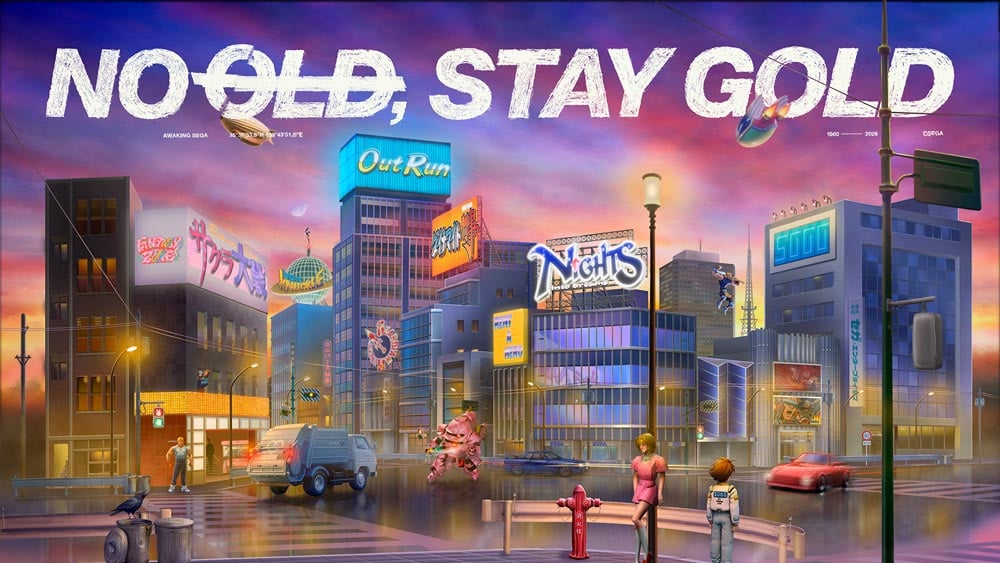
SEGA Universe feels like a fitting name for a company with a history this colorful, noisy, strange, and unforgettable. SEGA has officially launched a new initiative built around its older intellectual properties, using the concept “NO OLD, STAY GOLD” to frame a fresh push for franchises that still live rent-free in the minds of many players. The focus for 2026 is on anniversary projects tied to several classic names, including Fantasy Zone, Out Run, Streets of Rage, Rent A Hero, Guardian Heroes, NiGHTS, Dynamite Deka, Sakura Wars, and SGGG. Specific project details have not been fully revealed, so it is important to keep expectations grounded. This does not currently mean every listed franchise is getting a new game, remake, remaster, film, or product line. What it does mean is that SEGA wants these names to matter again beyond simple nostalgia. The company’s framing points toward entertainment that can stretch across games, film, music, fashion, publishing, live experiences, and other formats. That approach makes sense for SEGA, because its older franchises were never just software on a shelf. They had style, rhythm, attitude, color, and a certain reckless spark that still stands out. SEGA Universe is not merely about remembering the past. It is about asking whether these worlds can still surprise people today.
SEGA Universe gives classic franchises a louder voice again
SEGA Universe arrives with a clear message: old does not have to mean dusty, forgotten, or locked behind a museum rope. The initiative is built around legacy intellectual properties that helped shape SEGA’s identity across arcades, home consoles, and cult favorite corners of gaming culture. That matters because SEGA’s history has never been a neat, quiet shelf of safe ideas. It is more like a neon-lit arcade after midnight, packed with weird machines, loud music, risky experiments, and games that often felt like they were trying to outrun common sense. Through SEGA Universe, the company is placing several of those names back under the lights for 2026. Fantasy Zone and Out Run mark their 40th anniversaries, Streets of Rage and Rent A Hero reach 35 years, while Guardian Heroes, NiGHTS, Dynamite Deka, and Sakura Wars hit 30. SGGG, also known as Segagaga, reaches 25 years. That lineup alone tells a story. SEGA is not only highlighting obvious household names. It is also giving space to oddballs, fan favorites, arcade icons, and titles that still make longtime players grin like someone just found a secret level in their memory.

Why SEGA’s old rebel spirit still matters in 2026
The most interesting part of SEGA Universe is not just the list of names. It is the attitude behind it. SEGA’s own framing leans into a restless, almost reckless creative spirit, the kind that asks whether something can be more exciting, stranger, faster, louder, or more stylish than expected. That is exactly why so many of these older franchises still have bite. They were not always polished in the safest way, but they had personality in the way a great band has personality. You could hear it in the music, feel it in the controls, and see it in the art direction before a single menu even loaded. In a modern industry where many brands are carefully sanded down until they feel smooth but faceless, that kind of identity is valuable. SEGA Universe can work if it respects that spark. Nostalgia alone is like reheating yesterday’s fries. It can be fine, but it rarely feels magical. The real opportunity is to take the energy of these classics and give it new shapes without flattening what made them special.
The selected anniversaries show how wide SEGA’s history really is
The 2026 selected lineup is striking because it does not point to one single type of SEGA game. It points to a company that built worlds in every direction. Fantasy Zone brings pastel arcade shooting and shop-based power-ups. Out Run brings speed, music, branching routes, and that breezy fantasy of driving a sports car with no real-world traffic ruining the mood. Streets of Rage brings street-level brawling and one of the most memorable soundtracks of the 16-bit era. Rent A Hero brings a strange superhero rental premise that sounds ridiculous in the best possible way. Guardian Heroes mixes action RPG energy with fighting game structure. NiGHTS turns dreams into floating motion. Dynamite Deka throws players into full-polygon action with a taste for chaos. Sakura Wars blends drama, romance, strategy, animation, and theater. SGGG looks inward, turning SEGA’s own identity into a self-aware simulation RPG. Put together, these names remind us that SEGA’s legacy is not one lane. It is a whole highway system, complete with sharp turns, flashing signs, and at least one exit that probably leads to something wonderfully unhinged.
Fantasy Zone and Out Run still carry SEGA’s arcade DNA
Fantasy Zone and Out Run both turn 40 in 2026, and they represent two very different sides of SEGA’s arcade personality. Fantasy Zone is bright, odd, and instantly recognizable thanks to Opa-Opa and its surreal shooting action. It was not just another arcade shooter trying to look tough. It used colorful worlds, free-directional scrolling, and a shop-based power-up system to create something playful and strategic at the same time. Out Run, meanwhile, is pure motion. Its appeal has always been less about beating rivals and more about feeling the road open up ahead of you while the music does half the talking. That is why Out Run still feels bigger than a racing game. It is a mood, a postcard, a sunlit escape in arcade form. Bringing these names back into public view makes sense because they are easy to understand at a glance, yet rich enough to reinterpret. Fashion, music, collectibles, new digital releases, or visual collaborations could all fit them without feeling forced.
Streets of Rage and Rent A Hero show two very different sides of action
Streets of Rage and Rent A Hero both reach 35 years, but they could not be more different in tone. Streets of Rage is gritty, rhythmic, and immediate. It is the kind of series where the music starts and your fingers already know what to do. The original game helped define belt-scrolling action for SEGA players, especially with its cooperative two-player appeal and Yuzo Koshiro’s unforgettable soundtrack. Rent A Hero, on the other hand, is built around a wonderfully absurd idea: a hero who gets superhuman powers through rented gear. That premise gives it a comic edge, but it also makes it unusually flexible. In a media world full of superhero stories, Rent A Hero could feel surprisingly modern if handled with the right humor. It has the kind of setup that can poke fun at hero culture while still delivering sincere action. These two franchises show why SEGA Universe has room to be playful and muscular at the same time. One is a punch to the jaw. The other is a wink before the punch lands.
Guardian Heroes and NiGHTS prove SEGA was never afraid to get weird
Guardian Heroes and NiGHTS both celebrate 30 years in 2026, and both capture the side of SEGA that never seemed interested in coloring inside the lines. Guardian Heroes stands out because it mixes cooperative action, RPG flavor, branching energy, and a three-line battle system that gives its combat a distinct rhythm. It was never just about hitting enemies until they disappeared. It had a layered feel, like an arcade brawler had been taught a few tactical tricks and then handed a fantasy novel. NiGHTS is stranger still, but that strangeness is exactly why people remember it. Sonic Team created a dreamlike flight action game where movement itself became the star. The floating sensation, the surreal Nightopia setting, and the A-Life system gave NiGHTS a texture unlike most platform-era experiments. It was colorful without being childish, gentle without being sleepy, and weird without losing heart. If SEGA Universe wants to prove these worlds still have life, Guardian Heroes and NiGHTS are perfect tests. They are not generic brands. They need imagination, mood, and confidence.
Dynamite Deka and Sakura Wars capture SEGA at its boldest
Dynamite Deka and Sakura Wars also reach their 30th anniversaries, and together they show just how much range SEGA had during the mid-1990s. Dynamite Deka, also known to many players through its connection to Dynamite Cop, is loud, physical, and gleefully excessive. The idea of storming through danger while using everything from firearms to household objects as weapons still has that arcade cabinet charm, as if the game is daring you not to smile. Sakura Wars lives in a completely different emotional register. Set in a fictional Taisho-inspired world shaped by steam technology, it became known for its blend of dramatic adventure, strategy elements, animated sequences, characters, and music. Its influence spread beyond games into anime, stage productions, drama CDs, novels, and manga, which makes it especially relevant to SEGA Universe’s wider entertainment ambitions. Sakura Wars already proved that a game world could stretch across formats when the characters and presentation were strong enough. In that sense, it is not just part of the initiative. It is almost a blueprint for what the initiative wants to become.
SGGG remains one of SEGA’s strangest love letters to itself
SGGG, better known to many fans as Segagaga, turns 25 in 2026, and its inclusion may be the clearest sign that SEGA Universe has a sense of humor about SEGA’s own history. Released for Dreamcast in 2001, SGGG is a simulation RPG built around a near-future version of SEGA, with protagonist Taro Sega joining the company and trying to help it reclaim dominance in the games business. That premise is already unusually self-aware, but the charm comes from how directly it plays with the struggles of development, budgets, deadlines, corporate pressure, and industry anxiety. It is funny because it is ridiculous, but it lands because it clearly comes from a place of real feeling. In a lineup full of stylish arcade and console names, SGGG is the odd diary entry with doodles in the margins. It may not be the easiest franchise to revive, but it might be one of the most interesting to celebrate. Sometimes the weirdest souvenir tells the best story.
Why this initiative does not guarantee new games for every franchise
Excitement around SEGA Universe is easy to understand, but it needs a clear boundary. SEGA has not announced full details for every anniversary project, and the existence of this initiative does not automatically confirm new games, remakes, remasters, or ports for each franchise. That distinction matters. Fans are naturally going to dream big because names like Out Run, NiGHTS, Sakura Wars, and Guardian Heroes come with emotional baggage packed in bright plastic cases. Still, SEGA’s own messaging points beyond games, with entertainment forms such as film, music, fashion, and other experiences in view. That could mean many things. Some franchises may receive videos, playlists, merchandise, collaborations, events, archival features, or other anniversary material rather than new software. That is not a bad thing by itself. A well-made soundtrack release, art collection, fashion drop, or short film can bring a dormant name back into conversation in a way that feels meaningful. The trick is setting expectations correctly. SEGA Universe is a door opening, not a promise that every room behind it contains a new game.
How film, music, fashion, and live entertainment could reshape these names
SEGA’s wider strategy becomes more interesting when these franchises are viewed as worlds rather than only playable products. Out Run has obvious musical and fashion potential because its entire identity is built around style, motion, and a dreamlike road-trip fantasy. Streets of Rage could translate naturally into music projects, animated work, apparel, or live events that lean into its urban rhythm. NiGHTS could become a visual showcase, an art collaboration, or a dream-themed experience that plays with color and motion. Sakura Wars already has history across stage, animation, and publishing, making it a strong candidate for cross-format celebration. Even Fantasy Zone has the kind of bold visual identity that could work beautifully in merchandise or animation. This is where SEGA Universe could become more than a nostalgia campaign. If SEGA treats each franchise as a living mood with its own texture, rather than just a logo to print on a shirt, the results could feel fresh. The best legacy projects do not ask fans to clap because something old appeared. They give fans a new reason to care.
What fans should realistically expect next from SEGA Universe
The safest expectation is steady anniversary activity rather than one massive reveal for everything at once. SEGA has opened the official website, shown the key concept, and identified the main 2026 selected franchises, but many specifics remain undisclosed. That means the next meaningful step will likely be individual announcements that explain how each name is being celebrated. Some may receive small tributes. Others may receive larger projects. A few could connect to SEGA’s wider revival strategy, especially where the company has already shown interest in bringing older names back into modern entertainment. Fans should watch for official updates rather than treating rumors as confirmed plans. That may sound less thrilling than imagining a surprise Guardian Heroes sequel falling out of the sky, but it keeps the conversation healthier. SEGA has a valuable library, and the company seems increasingly aware that those older names still carry heat. The question is not whether fans remember them. They do. The question is whether SEGA can turn that memory into something active, surprising, and worth following.
Why SEGA’s legacy still feels fresh when handled with care
SEGA’s classic franchises endure because they were rarely bland. Even when they were messy, they had flavor. Fantasy Zone looked sweet but played sharp. Out Run made driving feel like freedom instead of pressure. Streets of Rage gave side-scrolling action a pulse you could almost dance to. Rent A Hero turned justice into a rental plan, which is such a beautifully odd idea that it still sounds fun decades later. Guardian Heroes gave action more layers. NiGHTS made flight feel emotional. Dynamite Deka embraced chaos with both arms. Sakura Wars built a whole stage for drama, romance, music, and combat. SGGG looked at SEGA itself and somehow turned corporate struggle into a strange, heartfelt joke. That is a rare collection of voices. SEGA Universe can succeed if it lets those voices stay distinct. Not every classic needs to become darker, bigger, louder, or more familiar. Some need to stay odd. Some need to stay stylish. Some need to stay sincere. When SEGA remembers that, the past does not feel old. It feels like a spark waiting for air.
Conclusion
SEGA Universe is exciting because it recognizes something fans have known for years: SEGA’s older franchises still have energy. The initiative’s 2026 focus gives names like Fantasy Zone, Out Run, Streets of Rage, Rent A Hero, Guardian Heroes, NiGHTS, Dynamite Deka, Sakura Wars, and SGGG a renewed place in the conversation. The smartest way to view this is with enthusiasm and patience. SEGA has not confirmed every project detail yet, and not every celebration should be assumed to be a new game. Even so, the direction is promising. These franchises were built with personality, risk, color, music, and heart. If SEGA can honor that spirit while giving each name a fresh format that fits, SEGA Universe could become more than an anniversary label. It could become a reminder that legacy only matters when it keeps moving.
FAQs
- What is SEGA Universe?
- SEGA Universe is a new initiative from SEGA that spotlights older intellectual properties under the concept “NO OLD, STAY GOLD.” It focuses on classic franchises that remain loved by fans and aims to present them through new entertainment projects.
- Which SEGA franchises are highlighted for 2026?
- The 2026 selected lineup includes Fantasy Zone, Out Run, Streets of Rage, Rent A Hero, Guardian Heroes, NiGHTS, Dynamite Deka, Sakura Wars, and SGGG, also known as Segagaga.
- Does SEGA Universe confirm new games for these franchises?
- No. SEGA has not confirmed new games for every listed franchise. The initiative mentions anniversary projects and wider entertainment possibilities, but specific details for each franchise have not been fully revealed.
- Why are Out Run and Fantasy Zone important in this initiative?
- Both Out Run and Fantasy Zone reach their 40th anniversaries in 2026. They represent SEGA’s arcade roots, with Out Run known for stylish driving and music, while Fantasy Zone is remembered for its colorful shooting action and shop-based power-up system.
- Why does Sakura Wars fit SEGA Universe so well?
- Sakura Wars already has a history beyond games, including anime, stage productions, drama CDs, novels, and manga. That makes it a natural fit for an initiative focused on expanding classic SEGA worlds through different entertainment formats.
Sources
- SEGA UNIVERSE|NO OLD, STAY GOLD, SEGA, April 24, 2026
- セガ、往年のIPの新展開を担う“SEGA UNIVERSE”を始動, SEGA, April 24, 2026
- SEGA UNIVERSE initiative announced, spotlighting legacy IP with anniversary projects, Gematsu, April 24, 2026
- ‘No old, stay gold’: Sega launches Sega Universe, a project designed to revive its older IP beyond games, Video Games Chronicle, April 24, 2026
- ‘Sega Universe’ Initiative Announced, Celebrating Multiple Classics With Anniversary Projects, Nintendo Life, April 25, 2026