














Summary:
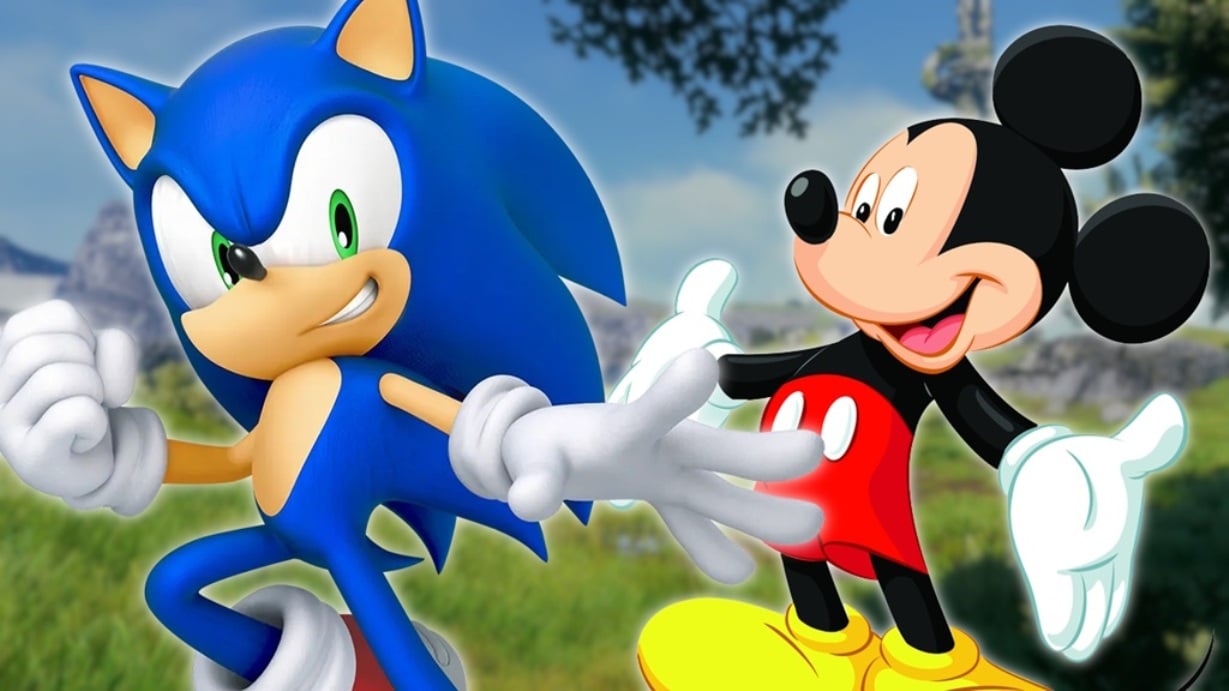
SEGA approached the creation of Sonic the Hedgehog with an ambition that stretched far beyond selling another video game. According to Sonic Team head Takashi Iizuka, the original team wanted Sonic to become powerful enough to challenge Disney, which represented one of the highest creative and commercial standards imaginable during the early 1990s. That towering goal helped fuel the passion behind Sonic’s design, personality, speed and introduction on the SEGA Genesis.
Iizuka explained that the developers did not simply want to create something comparable to Disney. Their aim was to produce entertainment that could go beyond what the company was doing. It was an almost impossibly bold target, but that was precisely the point. By chasing an industry leader that appeared far ahead, the team encouraged itself to think bigger and give Sonic the qualities required to become a globally recognised character.
More than three decades later, Iizuka believes that spirit remains important. Disney is still viewed as an extraordinary entertainment company, and Sonic Team continues to use its success as a distant but motivating benchmark. Sonic has already grown from a 16-bit video game character into the face of games, films, animation, merchandise, comics and live events. However, Iizuka’s comments make it clear that SEGA sees considerably more room for growth.
The comparison also echoes remarks from Nintendo’s Shigeru Miyamoto, who previously said he felt honoured when Nintendo was compared with Disney. Both companies appear to recognise that beloved characters can provide more than entertainment. Over time, they can become familiar, trusted parts of family life that connect with several generations.
SEGA originally wanted Sonic the Hedgehog to surpass Disney
SEGA’s aspirations for Sonic the Hedgehog were never modest. While the character was created to give the company a recognisable mascot and strengthen the appeal of the SEGA Genesis, the people behind Sonic were apparently looking toward a much larger horizon. Takashi Iizuka has revealed that the original team was driven by a desire to beat Disney, a company already associated with globally recognised characters, animation and family entertainment. It sounds like the sort of goal someone might write on a whiteboard before quietly erasing it when the boss walks in, but the ambition was genuine. SEGA wanted to create something capable of rising above one of the most influential entertainment companies in the world. That mindset encouraged the developers to view Sonic as more than a figure who could run quickly through colourful levels. He needed enough personality, visual appeal and cultural relevance to survive well beyond a single game or console generation.
Takashi Iizuka recalls the passion behind Sonic’s creation
During an interview celebrating Sonic the Hedgehog’s 35-year history, Iizuka reflected on the atmosphere surrounding the character’s original development. He described a team filled with passion and determined to make Sonic feel extraordinary. The developers were not satisfied with merely producing a competent platform game for the Genesis. They wanted to bring a character to market who could capture attention immediately and stand alongside the biggest names in entertainment. That enthusiasm can still be felt in the original Sonic the Hedgehog. The game moved with an energy that separated it from many contemporary platformers, while Sonic’s confident expression and impatient animations gave him a personality before players had even pressed a button. The team’s ambition acted like fuel in the engine. Even if beating Disney seemed distant, pursuing such a demanding goal pushed the developers to make stronger choices and avoid settling for something ordinary.
Disney represented the highest possible creative benchmark
Choosing Disney as the company to beat reveals how broadly SEGA viewed Sonic’s potential. Disney was not simply another game publisher competing for shelf space. It represented decades of storytelling, iconic characters, family recognition and creative influence across several forms of entertainment. By using Disney as its benchmark, the Sonic team was effectively measuring itself against a cultural institution rather than a direct commercial rival. This distinction matters because it shows that SEGA’s ambitions extended beyond hardware sales or review scores. The company wanted Sonic to become familiar even to people who had never touched a controller. Mickey Mouse could be recognised through a silhouette alone, and Disney’s stories were shared between parents and children. Sonic needed that same immediate clarity. His blue body, red shoes, sharp quills and energetic attitude helped create a design that could be understood in a fraction of a second, whether it appeared on a game box, television screen or piece of merchandise.
The ambitious goal continues to influence Sonic Team
Iizuka does not treat the original ambition as an amusing relic from SEGA’s more aggressive years. He believes the desire to reach Disney’s level can continue to inspire Sonic Team. He openly acknowledges that Disney remains far ahead and describes it as an amazing company, but that distance does not make the goal meaningless. A faraway target can still determine which direction you run, something Sonic should understand better than most. Iizuka indicated that even ten years from now, Sonic Team may still be chasing the same objective. The aim is to challenge the company at the top because its achievements offer a powerful example of what sustained creative success can look like. This does not necessarily mean copying Disney’s methods or transforming Sonic into a similar property. Instead, the comparison gives SEGA a demanding standard against which it can measure Sonic’s reach, reputation and ability to connect with audiences around the world.
Sonic was designed to become more than a video game hero
Sonic made his debut in 1991 as the star of a fast platform game, but nearly every aspect of his presentation suggested that SEGA had broader plans. He was given a clear personality at a time when many playable heroes were largely defined by their actions. Sonic tapped his foot when players left him waiting, smiled confidently and raced through levels with a sense of controlled rebellion. He felt like a character who knew he was cool, even if his audience had only just met him. That confidence made him suitable for advertising, animation, comics and merchandise from the beginning. SEGA was not merely asking players to enjoy Sonic’s abilities. It was inviting them to identify with his attitude. His speed represented freedom, while his willingness to confront Dr. Eggman gave him a simple but dependable heroic role. These qualities helped Sonic move beyond the limitations of any individual game and become one of the most recognisable figures associated with the medium.
SEGA’s blue mascot developed into a global entertainment property
Over the decades, Sonic has appeared in far more places than the looping landscapes of Green Hill Zone. He has starred in animated television productions, comic series, toys, clothing, music, mobile releases and major theatrical films. Each format has introduced the character to people with different interests and levels of familiarity with the games. A child might first meet Sonic through a film, while a parent may remember playing the Genesis original many years earlier. That cross-generational recognition is essential for any entertainment property attempting to build the kind of lasting presence associated with Disney. Sonic’s appeal no longer depends entirely on whether someone owns a SEGA system, especially since the company left the console hardware market and began releasing games across multiple platforms. Instead, the character travels wherever audiences are willing to follow. His identity remains flexible enough to support comedy, action and more emotional storytelling without losing the speed and confidence at the centre of his personality.
Modern Sonic projects support a broader entertainment strategy
The recent direction of the Sonic franchise suggests that SEGA understands the value of presenting its mascot through several connected forms of entertainment. The live-action film series brought Sonic to a huge theatrical audience, while games continue to serve players who prefer interactive adventures. Animation, merchandise, collaborations and anniversary celebrations help maintain visibility between major releases. This broader strategy allows each project to strengthen the others. Someone who enjoys a Sonic film may become curious about the games, while an established player may bring friends or family members to the cinema. It creates a welcoming circle rather than a one-way road. Disney has spent generations using films, parks, products and television to keep its characters present in everyday life. Sonic’s ecosystem is far smaller, but the underlying opportunity is similar. The more consistently SEGA protects the character’s identity while exploring different formats, the easier it becomes for Sonic to remain relevant without depending on constant game launches.
Shigeru Miyamoto has also addressed comparisons with Disney
Iizuka’s remarks carry an interesting connection to comments previously made by Nintendo’s Shigeru Miyamoto. In 2023, Miyamoto said he felt honoured that Nintendo was being compared with Disney. His response focused less on defeating a competitor and more on the sense of reassurance Disney can offer families. The company’s name often signals that an experience will be approachable, polished and suitable for a broad audience. Miyamoto suggested that comparisons with Disney gave him confidence that Nintendo was beginning to inspire a similar feeling. That idea reaches beyond popularity. A familiar character can become a trusted presence, making families feel comfortable choosing a game, film or attraction because they understand the values and quality associated with the name. Nintendo has gradually expanded Mario and its other characters beyond games, particularly through films, theme parks and licensed products. Miyamoto’s remarks indicate that the company values emotional trust as much as raw recognition.
SEGA and Nintendo share similar ambitions for their characters
SEGA and Nintendo have followed different paths, but both companies understand that memorable characters can become bridges between generations. Sonic and Mario began as stars of competing video game systems, yet both now operate in a much larger entertainment landscape. Their names can attract people who have little knowledge of console specifications, development studios or release schedules. Grandparents, parents and children can recognise them, even when their reasons for caring about the characters are completely different. That kind of reach is difficult to create and even harder to maintain. It requires a steady balance between familiarity and reinvention. Change too little, and a character can feel trapped in the past. Change too much, and the qualities people loved may disappear. Disney has spent decades navigating the same challenge with its characters. SEGA and Nintendo appear eager to build similarly enduring relationships without abandoning the interactive experiences that made their creations famous in the first place.
Different philosophies can lead toward a similar destination
Iizuka frames Disney as the leader Sonic Team wants to catch, while Miyamoto speaks about the honour and reassurance attached to the comparison. The language is different, but both perspectives point toward a similar destination. SEGA wants Sonic to achieve greater global influence, and Nintendo wants its characters to become trusted parts of family entertainment. Neither objective can be accomplished through a single successful release. It takes years of consistent decisions, creative risks and careful stewardship. The characters must remain visible without becoming exhausting, and new projects must appeal to fresh audiences without making existing fans feel forgotten. That is a delicate dance, particularly when nostalgia is involved. Everyone has a preferred version of Sonic or Mario, and those preferences can be surprisingly fierce. Still, a long-running property cannot survive by staring only in the rear-view mirror. Its creators need to honour the past while building experiences that will become someone else’s cherished memories.
Sonic Team faces a difficult but meaningful long-term challenge
Surpassing Disney is not a goal that can be measured through one box-office result, game launch or merchandise campaign. Disney’s influence has been built across generations and supported by a vast collection of characters, studios, films, parks and services. Iizuka is realistic about that distance. His comments do not suggest that Sonic Team expects to close the gap quickly. Instead, Disney functions as a north star, offering a clear direction even when the destination remains far away. This mindset can be healthy when it encourages ambitious creative work rather than constant comparison. Sonic does not need to imitate Disney to become more successful. In fact, copying another company too closely could weaken the qualities that make him distinctive. His rebellious energy, speed-focused action and connection to video game history provide a foundation no other property can reproduce exactly. The challenge is to use those strengths consistently while finding new ways to make them meaningful to future audiences.
Maintaining quality across different projects will be essential
A character’s reputation is shaped by every major appearance. Strong games and films can attract new fans, but poorly received projects may create doubt that lingers for years. Sonic’s history includes celebrated successes as well as releases that divided players, which makes consistency particularly important. Expanding into more forms of entertainment increases the opportunity for growth, but it also creates more chances for the character’s identity to become unclear. SEGA must ensure that Sonic still feels like Sonic whether he appears in a game, movie, animation or promotional collaboration. That does not mean every interpretation needs the same tone. Variety can keep the franchise lively, and Sonic has always worked in both playful and dramatic settings. However, audiences should continue to recognise his courage, impatience, humour and desire for freedom. Disney’s strongest properties have survived because their central appeal remains understandable even as technology and storytelling styles change. Sonic will need similar clarity to continue growing.
What Iizuka’s comments could mean for Sonic’s future
Iizuka’s words suggest that SEGA is thinking about Sonic in decades rather than individual release cycles. The franchise has already survived enormous changes in gaming, including the rise of 3D graphics, online distribution, mobile devices and cinematic adaptations. Reaching an even larger audience will require Sonic Team to remain flexible while protecting the character’s essential qualities. Future games may experiment with new structures, stories and technologies, while films and animation can explore relationships that receive less attention during fast-paced gameplay. SEGA can also introduce supporting characters to audiences who currently know only Sonic, Tails and Knuckles. Every successful project adds another doorway into the franchise. The important part is ensuring that those doorways lead to a world people want to revisit. Iizuka’s ambition indicates that Sonic Team does not consider the character’s current success to be the finish line. After 35 years, Sonic is apparently still gathering speed.
Conclusion
Takashi Iizuka’s recollection offers a revealing look at the scale of SEGA’s original ambition for Sonic the Hedgehog. The development team wanted to create something capable of surpassing Disney, and that seemingly impossible goal helped inspire the energy surrounding Sonic’s debut. More than three decades later, Disney remains a distant benchmark, but Iizuka believes chasing the best is still worthwhile. Sonic has already moved far beyond his Genesis origins and established a presence in games, films, animation, comics and merchandise. His journey reflects the value of aiming higher than seems reasonable, even when reaching the destination may take generations. Shigeru Miyamoto’s comments about Nintendo and Disney add another layer to the comparison, showing how major game companies increasingly want their characters to inspire familiarity and trust beyond interactive entertainment. Sonic may not be ready to overtake Disney, but SEGA’s blue mascot has never been known for standing still.
FAQs
- Did SEGA originally want Sonic the Hedgehog to beat Disney?
- Yes. Takashi Iizuka said the passion within the original Sonic team was partly driven by a desire to beat Disney and create entertainment that went beyond what Disney was producing at the time.
- When did Sonic the Hedgehog first appear?
- Sonic the Hedgehog made his main debut in 1991 on the SEGA Genesis, which was known as the Mega Drive in several regions. The game established Sonic as SEGA’s leading mascot.
- Does Takashi Iizuka still want Sonic to challenge Disney?
- Iizuka indicated that Disney remains an aspirational benchmark for Sonic Team. He acknowledged the considerable distance between them but said the team still wants to aim for the company at the top.
- What did Shigeru Miyamoto say about Disney?
- Miyamoto said he felt honoured that Nintendo was compared with Disney. He connected the comparison to the reassurance families associate with Disney and suggested Nintendo was developing a similar level of trust.
- How has Sonic expanded beyond video games?
- Sonic has appeared in theatrical films, animated productions, comics, merchandise, music, mobile releases and numerous collaborations. These projects have helped introduce him to audiences outside traditional gaming communities.
Sources
- 35 Years of Being Way Past Cool: A Conversation With Sonic the Hedgehog Creative Director Takashi Iizuka, Crunchyroll, July 20, 2026
- Sonic Team Head Talks About How SEGA Wanted to Beat Disney With Sonic the Hedgehog, Nintendo Everything, August 3, 2026
- SEGA Wanted to Beat Disney With Sonic the Hedgehog in the ’90s, Says Sonic Team Director, Nintendo Wire, August 4, 2026
- Miyamoto Says He’s Not a Fan of Being Called the Spielberg of Games, Honored by Disney Comparisons, Nintendo Everything, February 19, 2023
- Shigeru Miyamoto Doesn’t Like Comparisons to Steven Spielberg, NME, February 20, 2023