














Summary:
Shigeru Miyamoto has shared fresh details about the origins of The Legend of Zelda, explaining how Western PC role-playing games helped Nintendo imagine a different kind of home console experience. Speaking in a recent Famitsu interview, the legendary Nintendo developer looked back at a period when the company was searching for ideas that went beyond arcade-style challenges, sports games, high scores, and straightforward journeys toward a finish line.
Nintendo wanted players to become attached to a central character, explore at their own pace, and return to an adventure without losing everything they had accomplished. That goal placed save data at the heart of the project. It also connected the emerging game design with the Famicom Disk System, whose rewritable disks offered additional storage and built-in support for saving progress.
At the same time, expansive computer RPGs were gaining attention in Western markets, even though they had not yet become widely established in Japan. Miyamoto explained that Nintendo studied the most appealing elements of those experiences and reworked them around the Famicom, its controller, and the company’s existing technical knowledge. The result was not a traditional computer RPG squeezed onto a console. Instead, Nintendo created an action-focused adventure built around direct interaction, discovery, secrets, equipment, character growth, and freedom of movement. Those ideas became the foundation of The Legend of Zelda and helped establish a design philosophy that remains visible throughout the series decades later.
Miyamoto Reveals the Western RPG Roots of The Legend of Zelda
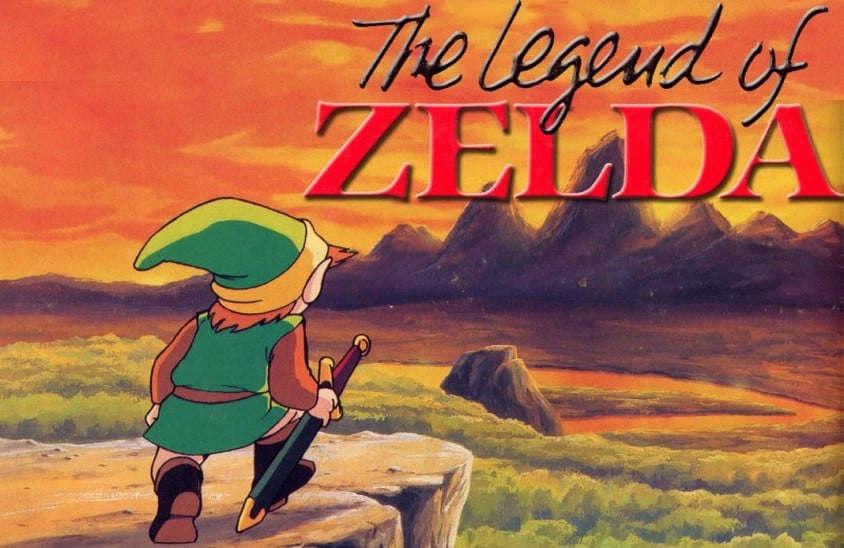
Shigeru Miyamoto’s recent Famitsu interview offers a revealing look at how Nintendo approached the creation of the original The Legend of Zelda. Rather than presenting the game as an idea that appeared fully formed, Miyamoto described it as the answer to several connected challenges. Nintendo wanted to reach more players, make better use of advancing technology, and create something that felt specifically suited to playing at home. Western PC role-playing games became an important source of inspiration because they offered longer adventures, persistent characters, large worlds, and a sense that players could choose their own path. These qualities stood apart from the faster, more structured experiences that dominated arcades. Nintendo did not simply borrow the RPG label, however. It gathered the ideas that seemed most exciting and reshaped them into a form that worked naturally with the Famicom controller. That process helped turn Link’s first adventure into something immediately recognizable yet difficult to place inside the familiar categories of its time.
Nintendo Wanted to Move Beyond Arcade-Style Experiences
During the early Famicom period, Nintendo had already become skilled at bringing the excitement of the arcade into people’s homes. Games could challenge players with enemies, obstacles, time limits, and increasingly difficult stages without requiring a particularly long commitment. The structure was clear: begin at the starting point, move toward the goal, earn a high score, and try again after failure. That rhythm worked wonderfully for many games, but Miyamoto recognized that Nintendo needed additional types of play if it wanted to attract a broader audience. A home console did not need to behave like a smaller arcade cabinet forever. It could invite players into a world that remained interesting for days or weeks rather than minutes. This distinction encouraged Nintendo to consider experiences built around curiosity and personal investment. Instead of asking only how quickly or skillfully you could reach the end, the company began asking where you might choose to go, what you might discover, and why you would want to return tomorrow.
Non-Linear Progression Became a Defining Creative Goal
Miyamoto specifically recalled wanting a game in which players did not simply continue along a straight path toward a predetermined goal. That ambition sits at the heart of the original Zelda. Hyrule was not presented as one long corridor decorated with different backgrounds. It was a connected landscape filled with branching routes, caves, suspicious walls, hidden stairways, dangerous regions, and dungeons that players had to locate for themselves. You could wander into an area before you were properly equipped, get thoroughly humbled by its enemies, and retreat with a new destination etched into your memory. That freedom made exploration feel personal. Two players could begin with the same wooden sword and quickly come away with different stories about where they went or what they found. The world became something to investigate rather than scenery to pass through. By removing the certainty of a single forward route, Nintendo gave curiosity a mechanical purpose and transformed getting lost from an obvious failure into a meaningful part of the adventure.
Save Data Changed What a Home Console Adventure Could Be
A large, non-linear adventure created an immediate practical problem: players needed a reliable way to preserve their progress. Many early games were designed to be completed in a single sitting or replayed from the beginning, while longer releases sometimes relied on passwords, stage selections, checkpoints, or cleverly hidden shortcuts. Super Mario Bros., for example, included Warp Pipes that allowed knowledgeable players to skip large portions of the journey. These solutions reduced repetition, but they did not remember a player’s individual discoveries, equipment, or accomplishments. Miyamoto wanted the main character to remain the focus and believed save data could support that relationship. Saving meant Link could grow alongside the player. Collected items, completed dungeons, increased health, and other progress no longer had to disappear when the system was switched off. It may sound ordinary now, but at the time it fundamentally changed the emotional contract between a console game and its audience. The machine was no longer asking you to start over. It was remembering your adventure.
The Famicom Disk System Supported Nintendo’s Bigger Ambitions
The Famicom Disk System played an important role in Nintendo’s effort to create games that could store more information and preserve player progress. Released in Japan in February 1986, the add-on used proprietary rewritable Disk Cards rather than standard Famicom cartridges. The format offered considerably more capacity than many cartridges available at the time and included support for saving data. Players could place the Famicom on top of the Disk System, insert a RAM Adapter into the cartridge slot, and load software from the magnetic disk. It was hardly as effortless as modern storage, and some games required players to remove the disk and flip it over during play. Still, the technology opened useful doors. Nintendo could design longer experiences without forcing players to record complicated strings of letters and numbers on scraps of paper. The original The Legend of Zelda launched alongside the hardware in Japan, making Link’s ability to preserve his journey one of the clearest demonstrations of what the Disk System could offer.
Technology Followed the Needs of Nintendo’s Game Design
Miyamoto’s explanation is especially interesting because it does not treat hardware and software as separate worlds. Nintendo wanted a character-focused game with persistent progress, so the company pursued technology that could support those goals. The hardware was not simply built first and handed to designers with instructions to find something entertaining to do with it. Instead, the desire to create a different relationship between players and games helped shape the technical challenge. That approach has appeared repeatedly throughout Nintendo’s history. Controllers, screens, motion sensors, portable hardware, and other features tend to matter most when they enable an immediately understandable form of play. With Zelda and the Disk System, saving was not merely a convenient feature listed on the back of a box. It allowed Nintendo to create a world that expected patience, memory, experimentation, and repeated visits. The storage technology quietly held the adventure together, rather like a bookmark that also remembered every sword, key, and heart container you had collected.
Western PC RPGs Offered Ideas That Were Rare in Japan
While Nintendo was considering these new possibilities, computer role-playing games were gaining popularity outside Japan. Series such as Wizardry had already shown that players could become deeply invested in parties of characters, statistical growth, exploration, treasure, and lengthy journeys through dangerous spaces. Miyamoto noted that PC RPGs were catching on abroad but had not yet become widespread in Japan. That gap gave Nintendo an unusual opportunity. The company could examine a style of game that many Japanese Famicom owners had never experienced, identify its most compelling qualities, and present them through a familiar console interface. For players accustomed to immediate action, the dense commands and text-heavy systems of computer RPGs might have felt like being handed the controls to a spaceship without an instruction manual. Nintendo’s task was to preserve the excitement of discovery and growth while removing unnecessary friction. The result needed to feel adventurous from the first button press, not only after an evening spent studying commands and statistics.
Nintendo Adapted RPG Concepts Instead of Simply Copying Them
The Legend of Zelda was influenced by Western RPGs, but it was not designed as a direct imitation of them. Nintendo used the technology and experience it had built through arcade games and Famicom development, then combined those strengths with selected RPG ideas. Instead of navigating primarily through written commands, players moved Link directly across the screen. Combat unfolded in real time. A sword swing, a thrown boomerang, or a carefully placed bomb produced an immediate visual result. Character improvement was represented through useful objects and additional heart containers rather than through a wall of numerical statistics. Dungeons still demanded planning, but puzzles were solved by interacting with rooms, blocks, walls, enemies, and equipment. This translation was crucial. Nintendo took concepts that could appear intimidating or abstract and made them physical. Finding a new item was not just a statistic rising in a menu. It was like receiving a new key to the world, one that suddenly made previously mysterious obstacles understandable. The game taught through action, surprise, and experimentation.
The Original Zelda Put the Player at the Center of the Adventure
Miyamoto wanted a game in which the main character was central, but Link’s importance did not come from lengthy speeches or elaborate cinematic scenes. Link served as the player’s presence inside Hyrule. His limited starting abilities made the world feel dangerous, while each discovery expanded what the player could attempt. The design encouraged a strong connection because progress belonged to both Link and the person holding the controller. When Link gained another heart container, the player gained confidence. When he found the raft, ladder, bow, or another useful tool, the map seemed to change even though its geography stayed the same. Places that once looked inaccessible became invitations to return. This relationship also made save data more meaningful. Players were not merely storing a level number. They were preserving a version of Link shaped by their own decisions, victories, mistakes, and detours. Nintendo’s character-focused ambition therefore worked hand in hand with exploration. Link became memorable partly because players had to guide him, protect him, and slowly build his ability to survive.
Secrets Turned Hyrule Into a Shared Mystery
The original Zelda’s secrets reinforced the idea that progress could come from observation and experimentation rather than simply moving forward. A plain wall might hide a cave. A particular tree could conceal a stairway. A dungeon entrance might sit somewhere players had already visited without recognizing its importance. The game often offered little explanation, which could make it confusing, mischievous, and occasionally downright cruel. Yet that uncertainty also encouraged players to talk. Schoolyards, living rooms, magazines, and handwritten maps became extensions of Hyrule as people traded discoveries and compared theories. The experience felt larger because no single journey revealed everything immediately. This social exchange echoed one of the most appealing qualities of early RPGs, where knowledge gained through exploration carried real value. Nintendo converted that value into a more accessible action format. Players did not need to understand complicated computer systems to participate. They only needed curiosity, a willingness to test strange ideas, and perhaps a friend who knew which wall looked unusually suspicious.
Zelda’s Early Design Philosophy Still Shapes the Series
The ideas described by Miyamoto did more than define one release. They established principles that have remained central to The Legend of Zelda across changing hardware generations. The series regularly asks players to examine their surroundings, use tools in inventive ways, remember inaccessible locations, and return with new knowledge. Later entries became more guided, cinematic, or structurally elaborate, but exploration continued to provide the heartbeat. Games such as The Legend of Zelda: Breath of the Wild renewed the emphasis on choosing a direction and discovering what lies beyond the next ridge. That freedom feels modern, yet its roots reach back to Nintendo’s original desire to move away from a linear race toward the goal. The scale has changed dramatically, of course. Hyrule has grown from a grid of connected screens into a vast landscape of mountains, ruins, villages, weather systems, and physics-based possibilities. Still, the invitation remains familiar: look around, choose a path, try something unusual, and accept that the best stories often begin when you wander somewhere you were not told to go.
Why Miyamoto’s Comments Matter to Nintendo’s History
Miyamoto’s recollections help explain why The Legend of Zelda became such an important turning point for Nintendo. Its creation was not only about designing a fantasy setting or introducing recognizable characters. It reflected a broader shift in how the company thought about home entertainment. Nintendo moved from recreating arcade excitement toward building experiences that could develop over time, remember a player’s progress, and support personal routes through a fictional world. Western RPGs provided useful inspiration, while the Famicom Disk System supplied technology that made a persistent adventure practical. Nintendo then filtered those influences through its own strengths in movement, action, visual communication, and controller-based interaction. That combination produced something distinctive. Zelda felt deeper than a typical arcade conversion without becoming inaccessible to players unfamiliar with computer RPGs. Miyamoto’s account reminds us that major creative breakthroughs rarely grow from one isolated idea. They emerge when technology, audience needs, outside influences, and a stubborn desire to try something different all meet at precisely the right moment.
Conclusion
The original The Legend of Zelda emerged from Nintendo’s search for a form of play that could only truly flourish at home. Shigeru Miyamoto and his colleagues wanted to leave the straight road behind and create an adventure centered on exploration, character growth, save data, and personal discovery. Western PC RPGs demonstrated that players could remain invested in large, persistent worlds, but Nintendo did not reproduce those games piece by piece. It selected their most engaging qualities and rebuilt them around direct movement, real-time action, accessible controls, memorable items, and environmental puzzles. The Famicom Disk System gave the team enough storage and saving capabilities to make that vision practical. Four decades later, the influence of those choices remains easy to see. Whenever Zelda gives you a distant landmark, a mysterious cave, or a tool with several unexpected uses, it repeats the same irresistible invitation offered by the first Hyrule: stop following the obvious route, trust your curiosity, and see what happens.
FAQs
- Was The Legend of Zelda inspired by Western RPGs?
- Yes. Shigeru Miyamoto explained that PC RPGs were becoming popular abroad while remaining relatively unfamiliar in Japan. Nintendo studied their appealing elements and adapted selected ideas for the Famicom.
- Which Western RPG series influenced Nintendo’s thinking?
- Miyamoto discussed Western PC RPGs broadly, while Wizardry is frequently identified as a prominent example of the large computer RPGs that had gained popularity in Western markets during that period.
- Why was save data important to the original Zelda?
- Saving allowed players to preserve Link’s collected items, health improvements, dungeon progress, and other accomplishments. This made a longer, character-focused adventure practical across multiple play sessions.
- What role did the Famicom Disk System play?
- The Famicom Disk System used rewritable Disk Cards with greater storage capacity than many contemporary cartridges and built-in save support. The original Zelda launched with the system in Japan in 1986.
- How did Zelda differ from many earlier Nintendo games?
- Rather than focusing mainly on high scores or a linear route toward a finish line, Zelda emphasized exploration, secrets, persistent progress, item-based growth, dungeon discovery, and greater freedom over where to travel.
Sources
- 【VIPインタビュー】宮本茂氏に訊く、ファミコンからSwitch 2、映画、テーマパークまで。目指す理想は「ゲームをいま以上に日常に」, Famitsu, July 27, 2026
- The Legend of Zelda Was Inspired by Western RPGs, Says Shigeru Miyamoto, GamesRadar+, July 30, 2026
- Miyamoto Reflects on the NES Era and Discusses Western RPG’s Influence on Zelda’s Creation, Nintendo Everything, July 30, 2026
- ファミコン ディスクシステム40周年。500円の書き換えサービスが安価で便利だった, Famitsu, February 21, 2026
- 初代『ゼルダの伝説』40周年。任天堂を代表する名作シリーズはディスクシステムから始まった, Famitsu, February 21, 2026