














Summary:
The Super Mario Galaxy Movie has suddenly turned one of Mario’s most flexible story worlds into a much bigger conversation. Shigeru Miyamoto’s recent comments about the film, its critical reception, and Princess Peach’s expanded backstory have given fans plenty to chew on, especially because the movie appears to introduce a major connection between Peach and Rosalina. That reveal matters because Mario has rarely treated character history as something fixed. For decades, the games have let gameplay take the wheel, while story has usually stayed light, playful, and easy to bend around each new idea. Now, with Nintendo’s movie projects becoming more important, that loose approach may be changing in small but meaningful ways. Miyamoto suggested that he would like future games to follow the settings created for the movie as much as possible, which opens the door to film lore influencing the games more directly. That does not mean every future Mario release will suddenly become story-heavy, but it does suggest Nintendo is thinking more carefully about how its characters live across games and films. The result is a fascinating moment for Mario fans. Peach may no longer be just the familiar ruler of the Mushroom Kingdom, Rosalina may gain a closer role in the wider Mario family, and Nintendo may be quietly laying the groundwork for a more connected future.
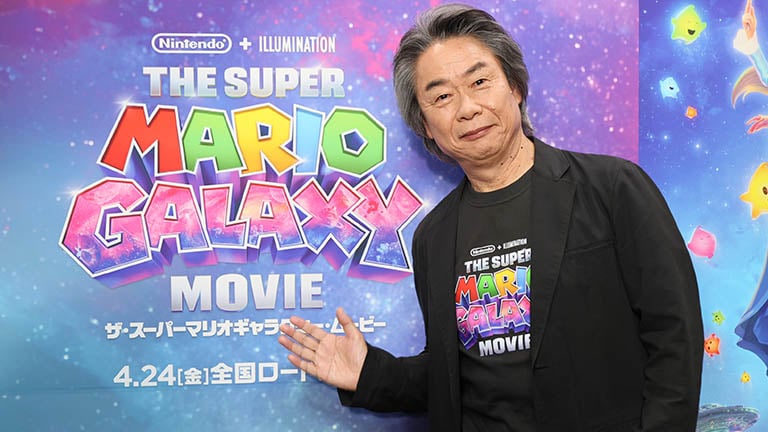
Super Mario Galaxy Movie puts Miyamoto’s view of Mario storytelling back in focus
The Super Mario Galaxy Movie has done more than bring Mario’s cosmic side back into the spotlight. It has reopened a long-running question about how much story the Mario universe actually needs. For years, Nintendo has treated Mario like a toy box rather than a locked timeline. One game can send him into space, another can throw him onto a tropical island, and another can turn him into paper without making fans pull out a corkboard and red string. That flexibility has always been part of the charm. Mario works because he can be almost anything, from a sports star to a plumber, a kart racer, a party host, or a hero bouncing between planets.
That is why Miyamoto’s latest comments feel so important. He is not simply talking about a film’s performance or a single story twist. He is talking about how Nintendo handles character history when Mario moves between games and movies. The Super Mario Galaxy Movie appears to give Princess Peach a clearer origin story, and that alone changes the conversation. Peach has always been iconic, but her background has often been left soft around the edges. The film seems to fill in some of that space, and Miyamoto’s remarks suggest Nintendo may not treat those ideas as disposable movie-only details.
Why Miyamoto’s comments on critics stand out
Miyamoto’s reaction to the film’s critical reception is notable because he usually comes across as measured, playful, and careful with public comments. In this case, he acknowledged that criticism of the first Mario film had points he could understand, but he also seemed surprised that the response to The Super Mario Galaxy Movie was reportedly even tougher. That makes the moment feel unusually candid. It is rare to hear someone so closely associated with Nintendo speak this openly about the divide between creative intent, critical response, and audience enjoyment.
There is also a bigger industry issue sitting under those comments. Nintendo stepped into movies with a different creative background than traditional studios. Mario was born from play, not cinema, so adapting that energy to film was always going to create friction. Critics may judge structure, pacing, character arcs, and emotional depth differently than fans who mainly want color, movement, familiar worlds, and joyful references. That does not make either side wrong. It does show why Mario movies can create such a strange split. For some viewers, the magic is in seeing the Mushroom Kingdom come alive. For others, that is only the starting line.
The gap between review scores and audience excitement
The divide between critics and fans has become one of the most interesting parts of Nintendo’s modern movie era. A Mario film can receive a cool response from reviewers while still filling theaters, selling the fantasy, and giving families exactly the kind of bright, fast-moving adventure they came to see. That is not a small detail. It shows that Mario’s appeal does not always travel through the usual film-review channels. It moves through memory, character recognition, music, visual energy, and the simple thrill of seeing familiar worlds treated like giant amusement parks.
Still, that gap can be tricky. If critics want more emotional weight and audiences want playful spectacle, Nintendo and its film partners have to decide which lane matters most. The answer is probably not one or the other. A stronger Mario film can still be colorful, silly, and approachable while giving its characters more room to breathe. The Super Mario Galaxy Movie seems to be testing that idea by adding more background to Peach and Rosalina. That kind of detail can give longtime fans something richer to discuss without taking away the easy fun that makes Mario so inviting in the first place.
Princess Peach’s backstory becomes the biggest talking point
Princess Peach has always been one of Nintendo’s most recognizable characters, but she has not always been one of its most clearly defined. She is the ruler of the Mushroom Kingdom, a regular target of Bowser’s schemes, a capable adventurer when the moment calls for it, and one of Mario’s closest allies. Beyond that, Nintendo has usually left her past open. That openness helped Peach fit into almost any kind of Mario story without too much explanation. She could be royal, sporty, funny, brave, elegant, stubborn, and occasionally chaotic, depending on what the game needed.
The Super Mario Galaxy Movie appears to change that by giving Peach a more specific personal history. That is a big step because once a character has a defined origin, it becomes harder to treat them as a blank canvas. It gives fans something concrete to remember and debate. It also gives future creators a foundation they may choose to build on. Miyamoto’s comment about wanting to adhere to the film’s settings as much as possible in future games makes this even more interesting. It suggests Peach’s movie backstory may not simply fade away once the credits roll.
Why Peach and Rosalina being sisters matters
The reported reveal that Peach and Rosalina are sisters is the kind of twist that instantly changes how fans look at both characters. Rosalina has always carried a different kind of energy from most of the Mario cast. She feels distant, calm, cosmic, and quietly sad, like someone who has seen more of the universe than she says out loud. Peach, by contrast, is tied closely to the Mushroom Kingdom, warmth, leadership, and the everyday rhythm of Mario’s world. Connecting them as sisters does not just add trivia. It creates emotional gravity between two characters who previously occupied very different corners of the franchise.
That connection also fits the Galaxy theme surprisingly well. Super Mario Galaxy already gave Rosalina a stronger sense of mystery and melancholy than most Mario characters receive. If Peach is linked to that same cosmic background, the Mushroom Kingdom suddenly feels less like her entire story and more like the place where her story continued. That is a powerful shift. It gives Peach a sense of discovery, and it gives Rosalina a more personal reason to matter beyond her role as a guardian of the stars. For fans, it is the kind of reveal that can make old games feel new again.
How the Galaxy connection changes the emotional tone
The Galaxy games have always felt a little different from the rest of Mario. Yes, they are full of playful platforming, colorful planets, and joyful music, but there is also a strange softness to them. Space is beautiful, but it is lonely. Rosalina’s presence added a quiet emotional layer that many players still remember years later. Bringing Peach into that emotional orbit could make future Mario stories feel more personal without making them heavy or overly serious. Think of it like adding a hidden melody under a familiar tune. The song is still Mario, but there is suddenly another note beneath it.
That is why the sister reveal has such staying power. It gives Nintendo a way to deepen Peach without changing the core of who she is. She can still be cheerful, confident, and deeply tied to the Mushroom Kingdom. Rosalina can still remain mysterious and cosmic. The difference is that their bond gives both characters something shared. If future games touch that idea lightly, it could make reunions, team-ups, and Galaxy-inspired settings feel more meaningful. Nintendo does not need dramatic speeches or tangled lore charts. Sometimes one carefully placed relationship can do a lot of work.
How Mario games have usually handled story
Mario games have rarely treated story as the main event. The usual rhythm is simple and effective: something goes wrong, Bowser is probably involved, Mario starts running, and the player gets to the fun part quickly. That formula works because Mario is built around motion. Jumping, exploring, collecting, racing, and experimenting matter more than long scenes or dense explanations. Nintendo has often kept character details light so each game can follow its best idea. If the team wants Mario to clean an island, travel through paintings, collect moons, or fly between planets, story bends to serve the game.
Miyamoto’s comments reflect that philosophy. He has long favored gameplay freedom, and his concern about being restricted by fixed backstories makes sense in that context. Too many firm rules can make a playful series feel boxed in. Mario thrives when developers can ask, “What would be fun?” before asking, “Does this fit the timeline?” That said, movies work differently. Viewers usually expect characters to have motivations, histories, and emotional arcs. When Mario enters theaters, Nintendo has to fill in some blanks that games can comfortably ignore. That tension is now becoming part of the franchise’s future.
Miyamoto’s careful balance between freedom and continuity
The most interesting part of Miyamoto’s position is that he does not seem to reject story outright. Instead, he appears to be drawing a line between helpful background and restrictive baggage. He is comfortable being guided by gameplay, but less comfortable being trapped by story decisions that could limit future creativity. That is a very Nintendo way of thinking. The company often protects the feeling of play above everything else, even when fans are hungry for more lore. In Mario’s case, that protection has kept the series fresh for decades.
At the same time, Miyamoto also said that making the movie made it fun to expand characters in different ways. That is the key. The film process may have shown Nintendo that character history does not have to be a cage. It can be a tool. A backstory can add emotional texture while still leaving room for wild ideas. The trick is to keep it flexible. Peach and Rosalina can be sisters without every future game needing to center on that relationship. The connection can exist in the background, ready to matter when the right story or setting calls for it.
Why Nintendo may prefer soft canon over strict canon
Nintendo often works best with what could be called soft canon. Certain ideas stick, but they do not always dominate. Characters have recognizable traits, relationships, and worlds, yet the games do not usually demand strict continuity from one release to the next. That approach lets Mario stay approachable for children, nostalgic for adults, and creatively useful for developers. It also means a movie reveal can be acknowledged without turning the franchise into homework. Fans can enjoy the Peach and Rosalina connection, but new players do not need a family tree before they pick up a controller.
This soft approach would be a smart fit for the Super Mario Galaxy Movie’s lore. Nintendo can carry forward the emotional value of Peach’s origin while keeping future games light on their feet. A new 3D Mario could reference the relationship through dialogue, visual details, a shared power, or a Galaxy-themed chapter. It does not need to pause the adventure for a long explanation. Mario storytelling is often strongest when it gestures rather than lectures. A wink, a line, or a quiet moment can be enough to make fans smile without slowing the game down.
What film lore could mean for future Mario games
If Nintendo truly wants to follow the film’s settings in future games where possible, the next major Mario release becomes even more exciting. Fans will naturally look for signs that Peach’s movie backstory has carried over. Will Rosalina and Peach interact differently? Will the Galaxy setting return with more narrative weight? Will Peach’s origins influence her role, powers, or place in the Mushroom Kingdom? Those are the questions that now follow the franchise around like a curious Luma. Nothing is guaranteed, but the door is clearly more open than it used to be.
The smartest path would be subtle integration. Nintendo does not need to rebuild Mario around movie lore. It only needs to let the lore enrich moments that already fit. A Galaxy-inspired game could let Peach and Rosalina share scenes that feel warmer and more personal. A future Peach-led adventure could touch on her past without making it the whole point. Even a small nod in dialogue could tell fans that the movie’s ideas matter. That kind of restraint would protect Mario’s playful identity while making the wider universe feel a little more connected.
Why Nintendo may be more open to connected storytelling now
Nintendo’s relationship with movies has changed. The company once seemed cautious about letting its characters live outside games, which is easy to understand given how protective Nintendo is of its biggest names. Now, the success of its animated projects has shown that film can expand those characters without replacing what makes the games special. Mario can still be a game-first icon while also becoming a movie character with a broader emotional life. That shift matters because it encourages Nintendo to think about its characters across multiple formats, not just one release at a time.
Connected storytelling also helps audiences feel that each appearance matters. When a film adds something meaningful and a later game quietly respects it, fans feel rewarded for paying attention. That does not mean Nintendo needs a rigid cinematic universe with every detail locked in place. Mario would probably lose some sparkle if it became too serious about continuity. But a little connective tissue can go a long way. Peach, Rosalina, the Galaxy setting, and the Mushroom Kingdom all become more interesting when they feel like parts of the same living world rather than separate toy shelves.
The risks of turning flexible Mario lore into firm canon
There is a risk here, of course. Mario’s looseness is not a flaw. It is one of the reasons the series has lasted so long. If Nintendo starts treating every movie detail as mandatory game canon, future developers may have less room to surprise players. Fans may also become more focused on whether something “counts” than whether it is fun. That can drain the joy out of a franchise that has always been at its best when it feels like a playground. Nobody wants Mario to need a rulebook thicker than Bowser’s shell.
The Peach and Rosalina reveal works because it adds emotional possibility, not because it demands constant explanation. If Nintendo uses it carefully, it can deepen both characters. If it overuses it, the idea could start to feel heavy. The challenge is to let the relationship matter when it naturally fits, then step back when the game needs speed, humor, or pure platforming energy. Mario is not built like a dense fantasy saga. It is built like a bright stage where new ideas can run in from the wings at any moment.
How future games can reference the movie without slowing down
Future Mario games have plenty of simple ways to honor the movie’s lore while keeping the pace lively. Peach and Rosalina could share a brief scene that hints at their bond. A collectible could reference stardust, childhood, or the Galaxy setting. A hub world could include a quiet visual connection between the Comet Observatory and the Mushroom Kingdom. Even a line from a Luma could be enough to make fans raise an eyebrow and grin. The goal should be seasoning, not sauce poured over the whole plate.
This is where Nintendo’s light touch can shine. The company is very good at making small details feel special. A background object, a musical cue, or a short exchange can carry surprising meaning when fans already understand the context. That kind of storytelling respects both audiences. Longtime fans get the extra layer, while newer players are not lost. If the film’s lore enters the games this way, it could feel natural rather than forced. Mario can keep jumping first and explaining later, which is exactly how it should be.
What fans should expect before the next Mario game
Fans should probably expect patience rather than instant answers. Miyamoto’s comments point toward a direction, not a detailed roadmap. Until Nintendo reveals the next major Mario project that uses these characters in a meaningful way, the exact impact of the Super Mario Galaxy Movie remains uncertain. That uncertainty is part of the fun, even if it also makes the wait a little itchy. Mario fans are very good at spotting clues, and every future trailer, character interaction, and Galaxy reference will now be inspected like a suspicious question block.
It is also worth remembering that Nintendo rarely moves in a straight line. The next Mario game might not be a Galaxy follow-up at all. It could be something wildly different, and if so, Peach’s backstory may only sit quietly in the background for a while. That would not mean the movie lore has been abandoned. It may simply mean Nintendo is waiting for the right project. A story detail only lands well when the surrounding idea supports it. Forcing Rosalina into every game would feel clumsy. Bringing her in when the stars align would feel much more Nintendo.
Why this moment feels bigger than one movie twist
The Peach and Rosalina reveal is the headline-grabber, but the bigger story is Nintendo’s changing relationship with its own characters. Mario has always been famous, but fame across games and films asks for a slightly different kind of care. The more Nintendo expands into animation and cinema, the more it has to decide which ideas travel between formats. That makes Miyamoto’s comments important beyond one family connection. They hint at a future where movies can shape the emotional texture of games, even if gameplay remains the heart of everything.
That future could be exciting if handled with restraint. Mario does not need to become a lore maze. It does not need dramatic family arguments in every castle or a timeline that requires a spreadsheet. But it can benefit from giving beloved characters a little more history, especially when that history supports the wonder already present in the games. Peach and Rosalina being sisters fits because Galaxy already had a dreamy, storybook feeling. It feels less like a random twist and more like a star that was always floating nearby, waiting for Nintendo to point at it.
How this could shape Nintendo’s wider movie plans
Nintendo’s movie ambitions are no longer a side curiosity. They are becoming a major part of how the company presents its worlds to a wider audience. If The Super Mario Galaxy Movie’s lore is carried into games, even softly, that could influence how Nintendo approaches other adaptations. The company may become more willing to let films add character details, strengthen relationships, or clarify backstories, as long as those choices do not interfere with future gameplay. That could matter for Mario, Zelda, and any other franchise Nintendo chooses to bring to theaters.
The key lesson is that adaptation can be more than a retelling. A movie can become a testing ground for ideas that later enrich games. That does not mean every film reveal should become permanent. Some ideas work best on screen and should stay there. But when a reveal fits the spirit of the games, Nintendo may now be more willing to keep it. Peach’s origin and her connection to Rosalina could be the first major example of that approach in Mario’s modern era, and fans will be watching closely.
The Super Mario Galaxy Movie may leave a lasting mark on Mario
The Super Mario Galaxy Movie has arrived at an interesting time for Nintendo. The company is no longer simply lending characters to films and hoping audiences enjoy the ride. It is actively shaping how those characters are understood across different forms of entertainment. Miyamoto’s comments suggest that Nintendo sees value in the settings and character details created for the film, especially when it comes to Peach’s backstory. That does not erase Mario’s playful past. It adds another layer to it, like finding a hidden room in a level you thought you knew by heart.
For Peach, the shift could be especially meaningful. She has always been central to Mario, but not always deeply explored. A connection to Rosalina gives her more history, more mystery, and potentially more emotional range. For Rosalina, it offers a closer tie to the main cast without removing her cosmic aura. For Mario as a whole, it shows that Nintendo may be ready to let movies and games speak to each other in a more deliberate way. The trick will be keeping that conversation light, flexible, and fun.
Conclusion
The Super Mario Galaxy Movie has turned a familiar Nintendo conversation into something much more interesting. Miyamoto’s response to the film’s reviews shows how differently critics and audiences can react to Mario on the big screen, while his comments about Peach’s backstory hint at a future where movie lore may influence the games. The reported connection between Peach and Rosalina is the kind of reveal that can reshape how fans see both characters, but it works best when treated with care. Mario does not need strict, heavy continuity to stay meaningful. It needs playful worlds, charming characters, and just enough emotional sparkle to make the adventure linger after the controller is set down. If Nintendo carries this lore forward with a light touch, The Super Mario Galaxy Movie could become more than a successful animated release. It could become a turning point in how Mario’s world grows across games and films.
FAQs
- Did Miyamoto say The Super Mario Galaxy Movie lore will be used in future games?
- Miyamoto indicated that he would like to follow the settings created for the movie as much as possible in future games. That suggests the film’s lore may influence future Mario releases, although Nintendo has not detailed exactly how that will happen.
- Are Peach and Rosalina sisters in The Super Mario Galaxy Movie?
- The movie reportedly reveals that Princess Peach and Rosalina are sisters. This is one of the biggest story details connected to Peach’s expanded backstory and has quickly become a major talking point among Mario fans.
- Was Peach’s backstory already established in the Mario games?
- Peach’s origin has not been heavily defined in the main Mario games. Nintendo has usually kept character backgrounds flexible so new games can prioritize gameplay ideas without being boxed in by too many fixed story rules.
- Why did Miyamoto mention critics in relation to The Super Mario Galaxy Movie?
- Miyamoto commented on the film’s critical reception and said he was surprised that reviews were reportedly harsher than those for the first Mario film. His remarks highlight the ongoing split between critic reactions and audience enthusiasm.
- Will future Mario games become more story-focused because of the movie?
- Not necessarily. Mario games are still likely to put gameplay first. However, future releases may include more references to movie-created character details when those ideas fit naturally within the game’s world.
Sources
- Miyamoto says he wants Peach’s origin story in The Super Mario Galaxy Movie to remain canon in future games, VGC, April 22, 2026
- Miyamoto says he was surprised Mario Galaxy Movie reviews were even harsher than the first, VGC, April 22, 2026
- Shigeru Miyamoto Comments On Critic Reviews Of Super Mario Galaxy Movie, Along With Peach’s New Backstory, NintendoSoup, April 22, 2026
- “It’s Truly Baffling” – Shigeru Miyamoto Comments On The Mario Galaxy Movie’s Critical Reception, Nintendo Life, April 22, 2026
- Princess Peach’s Super Mario Galaxy Movie Lineage Is Canon, Says Miyamoto, GameSpot, April 23, 2026