














Summary:
Take-Two Interactive has stirred up fresh excitement by confirming that six remakes, remasters, or platform extensions are currently part of its future plans. That single detail is enough to send fans running through the company’s massive back catalog, because Take-Two controls some of the biggest names in gaming through Rockstar Games, 2K, Gearbox, Hangar 13, and other labels. While the company has not attached names to all six projects, the possibilities are hard to ignore. Max Payne already has an official remake project in development through Remedy Entertainment and Rockstar Games, while the Mafia series continues to show how Take-Two can revive older worlds with modern production values. Meanwhile, ongoing rumors around Red Dead Redemption 2 and Nintendo Switch 2 keep one of Rockstar’s most beloved releases in the conversation.
What makes this situation especially interesting is the wording. Take-Two is not only talking about full remakes or traditional remasters. The company’s category also includes platform extensions, which could mean current-generation upgrades, PC releases, Nintendo Switch 2 versions, or new editions of existing games. That opens the door to a much wider range of possibilities. Some players may be hoping for full ground-up rebuilds of cult favorites, while others may simply want smoother frame rates, sharper visuals, and easier access to games that have been stuck on older hardware. Either way, Take-Two’s legacy catalog is loaded with names that still carry serious weight.
Take-Two Interactive’s remake plans point to a busy future for classic franchises
Take-Two Interactive has confirmed that six remakes, remasters, or platform extensions are part of its upcoming plans, and that small detail has done exactly what you would expect. It has kicked off a wave of guessing, wish-listing, and careful label-reading from players who know how many major franchises sit under the company’s umbrella. Take-Two is not a small publisher with a thin shelf of recognizable names. It owns and publishes through labels connected to Grand Theft Auto, Red Dead Redemption, Max Payne, Mafia, Borderlands, BioShock, Civilization, NBA 2K, WWE 2K, and more. That makes the number six feel both exciting and slightly maddening, because there are far more candidates than available slots.
The most important detail is that Take-Two has not publicly named all of these projects. That means fans should keep one foot on the ground, even while the other is already sprinting toward dream announcements. Some of these projects could be lavish remakes that rebuild older games from the floorboards up. Others could be remasters with improved resolution, frame rate, controls, and quality-of-life changes. A few may simply be platform extensions, which sounds less flashy but could still matter a lot if it brings beloved games to hardware where they are not currently available. For players, that difference is huge. A full remake of a classic can feel like moving into a rebuilt house. A platform extension is more like finally getting the keys to a room that was locked for years.
Why six remakes and remasters matter for Take-Two’s wider release strategy
Six legacy-focused releases are not just a nostalgia play. They can also help Take-Two build a steadier release calendar around its massive new launches. Big-budget games now take longer to make, cost more to market, and carry more pressure than ever before. When a company has a deep catalog, remakes and remasters can soften those long gaps. They keep familiar names active, give newer players an easy point of entry, and bring older fans back into the fold without requiring every project to be a brand-new blockbuster. It is a sensible move, especially when the company has franchises that people still talk about years after launch.
There is also a practical reason these projects matter. A remake, remaster, or platform extension can be scaled in different ways. Not every release needs to be a full modern rebuild with new performances, redesigned systems, and a completely reworked world. Some games may only need sharper presentation, better performance, and a clean release on modern machines to feel worthwhile again. That flexibility gives Take-Two room to balance ambition with efficiency. It can place a bigger bet on a project like Max Payne while using smaller upgrades or ports to give other games a second life. For players, the hope is simple: more access, better versions, and fewer great games left gathering digital dust.
Rockstar Games naturally sits at the center of fan speculation
Whenever Take-Two mentions remakes, remasters, or platform extensions, Rockstar Games immediately becomes the lightning rod. That is not surprising. Rockstar’s library is stacked with games that still dominate fan conversations, from Grand Theft Auto entries to Red Dead Redemption, Bully, Midnight Club, L.A. Noire, and Max Payne 3. The tricky part is separating what fans want from what has actually been confirmed. Right now, Take-Two has confirmed the existence of six projects in this category, but it has not said that every one of them belongs to Rockstar. That distinction matters, because Take-Two’s reach extends far beyond Rockstar.
Still, the speculation is understandable. Rockstar games often have unusually long tails. Players do not just finish them and move on. They keep exploring them, modding them, quoting them, replaying them, and arguing about them like favorite films. That kind of staying power makes them obvious candidates for modern updates. A smoother version of Red Dead Redemption 2, a cleaner Grand Theft Auto IV release, or a return to a cult favorite like Bully would grab attention quickly. But the safest position is also the plainest one: Rockstar is a likely part of the conversation, not the confirmed answer to all six slots. The door is open. Nobody has handed us the full guest list yet.
Max Payne remains the clearest confirmed remake connection
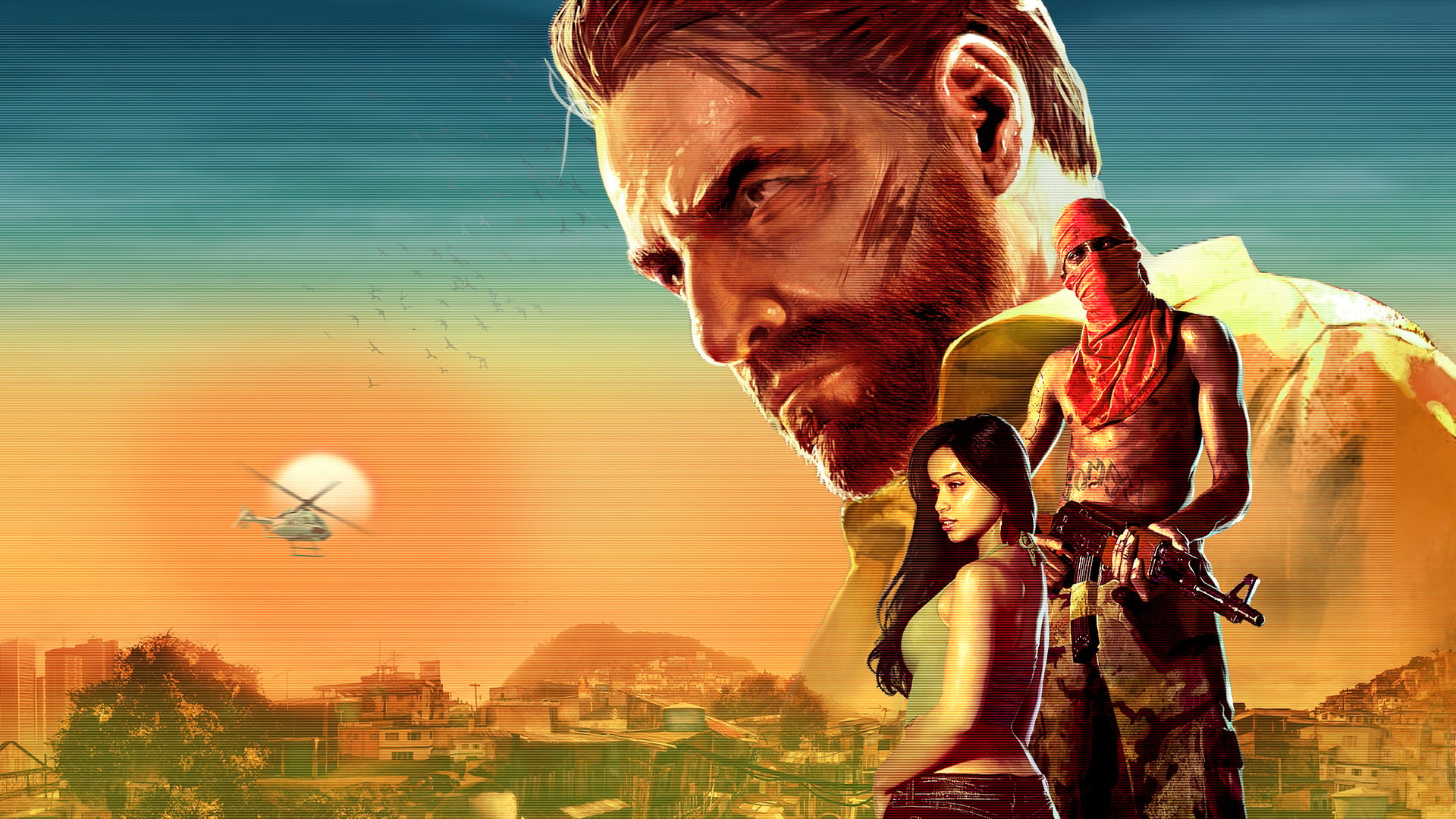
Among all the names being thrown around, Max Payne is the one with the strongest official footing. Remedy Entertainment is developing remakes of Max Payne and Max Payne 2: The Fall of Max Payne as a single project, with Rockstar Games involved through the development agreement. That makes it the cleanest example of the kind of legacy revival players are hoping to see. It also makes sense creatively. The original Max Payne games built their reputation on noir atmosphere, bullet-time gunplay, comic-book-style storytelling, and a bruised, rain-soaked mood that still has bite. Give that formula modern production values and it could feel surprisingly fresh.
What makes Max Payne especially interesting is that it is not just a technical upgrade waiting to happen. It is a series with a very specific personality. The voice, pacing, shadows, inner monologues, and dreamlike dread are all part of the appeal. A remake has to do more than polish the textures and call it a day. It has to preserve the grim poetry of the original while making the action feel sharp enough for modern expectations. That is a delicate balancing act, but Remedy is one of the few studios with the history and tone control to make it work. For many fans, Max Payne is not merely one candidate among many. It is the proof that Take-Two’s legacy plans can have real teeth.
Mafia keeps Take-Two’s legacy revival strategy moving
The Mafia series also sits comfortably inside this wider conversation, even if it should not be confused with every rumor surrounding Take-Two’s six unnamed projects. Mafia has already shown how the company can revisit older crime stories with a serious eye for atmosphere, character, and period detail. The series has always lived in a different lane from Grand Theft Auto. It is more structured, more cinematic, and more interested in the slow burn of loyalty, ambition, and consequence. That gives it a distinct flavor inside Take-Two’s catalog, like a smoky old jazz club tucked behind a louder neon street.
Mafia: The Old Country has also kept the franchise visible, proving that Take-Two and 2K still see value in this world. While that project is not simply the same thing as a traditional remake of an older entry, it reinforces the larger point: legacy franchises can be refreshed in more than one way. Sometimes that means rebuilding a familiar story. Sometimes it means expanding a series with a new chapter that captures the spirit of what came before. For players, Mafia’s continued presence is encouraging because it suggests Take-Two is not only interested in its loudest global franchises. The company also understands that mid-sized prestige names can matter when they are handled with care.
Red Dead Redemption 2 on Nintendo Switch 2 remains a tempting possibility
Red Dead Redemption 2 is one of the most tempting names in the rumor mill, especially when people talk about platform extensions. It is easy to understand why. Rockstar’s western remains one of the most technically impressive and emotionally rich open-world games ever released, and players have been asking for broader modern access for years. A Nintendo Switch 2 version would make a lot of noise, not only because of the game’s reputation, but because of the sheer novelty of carrying that world around. The thought of riding through the misty Heartlands or the snowy Grizzlies on a handheld is enough to make plenty of fans raise an eyebrow.
That said, the key word is still rumor. There has been continued chatter around Red Dead Redemption 2 and newer platforms, but Take-Two has not publicly confirmed a Nintendo Switch 2 version as part of the six projects. It could fit the “platform extension” wording, but fitting the wording is not the same as being announced. The game would also need careful technical work. Red Dead Redemption 2 is enormous, detailed, and demanding, with a world that breathes in tiny animations, dense landscapes, and complex systems. If it does come to Nintendo Switch 2, players will expect more than a rough squeeze onto different hardware. They will want the magic intact, not a cowboy hat on a compromise.
Platform extensions may matter just as much as full remakes
The phrase “platform extensions” deserves attention because it widens the field dramatically. A platform extension does not have to mean a glamorous remake with rebuilt environments and redesigned mechanics. It can mean bringing an existing game to a new platform, adding a current-generation version, releasing a long-awaited PC edition, or making a beloved title available to a wider audience. That might sound less exciting on paper, but in practice it can be huge. Access is often the difference between a classic being remembered and a classic being played.
For example, a game stuck on older hardware can become increasingly invisible to new players. Controllers change, stores close, servers vanish, and old consoles end up in cupboards with tangled cables and one missing HDMI lead. A strong platform extension can solve that. It can make a great game easy to buy, easy to run, and easy to recommend again. Take-Two’s wording leaves room for this kind of practical revival, which may be why fans should not assume all six projects are full remakes. Some may be smaller, cleaner, and still valuable. Not every classic needs a new skeleton. Sometimes it just needs the door opened and the lights turned back on.
Why Take-Two’s older catalog still has serious commercial power
Take-Two’s older catalog is valuable because it contains games that players still treat like cultural landmarks. Grand Theft Auto V continues to cast a long shadow. Red Dead Redemption 2 remains a frequent benchmark for open-world storytelling. Max Payne still carries cult prestige. Mafia has carved out its own loyal audience. Borderlands, BioShock, and Civilization each speak to very different kinds of players, which gives Take-Two a wide range of possible revival paths. That diversity matters. The company is not stuck choosing between one type of audience or one style of game.
There is also a generational advantage. A remake or remaster can serve two groups at once. Older fans get a reason to return, while newer players get a cleaner first experience without wrestling with outdated systems or unavailable platforms. That is a powerful combination when handled well. Nostalgia may open the door, but quality keeps people inside. The danger, of course, is that players can spot lazy work instantly. A weak remaster can feel like reheated leftovers. A thoughtful update feels like a familiar meal cooked properly again. Take-Two’s challenge is to make sure these six projects land closer to celebration than obligation.
What players should realistically expect from the six mystery projects
The most realistic expectation is a mixed slate. It would be surprising if all six projects were huge, ground-up remakes. It would also be surprising if none of them involved major names. The wording gives Take-Two plenty of room to combine different project sizes, from a confirmed-style remake such as Max Payne to possible ports, current-generation editions, or remasters from Rockstar, 2K, Gearbox, or other labels. That mix would make business sense. Bigger projects create headlines. Smaller platform extensions fill gaps, reach new audiences, and generate revenue without the same level of risk.
Players should also expect a slow reveal cycle. Take-Two does not need to name everything at once, especially when some projects may still be years away. Announcing too early can create pressure, and pressure can turn into frustration if timelines shift. For now, the safest reading is that Take-Two has a meaningful legacy slate in motion, with Max Payne standing as the strongest known example and other possibilities still waiting in the shadows. That may not satisfy every rumor-hungry fan, but it is enough to make the next few years interesting. Somewhere in Take-Two’s vault, six old doors are being unlocked. The fun, and the torment, is not knowing which ones creak open first.
Conclusion
Take-Two’s confirmation of six remakes, remasters, or platform extensions gives players plenty to talk about, even without a full list of names. The company owns one of the richest catalogs in modern gaming, and that makes every unannounced slot feel loaded with possibility. Max Payne is the clearest confirmed revival connected to this conversation, while Mafia shows how older worlds can remain relevant with careful handling. Red Dead Redemption 2 on Nintendo Switch 2 remains a tempting rumor rather than a confirmed project, but it fits the kind of platform-extension thinking that makes this slate so intriguing. The smartest approach is to stay excited, stay realistic, and watch for official announcements. Take-Two has the games. Now players are waiting to see which classics get called back onto the stage.
FAQs
- How many remakes and remasters does Take-Two have planned?
- Take-Two has indicated that six remakes, remasters, or platform extensions are part of its future plans. The company has not publicly named every project in that group, so the exact lineup remains unconfirmed.
- Are all six Take-Two projects full remakes?
- No. The wording includes remakes, remasters, and platform extensions. That means some projects could be full rebuilds, while others may be upgraded releases, ports, or versions for additional platforms.
- Is the Max Payne remake officially confirmed?
- Yes. Remedy Entertainment is developing remakes of Max Payne and Max Payne 2: The Fall of Max Payne as one project, with Rockstar Games involved through the development agreement.
- Is Red Dead Redemption 2 confirmed for Nintendo Switch 2?
- No official confirmation has been made for Red Dead Redemption 2 on Nintendo Switch 2. It remains a popular rumor and a logical fan guess because Take-Two’s wording includes platform extensions.
- Which Take-Two franchises could be involved?
- Possible candidates could come from Rockstar Games, 2K, Gearbox, Hangar 13, or other Take-Two labels. Fans frequently mention Max Payne, Red Dead Redemption, Grand Theft Auto, Mafia, BioShock, and Borderlands, but most names remain speculative until announced.
Sources
- Investor Relations, Take-Two Interactive Software, May 2026
- Investor Presentation – May 2026, Take-Two Interactive Software, May 2026
- Take-Two Has 6 Remakes And Remasters Planned For Next Few Years, My Nintendo News, May 24, 2026
- Take-Two Interactive Will Release 6 Remakes And Remasters In Fiscal Years 2028 And 2029, GamingBolt, May 25, 2026
- Max Payne 1 & 2 Remake, Remedy Entertainment, 2026
- Mafia: The Old Country, 2K Games, 2026
- GTA 5 And Red Dead 2 Could Be Coming To Switch 2, New Rumour Claims, GAMINGbible, May 19, 2026