














Summary:
Rayman is finally back in the spotlight, and for longtime fans, that alone feels like a tiny miracle with floating hands and a huge grin. Ubisoft recently unveiled Rayman Legends Retold during State of Play, confirming that the reimagined version of the 2013 platforming favorite is set to launch on October 1, 2026. The reveal naturally sparked a familiar question: if Ubisoft is celebrating Rayman again, why not remake the original 1995 game first? According to brand producer Loïc Gounon, that idea has been discussed internally, but remaking Rayman 1 is much harder than it may appear from the outside. The original game is beloved, colorful, strange, and still instantly recognizable, yet its pacing, design language, and difficulty belong to a very different era of platformers. Change too little, and modern players may bounce off its old-school structure. Change too much, and the result stops feeling like Rayman 1 at all. That is where Rayman Origins enters the conversation. Gounon described Rayman Origins as something close to a reboot of the first Rayman, carrying over some characters, places, and spirit while rebuilding the experience around faster, smoother, more modern platforming. That makes Rayman Legends Retold more than a simple return trip. It shows Ubisoft choosing a game that already fits modern expectations while still giving the series room to celebrate its history.
Rayman Legends Retold puts Ubisoft’s limbless hero back in the spotlight
Rayman has been away from the main stage for far too long, so the reveal of Rayman Legends Retold landed with a very specific kind of platforming joy. You know the feeling: bright colors, elastic movement, goofy creatures, music stages, and the sudden urge to rescue Teensies like it’s the most important job in the world. Ubisoft confirmed that Rayman Legends Retold is launching on October 1, 2026 for PlayStation 5, Xbox Series X|S, Nintendo Switch 2, PC, Ubisoft+, GeForce Now, Blacknut, Steam, the Epic Games Store, and Ubisoft Connect. That wide platform list matters because Rayman has always worked best as a shared discovery, whether you met him on a family TV, a handheld screen, or a PC monitor late at night.
Why Ubisoft is not rushing into a Rayman 1 remake
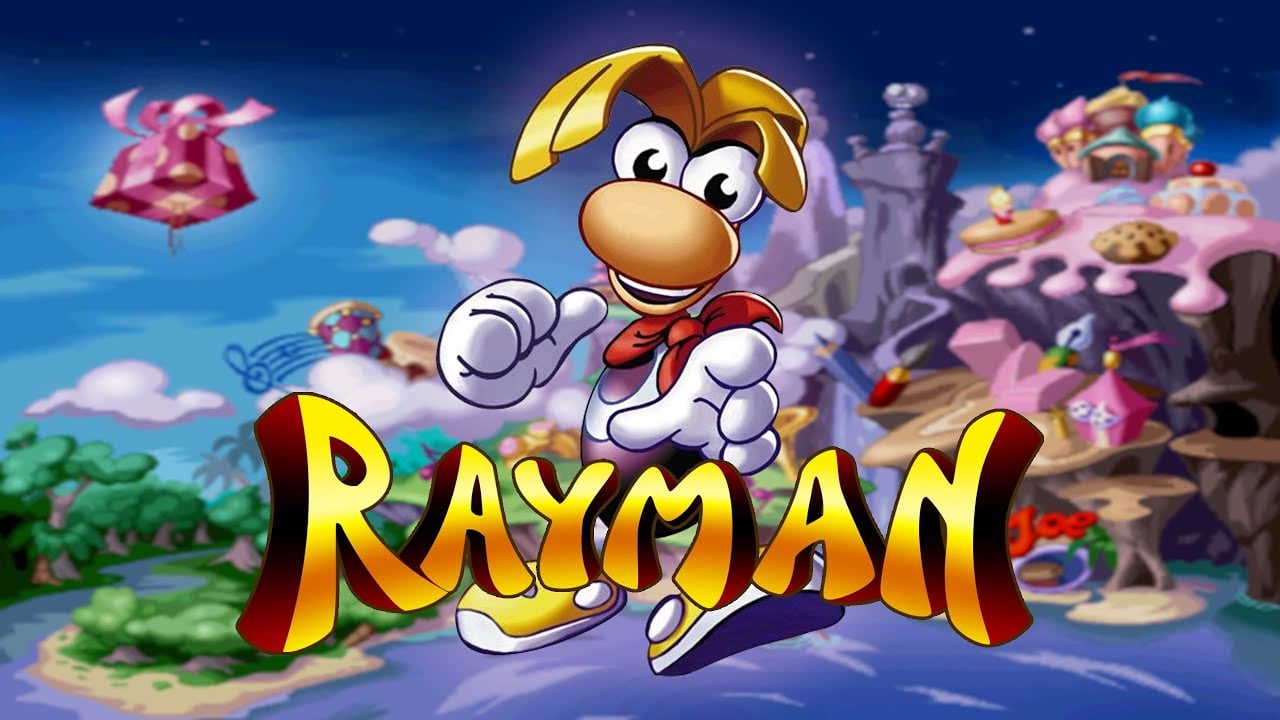
The obvious fan question is also the trickiest one: why remake Rayman Legends instead of the original Rayman from 1995? On paper, Rayman 1 sounds like the perfect anniversary candidate. It introduced the character, helped define the Glade of Dreams, and gave Ubisoft one of its most recognizable mascots. Yet Loïc Gounon has described the idea of remaking Rayman 1 as close to a mission impossible, not because the original lacks value, but because its value is tied to very specific design choices. The first Rayman is slow, demanding, and rooted in platforming rules that ask for patience in a way many modern players might find harsh. Try sanding off every rough edge, and suddenly the marble statue starts looking like something else entirely.
Rayman 1 is charming because it feels old-fashioned, but that also creates the remake problem
The original Rayman has a personality that is hard to fake. Its worlds feel handmade, surreal, and sometimes wonderfully odd, almost like a children’s storybook that got into a fight with an arcade cabinet. That charm comes with friction. Movement has a slower rhythm, hazards can be unforgiving, and level progression reflects a time when platformers expected players to repeat, memorize, and endure. Modernizing those parts sounds easy until the changes start stacking up. Faster movement changes jump timing. Smoother controls change enemy placement. More generous checkpoints change tension. Before long, the remake is no longer restoring Rayman 1 – it is replacing it with a different design philosophy wearing the same purple shirt.
Rayman Origins already carries part of the Rayman 1 spirit
Gounon pointed to Rayman Origins as the answer Ubisoft already found for many of the questions a Rayman 1 remake would raise. That makes sense when you look at what Origins actually does. It brings back the playful weirdness, the hand-drawn style, the lively world, and several familiar ingredients, but it rebuilds them around snappier movement and a clearer modern platforming flow. It is not a one-to-one recreation, and it never pretends to be. Instead, it captures the spirit of Rayman’s earliest adventure while allowing the series to move at a speed that feels natural for newer players. In other words, Origins is the remix you can dance to without needing to preserve every scratch on the original vinyl.
Rayman Origins gave Ubisoft room to modernize without being trapped by exact nostalgia
That distinction is important because exact nostalgia can be a very tight cage. Fans often say they want the same game again, only better, but the word “better” can pull in a dozen different directions at once. Better graphics? Better checkpoints? Better pacing? Better difficulty balancing? Each improvement risks changing the feel people remember. Rayman Origins avoided that trap by not presenting itself as a direct remake. It could borrow the soul of Rayman 1 without being measured against every jump, enemy, and collectible route from 1995. That freedom gave Ubisoft space to make a game that felt old and new at the same time, which is basically the platformer equivalent of finding a fresh croissant that somehow tastes like childhood.
The line between tribute and replacement is thinner than it looks
A direct Rayman 1 remake would have to walk a very narrow line. Keep the slower pace and old-school difficulty, and the project risks feeling dated to players who expect modern responsiveness. Change those fundamentals, and fans may reasonably ask why Ubisoft did not simply make a new Rayman game instead. That is the awkward middle ground many remakes face, especially when the original is defined as much by its limitations as by its strengths. Rayman’s first adventure is not just a set of characters and backgrounds. It is a specific rhythm. Once that rhythm changes, the melody may still be recognizable, but the song starts moving to a different beat.
Why changing Rayman 1 too much could break what made it special
When Gounon talked about Rayman 1 being slow and very old-school in its design, he was describing the exact tension at the heart of the remake debate. A modern remake would almost certainly need to adjust speed, level structure, feedback, and difficulty curves. Those are not cosmetic details. They are the bones of the game. Imagine rebuilding an old house and deciding the creaky staircase, tiny rooms, and unusual layout all need to go. You might end up with a more comfortable home, but would it still feel like the same place? Rayman 1 has that same problem. Its quirks are not all elegant, but they are part of its identity.
A faithful Rayman 1 remake could frustrate new players, while a modern one could frustrate older fans
This is where Ubisoft’s hesitation becomes easier to understand. New players might expect a remake to feel as fluid as Rayman Legends, with quick reactions, clear momentum, and a forgiving enough structure to keep the fun moving. Older fans might want the original’s strange pacing, unusual world design, and tough-as-nails personality protected from over-polishing. Those two wishes do not always fit together neatly. A remake that pleases one group could alienate the other. That does not mean Rayman 1 should never return in a refreshed form, but it does explain why Ubisoft might prefer to preserve it carefully rather than rebuild it into something that makes everyone argue over what Rayman is supposed to be.
Rayman Legends Retold feels like the safer celebration for modern players
Rayman Legends is a very different kind of candidate for a remake because it already plays like a modern classic. The original 2013 game is widely praised for its speed, rhythm, level variety, and co-op energy. It is not trapped in the same design gap as Rayman 1, which means Retold can focus on expanding presentation, adding narrative touches, refreshing visuals, and bringing the Glade of Dreams to current hardware without rebuilding the entire foundation. Ubisoft’s official description frames Rayman Legends Retold as a reimagining with a new threat spreading corruption through the Glade of Dreams, bringing Rayman, Globox, Barbara, Grand Minimus, and Murfy back together for another rescue mission.
Retold lets Ubisoft celebrate Rayman without turning the first game into something unfamiliar
That choice may disappoint fans who were hoping for a full Rayman 1 remake, but it has a practical logic. Rayman Legends Retold gives Ubisoft a game that can appeal to longtime fans, returning players, families, and newcomers without requiring a delicate redesign of 1995 platforming rules. It also allows the franchise to show up looking lively, polished, and immediately playable on current systems. For a series that has spent years mostly living in memory, that matters. A revival needs momentum. Rayman Legends Retold can provide that momentum without asking players to debate whether every changed jump arc has betrayed history. Sometimes the best way to honor the past is to pick the door that actually opens.
The Glade of Dreams is familiar, but Retold can still offer a fresher route through it
The appeal of Rayman Legends Retold is not only that it brings back a great game. It is that it can make the Glade of Dreams feel alive again for players who missed the original release window. The cast already has strong personality, the environments are packed with visual energy, and the musical level concept remains one of the series’ most joyful ideas. With modern hardware, Ubisoft has room to sharpen details, enrich animation, and add new narrative framing without disturbing the core platforming flow too much. That is a much easier balancing act than trying to convert Rayman 1 into something modern while preserving every fragile piece of its old charm.
The 30th anniversary approach protects Rayman’s original identity
Gounon also explained that, for Rayman’s 30th anniversary, Ubisoft felt a documentary-style approach made more sense for the original game than a remake. That is a meaningful choice. It suggests that Ubisoft sees Rayman 1 less as a blueprint to overwrite and more as a historical work worth presenting with context. That approach may not sound as flashy as a full remake reveal, but it has real value. Older games can be misunderstood when viewed only through modern expectations. Showing how Rayman was born, why it looked the way it did, and how it shaped the series can help players appreciate it without forcing it to compete directly with games built three decades later.
Preservation can be more respectful than reinvention when the original has such a distinct voice
There is a quiet strength in admitting that not every classic needs to be reshaped into a modern blockbuster. Some games deserve restoration, some deserve reinvention, and some deserve context. Rayman 1 belongs to a very specific moment in platforming history, with a visual style and design attitude that still stand out. Preserving that identity through a documentary-style anniversary package can help players understand why it mattered without pretending it was designed for 2026 tastes. That may not satisfy everyone, and fair enough. Fans want to play, not just watch history through a museum glass case. Still, when a remake risks erasing the thing people love, preservation starts to look less like caution and more like care.
What this means for the future of Rayman after Retold
Rayman Legends Retold could become an important test for Ubisoft. If players show up for it, the message is simple: Rayman still matters. That could open the door to more ambitious projects, whether that means further remakes, a new 2D adventure, or a fully new direction that pushes the franchise beyond its familiar borders. Nothing in Gounon’s comments makes a Rayman 1 remake sound likely right now, but it also does not close the book on Rayman as a series. In fact, the careful reasoning behind Retold suggests Ubisoft is thinking about what kind of return makes sense rather than grabbing the most obvious nostalgia button and slamming it like a cartoon alarm clock.
Rayman 2 and Rayman 3 may be more flexible candidates than the 1995 original
One reason the Rayman 1 remake question is so difficult is that the first game is locked to a very particular 2D platforming identity. Later entries may offer more room for reinterpretation, especially because 3D platformers have changed dramatically since Rayman 2 and Rayman 3 arrived. Those games could potentially benefit from camera improvements, control updates, visual upgrades, and pacing adjustments without facing quite the same identity crisis as Rayman 1. That does not mean Ubisoft has confirmed such projects, and it would be unwise to treat speculation as a promise. Still, if Rayman Legends Retold performs well, it would be surprising if Ubisoft did not study which parts of the series fans want revived next.
Rayman’s comeback depends on more than nostalgia alone
Nostalgia can get people to click a trailer, but it does not carry a franchise forever. For Rayman to thrive again, Ubisoft needs to remind players why these games feel different from other platformers. The series has always had a strange, springy identity: part slapstick cartoon, part dream logic, part precision platformer, part musical playground. Rayman is not just another mascot with gloves and attitude. He is a mood. Retold has the chance to reintroduce that mood to a wider audience, especially players who know Ubisoft mostly through open worlds and large-scale action series. A successful return would prove that there is still room for colorful, handcrafted weirdness on modern release calendars.
Rayman fans still have reason to be optimistic
Even if the Rayman 1 remake sounds unlikely, the bigger picture is brighter than it has been in years. Rayman Legends Retold is real, it has a release date, and Ubisoft is openly talking about why different parts of the franchise require different treatment. That kind of conversation matters because it shows that Rayman is not being handled casually. Fans may not get every dream announcement at once, but they are getting a serious return for a character who has spent too much time waiting offstage. The limbless wonder has always been good at impossible-looking jumps, so maybe the smartest thing now is to let him land this one first.
Conclusion
Ubisoft’s explanation for avoiding a Rayman 1 remake is not a dismissal of the original game. It is an acknowledgment that Rayman 1 is unusually difficult to modernize without changing its identity. Loïc Gounon’s comments make the situation clear: Rayman Origins already carried much of the first game’s spirit into a faster, smoother form, while Rayman Legends Retold gives Ubisoft a stronger foundation for bringing the series back to current platforms. That may not be the answer every fan wanted, but it is a sensible route for a franchise that needs renewed energy. Rayman’s past is being protected, his present is being rebuilt, and his future suddenly feels a lot less quiet.
FAQs
- Is Ubisoft remaking the original Rayman?
- Ubisoft has not announced a full remake of the original Rayman. Loïc Gounon has said that remaking Rayman 1 would be extremely difficult because changing its pacing, speed, and old-school design could turn it into a different game.
- When does Rayman Legends Retold release?
- Rayman Legends Retold is scheduled to release on October 1, 2026 across several platforms, including PlayStation 5, Xbox Series X|S, Nintendo Switch 2, PC, Ubisoft+, GeForce Now, Blacknut, Steam, the Epic Games Store, and Ubisoft Connect.
- Why does Ubisoft see Rayman Origins as connected to Rayman 1?
- According to Gounon, Rayman Origins works like a reboot of Rayman 1 because it carries over some of the original game’s characters, places, and spirit while rebuilding the experience around more modern platforming design.
- What is new in Rayman Legends Retold?
- Ubisoft describes Rayman Legends Retold as a reimagining of the classic platformer with a new threat in the Glade of Dreams, returning characters, couch co-op for up to four players, and updated presentation for modern platforms.
- Does this mean Rayman 1 will never return?
- Not necessarily, but a direct remake does not appear likely right now. Ubisoft seems more interested in preserving the original Rayman’s identity through anniversary material while using Rayman Legends Retold to bring the series back to current players.
Sources
- Rayman Legends Retold Launching October 1, Ubisoft News, June 2, 2026
- Rayman Legends Retold out October 1 on PS5, PlayStation Blog, June 2, 2026
- A Rayman 1 remake is basically “mission impossible” for Ubisoft, Rayman Legends Retold producer says, GamesRadar+, June 3, 2026
- Ubisoft all but rules out a Rayman 1 remake, says it’s near impossible to do, Nintendo Everything, June 4, 2026
- Ubisoft Reveals Rayman Legends Retold, Available on October 1, Games Press, June 3, 2026