














Summary:
Akatori has seemingly changed course on Nintendo hardware. After originally being announced for Nintendo Switch in 2024, the stylish 2.5D Metroidvania is now scheduled to reach Nintendo Switch 2 sometime in 2027. The latest release information names Nintendo’s newer system without mentioning the original Switch edition, suggesting that the earlier version is no longer part of the current launch plan. However, neither developer Contrast Games nor the companies publishing the game have formally described the Switch version as cancelled.
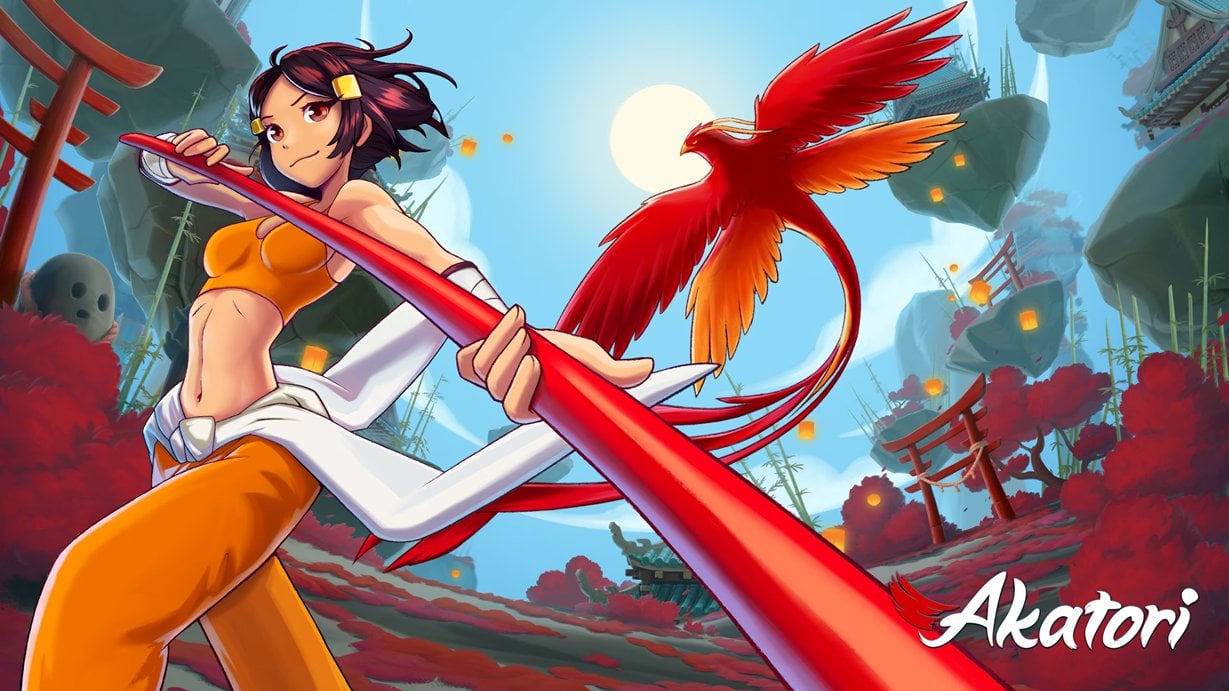
The change brings renewed attention to an adventure that combines fast staff combat, momentum-based parkour, interconnected environments, and a richly illustrated fantasy setting. Players follow Mako, a young monk raised in the Firebird Temple, as she travels between realms threatened by the Amber Storms. These destructive forces poison and distort living things, leaving Mako to confront dangerous creatures, uncover ancient truths, and learn more about the mysterious red bird sealed within her staff.
That staff forms the heart of almost everything players do. It works as a close-range weapon, a projectile, a traversal device, and a tool for reaching hidden locations. Mako can glide, slide, hook onto walls, perform aerial attacks, and maintain her momentum through vertically designed areas. Combined with reactive enemy ecosystems, unconventional bosses, 2.5D presentation, and location-specific music, Akatori is shaping up to be an expressive Metroidvania built around freedom of movement. Nintendo Switch 2 players will have to wait until 2027, but the latest trailer offers a clearer picture of the journey ahead.
Akatori Shifts Its Nintendo Plans Toward Switch 2
Akatori is now planned for Nintendo Switch 2, marking a notable change from the game’s original platform announcement. When the project was introduced for Nintendo hardware in 2024, Nintendo Switch was named as one of its intended destinations. The latest release schedule instead lists Nintendo Switch 2 for 2027, while the older console is absent. That omission is difficult to overlook, especially when the new information provides individual launch plans for several other platforms. It suggests that development priorities have moved toward Nintendo’s newer hardware, even though the original edition has not been formally declared cancelled. For players who have followed Akatori since its earlier reveal, the situation may feel bittersweet. A version for newer hardware could deliver a stronger experience, but owners of the original Switch may no longer receive the adventure they were initially promised.

What Happened to the Original Nintendo Switch Version?
The fate of Akatori on the original Nintendo Switch has not been explained in direct terms. Contrast Games has not publicly issued a statement saying that the version has been cancelled, and the absence of such confirmation matters. Plans can change quietly during development, particularly when a project has been in production across a major hardware transition. Still, the latest platform list only identifies Nintendo Switch 2, making it reasonable to view the newer edition as the current Nintendo release. Until the developer offers a clearer explanation, the safest conclusion is that the original Switch version is no longer being actively promoted. That distinction avoids turning a strong possibility into a confirmed fact. It also leaves a small amount of room for another announcement, although players should currently base their expectations on the confirmed 2027 Switch 2 plans rather than the older 2024 reveal.
Akatori Has a 2027 Release Window on Nintendo Switch 2
Nintendo Switch 2 players can expect Akatori sometime in 2027, although a specific day or month has not been announced. The game is scheduled to arrive earlier on other platforms, with the PC version launching on August 5, 2026, followed by PlayStation and Xbox editions on August 12, 2026. The longer wait for Switch 2 suggests that the Nintendo edition requires additional development time, optimization, or scheduling work. None of those possible reasons has been officially confirmed, so the exact cause of the gap remains unknown. What is clear is that the Switch 2 edition has its own separate release window. That gives Contrast Games more time to shape the experience around the system rather than rushing it alongside every other version. A later launch is rarely the news eager players want, but a carefully prepared port is preferable to one that arrives wobbling like a monk crossing a rope bridge in a thunderstorm.
Mako Faces the Corrupting Power of the Amber Storms
At the centre of Akatori is Mako, a young monk raised within the Firebird Temple. Her journey begins as the Amber Storms spread across different realms, corrupting living creatures and reshaping the natural order. Rather than staying within the safety of her home, Mako travels through interconnected worlds in search of answers and a way to stop the destruction. Her task is not simply to defeat a single villain waiting at the end of a predictable road. She must understand a threat that has seeped into wildlife, landscapes, societies, and perhaps the foundations of the worlds themselves. A mysterious red bird accompanies her, sealed within the staff she carries. Its identity and motives remain uncertain, giving the journey a personal mystery alongside its wider conflict. As Mako confronts danger, she also faces questions about growth, resilience, responsibility, and who she wants to become.
One Mystical Staff Connects Every Part of the Adventure
Mako’s staff is more than a weapon placed in her hands for combat. It acts as the mechanical thread stitching the entire experience together. Players use it to strike enemies, launch ranged attacks, cross gaps, interact with the environment, and reach places that initially appear inaccessible. This approach gives Akatori a strong sense of unity because combat and traversal do not feel like isolated systems competing for attention. The same tool that saves Mako during a difficult battle may help her swing toward a hidden ledge moments later. It also carries narrative significance because the red bird sealed inside it is directly tied to the mystery surrounding her quest. Instead of collecting an overflowing toolbox of unrelated gadgets, players learn how to use one flexible object in increasingly creative ways. The staff grows familiar, but its possibilities continue to expand as Mako’s abilities and the surrounding challenges become more demanding.
Fluid Combat Rewards Movement and Precise Timing
Akatori’s battles are designed around constant motion rather than standing still and trading blows. Mako can combine grounded attacks with aerial strikes, throw her staff as a projectile, and recall it while continuing to move through an encounter. This creates opportunities to attack enemies from multiple directions and maintain pressure without becoming rooted to one spot. Positioning appears just as important as raw aggression. A well-timed leap can avoid an incoming attack, set up an aerial combination, and place Mako behind another enemy before her feet touch the ground. The system seems built to reward players who understand rhythm, spacing, and momentum. Button mashing may get someone through an early scuffle, but tougher opponents are likely to demand sharper reactions. When movement and combat operate in harmony, every battle can feel like a choreographed martial arts sequence rather than a queue of enemies waiting politely for their turn.
Kung Fu Parkour Turns Exploration Into an Art Form
Movement in Akatori is expressive, fast, and closely tied to the martial arts identity of its heroine. Mako can glide through the air, slide across surfaces, hook onto walls, and navigate layered environments built around vertical routes. These actions are not merely methods for travelling from one objective marker to another. They form a flowing parkour system that encourages experimentation and mastery. A room may initially look like a collection of platforms and walls, but experienced players may read it as a chain of possible movements. One jump leads into a hook, the hook creates enough height for a glide, and the glide carries Mako toward a narrow landing or concealed passage. That sense of momentum can make simple traversal satisfying even when no enemies are present. The best movement systems turn getting around into its own reward, and Akatori appears determined to make every leap, slide, and swing feel purposeful.
The Staff Also Unlocks Paths and Hidden Secrets
Because Mako’s staff doubles as a traversal device, it naturally supports the exploration loops associated with Metroidvania design. Areas that seem unreachable during an early visit may become accessible once the player understands a new technique or gains an additional ability. The difference is that progress does not always need to come from finding an entirely separate item. It can emerge from learning another way to manipulate the staff, combine movements, or interact with the environment. This gives exploration a sense of personal improvement. The world has not magically moved its walls for Mako, but she has become skilled enough to pass them. Hidden paths, optional challenges, and environmental puzzles can all benefit from that structure. Curious players who examine unusual ledges or suspicious gaps may discover rewards that less observant travellers miss. After all, a mysterious wall in a Metroidvania is practically waving a tiny flag and begging to be investigated.
Akatori Builds Its Worlds Around Distinct Mythical Biomes
Mako’s journey crosses multiple realms shaped by different cultures, eras, and mythological influences. The environments shown so far range from medieval Asian landscapes to floating bamboo islands and strange dimensions that appear to operate under their own rules. This variety gives the adventure room to change its mood, movement challenges, enemies, and visual language as players progress. One area may focus on natural beauty and open vertical space, while another may feel enclosed, corrupted, or mechanically hostile. These transitions are important in a long exploration-focused game because new surroundings can restore a sense of discovery before familiarity settles in. The biomes are also connected to the spread of the Amber Storms, meaning visual changes can communicate how severely each place has been affected. Rather than serving as decorative backdrops, the realms appear designed to tell stories about their inhabitants, histories, and relationship with the corruption consuming them.
Living Enemies Make Encounters Less Predictable
Enemy behaviour in Akatori extends beyond creatures focusing all their attention on Mako. Different beings can interact with one another, activate traps, and react to hazards within the surrounding environment. That turns each location into a small ecosystem rather than a static arrangement of targets. Players may enter an area and watch enemies clash before deciding whether to intervene, slip past the chaos, or use it to their advantage. A trap triggered at the right moment could damage several opponents, while an environmental hazard might change the safest route through a battle. These possibilities reward observation. Charging forward without looking may still work occasionally, but a patient player can identify relationships and exploit them. Dynamic encounters also make repeated visits more interesting because the same group of creatures may not behave identically every time. When the world appears to function without waiting for Mako, it feels more believable and considerably less like a stage set populated by angry furniture.
Boss Battles Promise More Than Traditional Combat Arenas
Akatori’s major encounters are not limited to locking Mako inside a room with an oversized enemy and an enormous health bar. The developers have described unconventional challenges that include underwater escapes, rhythm-based sequences, and battles with multiple phases. This broader approach allows bosses to test abilities beyond direct combat. One encounter might demand accurate timing and pattern recognition, while another could combine movement, survival, and environmental awareness. Multi-stage battles can also tell a story through changing conditions, locations, or enemy behaviour. A creature that begins as a straightforward physical threat may transform as the Amber Storms tighten their grip, forcing the player to rethink a strategy that worked only moments earlier. Variety will be essential, since unusual mechanics can become frustrating when their rules are unclear. When handled well, however, these confrontations can become memorable milestones that reflect everything players have learned about Mako’s movement, staff techniques, and ability to remain calm under pressure.
Pixel Characters and 3D Environments Create a Distinct Look
Akatori uses a 2.5D presentation that places detailed pixel-art characters inside stylized three-dimensional environments. The combination gives Mako and the creatures around her the charm and clarity of traditional sprite work while allowing stages to convey depth, scale, and layered architecture. It is an appealing match for a game built around vertical movement. Platforms can stretch into the distance, structures can tower above the playable route, and environmental effects can surround the action without sacrificing the readable silhouettes needed during fast combat. The contrast between crisp character animation and dimensional scenery also helps Akatori stand apart from Metroidvanias that commit entirely to either flat pixel art or polygonal models. Visual style alone cannot carry an adventure, but it can make every new location feel worth seeing. Here, the presentation supports the movement system, mythology, and shifting tone of the worlds rather than existing as a decorative coat of paint.
Music Gives Every Realm and Major Encounter Its Own Identity
Akatori’s soundtrack is designed to give individual locations and bosses their own musical themes. That distinction can make each realm feel emotionally separate, even before players consciously notice differences in architecture or enemy design. A quiet temple may use restrained melodies that encourage reflection, while a corrupted region might introduce harsher sounds and uneasy rhythms. Boss themes can signal danger, transformation, or urgency as an encounter moves between phases. Music is especially valuable in exploration-driven adventures because players may spend long periods revisiting familiar paths. A memorable theme can turn those journeys into comforting returns rather than repetitive errands. It can also guide emotion without interrupting play with constant dialogue. When the soundtrack responds naturally to what is happening on screen, it becomes another layer of environmental storytelling. You may enter a beautiful location expecting peace, only for the music to whisper that something unpleasant is waiting just beyond the next bamboo grove.
Akatori Aims to Respect the Foundations of the Metroidvania Genre
Contrast Games describes Akatori as a Metroidvania made with respect for the genre’s legacy. That means players can expect interconnected environments, ability-based progression, rewarding backtracking, secrets, and routes that gradually open as Mako becomes more capable. Respecting those foundations does not mean copying familiar games without adding a personality of its own. Akatori’s staff mechanics, parkour, reactive creatures, mythology, and mixture of pixel characters with 3D scenery are intended to give it a distinct identity. Consistency will be particularly important. New abilities need to remain useful after their introductory areas, hidden paths should reward curiosity, and revisiting old locations should reveal meaningful discoveries rather than busywork. The genre works best when the world feels like a puzzle slowly unfolding in the player’s mind. Each shortcut, locked passage, and distant platform becomes part of a mental map that grows clearer with every successful expedition.
What the Move to Nintendo Switch 2 Could Mean for Players
Moving Akatori from the original Switch to Switch 2 could give the developers more technical flexibility, although no platform-specific improvements have been detailed. The newer hardware may offer additional room for stable performance, sharper presentation, richer effects, and more complex environments, but those possibilities should not be treated as confirmed features. For now, the main benefit is that the project has a current Nintendo destination and a defined 2027 release window. The downside is equally clear: people who planned to play on the original Switch may need access to newer hardware. That can be disappointing after the earlier announcement. Still, focusing on one Nintendo system could allow the team to avoid compromises required by supporting two generations simultaneously. The final result will determine whether the change was worthwhile. Until more details arrive, players can examine the latest trailer, follow the other platform releases, and watch how Akatori develops on its path toward Switch 2.
Conclusion
Akatori is no longer being promoted for the original Nintendo Switch and is currently scheduled to reach Nintendo Switch 2 in 2027. Although the older version has not been formally labelled as cancelled, its disappearance from the latest platform information strongly indicates that plans have shifted. The move places Mako’s adventure on newer Nintendo hardware, where its fast traversal, staff-based combat, layered environments, and 2.5D presentation may find a fitting home. At its heart, Akatori remains an exploration-driven journey about a young monk confronting the Amber Storms while uncovering the truth about a mysterious bird and the worlds around her. Its mixture of kung fu parkour, reactive enemies, unconventional bosses, and myth-inspired locations gives it plenty of personality. The wait for the Switch 2 edition will extend into 2027, but players now have a clearer idea of where the Nintendo version is heading and what kind of adventure awaits.
FAQs
- Is Akatori coming to Nintendo Switch 2?
- Yes. Akatori is currently scheduled to launch for Nintendo Switch 2 sometime in 2027. A specific release date has not yet been announced.
- Has the original Nintendo Switch version of Akatori been cancelled?
- The original Switch version is no longer included in the latest platform information, but the developer has not formally described it as cancelled. Nintendo Switch 2 is currently the only announced Nintendo edition.
- Who is the main character in Akatori?
- Players control Mako, a young monk raised at the Firebird Temple. She travels between different realms to stop the Amber Storms from corrupting all living things.
- How does Mako’s staff work in Akatori?
- The staff functions as a melee weapon, projectile, traversal device, and exploration tool. Mako can use it during combos, throw and recall it, hook onto surfaces, and reach hidden paths.
- What type of game is Akatori?
- Akatori is a 2.5D action Metroidvania featuring interconnected worlds, ability-based exploration, fluid parkour, staff-focused combat, environmental hazards, secrets, and varied boss encounters.
Sources
- Akatori launches August 5 for PC, August 12 for PS5, Xbox Series, PS4, and Xbox One, and in 2027 for Switch 2, Gematsu, July 23, 2026
- Akatori now coming to Nintendo Switch 2 instead of Switch 1, new trailer, Nintendo Everything, July 23, 2026
- Akatori on Steam, Steam, August 5, 2026
- Metroidvania game Akatori coming to Switch, Nintendo Everything, March 6, 2024
- Akatori, Gematsu, July 23, 2026