




Summary:
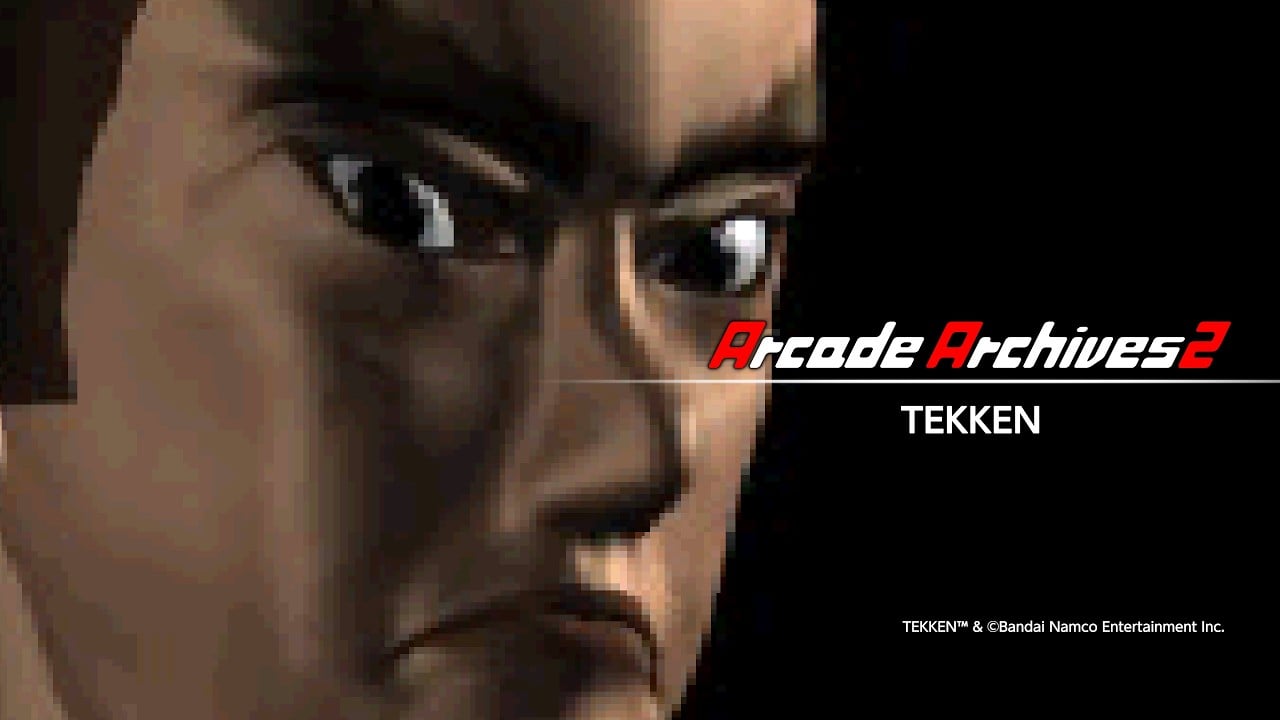
Hamster Corporation has released Arcade Archives 2 Tekken for Nintendo Switch 2, PlayStation 5, and Xbox Series X|S, giving players a convenient way to experience the original arcade version of Namco’s influential 3D fighting game. The digital release arrived on June 25, 2026, and is priced at $16.99 across the supported platforms. Rather than revisiting one of the later sequels, this release takes us all the way back to 1994, when Tekken first invited arcade players to enter the King of Iron Fist Tournament.
The first Tekken helped distinguish itself through a four-button control system in which each button corresponds to one of a fighter’s limbs. That design gave punches and kicks a direct, physical quality while opening the door to combinations that felt remarkably different from the input systems used by many competing fighting games. Beneath the blocky polygons and unmistakably 1990s presentation sits the foundation of a series that would grow into one of the most recognisable names in the genre.
Arcade Archives 2 preserves that original experience while surrounding it with modern conveniences. Players can adjust button layouts and display settings, as well as save and load their progress when needed. These additions make the release easier to approach without sanding away its arcade identity. Whether you remember feeding coins into a Tekken cabinet or only know characters such as Kazuya Mishima, Paul Phoenix, and King from later games, this is an opportunity to see where their long-running rivalries began.
Arcade Archives 2 Tekken brings the original fighter to modern consoles
Tekken has returned to its arcade roots through Hamster Corporation’s Arcade Archives 2 line. The release became available digitally on June 25, 2026, for Nintendo Switch 2, PlayStation 5, and Xbox Series X|S. It costs $16.99, placing it above many smaller retro rereleases while reflecting the significance and technical complexity of preserving an early polygonal arcade game. This is the original Tekken rather than the PlayStation adaptation or an enhanced remaster, so players are getting a recreation of the version that first appeared in arcades during 1994. That distinction matters. Home and arcade editions from this period often differed in presentation, performance, modes, and technical details. By focusing on the arcade release, Hamster is preserving the game as players originally encountered it in amusement centres, complete with its brisk matches, angular fighters, and wonderfully dramatic approach to martial arts.

The 1994 arcade game that started a fighting dynasty
Long before Tekken became known for cinematic feuds, outrageous hairstyles, exploding volcanoes, and a family tree that looks like it needs professional mediation, it began as a bold 3D arcade fighter from Namco. Released in 1994, the game arrived during an important period for the genre. Two-dimensional fighters were already firmly established, but developers were beginning to explore how polygonal graphics and three-dimensional movement could change the experience. Tekken did not merely replace sprites with polygons. It experimented with animation, physical impact, camera movement, and a control layout designed around the fighter’s body. The result could look stiff beside a modern instalment, yet its ideas were striking for the time. You can see Namco testing concepts that would later become central to the series, from elaborate attack strings to fighters whose personalities are communicated through their posture, clothing, and combat techniques.
A tournament driven by ambition, rivalry, and hidden motives
The original setup is simple but effective. Fighters from different parts of the world enter the Tekken Tournament, each carrying private motives and personal ambitions. Some seek power, some want revenge, and others have goals that are less obvious when the competition begins. At the centre of the story is the bitter Mishima conflict, which would eventually grow into one of gaming’s most chaotic family sagas. Even in this early release, Tekken treats its tournament as more than a neutral sporting event. Every match feels connected to a larger struggle over strength and control. The arcade format does not pause for lengthy cinematic explanations, so much of the personality comes through visual design, fighting style, and brief narrative rewards. That restraint gives the game a mysterious quality. Players are encouraged to choose a competitor, master their techniques, and discover what awaits them at the end of the tournament.
Four buttons give players direct control over every limb
Tekken’s defining mechanical idea is its four-button control layout. Each button corresponds to one limb, giving players separate commands for the left arm, right arm, left leg, and right leg. It sounds almost like controlling a puppet, but the system becomes intuitive once the rhythm clicks. Pressing individual buttons produces straightforward attacks, while carefully ordered combinations create strings, throws, and more elaborate techniques. This design helps players understand why a move behaves as it does. Instead of memorising every command as an abstract sequence, you can often picture the fighter carrying out the physical action. A left punch naturally leads into a right punch, while alternating kick inputs creates a different sequence. The system also supports experimentation. Even newcomers can press combinations and discover something impressive, although experienced players will quickly demonstrate that enthusiastic button tapping and deliberate execution are very different creatures.
Tekken established a different rhythm for 3D fighting games
The original Tekken feels noticeably different from many traditional two-dimensional fighters of its era. Its attacks have a weighty, deliberate rhythm, and its combination strings reward players who understand timing rather than relying only on rapid inputs. The polygonal presentation also allows characters to twist, lean, stumble, and strike in ways that were difficult to reproduce with fixed sprite animations. Movement may appear limited compared with later Tekken games, but the visual depth still changes how players read distance and impact. A powerful kick does not simply connect with a flat sprite. The camera, animation, and character models work together to sell the collision. This gives successful attacks a satisfying crunch, even when the fighters resemble sharply folded pieces of colourful cardboard by modern standards. Those early polygons have aged, naturally, but they also carry enormous charm. They represent a moment when arcade developers were learning an entirely new visual language.
The original roster introduced several enduring Tekken characters
Part of the pleasure of returning to the first Tekken comes from meeting familiar characters in their earliest forms. Kazuya Mishima stands at the heart of the conflict, already carrying the cold determination that would define his later appearances. Paul Phoenix arrives with his towering hair and uncompromising confidence, while King combines professional wrestling spectacle with the unforgettable image of a jaguar mask. Nina Williams brings speed, precision, and an icy personality, and Marshall Law displays a fast martial arts style that immediately communicates his cinematic inspiration. Other fighters add their own silhouettes, techniques, and national backgrounds to the tournament. Their original character models are far simpler than the detailed designs seen today, but their identities are already surprisingly clear. This roster provided the raw material for decades of sequels, rivalries, redesigns, and increasingly dramatic endings. Seeing everyone at the beginning feels like opening an old photo album, except this album occasionally launches you into the air with a spinning kick.
Early character designs reveal the foundations of later personalities
Modern Tekken characters communicate through detailed facial animation, elaborate costumes, spoken dialogue, and lengthy cinematic sequences. The original arcade game had far fewer tools at its disposal, so each fighter needed to make an immediate impression through basic visual cues. King’s mask tells you that spectacle is part of his identity before he throws a single punch. Paul’s hairstyle announces his personality from approximately three postcodes away. Yoshimitsu’s unusual armour and weapon create an instant sense of mystery, while Nina’s controlled stance reflects her disciplined approach. These designs had to remain readable on arcade displays and during fast matches, which encouraged bold shapes and clear colours. That visual economy is one reason many members of the original roster remained memorable. Their appearances evolved dramatically over the years, yet the central ideas survived because Namco established strong foundations from the beginning.
Arcade Archives 2 adds practical features without replacing the original experience
Retro rereleases work best when they preserve the personality of the original game while removing unnecessary obstacles created by old hardware. Arcade Archives 2 Tekken follows that philosophy by reproducing the arcade release and adding options designed for modern systems. Players can customise the button layout, which is especially useful in a fighter built around four distinct limb commands. Screen settings can also be adjusted, allowing the presentation to better suit different displays and personal preferences. Save and load functionality offers another welcome convenience. Arcade games were designed to keep matches moving and encourage repeated attempts, but modern players may not always have the time to complete a session in one sitting. Saving progress makes the experience more flexible without altering the mechanics of each fight. These tools act like a new frame around an old painting. The frame is cleaner and easier to hang, but the work inside remains recognisably the same.
Customisable controls make the four-limb system easier to learn
Control customisation is more than a pleasant bonus in this particular release. Tekken’s four-limb system depends on players building a clear connection between each button and the corresponding attack. A layout that feels awkward can make combinations unnecessarily confusing, especially for anyone accustomed to a different controller or a newer instalment in the series. Remapping the controls lets you arrange punches and kicks in a way that feels natural. This can help returning players recreate a familiar setup while giving newcomers room to experiment. The feature is also valuable across three different console families, since their controllers use different button labels and physical arrangements. Once the layout feels comfortable, the logic behind Tekken’s combat becomes much easier to appreciate. You stop thinking about the symbols printed on the controller and begin thinking in terms of limbs, attack height, sequence, and timing.
Display options help preserve the feel of an arcade cabinet
Games created for 1990s arcade displays can look unusual when stretched across a large modern television. Sharp digital panels expose every edge, shimmer, and low-resolution texture that older screens naturally softened. Adjustable display settings allow players to choose how they want the game presented rather than forcing a single interpretation. Some will prefer a clean image that highlights the angular polygon models, while others may want settings that more closely resemble the softer appearance of an arcade monitor. Neither approach is inherently correct. Preservation involves keeping the original software intact, but presentation preferences remain personal. The important point is that players have options. Tekken can look proudly raw and digital, or it can be adjusted to evoke the glow of an arcade cabinet humming in the corner of a crowded room.
Save and load functions make arcade progression more approachable
The ability to save and load at any point changes how comfortably an arcade game fits into everyday life. Tekken was originally built for short, intense sessions in which losing meant spending another coin or returning to the beginning. That structure remains part of its character, and purists can still play under those conditions. Save functionality simply provides another choice. You can pause a tournament run, preserve a difficult matchup, or practise without worrying about losing progress when something outside the game demands attention. It is a small feature with a large practical effect, particularly on a portable platform. Nobody wants to abandon a promising run because a train has reached its stop or a battery warning has appeared at the worst possible moment. Arcade discipline is admirable, but occasionally real life wins by technical knockout.
Nintendo Switch 2 gives Tekken a new portable home
The Nintendo Switch 2 version gives the original Tekken something it could not offer in 1994: an official portable way to play the arcade release. That flexibility suits a game built around quick matches. Players can work through the tournament on a television, continue in handheld mode, or practise individual combinations during a short break. Tekken has appeared on portable systems before, but this release is specifically valuable because it preserves the original arcade game rather than adapting a later entry. It creates an interesting contrast between eras. A title once tied to a large cabinet and specialised arcade hardware can now be carried in a bag and launched almost anywhere. The technology has changed beyond recognition, yet the central challenge remains familiar: choose a fighter, learn the timing, and try not to walk directly into the same powerful kick three rounds in a row.
PlayStation 5 and Xbox Series players can also enter the tournament
Arcade Archives 2 Tekken is not exclusive to Nintendo’s latest system. It is also available on PlayStation 5 and Xbox Series X|S, giving the rerelease a broad audience across current consoles. The PlayStation version carries an additional historical connection because Tekken became closely associated with the original PlayStation after its arcade debut. Many players first discovered the series through that home conversion, making its return on modern PlayStation hardware feel fitting. Xbox players can likewise experience an important early chapter in a franchise that later built a strong presence across multiple platforms. Releasing the game simultaneously on all three console families supports the central purpose of preservation. An arcade classic is far more useful when people can readily access it, rather than merely hearing about it through old magazines, grainy recordings, or stories from someone who insists they once completed the entire game with a single coin.
The $16.99 price reflects an important piece of arcade history
Arcade Archives 2 Tekken is priced at $16.99 as a digital release. Some players may consider that expensive beside simpler retro titles, especially when modern sales frequently offer newer games at similar prices. However, this release preserves a historically important polygonal arcade fighter across several modern hardware platforms while adding interface, display, control, and save features. Early 3D arcade games can present difficult technical challenges because their original hardware, graphics systems, and timing behaviour are not always easy to recreate accurately. The value will therefore depend on what you want from the package. Anyone seeking a large collection of Tekken games will not find one here. This release centres on a single arcade title. For players interested in fighting-game history, Namco’s early 3D work, or the origins of the Tekken series, that focused approach may be precisely the attraction.
Why the first Tekken remains worth playing
The first Tekken is not the smoothest, fastest, or most feature-rich entry in the series. Later sequels expanded almost every idea, adding richer movement, larger rosters, more advanced systems, and increasingly polished presentation. Yet the original remains worth playing because it shows the moment those ideas began taking shape. Its four-button control layout still makes immediate sense. Its characters possess clear identities despite their simple models. Its hits carry an exaggerated arcade impact that remains satisfying, and its rough edges reveal how much experimentation was happening behind the scenes. Historical games do not need to outperform their descendants to remain valuable. A first sketch can be fascinating precisely because the final painting is so familiar. Arcade Archives 2 Tekken lets us examine that sketch directly, controller in hand, without pretending that age has erased either its limitations or its achievements.
Conclusion
Arcade Archives 2 Tekken returns Namco’s original 1994 fighter to active circulation on Nintendo Switch 2, PlayStation 5, and Xbox Series X|S. Its $16.99 digital release preserves the arcade version while adding useful options for controls, screen presentation, saving, and loading. More importantly, it provides an accessible look at the foundations of a fighting series that would continue evolving for decades. The graphics are angular, the movement is unmistakably old-school, and the tournament can be wonderfully unforgiving. None of that diminishes its appeal. Those qualities are part of the history being preserved. Whether you remember the original cabinet or have only played the latest instalments, entering this early Tekken Tournament offers a revealing look at how one of gaming’s most famous fighting dynasties first found its footing.
FAQs
- When was Arcade Archives 2 Tekken released?
- Arcade Archives 2 Tekken was released digitally on June 25, 2026.
- Which platforms support Arcade Archives 2 Tekken?
- The game is available for Nintendo Switch 2, PlayStation 5, and Xbox Series X|S.
- How much does Arcade Archives 2 Tekken cost?
- The listed digital price is $16.99 across the supported platforms.
- Is this the arcade or PlayStation version of Tekken?
- This is a reproduction of the original arcade version released by Namco in 1994, not the later PlayStation conversion.
- What modern features are included?
- The release includes customisable button layouts, adjustable screen settings, and the ability to save and load at any point.
Sources
- Arcade Archives 2 TEKKEN, Hamster Corporation, June 24, 2026
- Arcade Archives 2 Tekken Launches June 25, Gematsu, June 24, 2026
- Tekken Coming to Nintendo Switch 2 via Arcade Archives 2, Nintendo Everything, June 24, 2026
- The Original Arcade Version of Tekken Is Getting a Console Release This Week, Video Games Chronicle, June 24, 2026
- Namco’s Legendary Arcade Fighting Game Tekken Is Coming to Arcade Archives 2, Time Extension, June 25, 2026