














Summary:
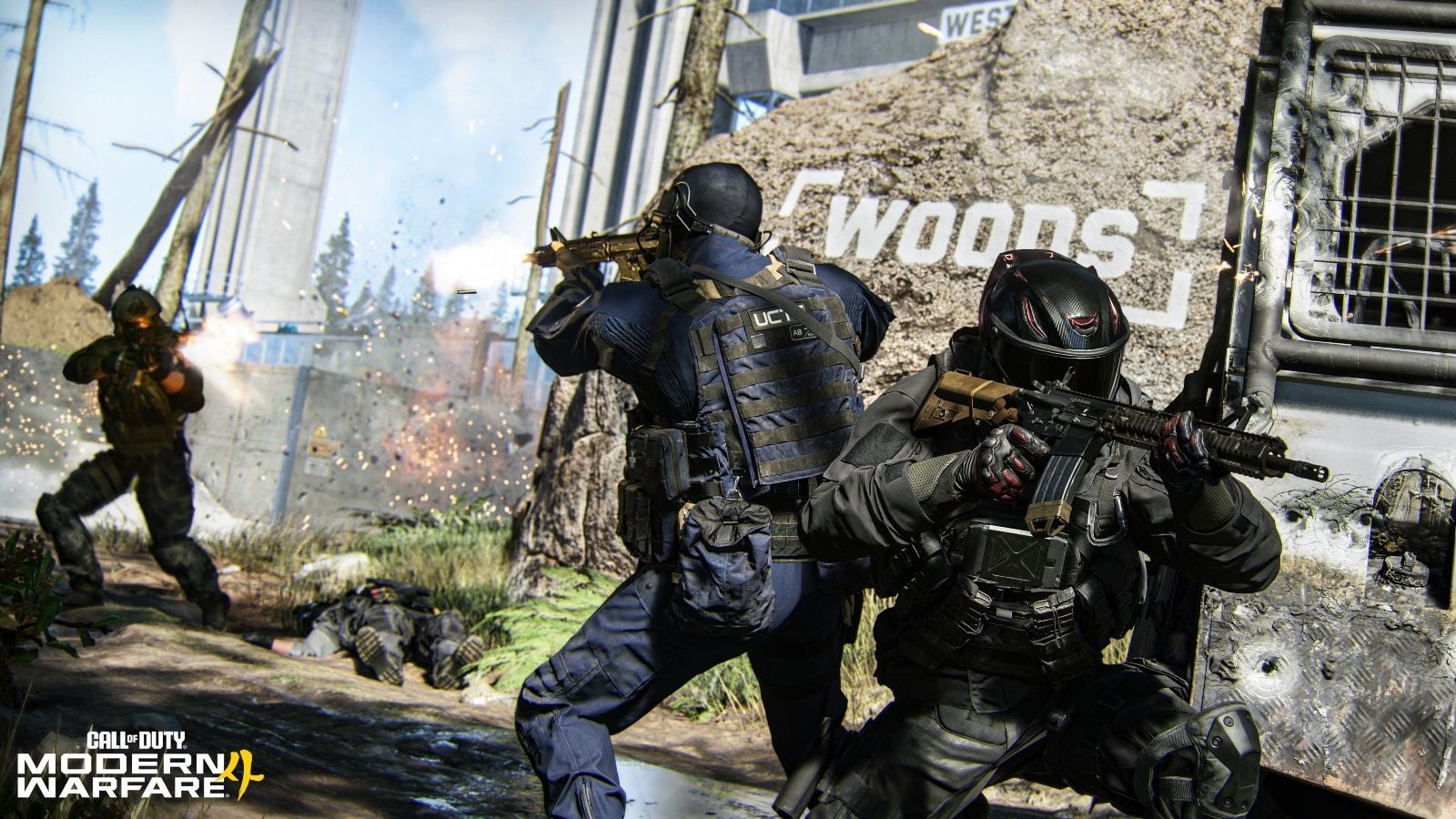
Activision and Infinity Ward have revealed Kill Block, a distinctive multiplayer experience coming to Call of Duty: Modern Warfare 4. Rather than placing players inside another fixed arena with routes that can be memorised after a few rounds, Kill Block uses enormous movable structures to physically alter the battlefield between matches. The action unfolds inside the West Bridge Advanced Military Training Facility, an adaptive live-fire environment designed around three modular structures known as Slabs.
Motors and rail-mounted tracks move these steel Slabs into different arrangements, producing hundreds of possible combinations. That means walls, firing lanes, cover positions and routes can shift before another match begins. Players may recognise individual sections, but the way those sections connect could be completely different. It sounds like the multiplayer equivalent of somebody shaking the board before every round, although thankfully without scattering your equipment across the floor.
Kill Block will support expanded Gunfight experiences when Modern Warfare 4 launches on October 23, 2026. Activision has confirmed traditional 3v3 competition alongside Gunfight 10v10, a much larger interpretation of the normally compact mode. Additional core multiplayer modes are planned for Kill Block after launch.
Players attending Fanatics Fest at the Javits Center in New York City between July 16 and July 19 can try the experience before release. Modern Warfare 4 is scheduled to arrive on Nintendo Switch 2 alongside its versions for PlayStation 5, Xbox Series X|S and PC, bringing the Call of Duty series back to Nintendo hardware with one of its most unusual multiplayer environments yet.
Modern Warfare 4 Introduces the Shape-Shifting Kill Block
Call of Duty multiplayer maps usually become more predictable as players spend time learning them. You discover the quickest route to an objective, identify the corner where somebody always seems to be waiting and eventually learn which doorway is essentially an invitation to get eliminated. Kill Block aims to disrupt that familiar process by changing the physical structure of its battlefield between matches. Activision and Infinity Ward describe it as an adaptive multiplayer environment, but the important detail is simple: the arena does not always stay in the same shape. Players can develop knowledge of its individual components, yet they may still need to reconsider how those pieces work together each time they enter. That approach gives Kill Block a clear identity within Modern Warfare 4. Instead of relying only on different weather, altered decorations or opening doors, the map rearranges major parts of its architecture to create new routes and combat situations.

Kill Block Turns a Training Facility Into a Changing Battlefield
Kill Block is set inside the West Bridge Advanced Military Training Facility, an experimental live-fire complex seemingly built to prepare soldiers for unpredictable combat scenarios. That setting neatly explains why the environment can be rearranged so dramatically. A normal military base probably would not move several enormous steel buildings around every afternoon, unless its facilities manager had developed a particularly unusual hobby. A specialised training centre, however, can plausibly use modular structures to simulate different environments and force participants to adapt quickly. For players, the location provides more than a narrative backdrop. Its industrial machinery, heavy materials and functional design are tied directly to the way the battlefield operates. The result is an arena where the setting and multiplayer mechanics support one another rather than feeling like two separate ideas. Every shifting wall and altered lane reinforces the sense that Kill Block was constructed to test how combatants react when familiar surroundings suddenly become unreliable.
Three Modular Slabs Create Hundreds of Potential Layouts
The central feature of Kill Block is a group of three enormous modular structures called Slabs. These steel sections can be repositioned using motors and rail-mounted tracks, allowing them to connect in numerous configurations. Activision says the system can produce hundreds of possible layouts, which should give the environment considerably more variety than a conventional map. The individual Slabs remain recognisable, so players will not be entering a completely unfamiliar location every time. Instead, the challenge comes from understanding how the known pieces have been assembled. A useful firing position in one arrangement could face a wall in another, while a previously protected route might open into a dangerous sightline. This balance between familiarity and uncertainty could be crucial. Completely random spaces might feel confusing, but rearranging identifiable sections gives players information they can use. You know the pieces on the board. You simply do not know exactly how the board will be assembled next.
Physical Movement Gives the Map Its Defining Identity
Kill Block stands apart because its changes are presented as physical transformations within the facility. The Slabs are not merely swapped through an unexplained menu selection or disguised with a different coat of paint. They are massive structures designed to travel along tracks with the help of heavy machinery. That mechanical foundation gives the idea a satisfying sense of scale. Even when players do not watch the entire rearrangement happen, they can understand how and why the battlefield changes. It also opens the door to strong visual storytelling, including rails running through the facility, tower-mounted machinery and industrial areas built around the moving sections. Call of Duty has experimented with interactive and changing environments before, but Kill Block appears to make adaptation the foundation of the entire multiplayer space. The map is not memorable because one wall falls down during a firefight. Its whole personality is built around the possibility that the next match may connect its major sections differently.
Changing Layouts Could Transform Player Strategies
A shifting battlefield has the potential to affect much more than scenery. Traditional Call of Duty strategies often depend on repetition. Players learn where opponents are likely to appear, where grenades can be thrown and how long it takes to move between important positions. Kill Block complicates those habits by altering the relationships between its different spaces. A strong opening route may disappear, while a previously secondary corridor could become the quickest path into combat. Teams will still benefit from learning each Slab, but victory may also depend on reading the current configuration before rushing ahead. That could reward communication, observation and the ability to improvise. Of course, plenty of players will still sprint forward immediately and hope enthusiasm counts as a tactical plan. Yet even highly aggressive squads may need to pause long enough to recognise how the present layout changes enemy movement. Kill Block could therefore place greater emphasis on adaptation without removing the fast pace associated with Call of Duty.
Familiar Routes May Not Stay Familiar for Long
Map knowledge remains valuable in Kill Block, although it may work differently from what experienced players expect. Knowing the interior of a particular Slab could help someone identify cover, entrances and likely engagement distances. The uncertainty begins when that Slab connects to a different section. A doorway that previously led toward the edge of the arena could now open near its busiest central lane. Likewise, a defensive location may become vulnerable because another structure has created a new angle of attack. This system could prevent matches from settling into exactly the same routine while still allowing players to improve through experience. Over time, dedicated competitors may learn not one ideal route but a collection of responses for different combinations. That is a more demanding type of mastery. Instead of memorising a single sequence of movements, players must recognise the layout, recall its likely risks and adjust their approach before the opposing team gains control.
Gunfight 3v3 Returns Alongside the New Gunfight 10v10
Kill Block will support an expanded selection of Gunfight experiences when Modern Warfare 4 launches. Activision has specifically confirmed 3v3 matches and the newly introduced Gunfight 10v10 format. Gunfight traditionally focuses on small teams, limited spaces and rounds that get to the point with very little hesitation. Increasing the player count to ten competitors on each side represents a substantial change to that formula. Kill Block appears well suited to the experiment because its modular design can create different combat spaces without abandoning the controlled nature of a training facility. Smaller arrangements may encourage tense encounters where each elimination matters, while broader configurations could provide enough room for 20 players to manoeuvre. Offering both formats on the same adaptable battlefield may also demonstrate how flexible the Slab system can be. One environment needs to support precise small-team play as well as the considerably louder chaos of two ten-player squads colliding.
Larger Teams Could Give Gunfight a Different Rhythm
Gunfight 10v10 could change the rhythm of the mode in several important ways. Small-team Gunfight rounds often revolve around tracking a handful of opponents and making careful decisions with limited support. With ten players on each side, information becomes harder to manage, firefights can develop across several routes and coordinated pushes may carry far more weight. The larger format could retain Gunfight’s round-based intensity while introducing the scale of a compact team battle. Kill Block’s changing layouts should add another complication because squads may need to divide their attention differently depending on how the Slabs are connected. A narrow central route could become a brutal contest for control, whereas a more open arrangement might encourage flanking groups and long-range exchanges. The mode will need sensible spawning, readable spaces and enough cover to prevent every round from becoming an instant traffic jam. Still, the unusual player count makes Gunfight 10v10 one of the more intriguing multiplayer experiments confirmed for Modern Warfare 4.
Fanatics Fest Offers the First Public Kill Block Experience
Players attending Fanatics Fest in New York City can experience Kill Block ahead of Modern Warfare 4’s release. The event runs from July 16 through July 19, 2026, at the Javits Center in Manhattan. Hosting a playable preview at a large fan event gives Activision and Infinity Ward an opportunity to place the new map directly in front of players rather than relying entirely on trailers and developer explanations. That matters for an idea like Kill Block because its appeal depends heavily on how clearly each layout feels different during play. A video can show enormous structures moving into position, but hands-on matches reveal whether those changes meaningfully affect decisions, pacing and teamwork. Reactions from the event should provide an early indication of how quickly players understand the modular system and whether the changing arrangements remain readable during intense fights. Fanatics Fest attendees will effectively become the first group to test how well Kill Block’s ambitious mechanical concept translates into moment-to-moment multiplayer action.
Additional Multiplayer Modes Are Planned After Launch
Kill Block’s launch support will focus on its expanded Gunfight experiences, but Activision has confirmed that additional core multiplayer modes are planned for the environment after release. The announcement does not identify every mode that will eventually become available, so it is best not to start placing imaginary Hardpoint locations on the floor just yet. Even so, post-launch expansion makes sense for a map built around hundreds of potential configurations. Different modes could use the Slabs in distinctive ways, with objective rules influencing which arrangements are suitable and how players move through them. Team-based modes may benefit from broader routes, while compact configurations could create intense battles around a single objective. The adaptable structure may also help Infinity Ward refine Kill Block over time by introducing combinations tailored to specific multiplayer formats. Its long-term success will depend on whether those additions feel thoughtfully designed rather than simply placing familiar rules into every available layout.
Modern Warfare 4 Brings Call of Duty Back to Nintendo Hardware
Call of Duty: Modern Warfare 4 is scheduled to launch for Nintendo Switch 2 on October 23, 2026, alongside PlayStation 5, Xbox Series X|S and PC. Its arrival marks a significant return for the series on Nintendo hardware, giving Switch 2 owners access to a new mainline entry rather than an older conversion arriving years after its original debut. Kill Block could be an especially noticeable showcase for that return because its moving structures, multiple configurations and 10v10 battles place clear demands on both performance and multiplayer connectivity. Nintendo players will naturally be interested in how closely the Switch 2 edition matches the experience available on other systems, particularly when it comes to frame rate, visual clarity and feature support. Official information confirms the platform and release date, but further technical details will determine how the version compares in practice. For now, Nintendo owners can expect to join Modern Warfare 4 on the same release date as players elsewhere.
Kill Block Could Become One of Modern Warfare 4’s Signature Features
Every Call of Duty release needs multiplayer spaces that players can recognise almost instantly, and Kill Block has the kind of central idea that could make it one of Modern Warfare 4’s defining locations. Three colossal Slabs, hundreds of arrangements and support for both small-team and 10v10 Gunfight matches give it a stronger identity than a map defined only by its visual theme. The important question is whether the shifting layouts create meaningful variety without making matches difficult to read. Players should feel challenged to adapt, not as though the building quietly moved their favourite doorway out of spite. If Infinity Ward finds that balance, Kill Block could provide the satisfaction of learning a map while resisting the rigid routines that often develop over time. Its modular construction may also give the studio room to add configurations and modes after launch, allowing the facility to evolve rather than remaining frozen in its original form.
Conclusion
Kill Block introduces a bold multiplayer concept to Call of Duty: Modern Warfare 4 by turning the battlefield itself into a variable. Its three movable Slabs can form hundreds of layouts inside the West Bridge Advanced Military Training Facility, changing routes, sightlines and tactical opportunities between matches. The environment will initially support Gunfight 3v3 and the newly announced Gunfight 10v10, with additional core multiplayer modes expected after launch. Players at Fanatics Fest can try the map before Modern Warfare 4 arrives on October 23, 2026. For Nintendo Switch 2 owners, the release also represents Call of Duty’s long-awaited return to Nintendo hardware. Kill Block still needs to prove that its moving parts create lasting strategic variety, but it already has something many multiplayer maps struggle to achieve: an identity that can be explained in one sentence and remembered after the trailer ends.
FAQs
- What is Kill Block in Call of Duty: Modern Warfare 4?
- Kill Block is an adaptive multiplayer environment set inside the West Bridge Advanced Military Training Facility. Three massive modular structures can be rearranged to create hundreds of potential battlefield layouts.
- How does the Kill Block map change?
- The facility uses motors and rail-mounted tracks to reposition three steel structures called Slabs. Different combinations alter how routes, cover positions and combat areas connect between matches.
- Which multiplayer modes will Kill Block support?
- Kill Block will support Gunfight 3v3 and the new Gunfight 10v10 mode at launch. Activision also plans to introduce additional core multiplayer modes after release.
- Can players try Kill Block before Modern Warfare 4 launches?
- Kill Block is playable at Fanatics Fest, which takes place at the Javits Center in New York City from July 16 through July 19, 2026.
- When will Modern Warfare 4 launch on Nintendo Switch 2?
- Call of Duty: Modern Warfare 4 is scheduled to launch for Nintendo Switch 2, PlayStation 5, Xbox Series X|S and PC on October 23, 2026.
Sources
- Modern Warfare 4 Multiplayer: Kill Block Intel, Call of Duty, July 16, 2026
- Announcing Call of Duty: Modern Warfare 4, Call of Duty, May 28, 2026
- Modern Warfare 4 Official Site, Call of Duty, June 8, 2026
- Fanatics Fest Returns to New York City July 16-19, 2026, Fanatics, October 10, 2025
- The Innovative Kill Block Map for Call of Duty: Modern Warfare 4 Is My Most Anticipated New Feature, Windows Central, July 15, 2026