














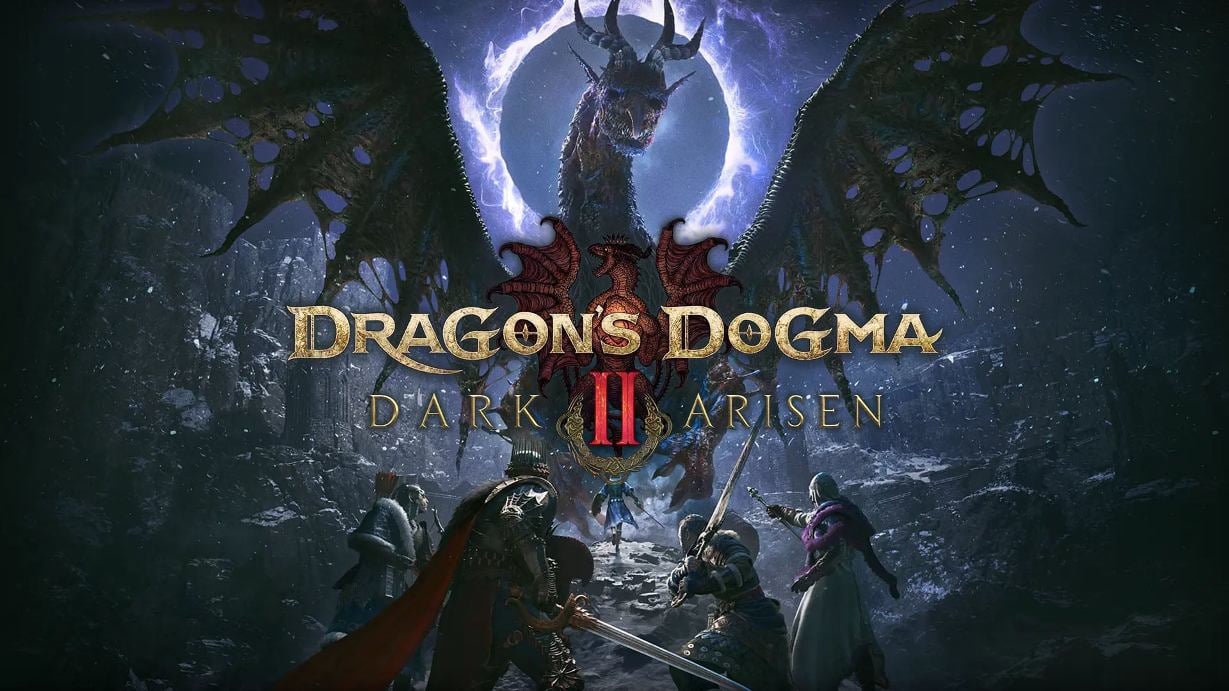
Summary:
Dragon’s Dogma 2: Dark Arisen is heading to Nintendo Switch 2 on October 9, 2026, but Capcom did not originally intend to bring the ambitious action RPG to Nintendo’s console. Producer Naoto Oyama has explained that development initially focused on creating additional experiences for players on the platforms that already supported Dragon’s Dogma 2. The possibility of a Switch 2 edition only emerged after Capcom evaluated the hardware while developing and adapting other internal projects.
Those tests showed that Capcom’s RE Engine worked particularly well with Nintendo Switch 2. Games such as Resident Evil Requiem and Pragmata helped Capcom’s teams build knowledge about the system and demonstrated that demanding RE Engine projects could be adapted successfully. That experience encouraged the Dragon’s Dogma 2 team to investigate whether its enormous open world, detailed environments, large creatures, and unpredictable battles could also make the jump.
The answer was more encouraging than expected. Oyama said the porting process progressed smoothly enough for Capcom to prepare the Switch 2 edition alongside the Dark Arisen expansion. Performance remained a major concern, especially after players raised technical complaints when Dragon’s Dogma 2 originally launched. As a result, optimization became one of the team’s earliest priorities. The work involved more than simply lowering visual settings. Developers revisited many smaller systems and improvements across the game, potentially benefiting the existing PlayStation 5, Xbox Series X|S, and PC editions as well.
For Nintendo players, the result is a package containing the main adventure and the new Dark Arisen expansion. It also represents another important step in Capcom’s increasingly strong support for Nintendo Switch 2.
Capcom Reveals Why Dragon’s Dogma 2 Came to Nintendo Switch 2
Dragon’s Dogma 2: Dark Arisen may look like a natural addition to the Nintendo Switch 2 library now, but its journey to the system was anything but guaranteed. Capcom had already demonstrated considerable support for Nintendo’s newer hardware, yet Dragon’s Dogma 2 presented a particularly intimidating challenge. Its world is packed with roaming creatures, towns filled with characters, physics-driven encounters, dynamic lighting, and battles that can become wonderfully chaotic in seconds. One moment you’re walking peacefully beside your Pawns, and the next you’re hanging from a griffin while it carries you toward the horizon. That kind of unpredictability is part of the game’s charm, but it also makes optimization far more complicated. Producer Naoto Oyama has now explained that Capcom only considered a Switch 2 edition after gaining confidence through its work on other projects.
The Nintendo Switch 2 Version Was Not in the Original Plan
According to Oyama, development did not begin with Nintendo Switch 2 included in the release strategy. The original objective was to produce new experiences for people already playing Dragon’s Dogma 2 on PlayStation 5, Xbox Series X|S, and PC. That approach makes sense because Capcom had an established audience on those platforms and plenty of player feedback to address. Adding another system would bring a separate collection of technical questions, development costs, testing requirements, and performance targets. Rather than promising a version before knowing whether it could meet expectations, the team concentrated on the existing editions. The Switch 2 opportunity appeared later, while other Capcom teams were examining Nintendo’s hardware. That gradual approach allowed the developers to make their decision using practical experience instead of wishful thinking, which is usually safer than throwing an enormous cyclops at a console and hoping for the best.
Other Capcom Projects Opened the Door for the Port
Capcom’s evaluation of Nintendo Switch 2 extended beyond Dragon’s Dogma 2. The company was already working with the system for other internal projects, giving its developers time to study the hardware and understand how the RE Engine behaved on it. Resident Evil Requiem and Pragmata became especially valuable examples. Both are visually ambitious projects that rely on Capcom’s proprietary technology, so their progress provided useful evidence about what could be achieved. Lessons learned by one development team could then be shared with others rather than remaining locked away like treasure in a forgotten cave. This internal exchange of tools and knowledge changed the conversation surrounding Dragon’s Dogma 2. Once Capcom saw strong compatibility between the engine and Nintendo’s hardware, a version of the open-world RPG no longer seemed like an unrealistic technical experiment. It became a challenge the team believed it could genuinely solve.
RE Engine Compatibility Gave the Team Confidence
The RE Engine has become the technological backbone of many modern Capcom releases. Although it first became widely associated with Resident Evil, the engine now supports projects ranging from fighting games to large action adventures. Its ability to scale across different hardware configurations is particularly important when Capcom wants to release games on several platforms. Oyama indicated that the results achieved with Resident Evil Requiem and Pragmata encouraged the Dragon’s Dogma 2 team to investigate a Switch 2 conversion. Because all of these projects use internally developed technology, improvements can carry forward. An optimization created for one title may reveal a more efficient rendering method, memory solution, or processing technique that another team can adapt. In practical terms, every successful Switch 2 project helps build a larger toolbox. Dragon’s Dogma 2 could therefore benefit from groundwork completed elsewhere within Capcom rather than beginning its port with an empty workbench.
Development Progressed More Smoothly Than Expected
After deciding to explore the possibility, Capcom discovered that the conversion process moved forward more smoothly than anticipated. That does not mean the work was effortless. Dragon’s Dogma 2 contains complicated systems that constantly interact with one another, from enemy behavior and Pawn decisions to environmental physics and background simulation. Bringing those elements to another platform requires careful balancing. However, the early results were encouraging enough to convince Capcom that the Switch 2 version could launch alongside the Dark Arisen expansion. This is an important detail because simultaneous development reduces the risk of Nintendo players receiving an edition months or years after everyone else. It also means the expansion and the base adventure can be prepared as a unified package. The smoother-than-expected progress suggests that Capcom’s growing familiarity with the hardware gave the team a stronger starting point than it might have had earlier in the console’s life.
Performance Optimization Became the First Priority
Performance was never going to be a minor concern. Dragon’s Dogma 2 faced criticism for technical issues when it originally arrived in March 2024, particularly in demanding areas filled with characters and background calculations. Capcom was therefore aware that announcing another version would immediately raise questions about frame rates, visual quality, and stability. Oyama said optimization was among the first areas the team addressed because it had been one of the subjects players discussed most after launch. That decision shows that the Switch 2 edition was not treated as a simple conversion where settings could be lowered until the game happened to run. The developers returned to the underlying experience and examined how its many systems consumed available resources. It is painstaking work, often involving changes that appear tiny in isolation. Put enough of those adjustments together, however, and they can turn a rough journey into a far steadier adventure.
Smaller Improvements Could Benefit Every Version
The optimization effort did not remain limited to Nintendo Switch 2. While adapting the game, Capcom revisited numerous smaller processes and improvements throughout Dragon’s Dogma 2. These changes may also strengthen performance on PlayStation 5, Xbox Series X|S, and PC because the developers are refining the shared foundation rather than creating an entirely disconnected edition. Think of it like repairing a complicated road network. Improving one narrow route may expose a smarter way to manage traffic everywhere else. Oyama has discussed how the team searched for small adjustments that could accumulate into a more meaningful performance increase. That is encouraging for existing players who may never purchase the Nintendo edition but could still benefit from discoveries made during its development. It also turns the Switch 2 port into more than an additional sales opportunity. The technical challenge has given Capcom another reason to re-examine the full game and polish areas that previously caused frustration.
Optimization Is More Than Reducing Visual Quality
When a demanding game moves to different hardware, it is tempting to assume that developers simply reduce resolution, shadows, textures, and environmental detail until everything fits. Real optimization is far more involved. Dragon’s Dogma 2 must manage enemy routines, Pawn behavior, physics, streaming, animation, lighting, weather, character data, and the movement of players through a seamless world. A bottleneck in any one of those areas can affect the entire experience. Developers may need to change how often distant characters are updated, how assets are loaded, how effects are displayed, or how calculations are distributed between processing components. The best changes are often invisible. Players do not notice what was removed because the adventure still feels natural. They simply notice that controls respond properly and battles remain stable when a dragon lands in the middle of an already crowded encounter, which is precisely when the engine earns its supper.
Dark Arisen Brings the Complete Adventure to Nintendo Players
The Nintendo Switch 2 edition will combine the original Dragon’s Dogma 2 experience with the Dark Arisen expansion, giving Nintendo players access to the complete package from the beginning. The base game follows the Arisen through an open-world fantasy adventure shaped by combat, exploration, vocations, quests, and AI-controlled Pawn companions. Dark Arisen expands that foundation with a new region called Norgan, an additional storyline, new challenges, and further progression systems. Capcom has said that the expansion provides more than 25 hours of additional material when its main scenario and extra dungeons are considered together. Newcomers will therefore have a substantial journey waiting for them, while experienced players can move into unfamiliar territory filled with fresh dangers. Packaging both parts together also avoids confusion over compatibility. Nintendo players will not need to purchase an older edition first and then determine which additional download unlocks the newest features.
The Expansion Introduces the Snowy Region of Norgan
Norgan gives Dark Arisen a distinct identity rather than merely adding another collection of quests to familiar locations. The region gradually leads players from its foothills into higher, harsher terrain where snow and persistent blizzards become more prominent. Capcom has described an open environment in which scenery, weather, and distant landmarks help guide exploration. Players may spot something unusual across the landscape, travel toward it out of curiosity, and discover that the route leads into the unfolding story. This visual approach fits Dragon’s Dogma particularly well because the series thrives when players abandon a straightforward path and follow whatever catches their attention. Norgan also supports a replayable loop based around Relics, which can provide stronger weapons, armor, and abilities. It gives adventurers a reason to keep returning rather than treating the new area as a corridor that closes forever once the final quest is complete.
New Challenges Support Different Stages of Progression
Dark Arisen is designed to accommodate both newcomers and veteran Arisen. Capcom has indicated that Norgan is recommended for characters around level 40, but twelve additional dungeons known as the Lost Rites begin offering challenges from approximately level 20. This structure creates a useful bridge for players starting the full package on Switch 2. Instead of completing every part of the original journey before touching the expansion, they can encounter some of its additions while naturally developing their character. The later portions of those dungeons are intended to become considerably more demanding, giving experienced players stronger opponents to test their equipment and skills against. Their rewards can also assist progression through the main adventure. It is a flexible design that lets the expansion mingle with the original game instead of sitting behind a locked door for dozens of hours, impatiently tapping its foot while newcomers finish their homework.
What the Switch 2 Release Means for Capcom’s Support
Dragon’s Dogma 2: Dark Arisen strengthens the impression that Capcom sees Nintendo Switch 2 as a serious destination for major releases. The company’s support is not restricted to smaller experiments or older projects that have already completed their commercial life elsewhere. By bringing technically demanding games such as Resident Evil Requiem, Pragmata, and Dragon’s Dogma 2 to the system, Capcom is establishing a broader development pipeline. Each release gives its teams more information about the hardware and improves the RE Engine tools available for later projects. That creates a positive cycle: stronger tools make future conversions easier, while more successful releases justify continued investment. Nintendo players also benefit from receiving games closer to their launches on other platforms. Nobody enjoys watching an exciting release arrive everywhere except the system sitting under their television. Capcom’s current direction suggests those gaps may become less common during the Switch 2 generation.
Shared Knowledge Could Shape Future Switch 2 Games
The most important part of Oyama’s explanation may be Capcom’s ability to share technical experience between internal teams. Proprietary engines are valuable because developers can retain improvements, adjust tools for their own needs, and pass solutions between projects. When Resident Evil Requiem or Pragmata solves a Switch 2 problem, that work can inform Dragon’s Dogma 2. In turn, the discoveries made while optimizing a vast open world may help another Capcom team working on a future release. This does not guarantee that every Capcom game will appear on Nintendo’s console. Each project has different demands, budgets, schedules, and creative priorities. It does mean the technical barrier becomes easier to evaluate. Instead of wondering whether the hardware can support an ambitious idea at all, developers can begin with proven methods and realistic performance data. That is a far healthier foundation for long-term support than treating every port as a completely isolated gamble.
The Port Could Reach a Different RPG Audience
Dragon’s Dogma 2 has already found an audience on other systems, but its arrival on Nintendo Switch 2 places it in front of players who may prefer Nintendo hardware or portable play. The series has an unusual personality that can stand out among more traditional role-playing games. Pawns offer advice, repeat stories from other worlds, point toward treasure, and occasionally behave like companions who have consumed one too many cups of coffee. Combat encourages experimentation rather than rigid routines, letting players climb monsters, combine vocations with party roles, and use the environment in surprising ways. That unpredictability may appeal to Switch 2 owners looking for a large fantasy experience that feels different from Nintendo’s established adventures. The complete Dark Arisen package also provides a clearer entry point, especially for people who waited for updates, performance refinements, and additional features before committing to the journey.
Dragon’s Dogma 2: Dark Arisen Release Details
Dragon’s Dogma 2: Dark Arisen is scheduled to launch on October 9, 2026, for Nintendo Switch 2, PlayStation 5, Xbox Series X|S, and PC. On Nintendo Switch 2, the release combines the original game and its expansion into one package. Existing players on supported platforms will be able to access Dark Arisen as paid additional material, while the broader release will be accompanied by improvements designed to strengthen the underlying experience. Capcom has not treated the Switch 2 edition as an afterthought, despite adding it to the project later in development. The company’s work with the RE Engine, combined with knowledge gathered from other Switch 2 projects, allowed the team to move ahead with greater confidence. Final performance will still need to be judged using the finished retail version, but the developers’ comments suggest that internal results have been more promising than they initially expected.
Conclusion
Dragon’s Dogma 2: Dark Arisen was not always destined for Nintendo Switch 2. Capcom began by focusing on new experiences and improvements for the platforms that already supported the game. The situation changed when other internal projects demonstrated that the RE Engine and Nintendo’s hardware worked well together. Resident Evil Requiem and Pragmata helped establish the technical knowledge that encouraged the Dragon’s Dogma 2 team to attempt its own conversion. Once work began, the process progressed smoothly enough for Capcom to schedule the Switch 2 release alongside the expansion. More importantly, the challenge prompted the developers to revisit performance across the wider game. Nintendo players will receive the original adventure and Dark Arisen in a single package on October 9, 2026, while existing players may benefit from the optimization work completed along the way. For Capcom, the release represents another confident step toward sustained Switch 2 support.
FAQs
- Was Dragon’s Dogma 2 originally planned for Nintendo Switch 2?
- No. Capcom initially developed the Dark Arisen project for the platforms that already supported Dragon’s Dogma 2. The Switch 2 edition was approved later after the company evaluated the hardware through other internal projects.
- Why did Capcom decide to create a Nintendo Switch 2 version?
- Capcom found that its RE Engine showed strong compatibility with Nintendo Switch 2. Experience gained from projects such as Resident Evil Requiem and Pragmata gave the Dragon’s Dogma 2 team confidence that a successful port was possible.
- Will the Switch 2 version include Dark Arisen?
- Yes. The Nintendo Switch 2 release combines the Dragon’s Dogma 2 base game and the Dark Arisen expansion in one package.
- Did Capcom improve performance while creating the port?
- Yes. Performance optimization was one of the team’s first priorities. Developers also revisited numerous smaller processes and improvements that may benefit the existing console and PC versions.
- When will Dragon’s Dogma 2: Dark Arisen be released?
- Dragon’s Dogma 2: Dark Arisen is scheduled to launch on October 9, 2026, for Nintendo Switch 2, PlayStation 5, Xbox Series X|S, and PC.
Sources
- Dragon’s Dogma 2: Dark Arisen Adds 25+ Hours of Content After Nearly Two Years in Development, AUTOMATON WEST, July 14, 2026
- Capcom on Decision to Bring Dragon’s Dogma 2: Dark Arisen to Nintendo Switch 2, Nintendo Everything, July 14, 2026
- Dragon’s Dogma 2 Performance on Switch 2 Is Exceeding Our Expectations, Says Producer, Video Games Chronicle, July 14, 2026
- Capcom’s Dragon’s Dogma 2: Dark Arisen Scheduled to Launch on October 9, 2026, Business Wire, June 10, 2026
- Dragon’s Dogma 2: Dark Arisen – Announcement Trailer, Capcom, June 9, 2026