














Summary:
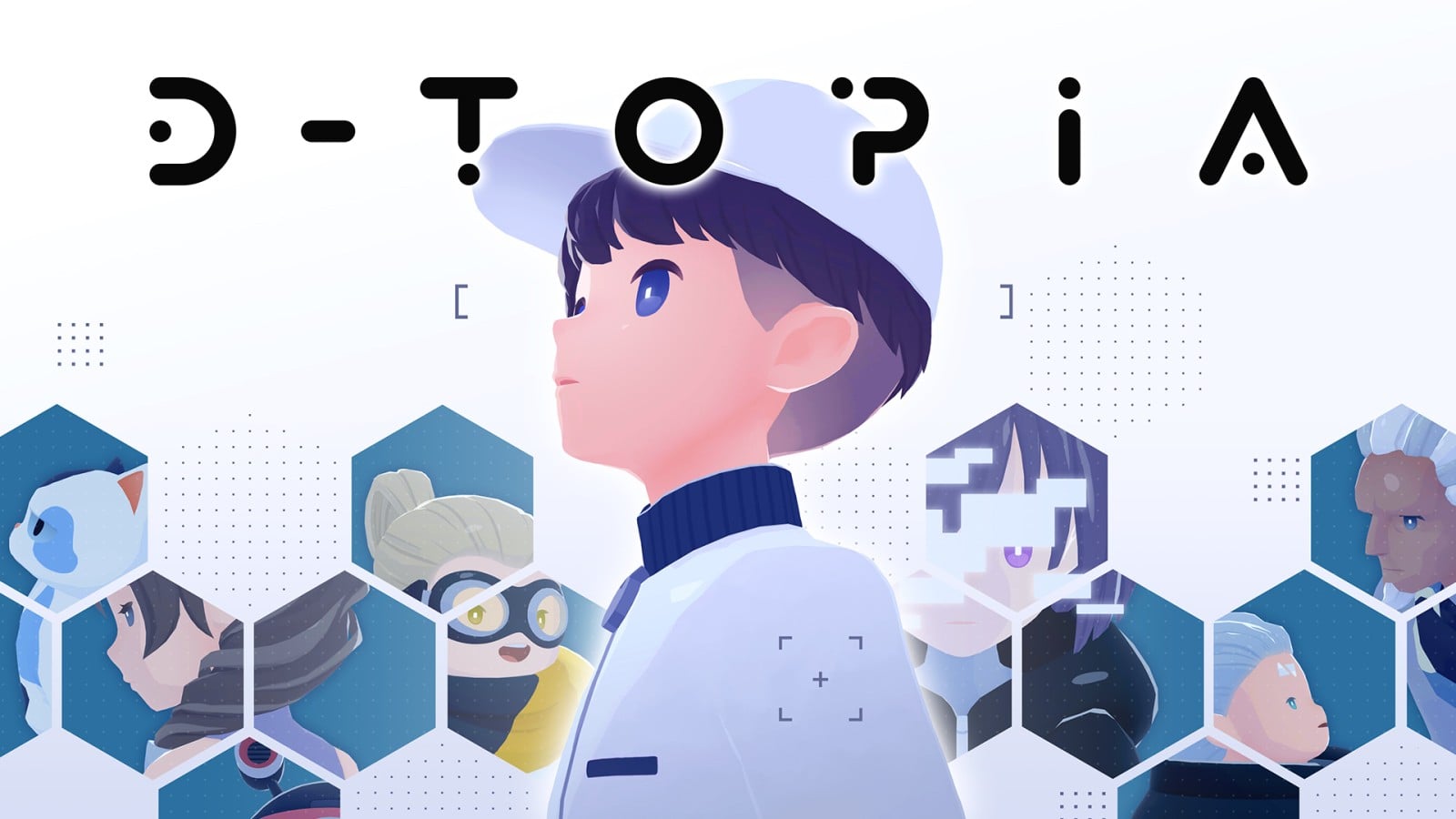
D-topia has received a launch trailer following its recent digital release on Nintendo Switch 2 and Nintendo Switch. Developed by Marumittu Games and published by Annapurna Interactive, the puzzle adventure invites players into a seemingly perfect residential community where artificial intelligence manages daily life in pursuit of maximum happiness. You step into the role of a newly appointed Facilitator responsible for fixing technical problems, maintaining public facilities and helping the people who call this unusual society home.
That may sound like a relaxed maintenance job, but D-topia soon begins asking questions that cannot be solved by reconnecting a few circuits. Every resident has personal concerns, unresolved emotions and an individual idea of what a meaningful life should look like. As you gain their trust, your decisions influence their futures and can gradually steer the wider community toward very different outcomes. Is comfort enough to make someone happy, or does a fulfilling life require uncertainty, struggle and freedom?
The experience combines gentle exploration with integrated logic puzzles, character-focused storytelling and choices carrying meaningful consequences. Players can also move between the bright public environment and a concealed digital space known as the Block Side, where glitches, secrets and inconvenient truths hide beneath the polished surface. The launch trailer offers a closer look at this contrast, presenting cheerful architecture and friendly residents alongside hints that the Utopia Project may be more fragile than it first appears.
D-topia Launch Trailer Highlights Its AI-Managed Utopia
The D-topia launch trailer introduces a future that looks inviting enough to appear on the front of a luxury holiday brochure. Clean streets, cheerful residents and helpful machines fill a residential community designed around comfort. Behind every pleasant interaction, however, sits an artificial intelligence system responsible for deciding how happiness should be maintained. That premise gives the colourful surroundings a fascinating tension. Everything appears peaceful, yet the idea of an algorithm defining human wellbeing naturally raises questions about freedom, identity and purpose.
Developed by Marumittu Games and published by Annapurna Interactive, D-topia recently arrived as a digital download for Nintendo Switch 2 and Nintendo Switch. The trailer presents its mix of exploration, conversations and logic-based challenges without turning the experience into a frantic sequence of explosions or dramatic confrontations. Instead, it focuses on atmosphere. Friendly characters chat in beautifully designed spaces, mechanical systems wait to be repaired and brief glimpses of stranger environments hint that the community’s polished appearance may conceal a more complicated reality.

A Calm Puzzle Adventure Built Around Difficult Questions
D-topia describes itself as a gentle-paced puzzle adventure, and that wording captures the rhythm players can expect. There is no pressure to race through corridors while alarms scream in the background. The experience allows you to observe your surroundings, understand each problem and gradually become familiar with the people living nearby. Its relaxed tempo does not mean that the story avoids serious ideas. In fact, the peaceful pacing gives its philosophical questions room to breathe rather than throwing them at you like bricks through a window.
The Utopia Project was created to maximise human happiness and comfort. On paper, that sounds wonderful. Who would reject a society designed to remove unnecessary pain and inconvenience? The difficulty appears when happiness becomes a measurable objective controlled by a system that may not understand everything people need. Human beings are messy, contradictory creatures. We can want safety and adventure at the same time, or reject a sensible decision simply because it does not feel right. D-topia uses these contradictions to examine whether a perfectly maintained life can still leave someone feeling empty.
Life as the New Facilitator of a Carefully Managed Community
Players enter D-topia as the community’s newest residential Facilitator. The position places you somewhere between a maintenance worker, problem solver and trusted neighbour. Residents rely on you when mechanical systems fail, but your responsibilities soon stretch beyond repairing equipment. You spend time learning about the people around you, listening to their concerns and deciding how to respond when their needs conflict with the rules or priorities established by the artificial intelligence managing the facility.
This role creates a natural connection between the game’s puzzles and its story. You are not wandering around solving disconnected brain teasers simply because someone scattered them across the map. Each task belongs to the environment and often affects the daily lives of the residents. Restoring a system may open a route, improve a facility or allow someone to continue an important routine. That makes even a modest repair feel meaningful, since the result can influence both the physical community and the emotional state of the people living within it.
Logic Puzzles Keep D-topia’s Facilities Running
Logic-based puzzles form an important part of the Facilitator’s work. These challenges are integrated into the machinery and infrastructure of the residential community, connecting them directly to the setting rather than presenting them as isolated minigames. Players must study each situation, identify how its components interact and find the correct solution to restore normal operation. The emphasis appears to be on satisfying reasoning rather than punishing difficulty, matching the measured pace of the wider adventure.
This approach helps D-topia remain approachable while still giving players something substantial to solve. A good logic puzzle works like a stubborn knot. At first, every part seems tangled together, but one careful movement reveals the pattern and makes the rest of the solution click into place. That moment of understanding can be more rewarding than simply reacting quickly to an obstacle. By tying these puzzles to practical problems within the facility, D-topia also ensures that completing them contributes to the world and the residents depending on its systems.
Mechanical Repairs Gradually Lead to Human Problems
Fixing machinery may be the Facilitator’s official responsibility, but mechanical faults are rarely the only complications awaiting attention. A broken device can be diagnosed using logic, tested and restored. Personal unhappiness is not so cooperative. Residents have unique histories, worries and aspirations that cannot always be translated into neat instructions. As you become more involved in their lives, the difference between repairing a system and helping a person becomes increasingly important.
This shift gives the adventure much of its emotional weight. The artificial intelligence governing D-topia may be highly capable, yet a system designed to maximise collective happiness could overlook the needs of an individual who does not fit its preferred model. Players must consider whether following an efficient solution is always the humane choice. Sometimes the most logical answer may not be the kindest one, while a compassionate decision could introduce uncertainty into a community built to eliminate it. Those tensions turn ordinary conversations into choices worth considering carefully.
Residents Give the Utopia Its Emotional Heart
D-topia’s residential community is populated by colourful characters with their own stories and personal struggles. Meeting them is not merely a way to collect assignments before moving to the next objective. Players can earn their trust, learn what motivates them and discover how life inside an artificial intelligence-managed society affects each person differently. Some residents may appreciate the security and convenience provided by the Utopia Project, while others could find its carefully curated lifestyle restrictive or emotionally hollow.
These individual perspectives prevent the central premise from becoming a simple argument that technology is either wonderful or terrible. People rarely agree so neatly, especially when their comfort, relationships and identities are involved. One resident’s perfect environment could feel like another person’s beautifully decorated cage. By focusing on personal experiences, D-topia can explore its larger themes through relatable moments instead of relying only on lengthy explanations. Players see the consequences of the system through the people living under it, which makes every philosophical question feel closer to home.
Trust Opens the Door to Personal Stories
Building trust appears to be essential when uncovering the deeper concerns of D-topia’s residents. A stranger may share a minor inconvenience, but someone who believes you genuinely care could reveal a fear or desire that conflicts with the community’s expectations. This creates a natural sense of progression. As relationships develop, seemingly straightforward situations can reveal emotional layers that were not visible during the first conversation.
The Facilitator’s position also carries responsibility. Residents may treat your advice as more than a casual suggestion, particularly when you have access to systems capable of changing their circumstances. A choice made with good intentions can still produce an unexpected outcome. That uncertainty makes each interaction more believable. Real relationships do not come with a glowing sign above the correct dialogue option, and D-topia appears willing to let players experience the discomfort of making a decision without knowing exactly where it will lead.
Player Decisions Can Reshape Individual Lives and Society
Choices matter throughout D-topia, influencing the wellbeing of individual residents and the direction of the broader community. The game’s central question is not simply whether the Utopia Project works. Instead, it asks what players believe a successful society should provide. Is preventing sadness the same as creating happiness? Should an artificial intelligence interfere when a resident makes a risky decision? Does personal freedom remain meaningful when every available option has already been curated by an unseen system?
These dilemmas allow players to guide the community toward joy or despair through accumulated decisions. That phrasing suggests outcomes are shaped by more than one dramatic choice near the finale. Everyday responses and smaller acts may gradually alter relationships, attitudes and future possibilities. Such a structure suits the setting particularly well. Societies rarely transform because someone presses a single enormous red button. They change through countless decisions that appear manageable in isolation but create a powerful direction when placed together.
The Meaning of Happiness Depends on Who Defines It
Artificial intelligence can analyse behaviour, detect patterns and recommend efficient solutions, but happiness remains frustratingly difficult to define. One person may find purpose in creative work, while another values community, freedom or peaceful routine. Even the same individual can want different things at different stages of life. A system designed to maximise happiness must therefore decide which definition to prioritise, and that decision carries enormous influence over the people relying on it.
D-topia places players close to this conflict by making them an intermediary between the system and its residents. You are not observing the debate from a distant control room. You speak with the people affected, repair the infrastructure surrounding them and make choices that can support or challenge the existing order. The situation resembles being handed the thermostat for an entire building where everyone prefers a different temperature. Someone will always feel uncomfortable, and pretending otherwise does not make the disagreement disappear.
The Block Side Reveals a Hidden Layer Beneath Paradise
One of D-topia’s most intriguing features is the ability to move between two versions of its world. The public-facing environment is bright, orderly and designed to communicate safety. Beneath that polished reality lies the Block Side, a hidden space where players can repair glitches and uncover secrets. The contrast immediately adds mystery to the community. If the Utopia Project is functioning exactly as promised, why does another layer need to remain concealed?
The Block Side appears to give mechanical problems a more unusual visual and thematic identity. Rather than merely opening a maintenance panel in the ordinary world, players can cross into a concealed digital environment that represents the systems operating behind the community’s pleasant exterior. This allows D-topia to transform abstract processes into locations that can be explored. It also reinforces the wider story. Every perfect surface depends on complicated machinery, hidden decisions and ongoing intervention. Paradise, it seems, still needs someone crawling behind the walls with a toolbox.
Glitches May Expose More Than Broken Machinery
Glitches are often treated as technical mistakes, but within D-topia they may reveal information that the public environment was never meant to display. A malfunction can expose how a system works, which rules it follows and what it tries to hide when everything operates normally. Exploring the Block Side therefore offers more than an opportunity to restore damaged equipment. It may provide clues about the true nature of the Utopia Project and the compromises required to maintain its carefully controlled atmosphere.
This hidden world also strengthens the connection between puzzles and discovery. Solving a technical problem can move the story forward, reveal a secret or change a resident’s situation. Each repair may answer one question while creating another. What caused the glitch? Was it an accident, a consequence of conflicting instructions or evidence that the system cannot account for human complexity? By placing such mysteries behind the colourful public reality, D-topia encourages players to question everything that initially looks flawless.
A Gentle Presentation Makes Space for Reflective Storytelling
D-topia’s calm presentation plays an important role in how its ideas are communicated. The bright environments, expressive residents and unhurried exploration create an approachable atmosphere. Rather than presenting artificial intelligence through a familiar vision of metal armies and ruined cities, the game focuses on comfort. Its technology appears helpful, polite and woven into daily life. That makes the underlying questions more effective because the system is not obviously malicious.
A villainous machine with glowing red eyes is easy to distrust. A friendly system that prepares pleasant surroundings and removes everyday frustrations presents a harder dilemma. Players may genuinely appreciate what the Utopia Project offers, even while recognising the risks of allowing it to define human wellbeing. The relaxed pace gives you time to notice those contradictions. One moment can feel warm and reassuring, while a small detail in the next scene raises an uncomfortable doubt. D-topia uses that contrast to create tension without abandoning its gentle identity.
The Launch Trailer Balances Warmth With Unease
The launch trailer reflects this balance by moving between inviting social scenes, puzzle interactions and glimpses of the concealed systems supporting the community. Nothing needs to leap from a dark corner to create suspense. The unease comes from wondering whether the residents’ happiness is authentic, encouraged or quietly enforced. Even cheerful environments can feel strange once you begin questioning who designed them and why.
At the same time, the trailer avoids presenting the experience as relentlessly grim. D-topia still centres on meeting memorable people, solving satisfying challenges and exploring an imaginative science-fiction setting. Its thoughtful themes do not erase the warmth found in helping someone or restoring an important facility. That mixture may appeal to players who enjoy narrative adventures capable of addressing serious ideas without becoming emotionally exhausting. It is a game about paradise, after all, even if that paradise has a few suspicious cracks around the edges.
D-topia Is Available Digitally on Nintendo Switch 2 and Switch
D-topia was released on July 14, 2026, and is available as a digital download for Nintendo Switch 2 and Nintendo Switch. The Nintendo Switch 2 edition is listed through the Nintendo eShop alongside the version created for the original Nintendo Switch. This gives players on both generations of Nintendo hardware access to Marumittu Games’ reflective puzzle adventure without needing to purchase a physical copy.
The game is also available on PC, PlayStation 5 and Xbox platforms, but the Nintendo editions provide the flexibility associated with portable play. Its calm pacing and puzzle-focused structure seem particularly well suited to shorter handheld sessions, although players may prefer longer stretches when conversations and decisions begin to overlap. Wherever it is played, the launch trailer makes the central appeal clear. D-topia is not merely about repairing a futuristic residential complex. It is about deciding whether a comfortable life designed by a machine can still leave enough room for people to define themselves.
Conclusion
D-topia presents an inviting future where technology has seemingly solved many of humanity’s everyday problems, then asks whether convenience alone can create a meaningful life. Its combination of integrated logic puzzles, resident-focused storytelling and consequential decisions gives players an active role in testing the promises of the Utopia Project. As the new Facilitator, you will repair machinery, build relationships and explore the hidden Block Side while gradually learning what keeps this apparently perfect community running.
The launch trailer captures that unusual balance of comfort and uncertainty. Bright surroundings and friendly characters make D-topia feel welcoming, but every carefully managed detail raises another question about freedom, individuality and purpose. With the game now available digitally on Nintendo Switch 2 and Nintendo Switch, players can enter the community themselves and decide whether its curated happiness represents an ideal future or a warning wrapped in cheerful colours.
FAQs
- What is D-topia?
- D-topia is a gentle-paced puzzle adventure set in a futuristic residential community managed by artificial intelligence. Players solve logic puzzles, help residents and make decisions that influence their lives and the future of the community.
- When was D-topia released for Nintendo Switch 2?
- D-topia was released digitally for Nintendo Switch 2 and Nintendo Switch on July 14, 2026.
- Who developed and published D-topia?
- D-topia was developed by Marumittu Games and published by Annapurna Interactive.
- What is the Block Side in D-topia?
- The Block Side is a hidden layer beneath the bright public world. Players enter it to repair glitches, solve problems and uncover secrets connected to the systems managing the community.
- Do choices affect the story in D-topia?
- Yes. Decisions can influence individual residents, shape their futures and guide the artificial intelligence-managed community toward different emotional and social outcomes.
Sources
- D-topia for Nintendo Switch 2, Nintendo, July 14, 2026
- D-topia – Nintendo Switch 2 Games, Nintendo UK, July 14, 2026
- D-topia Release Date Set for 14 July, Demo Available Now, Annapurna Interactive, June 8, 2026
- D-topia – Launch Trailer, Annapurna Interactive, July 14, 2026
- D-topia Launch Trailer – Puzzle Adventure Game Lands on Nintendo Switch 2 and Switch, Nintendo Everything, July 14, 2026