














Summary:
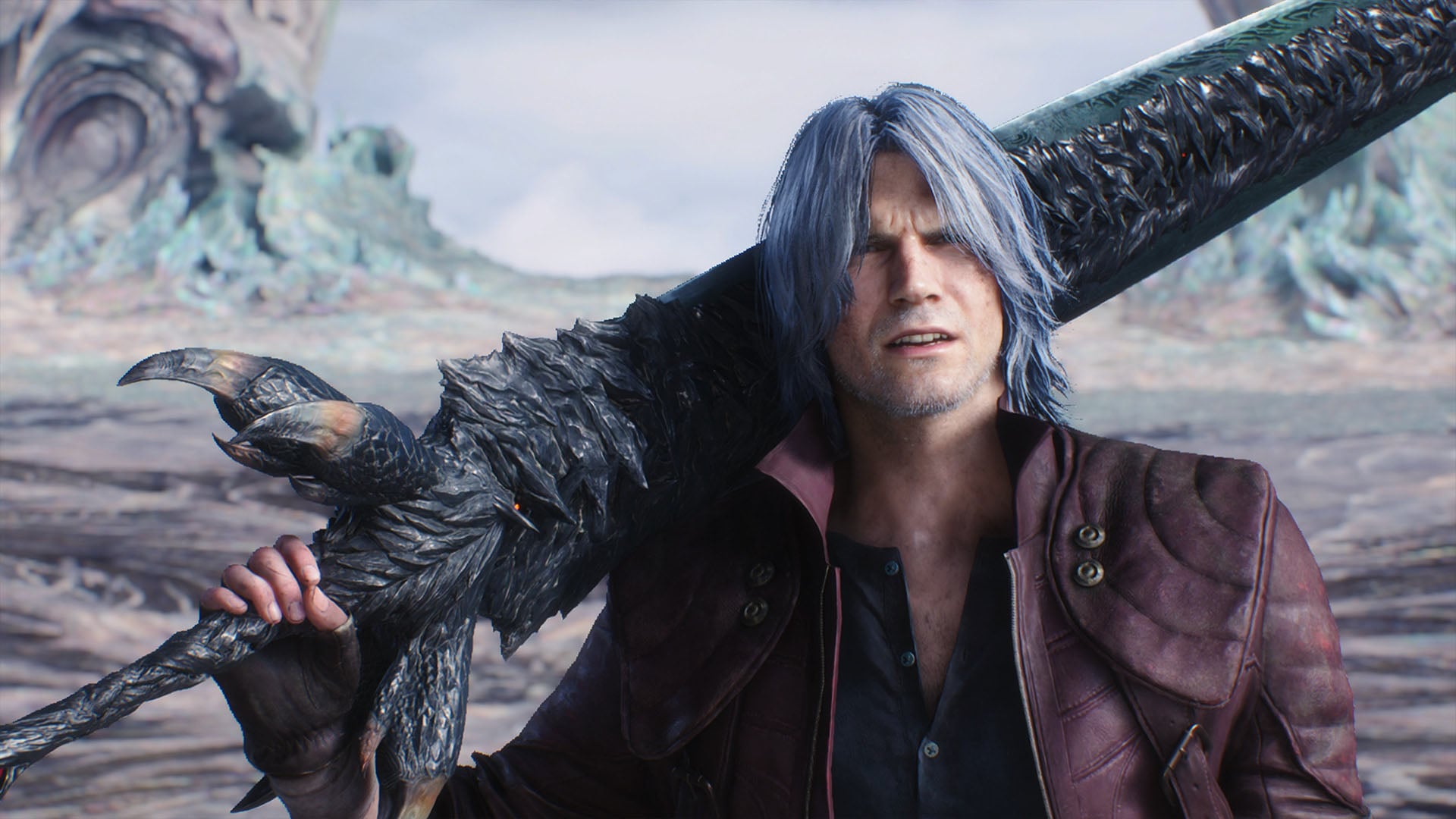
Devil May Cry 5 Devil Hunter Edition has made a confident arrival on Nintendo Switch 2, and a technical examination of Capcom’s conversion shows that the stylish action game holds up remarkably well on Nintendo’s hybrid system. The headline result is a largely stable 60 frames-per-second during gameplay, giving Nero, Dante, V and Vergil the responsiveness they need when slicing, shooting and summoning their way through hordes of demons. Brief dropped frames can occur, while cinematics may fluctuate between roughly 50 and 60 FPS, but ordinary combat remains impressively consistent.
The conversion uses relatively low internal resolutions to reach that performance target. Docked play appears to render at approximately 540p before being reconstructed to 1080p, while portable mode operates at around 360p and is upscaled towards a 720p output. Those figures may look alarming on paper, yet the resulting image is reportedly cleaner than the PlayStation 4 version in several areas, despite Sony’s older console rendering internally at 1080p. The Switch 2 release seemingly uses DLSS-style reconstruction to recover detail and stabilise the final presentation.
Players using a compatible display can also activate an unlocked frame rate through the system’s 120 Hz settings. The game does not hold 120 FPS, generally landing closer to the 80 to 90 FPS range, but the option still offers improved responsiveness. Faster loading, comparable graphical effects and strong handheld performance further strengthen the conversion, although the Switch 2 version displays a noticeably brighter image than other editions. Taken as a whole, Devil Hunter Edition appears to be a technically accomplished adaptation that sensibly places smooth combat ahead of native pixel counts.
Devil May Cry 5 Delivers a Strong Nintendo Switch 2 Conversion
Bringing Devil May Cry 5 to Nintendo Switch 2 was never simply a matter of shrinking a few textures and hoping Dante’s coat would stop fluttering long enough to save some processing power. Capcom’s stylish action game depends on speed, precise timing and visual clarity, so a weak conversion would immediately make itself known. Fortunately, Devil May Cry 5 Devil Hunter Edition appears to understand the assignment. The Switch 2 release delivers the full demonic spectacle while maintaining the responsive feel that sits at the heart of the experience. It is based on an older generation of Capcom’s RE Engine technology, which works in the system’s favour. The game remains visually rich, but it is not pushing the same technical boundaries as newer projects such as Resident Evil Requiem. That extra breathing room allows the hardware to concentrate on the factors that matter most, particularly frame rate stability. The result is not a flawless conversion, but it is a carefully balanced one that feels well suited to Nintendo’s hybrid format.

A Steady 60 FPS Keeps Stylish Combat Responsive
The most important achievement is the largely stable 60 FPS performance during regular gameplay. Devil May Cry 5 is built around rapid attacks, split-second dodges, weapon switching and elaborate combo strings, so consistency matters far more here than it would in a slow-paced adventure. A delayed input can be the difference between completing a spectacular sequence and watching Nero get slapped across the room by something with too many claws. On Nintendo Switch 2, gameplay reportedly stays close to the intended 60 FPS target in most circumstances. There are occasional isolated dropped frames, but these appear to be brief exceptions rather than persistent problems. That stability helps every character retain their distinctive rhythm. Nero’s mechanical Devil Breakers feel immediate, Dante’s vast arsenal remains manageable, V’s summons respond quickly and Vergil can continue pretending that excessive swordsmanship is a perfectly normal personality trait. Capcom’s focus on maintaining smooth play was clearly the correct choice for this particular game.
Cutscenes Show Occasional Performance Fluctuations
Cinematic sequences are somewhat less consistent than active gameplay, with performance generally falling somewhere between 50 and 60 FPS. That sounds dramatic when reduced to a number, but the effect is less significant because cutscenes do not demand the same level of input precision as combat. You are watching characters trade insults, pose dramatically and discuss world-ending threats with the casual confidence of people ordering lunch. A fluctuating frame rate is therefore less disruptive in these moments. The important point is that the performance variation does not appear to spill heavily into ordinary encounters. Capcom has seemingly prioritised the playable portions, allowing more demanding cinematics to move within a looser range when necessary. This is a sensible compromise. Locking every scene perfectly could have required more aggressive reductions elsewhere, and few players would trade responsive swordplay for a perfectly stable shot of Dante eating pizza. The presentation remains fluid enough to preserve the game’s cinematic energy without undermining its mechanical strengths.
The Optional 120 Hz Setting Unlocks Higher Frame Rates
Players with a compatible television or monitor can activate the Nintendo Switch 2 system’s 120 Hz output and use an unlocked frame rate option in docked mode. The wording may suggest that Devil May Cry 5 suddenly becomes a locked 120 FPS experience, but that is not what happens in practice. Performance reportedly sits closer to the 80 to 90 FPS range during much of the game, with variation depending on the scene and workload. Even so, that remains a meaningful improvement over the standard 60 FPS target. A higher frame rate can reduce perceived input latency and make fast camera movement look smoother, which naturally benefits an action game where enemies, projectiles and sword effects frequently fill the screen. The trade-off is consistency. Some players will prefer a steady 60 FPS presentation, while others may value the extra responsiveness provided by the unlocked option. Giving players that choice is valuable, particularly because high-refresh displays are becoming more common. It is an enthusiast feature rather than the default recommendation, but it adds flexibility to the Switch 2 release.
Why the Unlocked Mode Does Not Hold 120 FPS
Reaching a theoretical maximum and sustaining it are two very different challenges. Devil May Cry 5 may be several years old, but its dense environments, particle effects, character animation and enemy encounters can still place a substantial load on the hardware. The unlocked setting removes the normal 60 FPS ceiling, allowing the system to render additional frames whenever resources permit. It does not magically double the available processing power. As a result, the frame rate moves above 60 FPS without remaining fixed at 120 FPS. That behaviour is common in unlocked performance modes. Think of it as opening the speed limit rather than installing a rocket engine. The Switch 2 can stretch its legs, but the road still has hills. The reported 80 to 90 FPS range should nevertheless produce a noticeably smoother response on supported displays. Players sensitive to fluctuation may still favour the conventional setting, while those focused on reduced latency could find the unlocked mode worthwhile.
Lower Internal Resolutions Are Rebuilt Through Upscaling
The most eye-catching part of the technical breakdown concerns the internal rendering resolution. Devil May Cry 5 appears to operate well below its final output resolution on Nintendo Switch 2, using reconstruction technology to rebuild the image before it reaches the screen. The system seemingly relies on DLSS or a closely related Nvidia-powered solution, although the precise implementation has not been formally detailed by Capcom. This approach allows the game to render fewer pixels internally, reducing the pressure on the graphics processor while preserving enough information to create a cleaner final picture. It is a practical match for portable hardware, where power consumption, heat and performance all need to remain under control. Raw resolution figures never tell the entire story when reconstruction enters the equation. A well-designed upscaler can produce an image that looks considerably sharper than the internal pixel count suggests, especially in motion. That appears to be one of the reasons the Switch 2 edition can hold its frame rate without looking like someone smeared petroleum jelly across the screen.
Docked Mode Targets a Cleaner 1080p Presentation
In docked mode, the game reportedly renders internally at around 540p before being upscaled to a 1080p output. Rendering at half the horizontal and vertical dimensions of 1080p provides the hardware with a substantial performance advantage, but it also creates a demanding reconstruction task. Fine details, hair, thin geometry and rapidly moving objects can expose weaknesses in any upscaling system. Despite those challenges, the Switch 2 presentation is described as reasonably clean and can even compare favourably with the PlayStation 4 edition in certain respects. The final image will not match a native 1080p rendering in every scene, and players sitting close to a large display may notice softness or instability around detailed objects. However, the reconstruction appears effective enough to support the game’s visual identity without sacrificing the 60 FPS target. For most players, the trade-off is likely worthwhile. Devil May Cry 5 gains far more from responsive combat than it would from chasing a higher native resolution and stumbling whenever the action becomes chaotic.
Handheld Mode Prioritises Smooth Play Over Native Sharpness
Portable mode pushes the internal resolution lower, reportedly rendering at approximately 360p before reconstructing the image towards a 720p output. A 360p base resolution may sound like a relic from the age of blurry internet videos, but context matters. The smaller handheld display reduces how visible certain imperfections become, while reconstruction can restore edges and detail that would otherwise be lost. More importantly, the reduced rendering workload helps the game retain its 60 FPS target away from the dock. That makes handheld play one of the most appealing aspects of this edition. Devil May Cry 5 was originally designed for home consoles and PC, yet the Switch 2 version allows players to tackle missions, practise combos and chase higher style rankings almost anywhere. Some softness is inevitable, especially in busy scenes or around distant objects, but the experience remains recognisably intact. A sharp screenshot is pleasant, but a smooth battle against a towering demon is considerably more useful when you are actually holding the controller.
Switch 2 Compares Favourably With the PlayStation 4 Release
The comparison with PlayStation 4 is particularly interesting because the older Sony system runs Devil May Cry 5 at a higher internal resolution. The PS4 version targets an internal 1080p image, while Switch 2 reportedly starts from just 540p in docked mode. Yet the Switch 2 release can appear cleaner in certain areas and provides more stable performance. That difference illustrates how reconstruction technology and newer hardware features can complicate direct pixel-count comparisons. Native resolution remains valuable, but it is only one ingredient in the final result. Anti-aliasing, temporal stability, texture filtering, image reconstruction and frame pacing all influence what the player sees. The Switch 2 edition also improves upon the PS4 version’s frame rate behaviour, maintaining its 60 FPS target more reliably during gameplay. This gives Nintendo’s system a practical advantage where it matters most. The older console may begin with more pixels, but the newer platform often delivers a smoother and cleaner-feeling experience. Numbers can be useful, although they occasionally behave like demons themselves and require a little interpretation before they tell the truth.
Visual Effects Remain Surprisingly Consistent Across Systems
Despite the lower rendering resolution, the Nintendo Switch 2 release retains graphical effects that are broadly comparable with those seen on PlayStation 4 and PlayStation 5. This does not mean every setting is identical or that the hybrid system suddenly matches Sony’s newer console in raw visual quality. It does indicate that Capcom avoided stripping away the elements that give Devil May Cry 5 its distinctive look. Particle effects, lighting, environmental detail and the theatrical impact of special attacks remain present. That consistency matters because combat in Devil May Cry is as much a performance as it is a mechanical challenge. Every sword trail, muzzle flash and burst of demonic energy contributes to the feeling that the player is conducting a very loud orchestra with weapons. Reducing those effects too aggressively could have made the game feel flat, even if the frame rate remained smooth. Instead, the Switch 2 conversion appears to reduce internal resolution while preserving much of the original visual spectacle, creating a balanced result rather than a visibly hollow imitation.
Faster Loading Reduces Interruptions Between Missions
Improved loading times provide another advantage over the PlayStation 4 release. Devil May Cry 5 frequently moves between missions, menus, character selection screens and cinematic sequences, so reducing those pauses helps maintain momentum. Loading improvements rarely generate the same excitement as frame rates or resolutions, but they can have a substantial effect during a full playthrough. Waiting several extra seconds once is harmless. Waiting several extra seconds dozens of times begins to feel like being repeatedly stopped at the same red traffic light. The Switch 2’s storage technology allows the game to move between activities more quickly, making mission restarts and repeated attempts less tedious. This is especially useful for players chasing higher rankings, hidden collectibles or difficult challenges. Devil May Cry encourages replaying encounters until movements become instinctive, and shorter loading screens reduce the friction surrounding that process. It may not be the flashiest technical improvement, but it supports the fast, energetic pacing that defines the series.
A Brighter Image Creates One Unexplained Visual Difference
One unusual difference is that the Nintendo Switch 2 version appears noticeably brighter than the game on other platforms. The reason for this is not currently clear. It could be an intentional adjustment to improve visibility on the handheld screen, a difference in tone mapping, a platform-specific gamma setting or an unintended result of how the RE Engine is configured on Switch 2. Without confirmation from Capcom, it would be unwise to declare a definitive cause. What matters is that the brighter image can alter the atmosphere in certain scenes. Devil May Cry 5 often uses dark interiors, dramatic shadows and glowing effects to establish its supernatural mood, so even a modest brightness change can affect contrast and depth. Some players may prefer the increased visibility, particularly in portable mode, while others may find that it reduces the impact of darker environments. Display settings could help compensate, but the difference remains an interesting quirk of the conversion rather than a clear improvement or drawback.
Devil Hunter Edition Brings the Complete Experience to Switch 2
The technical performance is only part of the package. Devil May Cry 5 Devil Hunter Edition includes the acclaimed action experience alongside additional material released after the original 2019 launch, including playable Vergil and assorted bonus items. Players can take control of Nero, Dante, V or Vergil, each offering a dramatically different approach to combat. Nero combines swordplay, firearms and interchangeable mechanical arms. Dante swaps between weapons and fighting styles with enough complexity to make a piano recital look straightforward. V directs demonic companions from a distance, while Vergil focuses on precision, concentration and devastating efficiency. Capcom officially launched the digital Switch 2 version on June 23, 2026, with a physical release scheduled for August 28, 2026. The strong technical showing makes the edition more than a convenient portable alternative. It stands as a credible way to experience one of Capcom’s most celebrated action games, particularly for players who value stable performance and the freedom to switch between television and handheld play.
Conclusion
Devil May Cry 5 Devil Hunter Edition appears to be a smartly engineered Nintendo Switch 2 conversion. Its internal resolutions are low, reaching approximately 540p in docked mode and 360p in handheld play, but reconstruction technology produces a much cleaner output than those figures might suggest. More importantly, ordinary gameplay holds close to 60 FPS, preserving the fast response and precise timing that the combat system demands. Cutscenes can fluctuate, and the optional high-refresh setting generally runs closer to 80 or 90 FPS than a locked 120 FPS, but neither issue undermines the overall result. Faster loading, comparable visual effects and improved stability over the PlayStation 4 release strengthen the package further. The unusually bright presentation remains a curious difference, yet it is a relatively minor concern. Capcom has prioritised the right elements, delivering a version that feels fast, flexible and surprisingly polished on Nintendo’s hybrid hardware.
FAQs
- Does Devil May Cry 5 run at 60 FPS on Nintendo Switch 2?
- Yes. Regular gameplay generally maintains a smooth 60 FPS, with only occasional isolated frame drops. Cinematic sequences can fluctuate between approximately 50 and 60 FPS.
- What resolution does Devil May Cry 5 use in docked mode?
- The game reportedly renders at an internal resolution of around 540p in docked mode before being reconstructed to a 1080p output.
- What resolution does the game use in handheld mode?
- Portable play reportedly uses an internal resolution of approximately 360p, which is then upscaled towards a 720p presentation on the system’s display.
- Can Devil May Cry 5 reach 120 FPS on Switch 2?
- An unlocked frame rate option is available when using the system’s 120 Hz output in docked mode. It generally performs at around 80 to 90 FPS rather than holding 120 FPS.
- Is the Switch 2 version better than the PlayStation 4 version?
- The PlayStation 4 edition has a higher native internal resolution, but the Switch 2 version offers steadier gameplay performance, faster loading and a reconstructed image that can appear cleaner in several areas.
Sources
- Devil May Cry 5 Nintendo Switch 2 Tech Analysis, Including Frame Rate and Resolution, Nintendo Everything, June 25, 2026
- Devil May Cry 5 Devil Hunter Edition to Launch on Nintendo Switch 2!, Capcom, June 10, 2026
- Devil May Cry 5 Devil Hunter Edition Announced for Switch 2, Gematsu, June 9, 2026
- Devil May Cry 5 Devil Hunter Edition, Nintendo, June 23, 2026
- Devil May Cry 5 Devil Hunter Edition Switch 2 Review, Play Day One, June 22, 2026