








Summary:
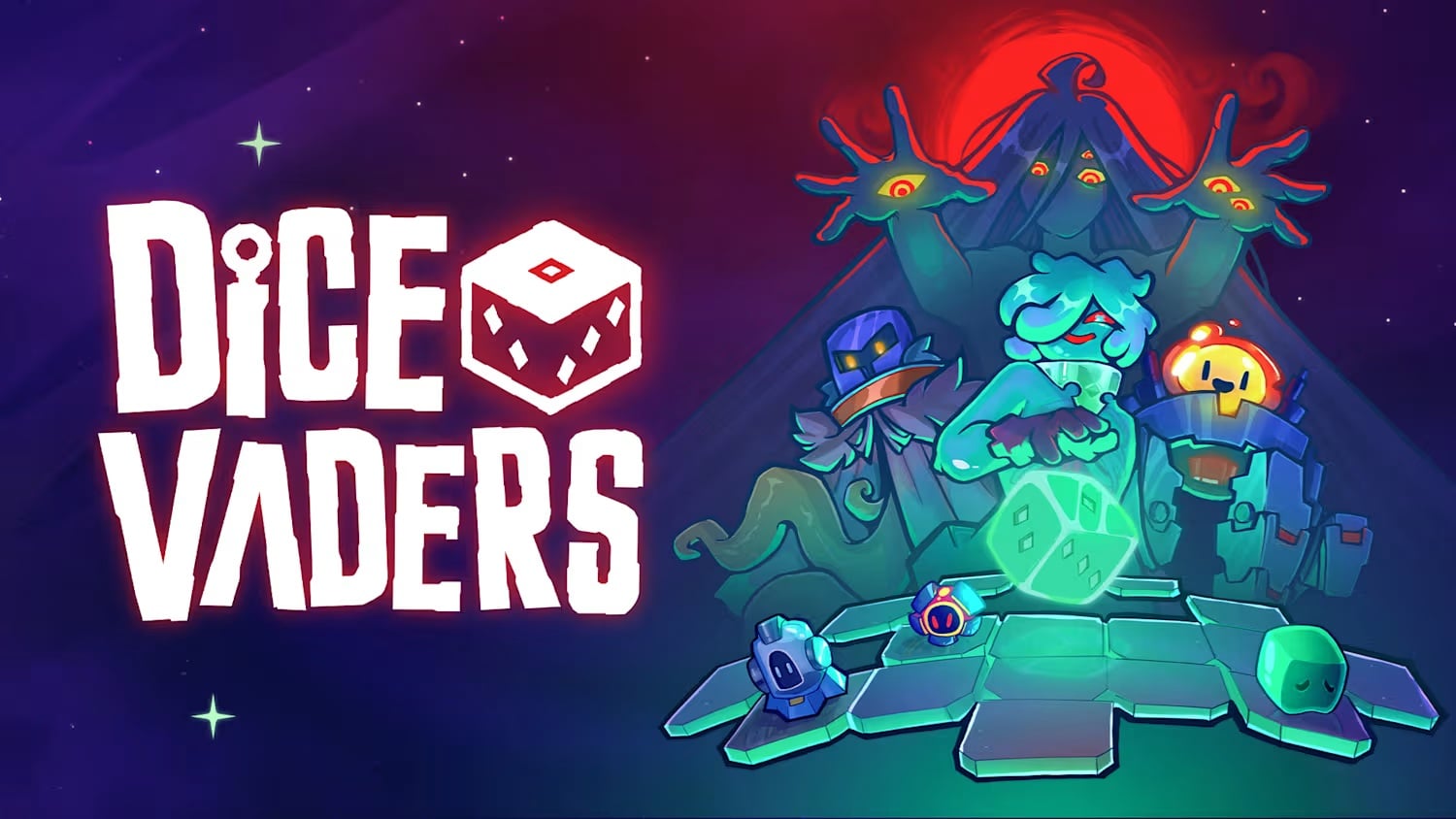
Dicevaders has landed on Nintendo platforms and brings a fresh twist to deckbuilding with dice-first mechanics that reward planning over pure luck. This release drops a tidy package of ten commanders, dozens of units and artifacts, and a set of systems – Chrono and budge – designed to let you manipulate rolls, restock the shop, and piece together explosive score combos. Whether you like methodical drafting or trying to break the rules with wild synergies, Dicevaders offers both structured strategy and pay-off moments where a single clever reroll can send your run into orbit. The launch trailer gives a quick look at core systems, commander diversity, and some of the frantic, satisfying scoring that plays like a strategic puzzle. If you follow Nintendo news, this is one to watch: the game supports both Nintendo Switch and enhanced features for Nintendo Switch 2 owners, including optional precision mouse-like controls and optimizations that make runs feel tighter on the newer hardware. NintendoReporters readers who want a Nintendo-focused rundown will find playstyle tips, platform notes, and where to buy below.
What Dicevaders Is and Why It Matters to Nintendo Fans
Dicevaders is a roguelike deckbuilder with a clear identity: dice are not mere chance but the core tool you shape to win. Instead of treating rolls as random events to be endured, the game hands you mechanics that let you reroll, nudge, and line up dice into meaningful combinations. For Nintendo fans who enjoy smart, repeatable runs and scoring mastery – think players who liked the tidy loops of card-based roguelikes or score-chasing indie hits – Dicevaders delivers a compact, addictive loop. Each run is a blend of drafting units, placing them on a turn-based grid for spatial bonuses, and managing resources like Chrono and budge to bend dice outcomes toward your plan. That makes each decision feel weighty: will you draft a high-value unit now or save resources to enable a combo later? The game’s StarVaders universe flavor ties it together with a classic arcade sci-fi tone, which pairs nicely with Nintendo players who appreciate stylized indie fare on Switch family hardware. NintendoReporters keeps an eye on titles like this since they often become small community sensations, especially when players find unexpected synergies and leaderboards heat up.
Core Mechanics – Dice, Chrono and Budge
At the heart of Dicevaders are three things you will think about every turn: the dice row, Chrono, and budge. The dice row is where raw potential sits visually on the screen – matching values, aligning pairs or triples, and creating chains that cascade into massive scoring bursts. Chrono functions as a strategic reroll and shop-refresh tool: spend Chrono at the right time to reroll dice and restock the pick pool so you can draft the exact units you need. Budge, by contrast, is a fine-control mechanic that nudges dice throws to build precise combos; it’s the difference between a near-miss and a perfect alignment that triggers a combo multiplier. Together these systems shift play away from helpless RNG and toward player agency. You still get unexpected rolls, but the game expects you to convert those into opportunities. For players who like thinking several steps ahead, Chrono and budge form a satisfying toolkit: priorities change based on commander perks, the current grid layout, and what artifacts you carry. Learning to manage those resources becomes the heart of the skill curve, and it’s exactly the kind of mechanical elegance that rewards repeat play and experimentation.
Commanders, Artifacts and Progression
Dicevaders gives you a roster of distinct commanders, each with unique perks, synergies, and XP-scaling possibilities that change how you approach a run. Choosing a commander is more than a cosmetic selection; it defines which artifacts you’ll lean on, what units synergize best, and which strategies you should prioritize. Artifacts serve as long-term modifiers you collect during runs, and they can tilt entire builds toward certain combos or scoring strategies. Progression feels meaningful because commander mastery unlocks fresh tactical options and shifts how you interpret the dice row. Over time you’ll learn which artifacts pair best with specific commanders, and that knowledge fuels attempts to create intentionally broken combos that skyrocket scores. For NintendoSwitch players who enjoy incremental progression systems and the satisfaction of unlocking new ways to play, Dicevaders’ commander-driven loop is engaging. Fans who like to chase high scores will appreciate how artifacts and level scaling let you stack small advantages into huge end-run outcomes without turning the game into a one-button exploit.
Platforms and Switch 2 Enhancements
Dicevaders is available on both Nintendo Switch and the newer Nintendo Switch 2, and the publisher has optimized the game to take advantage of the newer hardware where possible. On Nintendo Switch it runs as a tight portable experience, while Switch 2 owners get optional precision controls that feel closer to mouse input and generally snappier performance. Those optional mouse-like controls are especially useful during tense runs where lining up dice precisely matters; they make nudging and targeting feel more deliberate and comfortable. The Switch 2 edition also notes optimization for the system — smaller quality-of-life changes such as slightly faster UI responsiveness and clarity in the dice row animations mean that high-level play feels less fiddly. If you own both systems, pay attention to the publisher notes about separate editions and save compatibility: the store listing clarifies that save data and additional content may not transfer between the two releases, so avoid accidental duplicate purchases. For our NintendoReporters readers this matters: pick the edition that matches your hardware habits and controller preferences, and expect the Switch 2 build to feel a touch more polished for precision play.
Launch Trailer Highlights
The official launch trailer does a great job of showing the game’s DNA in short bursts: glimpses of commander variety, the dice row in action, and the satisfying chain reactions that make scoring feel cinematic. You’ll see examples of Chrono rerolls and shop refreshes that enable targeted drafting, as well as budge manipulations that turn mediocre rolls into perfect alignments. The trailer also teases the StarVaders tie-ins – namely the Pilots who act as defender characters that will challenge your invasion attempts and force you to adapt. For players who prefer to judge a game visually first, the trailer is a quick primer on the pace and aesthetic: the interface is clean, the grid placements are readable, and the feedback on big combos makes them look legitimately impactful. Beyond the eye candy, the trailer sets expectations: Dicevaders is less about twitch skill and more about timing, resource management and intelligent sequencing. If you want to see those moments that make the score skyrocket, the trailer is the best condensed look before you dive into a run yourself.
First-Runs: Strategies to Try
On your first few runs don’t worry about discovering the ultimate broken combo; instead focus on learning how Chrono and budge feel and how commanders change the priority order of units and artifacts. Try drafting a unit that complements the grid placement bonuses rather than chasing the flashiest pick. Use Chrono early to restock the shop and secure a critical piece that matches your commander’s perks, then conserve small amounts of budge to fix near-miss dice throws that would otherwise ruin a forming combo. Play conservatively for the first couple of runs so you can get a sense of artifact drops and how XP scaling improves your late-game options. Also, experiment with pairing one artifact that increases dice manipulation with another that rewards chaining – this dual-focus approach tends to produce steady score growth while you learn the meta. Above all, treat each run as a puzzle: the more deliberately you manage resources and grid placement, the faster you’ll get reliable high-scoring runs.
Experimenting with absurd synergies
Part of Dicevaders’ joy comes from trying to “break the game” by stacking weird synergies until something explodes into a massive score. Once you know how Chrono and budge work together, start testing combinations where one mechanic fuels the other: for example, artifacts that grant extra dice on certain reroll conditions paired with commanders that scale XP for dice interactions can create cascading pay-offs. Community players will inevitably share combos that look unintuitive at first but make mathematical sense when you examine the chain reactions involved. Don’t be afraid to take risks with draft choices in runs where you already feel comfortable; losing a run is just data that helps refine your approach. Also, watch indie community spaces for discovery: players who post screenshots or clips of insane runs often reveal setup patterns you can reverse engineer, and those experiments are what turn a mechanically-sound roguelike into a vibrant metagame.
Break-the-Game Combos and the Community Scene
Already, early adopters are sharing discovery clips and combo lists across forums and social feeds, and that communal experimentation is a big reason to follow a focused Nintendo outlet like NintendoReporters. The game’s design invites creative misuse of systems, and when players find chain reactions that feel unfairly powerful, community discussion helps the rest of us reproduce the effect or counter it with new strategies. If you like participating in leaderboards or comparing score runs, expect a lively early scene where folks iterate rapidly on commander-artifact synergies. Our readers often prefer such community-driven evolution because it increases replayability: the moment someone posts a reproducible method, others test it, patch notes or balance updates may follow, and the meta moves forward. Whether you prefer patiently climbing to the top of a local scoreboard or just want to find one glorious run to brag about, the social side of Dicevaders will keep things interesting long after the initial launch week excitement fades.
Conclusion
Dicevaders is a satisfying addition to the Switch family lineup, offering a tight blend of tactical drafting, spatial placement, and dice-focused resource management that rewards planning and creativity. With a clear set of systems – Chrono, budge, commanders, artifacts – the game gives you tools to shape outcomes and chase high scores, and the Switch 2 edition adds precision control options that make technical play feel smoother. For Nintendo players who enjoy indie strategy games with meaningful progression and community-driven experimentation, Dicevaders is worth a look. The launch trailer sets expectations properly, and the stores show it available now so you can jump in, experiment, and start carving out your invasion strategy. NintendoReporters will keep tracking player discoveries and noteworthy updates as the game evolves, so if you’re into scoreboard chases or just clever tactical loops, this one should be on your radar.
FAQs
- Is Dicevaders available on both Nintendo Switch and Nintendo Switch 2?
- Yes. Dicevaders is available on both platforms; the Switch 2 edition includes optional precision controls and optimizations.
- Does save data transfer between Switch and Switch 2 versions?
- No. The store listing notes that save data and additional content are not compatible between the two versions, so be careful when purchasing.
- Where can I watch the official launch trailer?
- The official launch trailer is published by the developer and publisher on major video platforms; check the Nintendo eShop listing or the publisher’s site for direct links.
- What are Chrono and budge, in simple terms?
- Chrono lets you reroll dice and refresh the shop to draft key units, while budge lets you nudge dice throws to build exact combos and alignments.
- How many commanders and units does the game include at launch?
- At launch the game features multiple commanders and dozens of units and artifacts; the exact roster is listed by the publisher and on store pages.
Sources
- Dicevaders for Nintendo Switch 2, Nintendo, September 29, 2026
- Dicevaders, Playstack, September 29, 2026
- Dicevaders on Steam, Steam, September 29, 2026
- Dicevaders launch trailer – dice-based roguelike deckbuilder live on Nintendo Switch 2, Switch, NintendoEverything, October 3, 2026