














Summary:
Bandai Namco has released a free demo for Digimon Story Time Stranger on Nintendo Switch and Nintendo Switch 2, giving players a chance to try the upcoming monster-taming RPG before its Nintendo launch in July 2026. The demo focuses on the game’s opening chapter, meaning players can experience the early story, battles, exploration, conversations, and Digivolution systems without needing to wait for the full release. Even better, progress from this opening portion can be transferred to the full game, making the demo feel like a proper first step rather than a throwaway sample. That matters, especially for an RPG where early choices, party building, and Digimon development can quickly start to feel personal.
The demo also includes Central Town – Adventure Trial, a separate mode that lets players explore more of the Digital World of Iliad, meet Digimon, and take part in additional battles. However, progress from this extra trial mode does not transfer to the full version, so players should treat it more like a playground than a permanent save file. With Digimon Story Time Stranger heading to Nintendo Switch and Nintendo Switch 2 on July 10, 2026 in many regions, this demo arrives at a smart moment. It gives longtime Digimon fans something practical to sink their teeth into while also giving newcomers an easy way to see whether this time-bending RPG clicks with them.
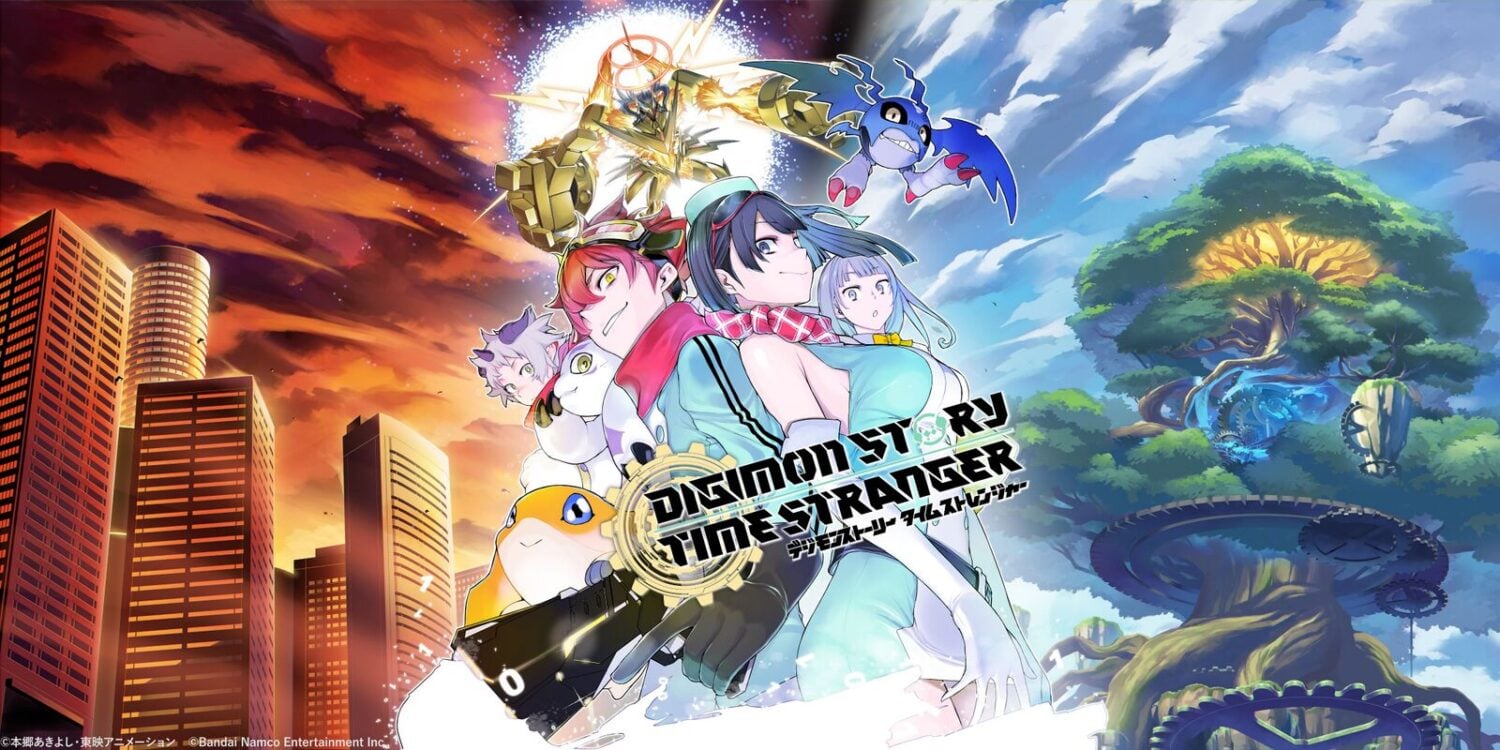
Digimon Story Time Stranger demo is now available on Switch and Switch 2
Bandai Namco has released the free Digimon Story Time Stranger demo for Nintendo Switch and Nintendo Switch 2, giving Nintendo players their first proper hands-on look at the RPG before its July 2026 launch. That is always a nice little moment, isn’t it? Instead of staring at screenshots, replaying trailers, and trying to guess how the game feels, players can now actually download the demo from the eShop and test the opening stretch for themselves. For a series like Digimon, where tone, pacing, battles, and creature progression all matter, a demo can say far more than a flashy trailer ever could.
This release is especially useful because Digimon Story Time Stranger is not just another quick spin-off tossed onto the schedule. It is positioned as a full RPG with monster-taming elements, turn-based combat, a story that moves between the human world and the Digital World, and a large roster of Digimon to collect and raise. That means players need more than a passing glance to understand its rhythm. A demo lets them feel the flow of combat, see how exploration works, and decide whether the game’s style fits their taste before committing to the full release.

The demo gives players a useful taste of the opening chapter
The main part of the demo focuses on the opening chapter of Digimon Story Time Stranger, which is the ideal place to begin. This is where the game introduces its world, tone, early characters, battle basics, and the first hints of its larger mystery. A strong RPG opening should do more than explain buttons and throw a few tutorial enemies into the player’s path. It should set the mood, create questions, and make the player think, “Alright, I need to know where this is going.” That is exactly why opening chapter access is a smart choice for this demo.
Players can expect to get a feel for exploration, conversations, battles, and Digivolution during this early portion. That matters because Digimon Story Time Stranger is built around more than simply collecting digital monsters like trading cards in a binder. The appeal comes from building a team, watching Digimon grow, testing strategies, and forming that strange but satisfying attachment to creatures that may start small and become absolute powerhouses later. It is the classic RPG snowball effect. First you are learning the basics, then suddenly you are comparing skills, planning evolutions, and treating every party slot like a life decision.
Save data transfer makes the demo worth playing before launch
One of the biggest reasons to try the demo is simple: save data from the opening chapter can carry over to the full version. That small feature changes the whole feel of the demo. Without save transfer, a demo can sometimes feel like a tasty sample at a market stall – nice, but gone the moment you walk away. With save transfer, it becomes the first step of the actual adventure. Players can begin the story, settle into the systems, and continue from that progress when the full game arrives, instead of repeating the same opening hours again.
This is especially welcome for RPG players, because the first few hours of any role-playing game can involve a fair amount of setup. You meet characters, learn menus, test mechanics, and slowly build momentum. Having to replay all of that can feel like being sent back to the start of a board game after you have finally figured out the rules. By allowing opening chapter progress to transfer, Bandai Namco gives players a real reason to jump in early. It turns the demo into a useful head start rather than a temporary preview that gets tossed aside when launch day arrives.
Central Town – Adventure Trial adds a separate look at the Digital World
The demo also includes Central Town – Adventure Trial, which gives players access to additional areas and dungeons within the Digital World of Iliad. This part sounds like a more flexible taste of what the broader adventure has to offer, with room to explore, interact with Digimon, and battle enemies outside the strict flow of the opening chapter. That is a smart addition because RPG demos can sometimes feel a little too narrow. A story opening teaches the basics, sure, but an extra trial area can show how the game breathes when it gives players more space to poke around.
There is one important detail to remember, though: progress made in Central Town – Adventure Trial does not transfer to the full version. So, yes, play it. Enjoy it. Experiment. Take a few risks. Try out battles like you are testing snacks at a buffet. Just do not treat it like permanent progress. The trial mode is better viewed as a separate playground that lets players get a fuller sense of the Digital World before release. It adds value to the demo, but the opening chapter remains the portion that matters most for anyone thinking ahead to save transfer.
Nintendo Switch and Switch 2 players get different ways to prepare
The demo being available on both Nintendo Switch and Nintendo Switch 2 is important because it gives players across Nintendo’s current ecosystem a chance to prepare. Some players may still be sticking with the original Switch for now, while others may already be testing what the Switch 2 can do with newer releases. By putting the demo on both platforms, Bandai Namco avoids making the early experience feel locked away from one side of the audience. That is a sensible move, especially for a franchise with a long-running fanbase spread across different systems and generations.
For Switch 2 players, the demo also arrives with extra curiosity attached. Whenever a game launches across both Switch and Switch 2, players naturally wonder how it feels on the newer hardware. Does it look sharper? Does it run smoother? Does handheld play feel comfortable? A demo gives players a chance to answer those questions for themselves without relying only on trailers, screenshots, or someone else’s impressions. For original Switch players, the same demo helps answer a different but equally important question: does this version feel like a good fit for the hardware they already own?
The release date is close enough to make the demo feel timely
Digimon Story Time Stranger is scheduled to release for Nintendo Switch and Nintendo Switch 2 on July 10, 2026 in many regions, while some regional listings point to July 9, 2026. Either way, the demo lands close enough to launch that it feels genuinely useful rather than strangely early. That timing gives players a chance to try the opening chapter, think about whether they want the full game, and carry over their progress shortly afterward. It is the gaming equivalent of getting seated before dinner and realizing the kitchen already smells fantastic.
A demo released near launch can also help players make a clearer choice about which version they want. RPGs are time commitments, and nobody wants to spend dozens of hours with a game that does not click. By letting players test the tone, pacing, combat, and early Digimon systems before release, Bandai Namco gives them a better foundation for that decision. It also gives fans something constructive to do while waiting. Instead of counting down the days like a kid staring at a wrapped birthday present, they can actually start the adventure and carry part of it forward.
The RPG structure keeps the focus on Digimon bonds and turn-based battles
At its heart, Digimon Story Time Stranger is an RPG with monster-taming elements, built around the bond between humans and Digimon. That phrase can sound simple, but it is really the engine that keeps the whole experience moving. Players collect Digimon, raise them, train them, and bring them into turn-based battles while the story explores the connection between the human world and the Digital World. The best Digimon games understand that these creatures are not just tools with stats. They are companions, strange digital partners, and sometimes tiny chaos gremlins with surprisingly dramatic destinies.
The turn-based structure should also appeal to players who enjoy planning instead of button-mashing their way through every encounter. Turn-based battles create space to think, compare options, and make clever use of a party’s strengths. When monster growth and Digivolution are layered on top, the result can become satisfyingly tactical. You are not just asking which move hits hardest. You are thinking about team roles, future evolution routes, weaknesses, and how each Digimon fits into the broader plan. It is a little like building a toolbox, except the tools have personalities and occasionally turn into giant digital beasts.
The Digital World of Iliad gives the demo more flavor
The Digital World of Iliad is one of the key settings in Digimon Story Time Stranger, and the demo’s Central Town – Adventure Trial gives players a chance to see more of it before launch. This matters because setting is a huge part of any RPG’s personality. Menus and mechanics may keep the gears turning, but the world is what gives the adventure its smell, color, and mood. A good Digital World should feel strange, lively, and just a bit unpredictable, like a circuit board that learned how to dream.
By offering access to Central Town and additional dungeon areas, the demo can show players more than the earliest story beats. It can give a glimpse of how Digimon inhabit the world, how environments are arranged, and how battles fit into exploration. That kind of hands-on worldbuilding is valuable because it lets players feel the difference between reading about a place and actually walking through it. For returning fans, it may spark that familiar Digimon warmth. For newcomers, it may help explain why the franchise has held onto its audience for so long.
Opening chapter progress is the part players should prioritize
Players who mainly care about carrying progress into the full version should prioritize the opening chapter. That is the section where save data transfer applies, making it the most practical part of the demo for anyone planning to buy the full game. Central Town – Adventure Trial is worth playing too, but it should be treated as a bonus space for experimentation rather than a permanent part of the save file. Keeping that distinction in mind can prevent disappointment later, especially for players who like to squeeze every possible reward out of a demo.
The best approach is simple: play the opening chapter carefully, then use the trial mode to mess around. Learn the battle flow, test Digivolution, explore the Digital World, and get comfortable with the game’s pace. Since the opening progress transfers, it makes sense to treat that portion like the beginning of the real adventure. The trial mode, meanwhile, can be the low-pressure sandbox. That balance gives the demo two different jobs, and both are useful. One moves players forward. The other lets them play around with the toy box before the full set arrives.
Why this demo matters for returning fans and curious newcomers
For returning Digimon fans, the demo is a welcome chance to see how Digimon Story Time Stranger feels on Nintendo hardware before release. Many longtime fans already know the pleasure of raising Digimon, experimenting with evolutions, and getting attached to a team that started as a practical choice and somehow became emotionally non-negotiable. The demo gives those players an early way to test the latest entry’s tone and systems. It answers a basic but important question: does this feel like the Digimon RPG experience they were hoping for?
For newcomers, the demo may be even more valuable. Digimon can seem intimidating from the outside because there are so many creatures, terms, evolutions, and worlds connected to the franchise. A free demo lowers that barrier. Players do not need to know every Digimon lineage or remember every anime reference to start. They can simply download the demo, play the opening chapter, and see whether the world pulls them in. That is the quiet power of a good demo. It turns curiosity into experience, and experience is much easier to trust than hype.
What players should know before downloading the demo
Before downloading the Digimon Story Time Stranger demo, players should understand what it includes and what transfers. The opening chapter is the key portion for save data carryover, while Central Town – Adventure Trial is a separate mode made for additional exploration and experimentation. That distinction is the main thing to keep in mind. It is not complicated, but it does matter. Nobody wants to spend time polishing progress in a trial mode only to discover later that it was never meant to carry into the full version.
Players should also remember that the demo is available through the eShop on Nintendo Switch and Nintendo Switch 2. Since the full game launches in July 2026 on both systems, this is a good moment to test which version feels right. Anyone who already knows they want the game can use the demo as a head start. Anyone still unsure can use it as a pressure-free test drive. Either way, the demo does exactly what a good pre-release sample should do: it opens the door, hands players the keys, and lets them decide whether they want to keep driving.
The demo helps players judge pacing, battles, and tone
RPGs live or die by their rhythm. A game can have a great premise and a huge creature roster, but if the pacing feels awkward or the battles lack spark, players will notice quickly. That is why this demo matters beyond the simple fact that it exists. It gives players a direct way to judge the early flow of Digimon Story Time Stranger. They can see how quickly the story gets moving, how battles are introduced, how Digimon progression begins, and whether the opening chapter has enough personality to make them want more.
Tone is just as important. Digimon has always balanced adventure, friendship, danger, and digital weirdness, which is a mix that can be charming when it lands well. The demo gives players a chance to see how Time Stranger handles that balance. Does the mystery feel intriguing? Do the Digimon interactions have warmth? Does the world feel inviting enough to explore for dozens of hours? These are the kinds of questions that cannot be answered properly through screenshots alone. Sometimes, you just need to press start and let the game speak for itself.
Digimon Story Time Stranger has a clear chance to stand out on Nintendo systems
Digimon Story Time Stranger arrives on Nintendo Switch and Nintendo Switch 2 at a strong moment for monster-taming RPGs. Nintendo audiences are already familiar with creature-collecting adventures, but Digimon brings a different flavor to the table. Its identity leans into digital worlds, branching evolutions, bonds between partners, and stories that often blend emotional stakes with sci-fi strangeness. That gives the game room to stand apart. It does not need to be another version of something players already know. It can be its own strange, energetic, data-powered beast.
The demo is a smart way to communicate that identity. Instead of asking players to simply trust the brand name, it lets them experience the opening directly. That matters because Digimon’s appeal can be very specific. Some players come for the evolutions. Some come for the battles. Some come for the story. Some just want to raise their favorite Digimon and pretend they are not emotionally attached when things get dramatic. The demo gives each kind of player something to inspect before launch, and that makes the full release feel more approachable.
Conclusion
The free Digimon Story Time Stranger demo is a strong move from Bandai Namco because it gives Nintendo Switch and Nintendo Switch 2 players a meaningful way to start before the full release. The opening chapter offers transferable progress, making it worth playing for anyone planning to continue into the full game. Central Town – Adventure Trial adds extra room to explore the Digital World of Iliad, even though progress from that mode stays separate. With the Nintendo release set for July 2026, the demo lands at the right time and gives both returning fans and newcomers a clear reason to jump in. For anyone curious about the battles, Digivolution, world, or story, this is the easiest way to see whether Time Stranger deserves a spot on the summer play list.
FAQs
- Is the Digimon Story Time Stranger demo available on Nintendo Switch?
- Yes, the demo is available for Nintendo Switch and Nintendo Switch 2 through the eShop. Players can download it for free and try the opening portion of the game before the full Nintendo release in July 2026.
- Does demo progress carry over to the full version?
- Yes, progress from the opening chapter can be transferred to the full version of Digimon Story Time Stranger. However, progress from Central Town – Adventure Trial does not transfer, so that part should be treated as a separate trial mode.
- What can players do in the demo?
- Players can experience the opening chapter, including early exploration, conversations, battles, and Digivolution. The demo also includes Central Town – Adventure Trial, which lets players explore additional areas and dungeons in the Digital World of Iliad.
- When does Digimon Story Time Stranger release on Switch and Switch 2?
- Digimon Story Time Stranger is listed for release on July 10, 2026 for Nintendo Switch and Nintendo Switch 2 in many regions. Some regional Bandai Namco listings show July 9, 2026, so the exact date may depend on location.
- Is the demo worth playing before launch?
- Yes, especially for players who want a head start. Since opening chapter progress carries over, the demo can serve as the beginning of the full adventure rather than a separate sample that needs to be replayed later.
Sources
- DIGIMON STORY TIME STRANGER’s demo is now available on Nintendo Switch and Nintendo Switch 2, Bandai Namco Entertainment Europe, June 2026
- Digimon Story Time Stranger for Nintendo Switch 2, Nintendo, 2026
- Digimon Story Time Stranger Official Site, Bandai Namco Entertainment America, 2026
- Digimon Story Time Stranger – Nintendo Switch and Nintendo Switch 2 Specs, Bandai Namco Entertainment America, February 6, 2026
- PSA: Digimon Story Time Stranger Demo Now Available For Switch 1 And 2, Nintendo Life, June 2026