














Summary:
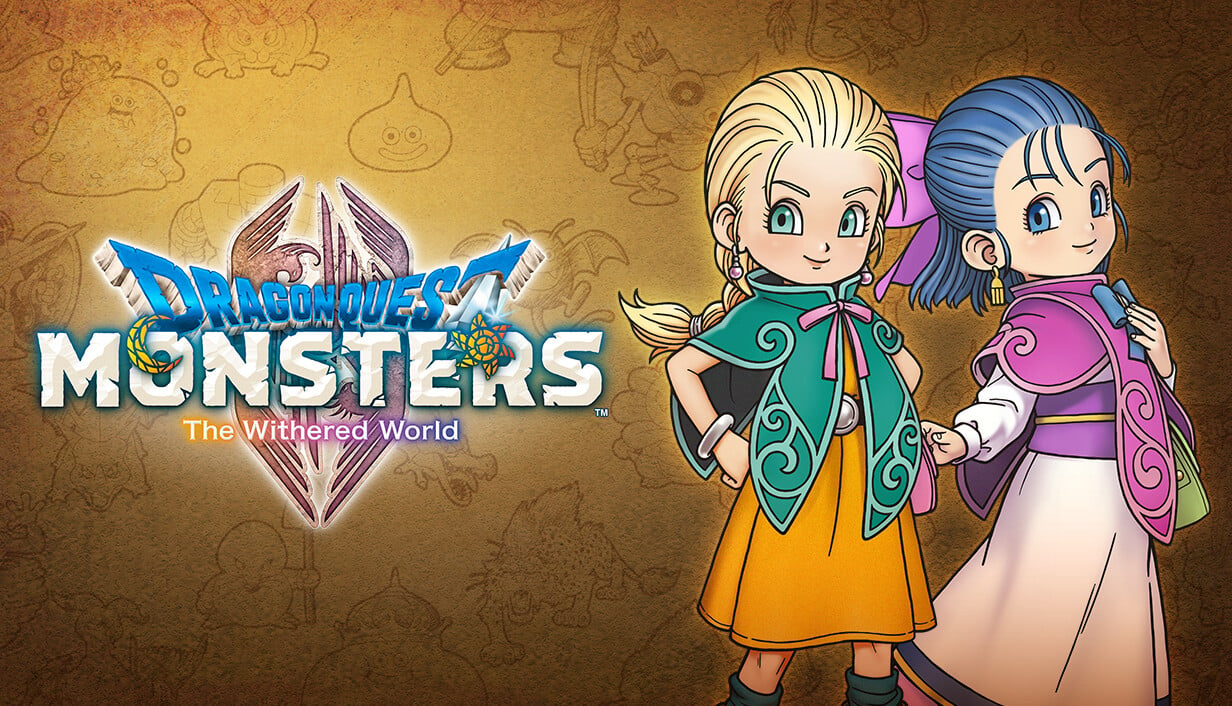
Dragon Quest Monsters: The Withered World puts familiar monster-collecting action in a fresher, faster package. Square Enix has recently outlined new systems that change how you recruit, fight and team up: Quick Scouting lets you try recruiting monsters on the overworld by tossing meat at them, while the Scout Run gives you a dedicated paddock and Scouty Snacks for snagging rarer recruits. Joint Battles scale encounters up so Bianca and Nera – and even other players – can combine parties to take on massive foes that would overwhelm a single team. The story thread introduces Almira, the missing Watcher of the Archeagles, who ties into Witherwood’s mystery and the Archeagles’ sudden fall from grace. If you play on Nintendo Switch or Nintendo Switch 2, these systems change how you approach exploration, arena play and online co-op. NintendoReporters readers can use the demo to preview Quick Scouting and bring demo progress into the full game before the December 3, 2026 launch.
Dragon Quest Monsters: The Withered World – What Quick Scouting Brings
Quick Scouting rewrites a core convention of the Dragon Quest Monsters series by letting you recruit without forcing a traditional battle first. Instead of engaging a wild monster, dragging it into combat and setting up a Show of Force, you can now target a beast you spot in the field and toss a piece of meat at it to try to convince it to join on the spot. The feature is elegant because it reduces downtime and gives you an on-the-go option when you’re exploring a new area and don’t want to stop for a fight. Meat quality matters – better cuts raise your chances – and some monsters prefer oddball varieties, which encourages experimentation and a little bit of culinary role-playing. If your party or reserve slots are full, recruits automatically move to the monster depot, so you won’t lose an opportunity just because your roster is packed. For anyone who likes hunting specific families or steadily building a stable of favorites, Quick Scouting feels like a quality-of-life improvement that keeps the thrill of chance intact while trimming tedious steps.
Scout Run and Scouty Snacks – A New Way to Farm Rare Monsters
The Scout Run opens later in Witherwood as a special paddock where rare monsters appear that don’t show up in normal wild encounters – and they’re meant to be recruited only through Quick Scouting. When you enter the Scout Run you receive a quota of Scouty Snacks, limited-use items you throw at the enclosure’s inhabitants to attempt recruitment. The system creates a focused, repeatable loop that’s great for players who want to target a particular rare recruit without grinding random battles. Over time, Square Enix plans for additional monsters to populate the Scout Run as the story progresses, making it worth repeated visits. There’s also DLC that modifies the Scout Run experience – items like the Scout Run VIP Card expand spawn rates and provide extra Scouty Snacks for players who want to accelerate their collection. The Scout Run gives recruiting a carnival-like feel – equal parts planning and luck – and it fits nicely alongside Quick Scouting as a more player-friendly way to expand your roster.
Joint Battles – Team Up Against Massive Foes
Joint Battles are the new headline for large-scale combat in The Withered World. When a massive monster blocks the path, it isn’t something one party can handle alone – that’s when Bianca and Nera must combine forces. In these set-piece fights each side fields two parties and shares HP and MP gauges across all monsters, creating a sense of shared fate that changes how you manage resources. If you are playing as Bianca, she commands the main party while Nera controls the reserves; swap character control and the roles reverse. That design makes Joint Battles feel like a staged cooperation exercise where timing, reserve management and tactical switches all matter. Massive monsters have mechanics that punish simple button-mashing and reward coordinated play, meaning the encounters are more about reading the monster and reacting than spamming your strongest moves until something gives. Joint Battles also expand into arena and online modes, so they are core to both single-player progression and competitive or cooperative multiplayer sessions.
Arena, Online Play and Rewards
Joint Battles aren’t just story spectacles – they’re playable in the battle arena and online with friends or other players, and that opens the door to competitive and cooperative strategies. In arena Joint Battles you’re effectively proving you can beat a category of massive monsters under constraints, with the opportunity to earn special rewards by finishing fights before round 10. Online Joint Battles let up to four players team up and coordinate across multiple parties, which turns the system into a built-in raid-like experience that encourages communication and role specialization. Rewards for early victory in arena or online matches can include items, unlocks and bragging rights, making these modes valuable beyond just the spectacle of a giant foe. If you enjoy group tactics, planning party compositions and executing multi-party combos, Joint Battles in arena and online modes give you an immediate reason to keep experimenting with different monster builds and strategies.
Combat Mechanics – Shared Gauges, Pet Hates, and the Rage Gauge
Joint Battles introduce layered combat mechanics that affect how you approach every decision in a fight. Parties in a Joint Battle use shared HP and MP gauges that all monsters draw from, which forces you to consider sustainability and not just damage-per-turn. Massive enemies come with Pet Hates – specific player actions or moves that irritate them and fill a Rage Gauge. When the Rage Gauge reaches capacity, the monster releases a potent, high-damage attack that can swing the tide. But RPG design is generous here: once the monster expends that burst of fury it becomes exhausted and vulnerable, opening a window to land heavy damage or finish the fight. Those cycles of anger and exhaustion create rhythm in Joint Battles: provoke, survive the big hit, then strike while the foe is down. The system rewards players who can bait out Rage at the right moment, manage shared resources across parties and time their strongest combos to hit when the monster is most fragile.
How to Approach Joint Battles Strategically
Strategy in Joint Battles leans heavily on pre-battle preparation and in-battle role clarity. Because HP and MP are shared across parties, balancing healing, defensive options and burst damage is crucial. Consider dedicating one party to sustain – items, healing spells and status prevention – while the other focuses on setup, debuffs and big damage windows. Tactics menus let you direct reserves with a degree of autonomy, so set clear roles before the fight and adapt on the fly when the monster’s Rage Gauge spikes. Pet Hates encourage thoughtful action sequence – sometimes the best move is to bait a reaction and then punish the monster while it’s exhausted. Take advantage of arena practice runs to learn a monster’s hates and patterns before attempting online co-op runs. If you want to dominate Joint Battles, practice coordinated chains with friends, polish party roles, and keep a stock of items that shore up your shared health and mana pool.
Almira, the Archeagles, and Witherwood’s Mystery
Storywise, the update introduces Almira, the priestess who once watched over Witherwood and tended the Archeagles Michelos and Lucifus. Almira’s disappearance after the Evil Eye descended and the strange turn of events where Lucifus attacks the townspeople create a central mystery that threads into Bianca and Nera’s journey. Almira is described as kind and selfless, a figure adored by Witherwoodians, which makes her sudden absence feel heavy and personal. The narrative stakes of finding Almira and understanding why an Archeagle went rogue add emotional weight to the monster-collecting loop. As you recruit new monsters and grow your parties, the story gives context to the world’s decay and the unusual behaviors of formerly protective creatures. If you care about lore, Almira’s arc promises to tie gameplay systems to the world’s history and to provide narrative payoffs as you progress.
New Monsters Spotlight – Hammerhood, See slug, Panda Pilgrim
Square Enix also highlighted fresh recruits that showcase how varied The Withered World’s roster will be. Hammerhood honcho is a beast-family bruiser packing a massive mallet and a twisted headband – expect it to trade heavy-hitting physical play for slower mobility. See slug stands out with a single golden eye and the nature-family Bottom Feeder Talent, which teaches water-elemental spells and expands tactical options for parties that need elemental coverage. The Panda pilgrim brings traditional garb and a walking stick that doubles as a weapon – a neat visual that hints at unexpected moves. These three reveal a design philosophy that blends recognizable Dragon Quest whimsy with mechanics that matter in battle. Whether you want a slow-hitting tank, a magic-leaning support or a quirky melee pick, the new monsters suggest there will be flavorful and practical choices for building teams that suit your playstyle.
Conclusion
Dragon Quest Monsters: The Withered World refines classic monster-wrangling with features that speed up recruitment and scale combat to feel epic without becoming tedious. Quick Scouting and the Scout Run give players low-friction ways to expand their rosters while maintaining the randomness and delight of finding a rare monster. Joint Battles transform story fights into strategic tests that reward coordination and resource management – and they carry into arena and online modes so the system has longevity beyond single-player. Story additions like Almira and the Archeagles add narrative stakes that make your monster roster matter in the world itself. With the demo available and a December 3, 2026 release on the horizon for Nintendo Switch 2 and Nintendo Switch, now is a great time to sample these systems and plan the parties you want to bring into the full game.
FAQs
- When does Dragon Quest Monsters: The Withered World release?
- Dragon Quest Monsters: The Withered World launches on December 3, 2026 for most platforms, with the Steam release following on December 4, 2026.
- What is Quick Scouting and how does it work?
- Quick Scouting lets you attempt to recruit visible wild monsters by targeting them and throwing meat, with better cuts improving success chances and full parties sending recruits to the depot.
- What is the Scout Run?
- The Scout Run is a paddock in Witherwood where players get Scouty Snacks to recruit rare monsters that don’t appear in normal wild encounters.
- How do Joint Battles change combat?
- Joint Battles have two parties per side that share HP and MP gauges, include mechanics like Pet Hates and a Rage Gauge, and can be played in arena or online with friends.
- Who is Almira in the story?
- Almira is the Watcher of the Archeagles and Witherwood’s guardian, a priestess who vanished after the Evil Eye and whose absence ties into the region’s unfolding mystery.
Sources
- Dragon Quest Monsters: The Withered World details Quick Scouting, Scout Run, Joint Battles, Almira, and new monsters, Gematsu, September 24, 2026
- “DRAGON QUEST MONSTERS: The Withered World” – Latest Updates Vol. 1, Square Enix Asia News Portal, June 12, 2026
- Dragon Quest Monsters The Withered World Details New Features, TwistedVoxel, September 25, 2026
- Dragon Quest Monsters: The Withered World — Quick Scouting and Joint Battles Detailed by Square Enix, NintendoNewsHub, September 24, 2026