














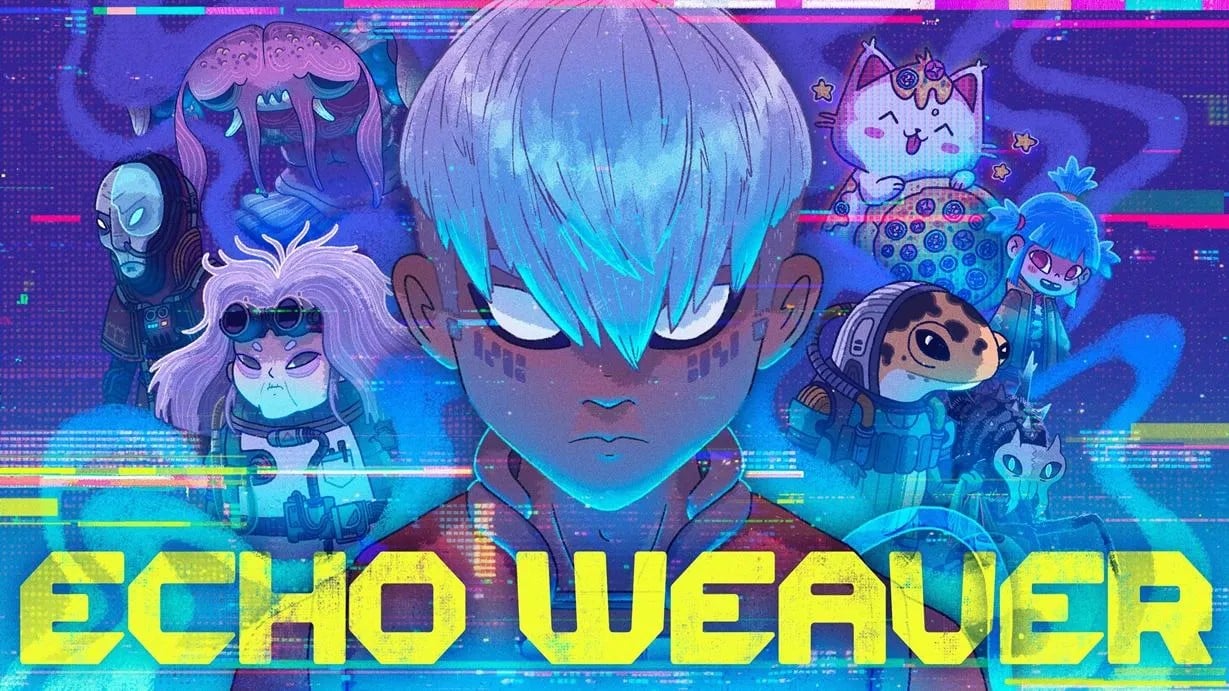
Summary:
Publisher Akupara Games and developer Moonlight Kids have confirmed that Echo Weaver will launch for Nintendo Switch 2 on October 8, 2026. The unusual metroidvania follows the last Weaver, a lone figure exploring the remains of a ruined society caught inside a fatal time loop. Rather than collecting a familiar assortment of weapons, keys, and permanent movement abilities, players advance by discovering information that changes how they understand and navigate the world.
Moonlight Kids describes this structure as a metroidbrainia, a style of exploration game in which knowledge acts as the real form of progression. The last Weaver may technically possess everything needed to move forward from the beginning, but players must learn how the world’s systems, hidden routes, and repeating events work before those possibilities become clear. Each loop offers another chance to follow leads, meet survivors, gather echoes, and experiment with potential solutions.
Time itself also serves as a consumable currency. Players can extend the current loop by collecting additional time, but many useful actions require them to spend part of that limited resource. Opening gates, healing damage, trading with characters, and accessing other opportunities may all reduce the time remaining before the cycle resets. This creates a constant push and pull between exploration and efficiency. The newly released trailer provides a closer look at Echo Weaver’s hand-drawn environments, rapid platforming, mysterious characters, and collapsing timeline ahead of its Nintendo Switch 2 debut.
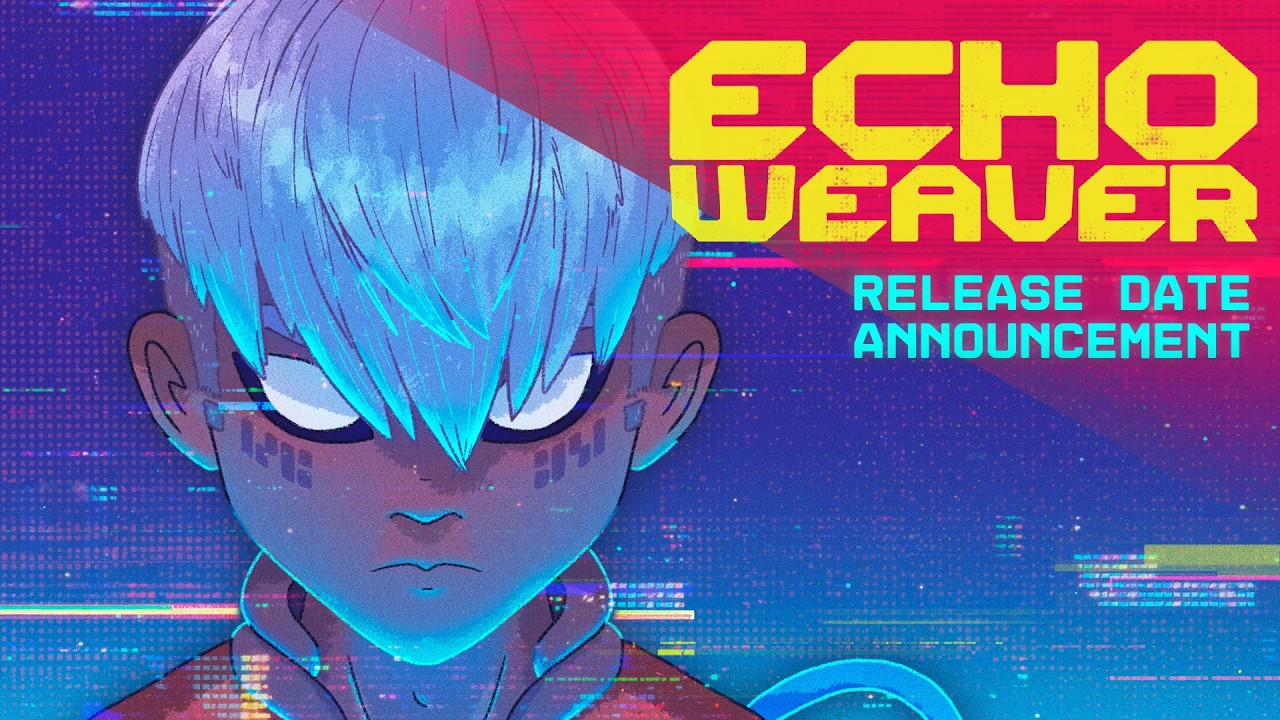
Echo Weaver Launches for Nintendo Switch 2 on October 8
Echo Weaver is officially heading to Nintendo Switch 2 on October 8, 2026, bringing Moonlight Kids’ knowledge-driven adventure to Nintendo’s latest console. Akupara Games announced the release date alongside a new trailer showing the last Weaver racing through a world that can rewind at almost any moment. The game will also be available for PlayStation 5, Xbox Series X|S, and PC, giving players several ways to enter its repeating timeline. Its Nintendo Switch 2 release should be particularly appealing to anyone who enjoys atmospheric exploration games that work well in shorter sessions. A complete loop may end, but the information learned during it remains useful, making each attempt feel meaningful rather than disposable.
The October launch places Echo Weaver among a growing selection of original adventures coming to Nintendo Switch 2. It does not simply copy the usual metroidvania formula, either. Its central systems reshape how exploration, progression, and resource management work. Instead of wandering until a newly acquired double jump conveniently solves every problem, players must pay attention, remember details, and test what they have learned. Curiosity becomes a tool, and the world becomes a giant puzzle box. Every closed door seems to whisper that the answer is already nearby, provided you know where to look.
Moonlight Kids Introduces a Metroidbrainia Built Around Knowledge
Moonlight Kids calls Echo Weaver a metroidbrainia, a playful term that neatly captures its most important idea. Traditional metroidvania games often block routes with physical requirements. You might need a grappling hook, a stronger weapon, or a particular movement ability before you can reach a new location. Echo Weaver takes a different approach. The last Weaver can already perform the actions required to progress, but the player does not initially understand every possibility. Discovery therefore replaces the usual stream of equipment upgrades.
This structure turns observation into a core mechanic. A symbol that appears decorative during an early loop may later reveal the purpose of a hidden passage. A survivor’s unusual comment could point toward a shortcut, while an environmental detail may explain how to manipulate the timeline. Returning to an old area is not simply a matter of checking whether a new key fits a lock. You return because your understanding has changed. It is a satisfying concept because the player’s own memory develops alongside the protagonist’s journey. The game does not only ask whether you can reach a destination. It asks whether you have learned enough to recognize the path.
Players Become the Last Weaver of a Ruined Society
At the centre of Echo Weaver is the last Weaver, the remaining trace of a society that has already fallen. The character is trapped in a repeating cycle, surrounded by ruins, survivors, and fragments of a history that no longer fit together cleanly. Players must investigate what happened to this civilisation while also uncovering the Weaver’s personal connection to the catastrophe. That dual mystery gives the journey an emotional reason to continue beyond simply escaping the loop.
The title’s language suggests that weaving is more than a name or occupation. The last Weaver is effectively stitching together scattered events, relationships, and discoveries, trying to create a future from threads that repeatedly unravel. Each loop may reset physical progress, but it cannot erase understanding. That makes the protagonist’s apparent isolation feel less hopeless. Even a failed attempt can expose a new clue or reveal another side of a character. The civilisation may be broken, but its story remains woven into the landscapes and people left behind. Players must patiently pull at those loose threads without making the whole mystery even more tangled.
Every Loop Provides Another Chance to Understand Provenance
The world of Echo Weaver is known as Provenance, and it appears to function as both a physical setting and an enormous interconnected mystery. Every loop gives players another opportunity to study its routines, explore its biomes, and investigate details they may have overlooked before. A route that seemed impossible during one attempt may become obvious once a separate clue explains its hidden logic. The reset therefore acts less like a punishment and more like another turn of the page.
That design can make repeated locations feel different without requiring the world itself to change completely. Your goals evolve as your knowledge grows. During an early loop, you might simply attempt to travel as far as possible. Later, you may enter the same region with a precise plan, racing toward a survivor before an event occurs or conserving enough time to activate a particular mechanism. Provenance becomes familiar, but it should not become predictable too quickly. Like revisiting a childhood home and suddenly noticing a door you somehow ignored for years, the surprise comes from seeing something familiar with sharper eyes.
Time Functions as a Valuable and Consumable Currency
Time is not merely a narrative theme in Echo Weaver. It is a resource that players actively collect, manage, and spend. Pickups scattered throughout Provenance can extend the current loop, providing additional opportunities to explore before the timeline resets. However, many useful actions draw from the same supply. That means every decision carries a cost. The question is not simply whether opening a gate is possible, but whether reaching whatever lies beyond it is worth sacrificing a portion of the current cycle.
This mechanic should create a natural sense of urgency without relying entirely on conventional countdown pressure. Spending time could provide immediate safety, access, or information, but it might also shorten the window available for another objective. Players who carefully plan a route may squeeze several discoveries into one loop, while an impulsive choice could leave them scrambling as the reset approaches. It is an elegant way to make time feel tangible. Instead of watching seconds disappear in the corner of the screen, you are effectively carrying them in your pocket and deciding when to pay.
Spending Time Can Open Gates, Restore Health, and Enable Trades
Echo Weaver allows the remaining duration of a loop to be exchanged for practical benefits. Akupara Games has confirmed that time can be used to unlock gates, heal, trade, and perform additional actions. These options ensure that the resource affects exploration, survival, and interaction rather than serving as a single-purpose meter. A player who takes damage may preserve the current attempt by healing, but doing so could remove the time needed to investigate one final lead. Likewise, a trade may reveal something valuable while making the rest of the journey considerably tighter.
The best decisions may not always be the most cautious ones. Spending nearly everything on a promising route could lead to an important secret, even if the loop ends moments later. On another attempt, saving time instead of healing may be worthwhile because the player already knows how to avoid an upcoming hazard. The balance changes as skill and knowledge improve. Early loops may feel frantic, but familiarity should gradually transform them into carefully rehearsed runs. What once resembled a desperate sprint can eventually become a well-practised performance, with each jump, purchase, and shortcut happening exactly when intended.
Secrets Replace Traditional Equipment and Ability Upgrades
Echo Weaver does not use a conventional progression system filled with unlockable powers and equipment. Its central promise is strikingly direct: no upgrades, no unlocks, just secrets. Players can already do everything they need to do, although the methods remain hidden until they discover the necessary information. This approach changes the meaning of progress. The character may not become stronger in the traditional numerical sense, but the person holding the controller becomes far more capable.
Secrets can take many possible forms within such a structure. Some may explain movement techniques, while others could identify hidden passages, character routines, or unusual interactions between environmental systems. The important point is that knowledge remains valuable after a loop resets. Once you understand a solution, you can apply it immediately during every future attempt. That can produce wonderfully satisfying moments when an obstacle that seemed immovable suddenly becomes simple. Nothing about the character has changed. You have changed, and the world responds differently because you finally understand the rules it was following all along.
Knowledge Changes How Players Navigate Familiar Locations
Knowledge-based progression can turn backtracking into something more rewarding than a routine search for coloured locks. When players revisit an area in Echo Weaver, they may recognise clues that made little sense earlier or notice that a familiar object can be used in an unexpected way. The geography remains recognisable, but its meaning shifts. This encourages players to remember unusual details instead of rushing past them in search of obvious rewards.
It also creates opportunities for sequence-breaking and experimentation. When the main barrier is understanding rather than equipment, a particularly observant player might solve a mystery earlier than expected. Someone else may uncover the same answer through a completely different chain of clues. That flexibility can make conversations around the game especially entertaining, as players compare discoveries and realise how much they missed. Of course, it may also lead to the classic experience of spending an hour on a puzzle before learning that the answer was standing three steps to the left. Humbling? Certainly. Memorable? Absolutely.
Handcrafted Biomes Reward Careful Exploration and Experimentation
Provenance is presented as a living, handcrafted world filled with beautifully drawn biomes. The available footage shows colourful environments, unusual architecture, dramatic lighting, and spaces designed around fast movement. These regions are more than decorative backdrops. Their structures, visual details, and repeating events are likely to contain the clues players need to understand the loop. Careful exploration should therefore matter just as much as platforming ability.
A handcrafted environment can communicate information in subtle ways. Repeated patterns might indicate a hidden route, while landmarks can help players navigate efficiently during later runs. Distinct biomes also make it easier to build a mental map of the world. Once the clock is ticking and every detour matters, recognising a location immediately becomes valuable. Players will gradually learn which paths lead to time pickups, which hazards can be bypassed, and which areas hold unfinished mysteries. Provenance may initially feel vast and intimidating, but repeated journeys should turn it into a place the player understands almost instinctively.
Quirky Survivors Bring Personality to the Repeating Timeline
Echo Weaver’s ruined world is not empty. Players will encounter a cast of quirky survivors whose lives and relationships are also shaped by the loop. These characters provide leads, trades, personal stories, and emotional connections within a setting where events are constantly rewound. Their presence may help prevent the repeating structure from feeling cold or mechanical. After all, learning how a puzzle works is satisfying, but learning why someone behaves a certain way can be far more affecting.
Relationships inside a time loop raise fascinating questions. What happens when the Weaver remembers conversations that another character has forgotten? Can trust survive when one person repeatedly returns to the beginning? A survivor may appear humorous during one encounter and heartbreaking during another once the player understands the circumstances surrounding them. Repetition creates room for contrast, allowing familiar dialogue or behaviour to gain a completely different meaning. The cast may also act as living signposts within the timeline, with their locations and actions helping players determine when and where important events will occur.
Echoes and Faster Routes Encourage Greater Mastery
Players can harvest potent echoes while exploring Provenance and use each loop to refine their approach. Although every attempt has a limited duration, improved movement and route planning should allow experienced players to cover much more ground. This creates a satisfying form of mastery. Progress is visible not through a larger inventory screen, but through smoother execution. A difficult sequence becomes reliable, a confusing junction becomes familiar, and a long journey becomes a rapid chain of carefully timed movements.
Echoes appear to play an important role within that rhythm, although every detail of their function has not yet been disclosed. What is clear is that players will track them down while investigating the world and use their growing understanding to reshape future attempts. The game encourages you to blaze through new routes rather than cautiously repeat the same journey forever. Over time, each loop should feel less like starting over and more like editing a plan. Unnecessary steps disappear, risks become calculated, and the route gradually sharpens until it cuts cleanly through the timeline.
The Announcement Trailer Highlights Fluid Movement and Urgency
The release-date trailer offers a closer look at Echo Weaver’s platforming and exploration. The Weaver can be seen jumping, gliding, and moving quickly through environments while the surrounding timeline appears unstable. The footage emphasises momentum, suggesting that efficient traversal will become increasingly important as players learn the layout of Provenance. Movement needs to feel responsive in a game built around repeated routes, and the trailer presents a protagonist capable of crossing large spaces with speed and precision.
The visual presentation also supports the central time-loop concept. Environments seem fractured, dangerous, and slightly dreamlike, as though the world itself is struggling to remain intact. Moments of calm exploration are contrasted with bursts of movement and apparent temporal disruption. That combination gives Echo Weaver an identity of its own. It is mysterious without becoming visually gloomy at every turn, while its hand-drawn style keeps the ruined civilisation inviting enough to explore repeatedly. The clock may be an enemy, but the scenery still makes a persuasive argument for stopping to look around.
Nintendo Switch 2 Expands Echo Weaver’s Multiplatform Release
Echo Weaver will launch simultaneously for Nintendo Switch 2, PlayStation 5, Xbox Series X|S, and PC on October 8. Its inclusion on Nintendo Switch 2 ensures that players can experience the complete time-loop adventure on a portable system as well as a television. That flexibility could suit the game’s repeating structure particularly well. Individual loops may provide natural stopping points, making it easy to attempt one more route during a shorter play session.
The Nintendo Switch 2 version also gives the game access to an audience that has traditionally embraced exploration-focused independent releases. Echo Weaver’s combination of metroidvania movement, environmental puzzles, mysterious storytelling, and knowledge-based progression feels well matched to players who enjoy slowly untangling interconnected worlds. Its success will depend on how clearly its secrets are communicated and how rewarding repetition remains across the full experience. Still, the underlying idea is immediately intriguing. When time is money and knowledge is power, every second spent paying attention may become the most useful upgrade of all.
Conclusion
Echo Weaver will bring its unusual metroidbrainia structure to Nintendo Switch 2 on October 8, 2026. Moonlight Kids is building an adventure where the last Weaver must explore Provenance, investigate a fallen civilisation, and find a way to reshape a fatal loop. Time can be collected and spent, turning every gate, trade, and healing opportunity into a meaningful decision. Meanwhile, secrets replace traditional abilities, ensuring that discovery and understanding remain central to progression.
The result promises a different kind of metroidvania, one where the most important upgrade happens in the player’s mind. Each attempt should reveal another clue, a more efficient path, or a deeper understanding of the survivors caught inside the repeating timeline. With its hand-drawn biomes, fluid platforming, unusual resource system, and mystery-driven structure, Echo Weaver has the potential to become one of Nintendo Switch 2’s more distinctive independent releases of 2026.
FAQs
- When will Echo Weaver launch for Nintendo Switch 2?
- Echo Weaver will launch for Nintendo Switch 2 on October 8, 2026. It will arrive on the same date for PlayStation 5, Xbox Series X|S, and PC.
- Who is developing and publishing Echo Weaver?
- Echo Weaver is being developed by Moonlight Kids and published by Akupara Games.
- What is a metroidbrainia?
- A metroidbrainia is an exploration game in which knowledge serves as the main form of progression. Players advance by learning secrets and understanding hidden systems rather than collecting conventional ability upgrades.
- How does time work in Echo Weaver?
- Time is a consumable resource that determines how long the current loop lasts. Players can collect additional time and spend it to open gates, heal, trade, and perform other useful actions.
- Does Echo Weaver have traditional upgrades?
- No. Echo Weaver replaces traditional equipment and ability unlocks with secrets. The last Weaver can already perform the required actions, but players must discover how the world’s systems work.
Sources
- Echo Weaver Closes The Loop On an October 8 Release, GamesPress, July 21, 2026
- Echo Weaver Launches October 8 for PS5, Xbox Series, Switch 2, and PC, Gematsu, July 21, 2026
- Echo Weaver Announced for Nintendo Switch 2, Nintendo Everything, July 21, 2026
- Time-Based Metroidvania Echo Weaver Closes the Loop on an October 8th Release, Saving Content, July 22, 2026
- Akupara Games Monthly Dev Log – March 2025, Akupara Games, April 4, 2025