














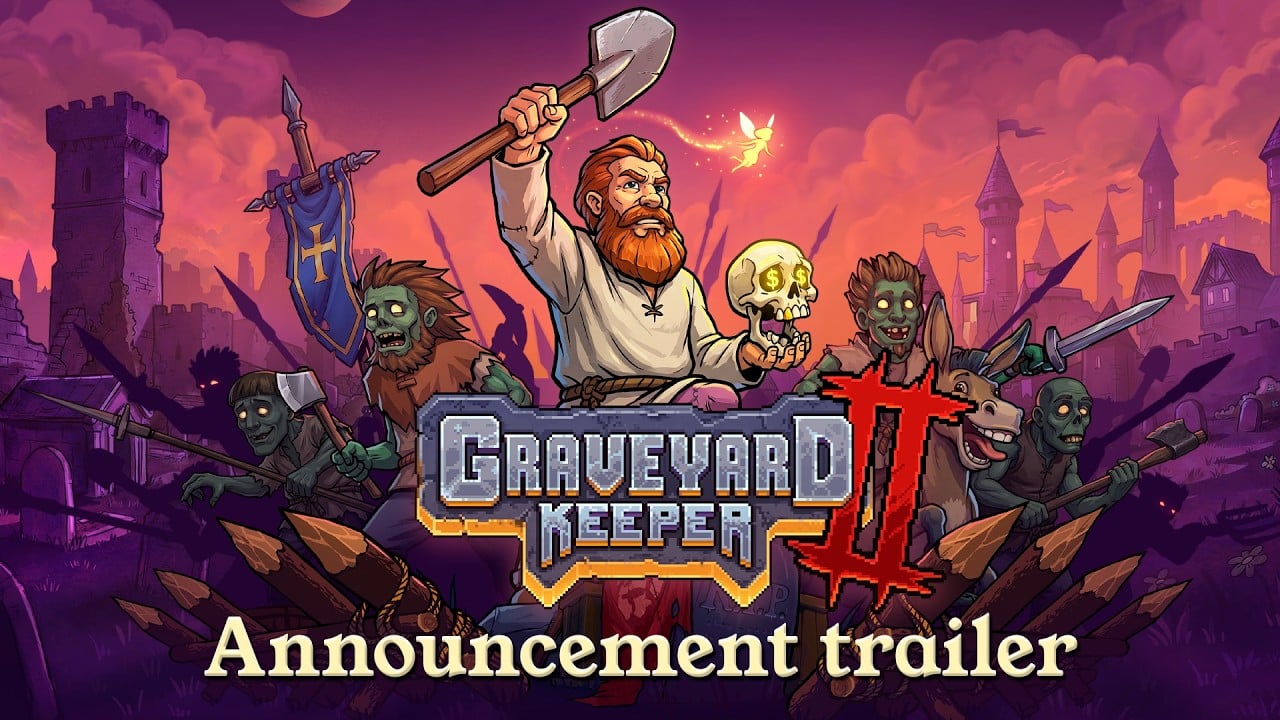
Summary:
Graveyard Keeper II has been revealed as the follow-up to the original medieval management favorite from tinyBuild and Lazy Bear Games, and the pitch already feels bigger in every direction that matters. The familiar foundation is still there, which is great news for anyone who enjoyed the oddball rhythm of tending graves, collecting resources, crafting machinery, and squeezing every possible coin out of a gloomy little corner of the world. This time, though, the sequel is not content with simply repeating the same formula with shinier tools. It pushes outward. You are no longer just keeping the cemetery running while chaos bubbles away in the background. You are the Grand Inquisitor, and that change gives the whole setup a larger sense of purpose, pressure, and mischief.
What stands out most is how the sequel combines several ideas that could complement each other beautifully if they land well. Graveyard management returns as the core identity, but automation appears to be more central, town restoration looks more meaningful, and combat enters the picture through zombie army battles and defensive fortifications. That combination could make the whole experience feel less like a collection of disconnected tasks and more like a living system where every decision feeds into another. Gather resources, expand operations, rebuild homes, keep townsfolk useful, train your undead workers, and prepare for incoming threats. It sounds messy in the best possible way.
There is also a strong sense that the developers understand what people liked about the original. The humor remains warped, the setting is still grotesque, and the world clearly has no interest in becoming polite just because the sequel is larger. That matters. Graveyard Keeper was never meant to feel neat and tidy. It worked because it was charmingly unhinged, like a crooked little marketplace run by people who would absolutely smile while selling you something suspicious in a glass jar. Graveyard Keeper II appears ready to keep that personality intact while giving players more to manage, more to defend, and more to profit from.
Graveyard Keeper II starts by widening the series formula
One of the most promising things about Graveyard Keeper II is that it does not look satisfied with being more of the same wearing a new hat. It seems to take the original formula and stretch it outward into something broader and more layered. In the first game, much of the appeal came from juggling systems that were strange, morbid, and surprisingly relaxing once you settled into them. Recently announced details suggest the sequel wants to keep that satisfying loop but place it inside a world with greater stakes. You are not just tending graves and chasing profit anymore. You are restoring a town, commanding undead helpers, and defending the realm from a zombie apocalypse. That shift makes the sequel feel less like a simple return trip and more like the village got bigger, the problems got louder, and someone handed you the keys while laughing nervously. It is still the same oddball universe, but the scale of responsibility looks much larger, which could give every task more meaning.
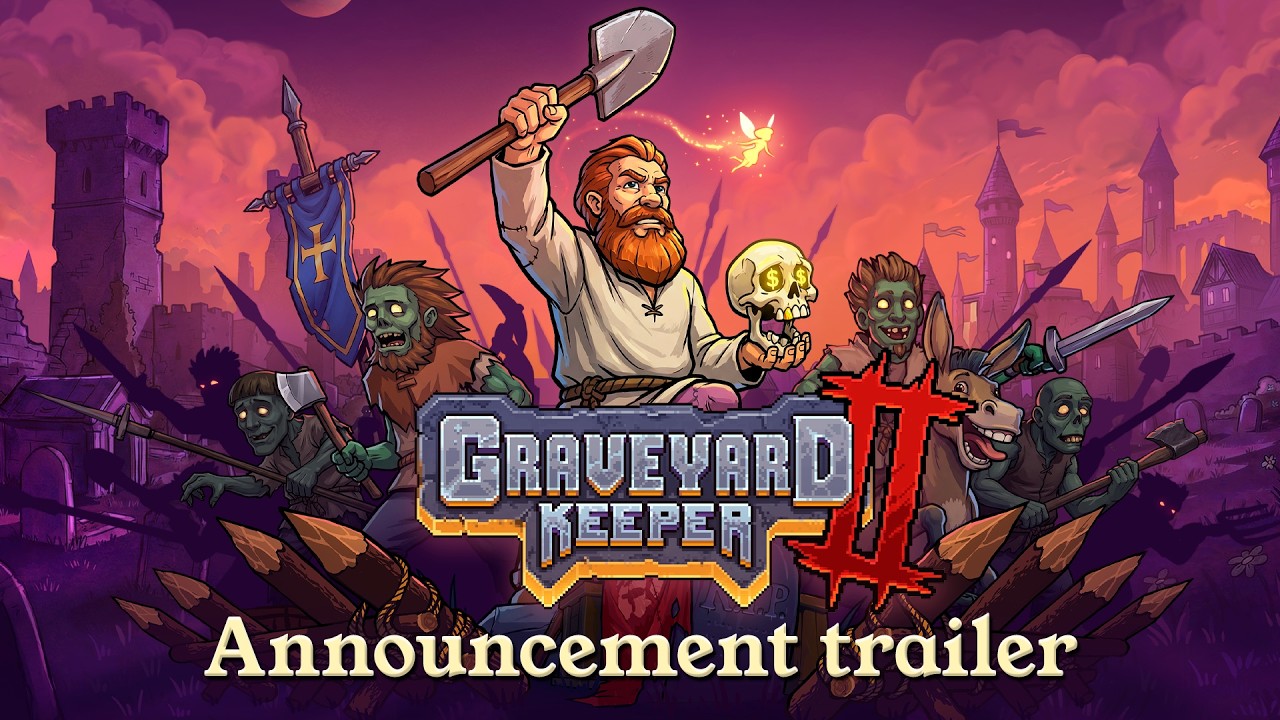
Managing the graveyard is still the beating heart
For all the new features being discussed, the graveyard itself still appears to be the center of everything, and that is exactly how it should be. The series built its identity on the wonderfully grim task of turning cemetery upkeep into a system-driven obsession. That idea remains intact here. You will still be managing a medieval graveyard, gathering useful materials, and turning questionable labor into steady progress. There is something weirdly comforting about that. The whole setup works because it is ridiculous on paper yet strangely compelling once you start imagining how all the pieces fit together. A graveyard in this world is not just a place for solemn reflection. It is a workshop, a business engine, a logistical headache, and probably the sort of place where nobody asks too many questions if a wheelbarrow leaks. By keeping that foundation in place, the sequel preserves the series identity while giving returning players a familiar anchor in the middle of all the newer systems.
Automation looks set to play a much bigger role
Automation was already one of the most satisfying ideas in the original game, and it looks like Graveyard Keeper II wants to lean into it far more aggressively. That is a smart move because automation is where management games often go from mildly interesting to delightfully absorbing. Early information points to expanded production systems and more elaborate machinery, which suggests players will spend less time doing every repetitive task by hand and more time designing efficient workflows. That kind of change can do wonders for pacing. Instead of feeling trapped in a cycle of chores, you start feeling like the scheming owner of a crooked medieval enterprise that somehow runs on corpses, gears, and bad decisions. There is a special joy in watching a messy process become smooth and profitable. If the sequel delivers stronger automation tools, it could turn the graveyard from a workplace into a machine that hums along while you focus on bigger ambitions elsewhere.
Town rebuilding adds a stronger economic loop
The town restoration angle might be one of the sequel’s most important additions because it gives the broader world a clearer relationship with your work. In the original setup, much of the fun came from personal progress and local optimization. Here, rebuilding the town appears tied directly to revenue, quests, and larger systemic growth. That could make every improvement feel more visible and more rewarding. Instead of managing in isolation, you would be turning local problems into opportunity, sending undead workers to handle the heavy lifting while you collect the benefits and keep the operation moving. It is a wonderfully fitting premise for this series because it blends practicality with moral side-eye. You are helping, sure, but you are also making money wherever possible. That mix of generosity and opportunism is very on-brand. A town that grows because of your efforts can make the world feel more alive, and a world that responds to your systems usually gives players many more reasons to stay invested.
The Grand Inquisitor role changes the tone
Becoming the Grand Inquisitor is more than a flashy title. It changes the tone of the entire experience. Titles matter in games because they frame how players think about their place in the world, and this one carries authority, absurdity, and a touch of menace all at once. In the original, you felt like someone trying to survive inside a bizarre routine. In the sequel, you sound like someone expected to lead, judge, rebuild, and protect, even if the methods are deeply questionable. That change could make decision-making feel more deliberate. You are not merely reacting to systems now. You are shaping them from above. It also creates a stronger story hook, because a role like Grand Inquisitor naturally implies politics, responsibility, power, and pressure. In a world full of grotesque characters and twisted humor, that is a rich setup. It gives the sequel room to be bigger without losing the weird personality that made the original memorable in the first place.
Zombie army battles could reshape daily progression
Combat is one of the boldest additions in the pitch, and it could significantly alter the rhythm of play. Graveyard Keeper was never built around large-scale action, so introducing zombie army battles immediately raises interesting questions. How often will conflict interrupt management? How deeply will battle preparation connect to crafting, automation, and town rebuilding? Those questions matter because the strongest management games make every system feed another one. If you gather materials in the graveyard, use workshops to craft gear, strengthen defenses around town, and then deploy your undead forces when danger arrives, the whole experience becomes a loop with genuine momentum. That is where the idea gets exciting. Battles are not just battles then. They are the payoff for everything you built earlier. And honestly, there is a certain dark comedy in the idea of trying to optimize supply chains by day and then sending a not-so-bright zombie army into danger by night. It sounds chaotic, but the good kind of chaotic.
The world still leans on twisted humor and grotesque charm
Just as important as any gameplay addition is the fact that Graveyard Keeper II still appears committed to the same warped sense of humor that defined the original. Without that personality, the whole thing risks becoming another management game with a spooky paint job. What made the first one stick in people’s minds was the way it embraced the absurdity of its premise. It was dark, strange, and often funny in a way that felt shameless rather than forced. The sequel seems ready to preserve that energy with grotesque characters, grim systems, and a story that clearly has no interest in behaving politely. That matters because tone is glue. It is what keeps all the mechanics from feeling sterile. When a game can make you laugh while asking you to squeeze profit from a deeply suspicious operation, it creates a flavor that is hard to mistake for anything else. Graveyard Keeper II looks aware that this flavor is not decoration. It is the whole recipe.
Why the sequel feels broader than the original premise
What makes the sequel stand out is not any single feature on its own. It is the way several features suggest a much broader structure than before. Graveyard management, production automation, town rebuilding, military defense, and zombie-led labor each sound interesting separately, but together they hint at a more interconnected experience. That could be the key difference between a pleasant follow-up and a truly memorable one. A sequel does not always need to reinvent its identity. Sometimes it needs to understand what was working, then build extra floors on the same crooked house. That seems to be the direction here. The graveyard remains the foundation, but the surrounding systems now look large enough to make every small action ripple outward. Bury a body, refine a resource, improve a machine, solve a town problem, prepare a defense, train a unit, make a profit. Suddenly the whole world feels like a web instead of a checklist. That is an encouraging sign.
Platform release plans put it in front of a wide audience
Another point in the sequel’s favor is the broad platform plan. Graveyard Keeper II has been announced for Switch, Switch 2, PC, PlayStation 5, and Xbox Series, which gives it a much wider reach right out of the gate. That matters for a game like this because its audience is not limited to one type of player. Some people will come for the management loop. Others will be drawn in by the humor, the strange setting, or the promise of automation and resource optimization. A wider platform spread means more room for the game to find the exact crowd that clicks with its very particular charm. It also suggests confidence from the publisher and developer. This is not being treated like a tiny curiosity tucked into a corner. It is being positioned as a sequel with real ambition and room to grow. At the same time, one detail is worth keeping in mind: a precise release date has not been confirmed yet, so for now the excitement comes with a bit of patience attached.
What fans should watch as more details emerge
As more information arrives, there are a few areas that will likely determine how strong the sequel ultimately feels. First, players will want to see how seamlessly combat and management work together. If those systems connect naturally, the experience could feel rich and dynamic. If they sit awkwardly beside each other, the pace could become uneven. Second, automation depth will matter a lot. Fans of the original will want tools that feel smarter, more flexible, and more rewarding over time. Third, the town rebuilding side needs to feel meaningful rather than decorative. If restoring homes, helping residents, and expanding local systems genuinely change how the game plays, the sequel could gain a lot of staying power. Finally, the writing and humor need to remain sharp. This series lives and dies by personality. A graveyard simulator with zombie labor and profit-chasing townsfolk should feel delightfully crooked, not bland. If the developers keep that spark alive, Graveyard Keeper II could be one of those sequels that feels instantly familiar while still surprising you.
Conclusion
Graveyard Keeper II already looks like a sequel that understands where its strengths lie. It keeps the cemetery management identity intact, but layers in town rebuilding, stronger automation, bigger stakes, and zombie army combat to create something that feels more ambitious without losing its original spirit. The result is a pitch with real personality. It is grim, funny, practical, slightly ridiculous, and oddly inviting all at once. That balance is not easy to pull off, yet it is exactly what gives the series its charm. There is still plenty left to learn, especially around structure, pacing, and how all the systems truly connect in play. Even so, the early picture is promising. This looks less like a cautious repeat and more like a sequel willing to get dirt under its nails, sharpen its shovel, and aim for something bigger.
FAQs
- What is Graveyard Keeper II about?
- Graveyard Keeper II is a sequel centered on medieval graveyard management, expanded automation, town rebuilding, and defending the realm with an undead army during a zombie apocalypse.
- Which platforms has Graveyard Keeper II been announced for?
- The game has been announced for Nintendo Switch, Nintendo Switch 2, PC, PlayStation 5, and Xbox Series.
- Does Graveyard Keeper II keep the same dark humor as the original?
- Yes. The revealed details highlight grotesque characters, twisted storytelling, and the same offbeat sense of humor that helped the original stand out.
- What seems new in Graveyard Keeper II compared with the first game?
- The biggest additions appear to be a larger focus on automation, rebuilding the town, taking on the role of Grand Inquisitor, and leading zombie forces into battle.
- Has a release date been confirmed for Graveyard Keeper II?
- No exact release date has been confirmed yet. The game has been announced, but the currently available store information lists the release timing as to be announced.
Sources
- Graveyard Keeper II announced for PS5, Xbox Series, Switch 2, Switch, and PC, Gematsu, April 9, 2026
- Graveyard Keeper 2, Steam
- Cemetery Management Sim ‘Graveyard Keeper’ Digs Up A Sequel On Switch 1 & 2, Nintendo Life, April 10, 2026
- tinyBuildGAMES, YouTube