














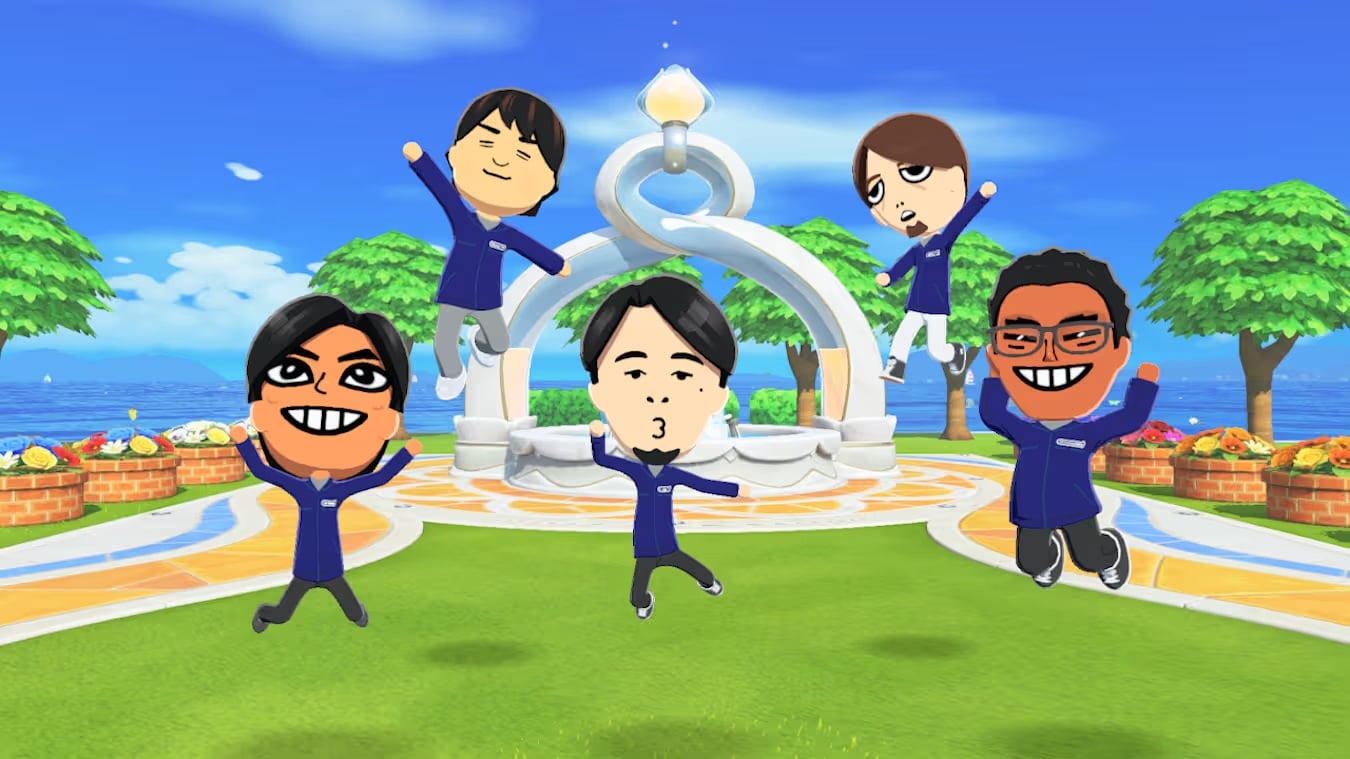
Summary:
Nintendo’s latest developer interview for Tomodachi Life: Living the Dream pulls back the curtain on a project that apparently carried years of ideas, hesitation, debate, and stubborn affection for the series. What stands out right away is not just that development began around 2017, but that the team spent all that time trying to protect what makes Tomodachi Life feel like Tomodachi Life. That sounds obvious on paper, yet it is exactly where sequels often wobble. Some chase scale. Some chase realism. Some sand off the strange edges that made them memorable in the first place. This one seems to have gone in the opposite direction. It kept the oddball heartbeat alive and then spent years figuring out how to let it beat louder.
The most charming details are also the most revealing. Nintendo says the team used an internal idea board where anyone could pitch something fun, and those ideas could jump across departments until they became real parts of the game. That kind of setup helps explain why the finished experience sounds so packed with small touches, moving objects, strange sounds, detailed rooms, and those blink-and-you-miss-it moments that fans tend to remember for years. It also explains why the project sometimes sounded like a cheerful disaster zone in the best possible way. One person adds a detail, another gives it motion, someone else adds smoke, and suddenly the graphics team is staring into the void.
The interview also reveals how close the game came to losing one of its most recognizable features. Mii News was reportedly almost cut when time became tight, but a younger designer pushed to save it because it simply would not feel like Tomodachi Life without it. That detail matters. It shows that some of the people shaping this sequel were once fans looking in from the outside, and now they are the ones making sure the series still sounds, moves, and jokes the way players remember. Then there is the now unforgettable discussion over whether a Mii should be able to break wind. Silly? Absolutely. Unimportant? Not even slightly. In a game like this, those tiny absurd choices are part of the personality. They are the seasoning, and nobody wants bland soup.
Tomodachi Life: Living the Dream reveals how long Nintendo sat with its best ideas
Nintendo’s Ask the Developer feature paints a picture of a sequel that was not rushed out the door the moment nostalgia started buzzing. Instead, Tomodachi Life: Living the Dream appears to have spent years simmering, with the team gathering ideas, testing direction, and deciding what absolutely had to survive from the older games. That matters because Tomodachi Life is not a series people love for raw scale or technical spectacle alone. People love it because it feels like a weird little social mirror where your friends, family, and favorite characters can behave like sleep deprived theater kids on an island. When a game works on that level, every detail has to support the tone. A long development cycle can be risky, sure, but it can also give a team room to separate disposable gimmicks from the kind of weirdness that sticks in your brain for years. From the outside, that seems to be exactly what happened here. The interview does not make the game sound polished into blandness. It makes it sound lovingly overthought, which for Tomodachi Life might be the most encouraging sign possible.
Why a 2017 development start matters for the finished game
The detail that development began around 2017 instantly changes how this project looks. This was not some quick reaction to fans asking for a return. It was a long, deliberate effort shaped by changing hardware, evolving design goals, and a serious question at the center of it all: how do you make a new Tomodachi Life without flattening its personality? That timeline suggests Nintendo had to think through more than a simple visual upgrade. The team needed to reconsider how Miis would move, how players would interact with them, and how the island itself could feel livelier without losing the series’ recognizable awkward charm. Long development stories sometimes sound alarming, but here it reads more like patience mixed with stubborn care. The team was not trying to build a shinier museum piece. It was trying to rebuild the emotional machinery of a game that thrives on surprise, familiarity, and pure nonsense. That takes time, especially when the wrong decision can make the whole thing feel off by just a few inches, which is often worse than being wildly different.
The idea board sounds like the engine behind the game’s personality
One of the most revealing parts of the interview is the mention of an internal idea board where anyone on the team could pitch something fun. That setup feels perfect for a game like this. Tomodachi Life has always lived or died on the strength of the little moments you do not expect, the kind you describe to someone else with a grin because they sound half made up. An idea board invites that energy. It gives designers, artists, programmers, and sound staff a place to throw sparks at the wall and see which ones catch fire. Better yet, Nintendo says those ideas could be picked up by people in completely different roles and pushed forward into actual workflows. That sort of cross-team enthusiasm is not just a sweet behind the scenes note. It is likely a big reason the game feels packed with oddities. When people are allowed to chase a joke, a behavior, or a tiny visual flourish because they genuinely believe it belongs, the result is rarely sterile. It becomes messy, alive, and a little unpredictable. For Tomodachi Life, that is not a bug. That is the recipe.
You can almost see the rooms getting more chaotic by the week
Daisuke Kageyama’s comments about room design say a lot in a small amount of space. He admits the team may have gone overboard with little touches, to the point that some rooms became a headache for the graphics team. That is funny on its own, but it also says something important about the project’s priorities. The team was clearly not approaching environments as empty backdrops. These spaces were part of the joke, part of the atmosphere, and part of the emotional texture of island life. A room in Tomodachi Life should not feel like a box with furniture shoved inside it. It should feel like a personality test that accidentally became architecture. If the team was stuffing in movement, sound, visual surprises, and tiny bits of flair, that probably means every environment had to help sell the illusion that these Miis have strange little inner worlds. And yes, that probably gave someone in optimization a migraine. Still, the end result sounds worth it. A world like this should feel like it has secrets tucked into every corner, even when those secrets are a lamp doing something mildly unhinged.
How younger developers helped preserve the series identity
There is something genuinely touching about the way the interview describes newer team members. According to the developers, many younger staff had grown up playing Tomodachi Life on Nintendo DS and Nintendo 3DS, and they were among the most passionate voices pushing for certain features to stay. That dynamic matters because sequels often succeed when they are built by a mix of veterans who know the bones and newer creators who remember how the original felt from the player side. The veterans know what is hard, what costs time, and what might need to go. The newer voices know what players will immediately notice if it disappears. That tension can lead to conflict, but it can also lead to better choices. In this case, it sounds like the fans-turned-developers served as emotional anchors for the project. They were the ones saying, in effect, this is the bit people remember, this is the thing that gives the series its face, this is the strange rhythm we cannot lose. That kind of internal advocacy is gold, especially for a sequel trying to modernize without becoming anonymous.
Why Mii News nearly disappeared
Mii News being close to the chopping block is one of those details that instantly grabs attention because it reveals how fragile iconic features can be during development. When schedules tighten, teams naturally start looking at anything that seems extra, complicated, or difficult to finish. The danger is that what looks optional on a spreadsheet can be emotionally central to the player experience. Mii News fits that description perfectly. It is not just a feature. It is part of the series’ comedic voice. It helps the world feel like it is reacting to itself. It turns random island nonsense into something performative, as if your little digital community has developed its own local broadcaster with no editorial standards whatsoever. Losing that would not just remove a mechanic. It would dull the game’s identity. That is why the story matters so much. It shows that the team was not merely deciding what could technically fit. It was wrestling with what gives the series its soul. In a game built on tone and memory, those decisions hit much harder than they would in something more straightforward.
One determined designer helped save a defining feature
Ryutaro Takahashi’s description of a younger designer stepping up to protect Mii News is one of the best moments in the whole interview. Instead of simply objecting, that person reportedly talked to different people, worked out how it could realistically happen, and helped build a plan that made the feature viable. That tells you a lot about why this game made it to the finish line with its personality intact. Passion alone is lovely, but passion paired with practical problem solving is what actually changes a project. It is easy to say a fan-favorite feature is essential. It is much harder to prove it can be delivered inside a real schedule. The fact that someone did exactly that is a small victory story tucked inside a development interview, and it says a lot about the culture around this sequel. Tomodachi Life: Living the Dream does not sound like a game where weirdness survived by accident. It sounds like a game where weirdness had advocates, defenders, and probably at least one person dramatically pointing at a whiteboard and refusing to surrender.
Little quirks feel like Nintendo’s smartest answer to an old limitation
Another standout idea from the interview is the feature called little quirks, which lets players assign specific traits and behaviors to Miis beyond the older personality framework. That is a smart move because personality systems can become cages if they are too rigid. Tomodachi Life always worked best when your Mii characters felt close enough to the real people they represented, yet still unpredictable enough to be funny. If the older structure was not flexible enough to capture details like a loud voice, restless sleep, or odd habits, then expanding customization at that level makes perfect sense. It gives players more authorship without breaking the illusion that the Miis have minds of their own. That balance is crucial. Too little control and the Miis stop feeling personal. Too much control and they become puppets. Little quirks seem to sit in the sweet spot between those extremes. They add texture. They let players nudge a Mii closer to the person in their head. And in a series built on inside jokes, tiny behavior details can matter more than any huge headline feature.
The breaking wind debate says everything about the game’s tone
Yes, the interview confirms there was a major internal debate over whether Miis should be able to break wind. Silly as that sounds, it is actually a perfect example of how carefully a game like this has to manage tone. Tomodachi Life has always lived in a strange corner where innocence, absurdity, awkwardness, and chaos all have to coexist. Push too far in one direction and the joke gets cheap. Pull too far back and the game loses some of its fearless weirdness. The team’s solution was clever. Rather than forcing that behavior onto every player, they turned it into an optional little quirk. That means players who find it hilarious can lean into it, while players who think it crosses the line can leave it untouched. It is a very Tomodachi answer to a very Tomodachi problem. The game does not seem interested in deciding one universal definition of funny. It wants to hand players a strange toy box and let them choose which bits of nonsense belong on their island. Frankly, that is probably the healthiest way to handle cartoon bodily comedy in 2026.
Even the sound team treated the joke like serious craft
One of the funniest and most telling moments in the interview comes from the sound team explaining how many retakes were done to get the effect right. That is hilarious because it turns a ridiculous little gag into a story about artistic precision, but it is also revealing. Comedy often works because people treat the details seriously. If the sound is too harsh, too realistic, too cartoonish, or just slightly off in timing, the joke can collapse. The developers openly admit they obsessed over it, with comments coming back that a version sounded too realistic for comfort. That level of fussing over a tiny optional quirk sounds absurd, yet it fits the whole spirit of Tomodachi Life. This series has always thrived on taking nonsense seriously enough that it becomes funnier. When developers are carefully tuning the sound design of a joke feature as if they are balancing a dramatic scene in a prestige production, that is when you know the game understands its own rhythm. It is ridiculous, yes, but it is precise ridiculousness.
The visual effects apparently flirted with total chaos
Kageyama’s note that the visual effect at one point looked like an explosion is the sort of line people will probably repeat for months because it so perfectly matches the tone of the series. It also highlights how even throwaway gags pass through multiple layers of experimentation before they land in a finished game. Visual effects in Tomodachi Life cannot just exist. They have to communicate mood, absurdity, and scale without shattering the playful feel of the world. Too subtle, and the joke lands with a thud. Too dramatic, and suddenly a tiny quirk looks like a boss battle. The image of the team testing different versions until they found the right line between funny and too much is wonderful because it captures the challenge of making strange humor feel polished. A joke can be messy by design, but the delivery still needs control. That is what makes this development story interesting. Nintendo was not merely tossing random weirdness into the game. It was tuning weirdness like an instrument, one puff of cartoon chaos at a time.
These behind the scenes details make the sequel sound more confident, not more random
The biggest takeaway from the interview is that Tomodachi Life: Living the Dream does not sound like a project that stumbled into its quirks. It sounds like a team spent years protecting the exact kind of oddball energy fans hoped would survive the jump to modern hardware. The stories about idea boards, overloaded rooms, fan-favorite features almost getting cut, and debates over optional joke traits all point in the same direction. Nintendo knew this series could not return as a sanitized, overly tidy sequel. It had to feel playful, personal, and just odd enough to make you laugh when you least expect it. That does not mean every choice will land for every player. Games like this never work that way. What matters is that the people making it seem to understand what kind of experience they are building. They are not chasing weirdness for shock value. They are using it to support attachment. The more specific, awkward, and unexpectedly human these Miis feel, the easier it becomes to care about them. That is the magic trick, and this interview suggests Nintendo still knows how to pull it off.
What this means for longtime fans heading into release
For longtime fans, these details should be reassuring. The interview suggests the team remembered that Tomodachi Life is not beloved because it behaves like a conventional life sim. It is beloved because it turns familiar faces into little agents of chaos and then invites you to laugh, meddle, and get weirdly attached. Seeing Nintendo talk so openly about preserving Mii News, expanding personal quirks, and keeping the collaborative spirit of strange ideas alive makes the sequel sound like a return built with affection rather than obligation. It also makes the game feel a bit more personal before players even start. You can already imagine the arguments, the laughter in meeting rooms, the moments where someone insisted a tiny detail had to stay because it simply felt right. Those details matter because they often end up being the things players remember most. Not the bullet points on a sales page, but the odd scene, the silly sound, the feature that makes you say, yes, this is absolutely still Tomodachi Life.
Conclusion
Nintendo’s Ask the Developer feature for Tomodachi Life: Living the Dream reveals more than a stack of amusing behind the scenes anecdotes. It shows a team that seems to understand how delicate this sequel really is. The game needed to grow, but it also needed to stay gloriously weird. From a development timeline that reaches back to 2017, to the internal battle to keep Mii News, to the strangely passionate work spent refining optional little quirks, everything points to a project shaped by people who care deeply about the series’ identity. That is why these details land. They are funny, yes, but they also feel reassuring. They suggest Nintendo did not just remember what made Tomodachi Life memorable. It fought to keep those instincts alive. For anyone who wanted this return to feel playful, personal, and a little unhinged in the best way, this interview gives plenty of reasons to feel optimistic.
FAQs
- When did Tomodachi Life: Living the Dream begin development?
- Nintendo says development began around 2017. That gives the sequel a long runway, which helps explain why the team had years to shape ideas, refine features, and figure out how to modernize the series without losing its personality.
- Was Mii News almost removed from the game?
- Yes. The developers said Mii News was nearly cut when time became tight, but a younger designer pushed to keep it because it felt essential to the spirit and character of Tomodachi Life.
- What are little quirks in Tomodachi Life: Living the Dream?
- Little quirks are optional traits and behaviors players can assign to Miis. They help characters feel more specific and personal, going beyond the older personality structure so players can create Miis that better match the people they are based on.
- Did Nintendo really debate whether Miis should be able to break wind?
- Yes, and that might be the most Tomodachi Life sentence ever written. The team discussed whether it was funny or too vulgar, then turned it into an optional quirk so players could decide for themselves.
- Why do these developer comments matter to fans?
- They matter because they show how carefully Nintendo approached the sequel’s tone. The interview suggests the team worked hard to preserve the odd humor, recognizable features, and emotional charm that longtime fans associate with the series.
Sources
- Ask the Developer Vol. 21: Tomodachi Life: Living the Dream – Part 3, Nintendo, April 14, 2026
- Ask the Developer Vol. 21, Tomodachi Life: Living the Dream – Chapter 1, Nintendo UK, April 14, 2026
- “We Did So Many Retakes” – The Tomodachi Life Team Was Determined To Make Farts Sound Just Right, Nintendo Life, April 14, 2026