














Summary:
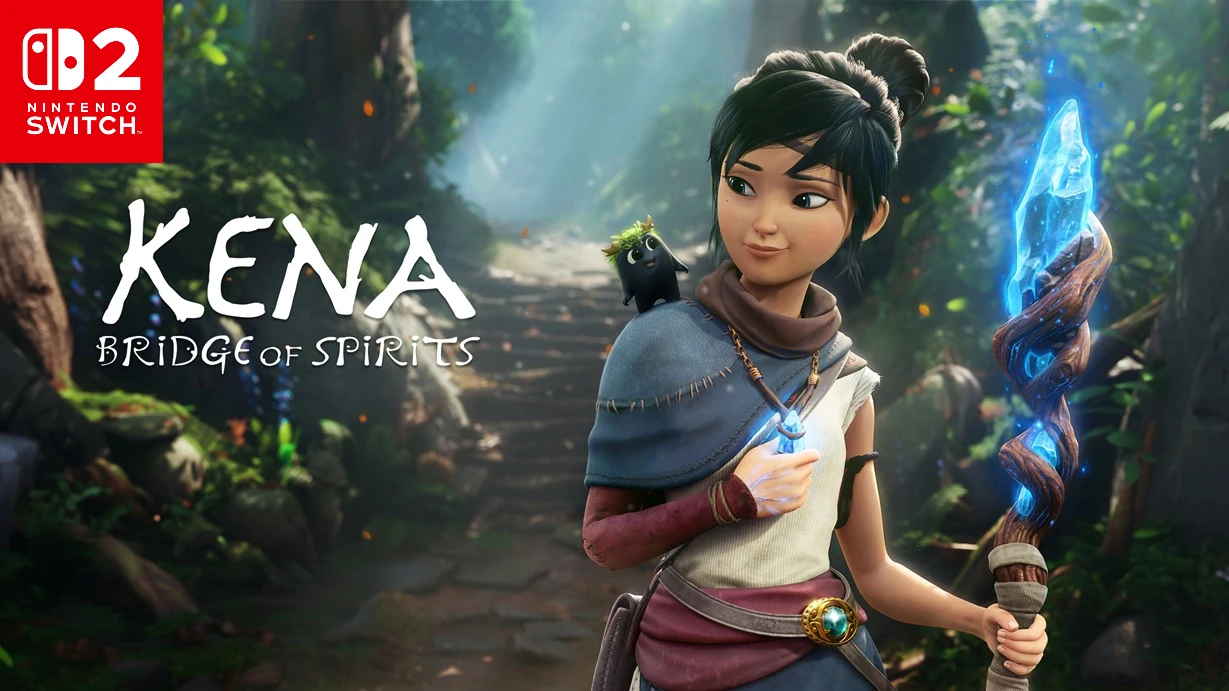
Kena: Bridge of Spirits has finally arrived on Nintendo hardware through its Nintendo Switch 2 release, giving players a new way to experience Ember Lab’s vibrant action adventure. The move is notable because the game skipped the original Switch after early experimentation, mainly because Ember Lab did not have the bandwidth to pursue a full port at the time. With Switch 2, the studio saw a better opportunity to bring Kena to a flexible platform that could support the game’s visual style while giving players handheld and TV play. Josh Grier, chief operating officer at Ember Lab, recently explained how the team approached the port, from working with Nintendo development hardware to refining level of detail thresholds, texture memory, HLODs, billboards, and Rot character optimization. The game also uses DLSS for upscaling, with Ember Lab choosing settings that matched its visual goals and performance target. A 40 FPS mode was considered possible in theory, but the studio felt the required visual sacrifices were not worth the smoother frame rate. Future patches remain possible depending on player feedback, while a physical release is still being weighed. As for the sequel, Kena: Scars of Kosmora is currently focused on PS5 and PC, though Ember Lab’s affection for Nintendo and Zelda remains clear.
Kena finally finds a new home on Nintendo Switch 2
Kena: Bridge of Spirits landing on Nintendo Switch 2 feels like one of those releases that simply makes sense once it happens. The game has always had a strong adventure flavor, mixing forest exploration, puzzle solving, magical companions, and emotional storytelling in a way that naturally clicks with many Nintendo players. Its arrival on Switch 2 also marks the first time the title has been playable on a Nintendo system, which gives this release a little extra sparkle. It is not just another platform box being ticked. It is a game with clear Nintendo-adjacent energy finally stepping onto Nintendo hardware, suitcase packed, staff in hand, and Rot friends waddling behind like tiny chaotic mascots.
The Switch 2 version also arrives as a digital release on the Nintendo eShop, where Nintendo lists the game for Nintendo Switch 2 with TV mode, tabletop mode, and handheld mode support. That matters because Kena is not only a cinematic adventure built for big screens. It also has the kind of structure that works well in smaller sessions, whether you are clearing a combat encounter, exploring a forgotten corner of the forest, or hunting for another shy Rot companion hidden just out of sight. For players who missed Kena on PlayStation, PC, or Xbox, the Switch 2 version becomes a fresh entry point rather than a late footnote.
Why the original Switch version never became a full project
One of the most interesting details from Ember Lab’s recent comments is that the studio did experiment with the original Switch. That small detail answers a question many fans likely had for years. Kena looked like a game that would fit Nintendo’s audience beautifully, but its lush environments, detailed animation, and cinematic presentation always seemed like a tall order for the original hardware. Ember Lab did not frame the original Switch as impossible in a dramatic way. Instead, the studio explained that it did not have the bandwidth to chase a full port at the time. That sounds less like a slammed door and more like a path the team could not reasonably take while juggling everything else.
That distinction matters. Porting is not magic, even if players sometimes wish it were. A studio cannot simply press a button, shrink the files, and toss the game onto another system like putting leftovers into a smaller container. Every platform asks for careful decisions, especially when a game has a strong visual identity. For Ember Lab, the Switch 2 announcement created a more suitable opening. The newer hardware offered a better foundation, and the timing gave the studio a clearer reason to revisit Nintendo development properly. The result is a version that did not need to exist through compromise alone. It could be shaped around the strengths of the new system.
Ember Lab’s first steps with Nintendo hardware
Kena: Bridge of Spirits also represents Ember Lab’s first game on Nintendo hardware, which makes the Switch 2 release an important learning experience for the studio. According to Josh Grier, Nintendo’s support helped the team get started with development hardware, while platform-specific guidance helped smooth out the process. That is worth noting because a studio’s first release on any new system can come with surprises. Toolchains, certification requirements, development kits, performance targets, memory behavior, storefront expectations, and platform features all come with their own little personalities. Some are friendly. Some glare at you from across the room until you figure them out.
The biggest challenge for Ember Lab was not simply making the game run. It was making the game run while preserving as much of its artistic direction as possible. That is the heart of this port. Kena is remembered for its painterly forests, expressive characters, soft lighting, and animation-driven charm. If too much of that identity had been stripped away, the Switch 2 release might have felt technically functional but emotionally thinner. Ember Lab’s job was to keep the spirit of Kena intact while adjusting the machinery underneath. In that sense, the porting process sounds less like rebuilding a house and more like carefully moving a delicate glass sculpture without letting it crack.
How optimization shaped the Switch 2 release
The technical work behind the Switch 2 version centered heavily on optimization. Ember Lab revisited level of detail thresholds, refined texture memory usage, and spent time on HLODs to reduce draw calls and improve rendering performance. That may sound dry on the surface, but these choices are the invisible scaffolding holding the final experience together. Level of detail systems decide when faraway objects become simpler versions of themselves. Texture memory management helps prevent the system from choking on too much visual data at once. HLODs help combine or simplify distant geometry so the game is not constantly asking the hardware to draw more than it needs to.
Ember Lab also increased its use of billboards, especially for distant environmental elements. In simple terms, a billboard can represent faraway scenery with a lighter visual trick instead of expensive full geometry. When done well, players barely notice. When done poorly, the illusion can crumble like cardboard scenery in a stage play. The goal here was to reduce geometry cost and streaming overhead without obvious visual damage. That is the kind of optimization players usually only notice when it goes wrong. When it goes right, the forest still looks like a forest, the mountain still feels distant and mysterious, and nobody stops mid-adventure to compliment the draw call budget. Poor draw calls, forever underappreciated.
Why the Rot needed extra care during development
The Rot are central to Kena’s personality, so optimizing them was always going to be a delicate task. These tiny spirit companions are not just background decoration. They are collectible friends, puzzle helpers, emotional punctuation marks, and occasional scene-stealers. Since many of them can appear on screen, Ember Lab had to reduce complexity while keeping their charm intact. That is a tricky balancing act. Take away too much, and they risk becoming little blobs with eyes. Leave everything untouched, and performance can start waving a white flag. The team had to preserve personality while trimming what the Switch 2 version did not absolutely need.
Animation optimization was especially important because the Rot feel alive through movement. Their little hops, stares, gestures, and group behavior give the world warmth. If those details became stiff or inconsistent, the game would lose part of its heart. Ember Lab’s comments suggest that the team understood this clearly. The Rot are small, but their impact is huge. They turn lonely spaces into places that feel watched over, helped, and sometimes gently invaded by cuteness. Optimizing them was not just a technical job. It was a character preservation job. In a game built around emotional connection, that kind of detail matters more than a spec sheet can fully capture.
DLSS gives the Switch 2 version its visual backbone
One of the biggest technical confirmations is that Kena: Bridge of Spirits uses DLSS for upscaling on Nintendo Switch 2. That detail helps explain how Ember Lab aimed to balance presentation and performance on the platform. DLSS gives developers a way to render at one resolution and use upscaling technology to deliver a cleaner final image. It is not a free lunch, because settings and implementation still matter, but it can be a very useful tool when a game wants to keep rich visuals while staying within a realistic performance target. For Kena, that balance is especially important because the game sells so much of its mood through visual softness, color, and animation.
Grier also addressed speculation that the Switch 2 version might use a lighter form of the technology. Rather than framing it that way, he explained that developers have access to different presets and that Ember Lab chose settings that matched its visual goals and performance target. That is a more practical answer than a buzzword-heavy one. The studio did not chase the most impressive label. It picked the settings that helped the game look and run the way it wanted. That is usually how good technical decisions are made. Players may love flashy terms, but the best results often come from careful tuning, not from throwing the biggest setting at the wall and hoping the hardware applauds.
Why a 40 FPS mode was not the right trade
Some Nintendo Switch 2 games have offered 40 FPS modes, so it was natural for players to wonder whether Kena could receive one too. Ember Lab’s answer was measured. A 40 FPS mode might be possible, but it would require compromises to visual quality. In this case, the studio decided that the extra frame rate was not worth the sacrifices needed to the overall presentation. That is an important reminder that performance modes are not always simple upgrades. Every frame has a cost. Sometimes the cost is resolution. Sometimes it is shadow quality, foliage density, draw distance, effects, or overall image stability. Kena’s identity depends heavily on its atmosphere, so the trade was not automatically worth it.
This does not mean players are wrong to want smoother performance. A higher frame rate can make combat feel more responsive, especially in a game with dodges, ranged attacks, and quick enemy tells. Yet Kena is also a visually driven experience. Its forests, shrines, spirits, and cinematic staging all carry weight. Ember Lab chose to protect the look and feel of the adventure rather than chase a number that could weaken the whole picture. That decision may not please every player, but it does show a clear priority. The studio wanted the Switch 2 version to feel like Kena first, not like a technical experiment wearing Kena’s outfit.
Future patches depend on player feedback
Ember Lab is keeping an eye on player experiences now that Kena has launched on Switch 2. That leaves the door open for future patches, but it does not promise specific additions. The studio mentioned taking feedback into account for updates that are within scope. That phrase is doing important work. It means player feedback matters, but it also recognizes that not every request can be turned into a practical update. Fans may ask for gyro aiming, graphical tweaks, performance options, physical editions, Nintendo-themed extras, or quality of life changes. Some of those ideas might be realistic. Others might be difficult, expensive, or misaligned with the current plan.
The healthiest way to read Ember Lab’s position is that the Switch 2 version is being watched, not abandoned. If common issues appear or if clear improvements make sense, the studio may consider them. That is better than silence, especially for a port arriving on new hardware. At the same time, players should not treat every wishlist item as an incoming feature. Game updates live in the real world, where teams have limited time, new projects, testing requirements, and platform approvals. Still, the fact that Ember Lab is listening gives the Switch 2 release room to grow. A little feedback can go a long way when it is specific, fair, and not delivered like a thrown controller.
The physical edition question remains open
Collectors have a very understandable question: will Kena: Bridge of Spirits receive a physical version on Nintendo Switch 2? Ember Lab has heard the interest, and Grier pointed out that the studio was happy to support a physical release for the initial PlayStation launch. For now, though, the team is still weighing future efforts. That means there is no confirmed boxed edition at this stage. It is not a no, but it is not a yes either. For collectors, that middle ground can be both hopeful and mildly torturous, like seeing a treasure chest across a gap without knowing whether the jump button works.
A physical release would make sense for several reasons. Kena has a strong visual identity, a passionate fanbase, and the kind of premium adventure feel that collectors often enjoy having on a shelf. Switch audiences also have a long tradition of supporting boxed editions, especially for indie and AA games that feel special. Still, producing a physical version requires planning, partners, manufacturing, distribution, timing, and confidence that demand is strong enough. Ember Lab’s current wording suggests that fan interest could matter. If players want a boxed Switch 2 version, clear demand is probably useful. Until then, the Nintendo eShop version remains the confirmed way to play Kena on Switch 2.
Kena: Scars of Kosmora is focused on PS5 and PC
With Kena now on Switch 2, fans naturally want to know whether the sequel, Kena: Scars of Kosmora, could follow. Ember Lab’s answer is clear for now: the studio is focused on developing the sequel for PS5 and PC. That does not confirm a Switch 2 version, and it would be unwise to pretend otherwise. The sequel is already positioned as a bigger adventure, with Kena traveling to the island of Kosmora, facing new corruption, and using elemental abilities tied to a more dangerous form of Spirit Guiding. If the first game was a warm forest path with teeth, Scars of Kosmora sounds like it is sharpening the teeth.
The focus on PS5 and PC makes sense from a development standpoint. Building a sequel is already a major task, especially when the studio is expanding combat, world design, narrative ambition, and character progression. Adding more platforms too early can complicate production. Still, the Switch 2 release of Bridge of Spirits gives Nintendo players a foothold in the series. It introduces Kena, the Rot, the tone, and the core style to a wider audience. Whether that eventually influences future platform plans for Scars of Kosmora remains unknown. For now, the honest takeaway is simple: Switch 2 players can enjoy the first adventure, while the sequel’s confirmed destination remains PS5 and PC.
Ember Lab’s Zelda roots still matter
Before Kena: Bridge of Spirits became Ember Lab’s signature game, the studio created the Zelda: Majora’s Mask fan film Terrible Fate in 2016. That history still matters because it shows how deeply Nintendo’s adventure design and emotional fantasy worlds influenced the team. Grier described Zelda as a major inspiration for many people at the studio, both when they were younger and now that they make games themselves. That affection is easy to understand when looking at Kena. The game is not Zelda, but it shares a love of mysterious spaces, spiritual themes, environmental puzzles, and worlds that feel both inviting and haunted.
When asked whether Ember Lab would be interested in working with the Zelda IP if Nintendo ever granted access, Grier’s answer was warmly enthusiastic without pretending anything was happening. The team currently has its hands full with Kena: Scars of Kosmora, but the idea of creating something in the Zelda world would be exciting to the studio. That kind of response is bound to make fans daydream. Ember Lab has animation talent, strong visual direction, and a clear affection for fantasy adventure. Would a Zelda project from the studio be fascinating? Absolutely. Is one announced? No. For now, it remains a charming what-if rather than a real development update.
What this Switch 2 release means for Nintendo players
Kena: Bridge of Spirits on Switch 2 is meaningful because it gives Nintendo players access to a game that always felt close to their tastes, even when it was unavailable on their hardware. It brings together exploration, combat, puzzle solving, spirit companions, and a strong visual identity in a package that can now be played at home or on the go. The port also shows that Switch 2 can attract visually ambitious games when developers have the right tools, time, and technical strategy. Ember Lab’s work with DLSS, LOD tuning, texture memory, HLODs, billboards, and Rot optimization gives the release more behind-the-scenes weight than a simple platform announcement.
It also opens a new relationship between Ember Lab and Nintendo players. The studio has now gone through its first Nintendo hardware development process, worked with Nintendo support, and learned how to bring its artistic style to Switch 2. That experience could matter later, even if no future Switch 2 projects have been confirmed. For fans, the best part is much simpler: Kena is available now, and it brings one of the most charming action adventure worlds of recent years to a system built around flexibility. Sometimes that is enough. A good adventure finding a new audience is always worth celebrating, especially when the Rot get to come along for the ride.
Conclusion
Kena: Bridge of Spirits arriving on Nintendo Switch 2 is more than a late port. It is a careful adaptation of a visually rich adventure onto Nintendo hardware, shaped by practical technical choices and a clear desire to preserve the game’s heart. Ember Lab experimented with the original Switch but found the timing and resources were not right. Switch 2 gave the team a stronger opportunity, supported by DLSS, optimization work, and a platform that fits the game’s spirit surprisingly well. A 40 FPS mode is not currently part of the plan, a physical version remains undecided, and future patches will depend on feedback and scope. Meanwhile, Kena: Scars of Kosmora remains focused on PS5 and PC. For Nintendo players, the message is still a welcome one: Kena has finally crossed the bridge to Switch 2, and the journey feels right at home.
FAQs
- Is Kena: Bridge of Spirits available on Nintendo Switch 2?
- Yes. Kena: Bridge of Spirits is available on Nintendo Switch 2 through the Nintendo eShop. Nintendo lists the game as a digital release with support for TV mode, tabletop mode, and handheld mode.
- Did Ember Lab ever consider bringing Kena to the original Switch?
- Yes. Ember Lab experimented with the original Switch, but the studio did not have the bandwidth to pursue a full port at the time. The Switch 2 announcement gave the team a better opportunity to bring the game to Nintendo hardware.
- Does Kena: Bridge of Spirits use DLSS on Switch 2?
- Yes. Ember Lab confirmed that the Switch 2 version uses DLSS for upscaling. The studio chose settings that best matched its visual goals while maintaining its performance target.
- Will Kena: Bridge of Spirits get a 40 FPS mode on Switch 2?
- A 40 FPS mode might be possible, but Ember Lab said it would require visual compromises. The studio decided the added frame rate was not worth the sacrifices to the game’s overall presentation.
- Is Kena: Scars of Kosmora coming to Nintendo Switch 2?
- There is no confirmed Nintendo Switch 2 version of Kena: Scars of Kosmora. Ember Lab has said it is currently focused on developing the sequel for PS5 and PC.
Sources
- Kena: Bridge of Spirits interview: dev talks Nintendo Switch 2 port, frame rate, more, Nintendo Everything, May 9, 2026
- Kena: Bridge of Spirits for Nintendo Switch 2, Nintendo, March 26, 2026
- Kena: Scars of Kosmora announced for PS5 and PC, out 2026, PlayStation.Blog, February 12, 2026
- Kena: Scars of Kosmora, Ember Lab, 2026
- PlayStation Indie Hit ‘Kena: Bridge Of Spirits’ Is Headed To Switch 2 Next Week, Nintendo Life, March 19, 2026