














Summary:
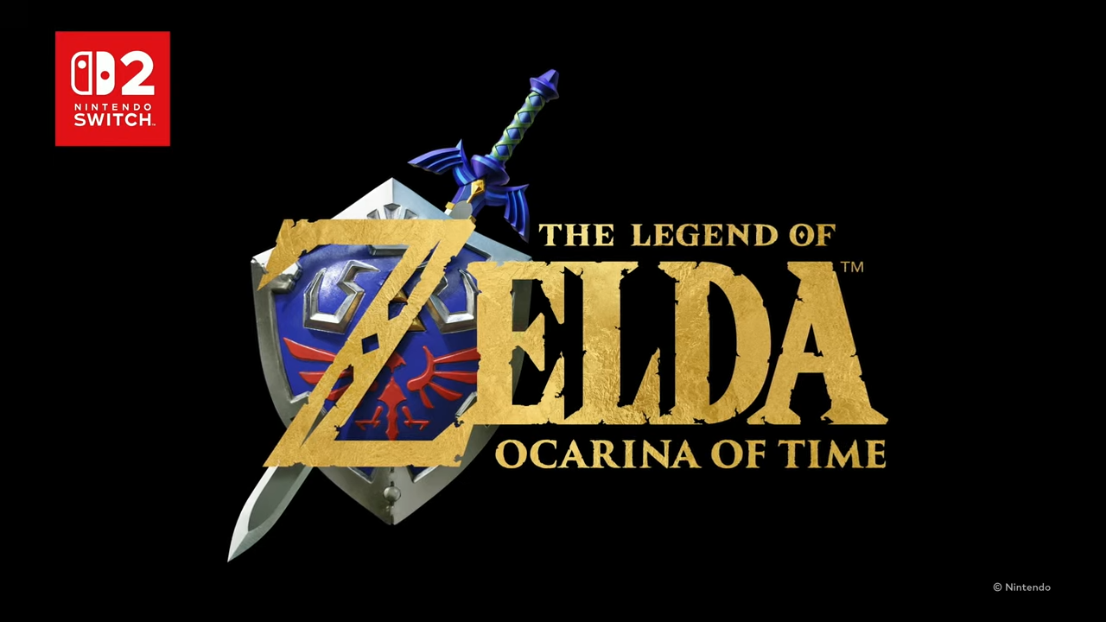
The Legend of Zelda: Ocarina of Time is officially coming back as a full remake for Nintendo Switch 2, and even though Nintendo has kept most of the details tucked away like a secret in the Lost Woods, a small piece of official wording has given fans something meaningful to chew on. The remake was confirmed during the June 2026 Nintendo Direct, where Nintendo closed the presentation with a brief teaser and confirmed that the Nintendo 64 classic will return in 2026. Since then, attention has shifted to a short description connected to the North American Nintendo page, which says the N64 classic is being reborn as a full remake with stunning visuals, updated designs, and timeless gameplay. That wording matters because it suggests Nintendo is not simply polishing an old adventure and calling it a day. The phrase updated designs hints at broader visual and artistic changes, while timeless gameplay suggests the heart of the original adventure will remain recognizable. For longtime fans, that balance is everything. Ocarina of Time is not just another beloved Zelda entry. It is a landmark release that shaped how 3D adventure games handled exploration, lock-on combat, puzzle design, storytelling, and emotional worldbuilding. A remake on Nintendo Switch 2 carries huge expectations, but this first clue points toward a version of Hyrule that may feel familiar, refreshed, and carefully rebuilt for a new generation.
Ocarina of Time returns as a full Nintendo Switch 2 remake
The Legend of Zelda: Ocarina of Time is heading to Nintendo Switch 2 as a full remake, bringing one of Nintendo’s most celebrated adventures back into the spotlight in 2026. Nintendo revealed the project during its June 2026 Direct, using the final moments of the presentation to bring out the kind of surprise that makes Zelda fans sit up a little straighter. The reveal was brief, but that almost made it more powerful. A flash of recognition, a familiar name, and then the floodgates opened. For many players, Ocarina of Time is not just remembered as a great game. It is remembered as the game that made Hyrule feel like a living place for the first time in 3D.
That is why the word remake carries so much weight here. A remake is not the same as a simple re-release, and it is not the same as a light visual upgrade. Nintendo’s own store wording describes the Nintendo 64 classic as reborn for Nintendo Switch 2, which immediately frames this as something built for the newer hardware rather than merely preserved from the past. That does not mean every dungeon, boss, character, or mechanic will be changed, and it would be risky to assume too much before Nintendo shares more. Still, the framing gives fans a good reason to expect a project with real ambition. After all, when you are bringing back Ocarina of Time, you are not just repainting a house. You are restoring a castle while everyone remembers where every stone used to be.
Nintendo’s hidden page description gives fans the first real clue
The newest detail comes from a short description tied to the North American Nintendo page for The Legend of Zelda: Ocarina of Time on Nintendo Switch 2. The page itself keeps things simple, but the search result description gives a little more flavor. It describes the game as the N64 classic reborn as a full remake for Nintendo Switch 2, with stunning visuals, updated designs, and timeless gameplay. That is not a huge paragraph, of course, but Zelda fans have built theories from far smaller crumbs. When Nintendo says little, every phrase starts to matter, especially when the game in question is one of the most analyzed and beloved releases in the company’s history.
What makes this description interesting is how carefully it seems to separate three ideas. Stunning visuals points to the presentation. Updated designs points to the way characters, locations, enemies, environments, and perhaps interface elements may be reworked. Timeless gameplay points to preservation, suggesting Nintendo still sees the original structure as valuable. Together, those phrases create a neat little triangle. One side is modern polish, one side is reinterpretation, and one side is respect for what already worked. That balance may be the key to the entire remake. Too little change, and players may wonder why it needed to exist. Too much change, and the remake risks losing the strange, dreamlike magic that made Ocarina of Time unforgettable in the first place.
Updated designs may be the biggest phrase in the description
The phrase updated designs is probably the most exciting part of Nintendo’s wording because it suggests more than a cleaner image. Updated visuals would have been easy to understand. Enhanced graphics would have sounded familiar. Updated designs, however, feels broader and a little more deliberate. It could refer to redesigned character models, reimagined environments, altered enemy appearances, modernized animation, refreshed interiors, clearer dungeon spaces, or a more expressive version of Hyrule Field. It may even point to changes in how familiar places are presented so that they feel fresh without becoming unrecognizable. That is a tricky line to walk, but Nintendo has crossed harder bridges before, usually while making it look annoyingly easy.
Ocarina of Time has already had one major visual update through its Nintendo 3DS version, which cleaned up models, textures, menus, and several rough edges from the original Nintendo 64 release. A Nintendo Switch 2 remake has a very different opportunity. Rather than simply modernizing an older handheld version, Nintendo can reinterpret Hyrule at a scale and fidelity closer to what modern players expect from a premium console release. Kokiri Forest could feel denser and more magical. Castle Town could finally bustle with more life. The Temple of Time could feel grand enough to match its importance. Even small design choices, such as how Navi glows or how the Master Sword chamber is lit, could reshape the emotional texture of the adventure.
Stunning visuals point toward more than a simple remaster
Nintendo’s mention of stunning visuals is expected, but it still matters. Ocarina of Time is a game whose original visual identity was shaped by the limitations of the Nintendo 64. Those limitations gave it charm, but they also left plenty to the imagination. The remake can now turn that imagination into something more tangible. The rolling green openness of Hyrule Field, the eerie quiet of the Forest Temple, the oppressive heat around Death Mountain, and the unsettling shadows beneath Kakariko Village can all be rebuilt with richer atmosphere. A good remake does not simply show more detail. It uses detail to make players feel what they already remember feeling.
That is the magic trick Nintendo has to perform here. The original Ocarina of Time is remembered through a mix of actual pixels and player memory. Many fans do not remember the exact texture on a wall or the exact shape of a staircase. They remember the feeling of stepping into a dungeon, hearing a melody, seeing the world change after pulling the Master Sword, and realizing that Hyrule was bigger and stranger than it first appeared. Better visuals can support those memories, but they need to serve the mood rather than drown it in spectacle. If Nintendo gets it right, the remake could make Hyrule feel like the place fans remember, not necessarily the place the Nintendo 64 could technically display.
Timeless gameplay suggests Nintendo knows what must stay intact
The description’s reference to timeless gameplay is just as important as the talk of visual upgrades. Ocarina of Time helped define 3D Zelda with Z-targeting, puzzle-based dungeons, contextual actions, musical progression, horseback travel, and a structure that moves between childhood wonder and adult responsibility. Those foundations still matter because they are not merely old mechanics. They are part of the adventure’s rhythm. Change them too aggressively and the remake might stop feeling like Ocarina of Time. Leave them untouched in every detail and some parts may feel stiff to modern players. The best path probably sits somewhere between faithfulness and smart comfort.
Modern players may reasonably expect smoother camera control, faster menu handling, more convenient item use, clearer map support, and small quality-of-life improvements. Those updates would not necessarily damage the original design. In fact, they could help the old strengths shine more clearly. Nobody wants the Water Temple to feel confusing because of awkward menu swapping, right? There is a difference between meaningful challenge and wrestling with friction that came from hardware limitations. If Nintendo preserves the adventure’s core while sanding down the rougher edges, the remake can respect veteran fans and welcome players who were not around when the original launched in 1998.
Why Ocarina of Time still carries so much weight
Ocarina of Time still matters because it was a turning point for Zelda and for 3D adventure design as a whole. The game translated the series’ sense of exploration, mystery, dungeons, tools, and discovery into a 3D world at a time when many developers were still figuring out what 3D games should feel like. Its lock-on combat gave players a clear way to read battles in a 3D space. Its dungeons mixed atmosphere with puzzle logic. Its music became more than background sound, turning melodies into keys, memories, and emotional anchors. Even now, a few notes from the ocarina can hit longtime fans like a fairy in a bottle.
The remake also arrives in a very different Zelda landscape. Since Ocarina of Time, the series has expanded in many directions, from the painterly ocean of The Wind Waker to the motion-driven design of Skyward Sword, and from the open-air reinvention of Breath of the Wild to the systemic creativity of Tears of the Kingdom. That history creates an interesting question. How does Nintendo bring back a more structured 3D Zelda after years of open-world freedom? The answer may be part of the remake’s appeal. Ocarina of Time offers a different kind of satisfaction. It is not about climbing every cliff or building wild machines. It is about entering a carefully arranged adventure where each item, dungeon, song, and story beat fits like a piece of a beautifully strange puzzle box.
How Switch 2 can reshape Hyrule without losing its identity
Nintendo Switch 2 gives the remake room to reshape Hyrule in ways that were not possible in 1998 or even on Nintendo 3DS. That does not mean the world needs to become huge for the sake of being huge. In fact, making Ocarina of Time too large could weaken its pacing. The original adventure works because its spaces are memorable and purposeful. Hyrule Field is a hub, not a modern open-world checklist. Kokiri Forest feels intimate. Kakariko Village acts as a quiet human center. Each dungeon has a clear mood and identity. A remake can expand detail, atmosphere, and animation while keeping that tight structure intact.
The strongest use of Switch 2 hardware may come from texture, lighting, scale, and responsiveness rather than from sheer size. Imagine the sun falling across Lon Lon Ranch with warmer colors, rain gathering over Hyrule Field, torchlight shifting across the walls of the Shadow Temple, or the Spirit Temple feeling truly ancient under the desert sky. These are not changes that rewrite the adventure. They deepen it. Updated designs could also help make characters more expressive, which would matter in a story built around friendship, loss, time, and destiny. Link does not need to talk for players to understand him. A glance, a pause, or a small animation can say plenty.
The 2026 release window keeps the mystery alive
Nintendo has confirmed a 2026 release window for The Legend of Zelda: Ocarina of Time on Nintendo Switch 2, but it has not yet locked in a specific date. That keeps the remake surrounded by mystery, which is both exciting and mildly cruel. Fans know it is coming, but they do not yet know how far Nintendo is willing to go with changes, whether any extra features will be included, how the game will perform, or whether familiar elements from Ocarina of Time 3D will carry over. The result is a familiar waiting game, and Zelda fans know that waiting game well.
A 2026 window also places the remake in a major year for Nintendo Switch 2. The system is still building its identity, and a rebuilt version of Ocarina of Time can act as both a nostalgic powerhouse and a statement release. Nintendo has often used Zelda to show what its hardware can do emotionally, not just technically. Breath of the Wild helped define the original Switch launch period, while Tears of the Kingdom became a late-generation showcase for player creativity. Ocarina of Time on Switch 2 could play a different role. It could show how Nintendo treats its most sacred classics when modern hardware allows more than preservation.
Fan expectations are high because the original set the standard
Expectations are high because Ocarina of Time is not a normal remake candidate. It is one of those games people talk about with a certain reverence, sometimes fairly, sometimes with nostalgia turned up louder than a Goron drum circle. That kind of legacy can be both a blessing and a trap. On one hand, millions of players already care deeply about the adventure. On the other hand, those same players may have very specific ideas about what should and should not change. Some will want a nearly identical structure with modern visuals. Others will want expanded towns, more dialogue, better combat flow, new secrets, or even redesigned dungeons.
The wording Nintendo has used so far wisely avoids overpromising. Stunning visuals, updated designs, and timeless gameplay is enough to shape expectations without revealing too much. It tells players that the remake is not being treated as a bare-bones release, but it also suggests the classic foundation remains important. That matters because Ocarina of Time’s greatest strength is not only its story, world, or mechanics. It is how all of those pieces work together. The first time players leave Kokiri Forest, the first time they enter Hyrule Market, the first time the future version of Hyrule reveals itself, those moments depend on pacing and contrast. A remake has to preserve that emotional architecture.
The remake can introduce a new generation to classic 3D Zelda
One of the most exciting parts of this remake is the chance to bring Ocarina of Time to players who know Zelda mainly through Breath of the Wild, Tears of the Kingdom, or newer releases. For those players, this remake may feel like stepping into a different branch of the same family tree. The adventure is more directed, the dungeons are more traditional, and the progression is built around earning tools that unlock new paths. That structure may feel refreshing, especially for players who miss the satisfaction of solving a carefully designed temple and leaving with a new item that changes how the world opens up.
For longtime fans, the remake is a return trip. For newer players, it may become a first real meeting with the version of Zelda that shaped decades of expectations. That is a powerful combination. A remake that only serves nostalgia can become too inward-looking, like a locked treasure chest without a key. A remake that only chases new audiences can forget why people loved the original. Nintendo’s challenge is to welcome both groups into the same Hyrule. If updated designs make the world more expressive and timeless gameplay keeps the original spirit alive, this could become one of the defining Switch 2 releases of 2026.
Small official wording can say a lot when Nintendo stays quiet
Nintendo often reveals information slowly, especially with major first-party releases. That makes small wording changes and page descriptions feel more important than they might for another publisher. In this case, the description connected to the North American page gives players a slightly clearer idea of the remake’s direction. It confirms the language of a full remake, reinforces the focus on visual improvement, and adds the intriguing idea of updated designs. For now, that is the closest thing fans have to a design statement, and yes, Zelda fans will absolutely inspect every syllable like it is a cracked wall hiding a secret passage.
It is still important to keep expectations grounded. Nintendo has not yet detailed new mechanics, expanded areas, revised dungeons, voice work, amiibo support, performance targets, special editions, or exact release timing. Until those details are shared, the safest reading is that the remake will modernize presentation and design while retaining the essential gameplay identity of Ocarina of Time. That alone is a huge promise. The original game does not need to become something else to matter in 2026. It needs to feel alive again, with enough care and confidence to remind players why Hyrule once felt impossibly vast from the back of a young hero’s first steps into the field.
What Nintendo needs to preserve most
The most important thing Nintendo needs to preserve is the feeling of progression through time. Ocarina of Time is built around contrast. Childhood and adulthood, safety and ruin, music and silence, green forests and cursed temples, hope and loss. The remake can improve visuals, animation, controls, and design clarity, but it should not flatten that contrast. The shift from young Link’s world to adult Link’s world must still feel startling. Hyrule must still feel like a place that changed while the player was gone. That emotional punch is one of the reasons the original has stayed in the conversation for so long.
The music also has to remain central. The ocarina melodies are not decorative. They are memory triggers, puzzle tools, and emotional bookmarks. A modern arrangement can make them sound richer, but the melodies need room to breathe. The same goes for dungeon atmosphere. Ocarina of Time’s temples are famous because each one has a personality, from the strange elegance of the Forest Temple to the heavy dread of the Shadow Temple. Updated designs should sharpen those identities, not blur them into generic fantasy spaces. A remake can change plenty, but the soul has to stay where fans left it, waiting patiently like the Master Sword in its pedestal.
Conclusion
The Legend of Zelda: Ocarina of Time remake for Nintendo Switch 2 is already one of Nintendo’s most talked-about 2026 releases, even with only a small amount of official information available. The newest wording tied to Nintendo’s North American page gives fans a clearer reason to be excited, especially with its mention of stunning visuals, updated designs, and timeless gameplay. That combination suggests Nintendo understands the delicate job ahead. Ocarina of Time needs to feel modern enough to justify a full remake, but familiar enough to preserve the adventure that helped define 3D Zelda. If Nintendo can rebuild Hyrule with care, the remake could become more than a nostalgic return. It could introduce one of gaming’s most important adventures to a fresh generation while giving longtime fans a reason to hear those familiar ocarina notes all over again.
FAQs
- Is The Legend of Zelda: Ocarina of Time remake officially confirmed for Nintendo Switch 2?
- Yes. Nintendo has confirmed that The Legend of Zelda: Ocarina of Time is coming to Nintendo Switch 2 as a remake, with a 2026 release window currently listed. The announcement was made during the June 2026 Nintendo Direct.
- What new detail did Nintendo’s page description reveal?
- The description connected to Nintendo’s North American page refers to the game as a full remake with stunning visuals, updated designs, and timeless gameplay. The phrase updated designs is especially interesting because it suggests changes beyond a basic visual touch-up.
- Does the remake have an exact release date?
- No exact release date has been announced yet. Nintendo currently lists The Legend of Zelda: Ocarina of Time for Nintendo Switch 2 with a 2026 release window.
- Will the remake change the original gameplay?
- Nintendo has not detailed gameplay changes yet. The official wording mentions timeless gameplay, which suggests the remake will preserve the core feel of the original while likely improving presentation and possibly modernizing some design elements.
- Why is Ocarina of Time such a major remake for Nintendo?
- Ocarina of Time is widely remembered as one of the most influential 3D adventure games ever made. It helped define 3D Zelda through lock-on combat, dungeon design, music-based progression, and a memorable version of Hyrule that shaped the series for years.
Sources
- The Legend of Zelda™: Ocarina of Time, Nintendo, 2026
- Nintendo Direct unveils new games and updates for Nintendo Switch 2 and Nintendo Switch including The Legend of Zelda: Ocarina of Time, KINGDOM HEARTS IV, Xenoblade Genesis and more, Nintendo, June 9, 2026
- Nintendo says Zelda: Ocarina of Time Switch 2 remake has “stunning visuals, updated designs, and timeless gameplay”, Nintendo Everything, June 14, 2026
- Zelda: Ocarina of Time remake announced for Nintendo Switch 2, Nintendo Everything, June 9, 2026
- The Nintendo Switch 2 Remake Of The Legend Of Zelda: Ocarina Of Time, Game Informer, June 9, 2026