














Summary:
Logicalbeat has confirmed that it contributed to Xenoblade Chronicles: Definitive Edition – Nintendo Switch 2 Edition, revealing another piece of the development story behind the enhanced release. Monolith Soft, the studio responsible for the original adventure, remained involved, while Logicalbeat provided cooperation and technical support related to the game’s 4K resolution and 60 frames-per-second performance. The information was shared publicly by Logicalbeat representative director Yoshiki Domae, who proudly highlighted the project as one of the company’s accomplishments.
The collaboration is notable because Xenoblade Chronicles places unusually heavy demands on its hardware. Its enormous landscapes, busy battles, distant scenery, elaborate character designs, and cinematic sequences all need to work together without interrupting the player’s journey. Bringing that experience to Nintendo Switch 2 at a higher resolution and smoother frame rate therefore involves far more than simply changing a few display settings. Logicalbeat’s support likely contributed to the careful optimization required to preserve the identity of the original game while taking advantage of the newer system.
Logicalbeat is also known for developing Baten Kaitos I & II HD Remaster, giving the company relevant experience with large Japanese role-playing games and technically demanding remastering projects. Domae even replayed Xenoblade Chronicles from the beginning and praised the new Ether Jet, suggesting that the studio’s connection to the project went beyond an anonymous technical assignment. Although Xenoblade Chronicles 2 and Xenoblade Chronicles 3 are also receiving Nintendo Switch 2 Editions, Logicalbeat has not confirmed whether it is contributing to either release.
Logicalbeat Confirms Its Role in the Nintendo Switch 2 Upgrade
Logicalbeat has revealed that it worked on Xenoblade Chronicles: Definitive Edition – Nintendo Switch 2 Edition, giving players a clearer understanding of how the enhanced release came together. The original game and its Definitive Edition are closely associated with Monolith Soft, but large modern projects often involve additional companies with specialized technical experience. Logicalbeat appears to have filled such a role by cooperating on the improvements needed for the Nintendo Switch 2 version. Its contribution was specifically connected to the support for 4K resolution and 60 frames per second, two of the edition’s most visible upgrades. That is an important distinction because the studio was not claiming ownership of the entire conversion. Instead, it described a collaborative role focused on helping the enhanced version reach its technical targets while Monolith Soft remained involved in the wider project.
The Studio Provided Support for 4K Resolution and 60 FPS
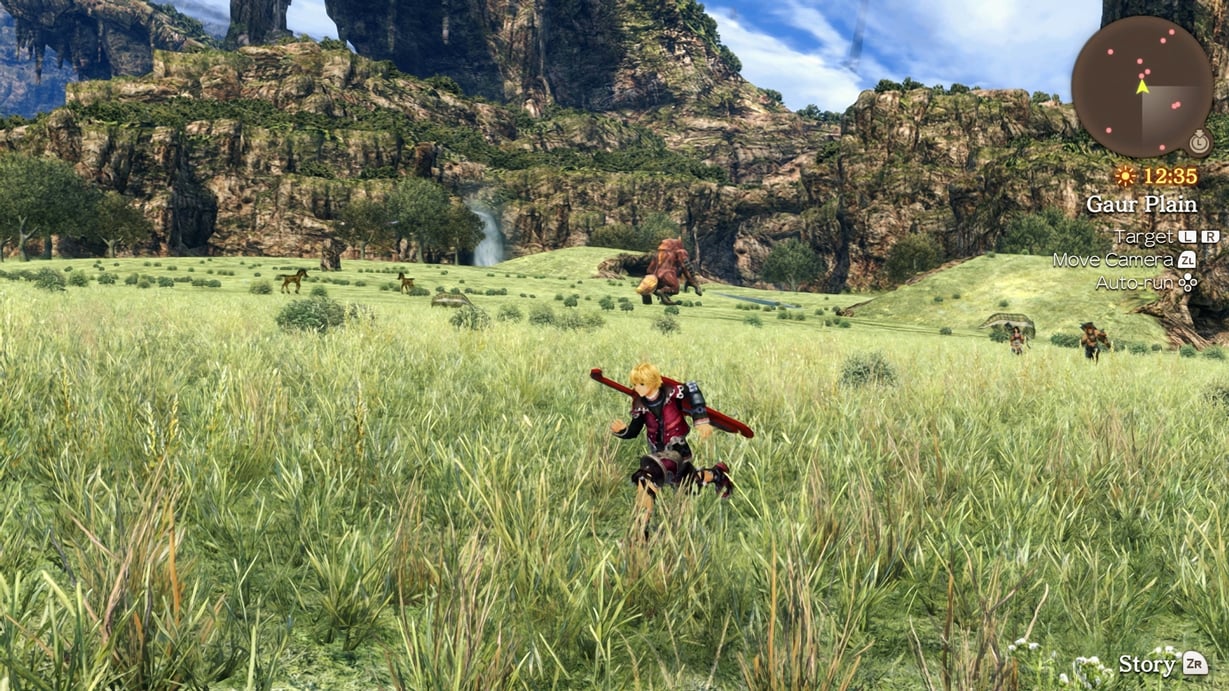
The most significant detail in Logicalbeat’s announcement is its involvement in supporting 4K output and 60 FPS performance. Nintendo confirms that Xenoblade Chronicles: Definitive Edition – Nintendo Switch 2 Edition can run at 4K resolution in TV mode and Full HD in handheld mode while targeting 60 frames per second. These improvements give the world a sharper appearance and make movement feel noticeably smoother. Xenoblade Chronicles is filled with sweeping landscapes, towering mechanical structures, glowing attacks, wildlife, changing weather, and enemies of wildly different sizes. Every one of those elements places demands on the system. Maintaining a higher resolution while doubling the perceived smoothness over a typical 30 FPS presentation is no small task. Logicalbeat’s contribution suggests that its developers were able to provide valuable optimization knowledge during that process.
Why a Higher Frame Rate Matters in Xenoblade Chronicles
A higher frame rate can change how an adventure feels even when its underlying design remains the same. At 60 FPS, camera movement appears smoother, character animation feels more immediate, and player inputs receive quicker visual feedback. That difference is especially noticeable when rotating the camera across Xenoblade Chronicles’ enormous environments or running through areas filled with creatures and environmental effects. The game constantly encourages players to look around, whether they are searching for a quest marker, admiring a distant landmark, or checking whether an oversized monster has decided to join the party uninvited. Smoother motion makes those moments easier on the eyes. It cannot shorten the distance between two objectives, sadly, but it can make the long journey across Bionis feel more polished and responsive.
Smoother Battles Make the Game Easier to Read
Xenoblade Chronicles uses a real-time battle system in which positioning, cooldowns, status effects, visions, party management, and enemy attacks can all demand attention at once. When the action becomes busy, visual clarity matters. A smoother frame rate can make it easier to follow character movement, recognize attack animations, and react to changing battlefield conditions. Shulk’s visions may warn the player about a dangerous event, but the player still needs to understand what is happening and respond quickly. At 60 FPS, transitions and animations can appear more fluid, helping the different pieces of information fit together more naturally. The battle mechanics have not been replaced, simplified, or redesigned around the higher frame rate. Instead, the technical upgrade gives the existing systems more room to shine, rather like cleaning a window instead of changing the view outside it.
Exploration Also Benefits From Improved Performance
The advantages are not limited to combat. Exploration is one of the defining parts of Xenoblade Chronicles, and players regularly travel through wide fields, caves, settlements, forests, snowy regions, and mechanical interiors. These environments often use their scale to inspire curiosity, placing distant landmarks on the horizon and tempting players to investigate locations far beyond the main route. Running, changing direction, moving the camera, and using the new Ether Jet all feel more natural when the image updates at a faster rate. Improved performance also helps the scenery maintain its impact while the player moves quickly through it. The result is not merely a prettier version of the same world. It is a version that can feel more comfortable and energetic during the many hours spent travelling between quests, secret locations, and monsters that are clearly too powerful but somehow still look worth challenging.
Monolith Soft Remained Involved in the Enhanced Edition
Logicalbeat’s announcement does not mean that Monolith Soft stepped away from the project. Monolith Soft remained involved with Xenoblade Chronicles: Definitive Edition – Nintendo Switch 2 Edition, which is hardly surprising given the studio’s close relationship with the series. The newly revealed information instead points to a collaborative development structure. Monolith Soft could continue overseeing the creative identity, gameplay, characters, environments, and overall direction while receiving technical assistance in areas where additional expertise or development capacity was useful. This approach allows the enhanced edition to retain the qualities players associate with Xenoblade Chronicles while benefiting from another studio’s experience. It also explains why the finished release can contain technical improvements and new features without feeling detached from the original vision. The work appears to have been shared, but the game’s personality remains unmistakably Xenoblade.
Yoshiki Domae Shared the Development Credit Publicly
Logicalbeat representative director Yoshiki Domae disclosed the company’s contribution through social media. In his message, he presented the project as an accomplishment for Logicalbeat and stated that the company cooperated in supporting 4K and 60 FPS for the Nintendo Switch 2 Edition. The wording is meaningful because it carefully describes Logicalbeat as a supporting partner rather than the principal developer. Public recognition of this kind gives us a rare glimpse at the network of studios behind a major release. Development credits can be long, and many players never see the names of the teams that solve performance problems, rebuild tools, test hardware-specific features, or optimize graphics. Domae’s message places Logicalbeat’s contribution in the spotlight and ensures that its technical work becomes part of the edition’s development history.
The Ether Jet Left a Strong Impression on Logicalbeat’s Director
Domae also revealed that he replayed Xenoblade Chronicles from the beginning and particularly enjoyed the Ether Jet. The high-speed vehicle is one of the new additions included in the Nintendo Switch 2 Edition, allowing players to cross the game’s large environments far more quickly. It can be unlocked through a new mission available from Chapter 4, and it is also supported in the Future Connected scenario. The vehicle is a practical addition, but it also changes the rhythm of exploration. Areas that once demanded a lengthy walk can be crossed with considerably more speed, making optional objectives and return journeys feel less demanding. Domae’s enthusiastic reaction adds a personal note to the technical announcement. Rather than mentioning resolution figures and quietly disappearing into the mist, he highlighted a feature he genuinely enjoyed while replaying the game.
Logicalbeat Brings Valuable Remastering Experience
Logicalbeat’s participation makes sense when we examine the studio’s previous work. The Japanese developer has experience with ports, remasters, optimization, and projects that require existing games to function correctly on different hardware. That type of development can be deceptively difficult. A remaster must respect the original design while adjusting old systems, assets, interfaces, and performance assumptions for modern equipment. Developers may need to understand code they did not originally write, identify bottlenecks that only appear under specific conditions, and ensure that improvements do not introduce new problems elsewhere. One altered effect can influence performance during a crowded battle, while one interface adjustment can create unexpected issues in another language. Logicalbeat’s background makes it a logical partner for a technically ambitious Nintendo Switch 2 upgrade, even if the company’s name is less familiar than Monolith Soft’s.
Baten Kaitos I & II HD Remaster Is an Important Connection
Logicalbeat is prominently associated with Baten Kaitos I & II HD Remaster, which brought two classic role-playing games together in an updated collection. Bandai Namco’s official materials and the game’s Steam listing identify Logicalbeat as its developer. That project required the studio to handle two large adventures with distinctive visual styles, card-based battle systems, lengthy stories, and numerous quality-of-life additions. The connection is especially interesting because Baten Kaitos has its own historical relationship with Monolith Soft. Although the projects are separate, Logicalbeat’s work on the remaster demonstrates familiarity with preserving Japanese role-playing games while making them more accessible on newer platforms. It also shows that the company is comfortable dealing with beloved games whose fans notice everything. Change one small detail and someone, somewhere, will probably have a fifteen-minute video ready before lunch.
External Development Support Plays a Key Role in Modern Games
Collaboration between multiple studios has become a normal part of game development, particularly when companies are preparing enhanced editions for new hardware. A project may involve the original developer, platform engineers, localization teams, quality-assurance groups, technical support studios, cinematic specialists, and outside companies responsible for particular assets or systems. This does not necessarily indicate that the original team lacked the ability to complete the work alone. Development schedules are crowded, and specialist partners can help solve specific challenges without forcing the central studio to divert every available employee. In this case, Logicalbeat’s stated focus on 4K and 60 FPS support suggests a targeted contribution. Its developers could work alongside Monolith Soft and other partners to help the game use Nintendo Switch 2 hardware effectively while the broader team handled new features, testing, presentation, and the preservation of the original experience.
Logicalbeat’s Involvement Raises Questions About Future Editions
The announcement naturally raises questions about Xenoblade Chronicles 2 – Nintendo Switch 2 Edition and Xenoblade Chronicles 3 – Nintendo Switch 2 Edition. Both games are also being enhanced for Nintendo’s newer hardware, and they will require similar attention to resolution, performance, visual effects, and compatibility. A studio that has already supported one entry could be well positioned to assist with another, especially if it has become familiar with Monolith Soft’s technology and development process. Reusing an experienced partner can reduce the time needed to understand tools, workflows, and performance targets. Nevertheless, that possibility should not be treated as confirmation. Logicalbeat has only publicly identified its involvement with Xenoblade Chronicles: Definitive Edition – Nintendo Switch 2 Edition. Anything beyond that remains speculation unless the studio, Monolith Soft, or Nintendo provides further information.
No Role in Xenoblade Chronicles 2 or 3 Has Been Confirmed
There is currently no verified statement establishing that Logicalbeat worked on the Nintendo Switch 2 Editions of Xenoblade Chronicles 2 or Xenoblade Chronicles 3. The similarities between the projects make the idea believable, but believable is not the same as confirmed. Development arrangements can change from one release to another depending on scheduling, technology, available staff, and the specific upgrades being implemented. Nintendo and Monolith Soft may use the same partner, rely on internal teams, or involve an entirely different collection of support studios. Until official credits or public comments provide an answer, Logicalbeat’s involvement should be discussed only in relation to the first game’s enhanced edition. Keeping that distinction clear prevents an interesting possibility from gradually being repeated as fact, which happens online with all the stealth and persistence of a level 90 monster wandering into a beginner’s quest.
What the Collaboration Means for Xenoblade Chronicles Players
For players, the revelation provides useful context for one of the edition’s most important achievements. Xenoblade Chronicles: Definitive Edition was already an ambitious remaster, combining the original adventure with improved visuals, remastered music, interface refinements, better quest tracking, and the Future Connected epilogue. The Nintendo Switch 2 Edition builds on that foundation with a smoother frame rate, sharper output, the Ether Jet, additional equipment, and further visual improvements. Logicalbeat helped support the technical work behind the 4K and 60 FPS presentation, while Monolith Soft remained connected to the project. Knowing which studios contributed does not change the story of Shulk and his companions, but it gives us a better appreciation of the work required to bring their journey to newer hardware. Great upgrades rarely happen through magic. Even in Xenoblade, someone still has to optimize the machinery.
Conclusion
Logicalbeat’s involvement in Xenoblade Chronicles: Definitive Edition – Nintendo Switch 2 Edition adds an interesting new chapter to the game’s development story. The studio cooperated on support for 4K resolution and 60 FPS, helping the enormous world, fast-moving battles, cinematic scenes, and new Ether Jet feature benefit from Nintendo Switch 2 hardware. Monolith Soft remained involved, making this a collaborative effort rather than a transfer of responsibility from one developer to another. Logicalbeat’s experience with projects such as Baten Kaitos I & II HD Remaster also makes it a fitting technical partner. Although its possible involvement with the upcoming Nintendo Switch 2 Editions of Xenoblade Chronicles 2 and Xenoblade Chronicles 3 is an intriguing thought, no such role has been confirmed. For now, the announcement gives Logicalbeat deserved recognition for helping one of Nintendo’s largest role-playing adventures look sharper, move more smoothly, and feel better to explore.
FAQs
- Did Logicalbeat develop Xenoblade Chronicles: Definitive Edition – Nintendo Switch 2 Edition?
- Logicalbeat provided development cooperation and support related to the game’s 4K resolution and 60 FPS performance. Monolith Soft was also involved with the enhanced edition.
- What improvements does the Nintendo Switch 2 Edition include?
- The edition supports 4K resolution in TV mode, Full HD in handheld mode, and 60 FPS. It also introduces the Ether Jet, new equipment, enhanced visuals, and improvements for Future Connected.
- What is the Ether Jet in Xenoblade Chronicles?
- The Ether Jet is a new high-speed vehicle that allows players to travel through the game’s large environments more quickly. It can be unlocked through a mission available from Chapter 4.
- What other games has Logicalbeat developed?
- Logicalbeat developed Baten Kaitos I & II HD Remaster and has worked on various porting, remastering, and optimization projects for modern platforms.
- Is Logicalbeat working on Xenoblade Chronicles 2 and 3 for Nintendo Switch 2?
- Logicalbeat has not confirmed involvement with either edition. Its experience with the first game makes further collaboration possible, but no official information currently verifies it.
Sources
- Xenoblade Chronicles: Definitive Edition – Nintendo Switch 2 Edition, Nintendo, June 2026
- Xenoblade Chronicles: Definitive Edition – Nintendo Switch 2 Edition, Nintendo Nederland, June 2026
- Xenoblade Chronicles: Definitive Edition – Nintendo Switch 2 Edition Worked on by Baten Kaitos Remaster Dev, Nintendo Everything, July 24, 2026
- Baten Kaitos Remaster Dev Helped Out With Xenoblade Chronicles’ Switch 2 Edition, Nintendo Life, July 24, 2026
- Baten Kaitos I & II HD Remaster Official Site, Bandai Namco Entertainment, June 18, 2024