














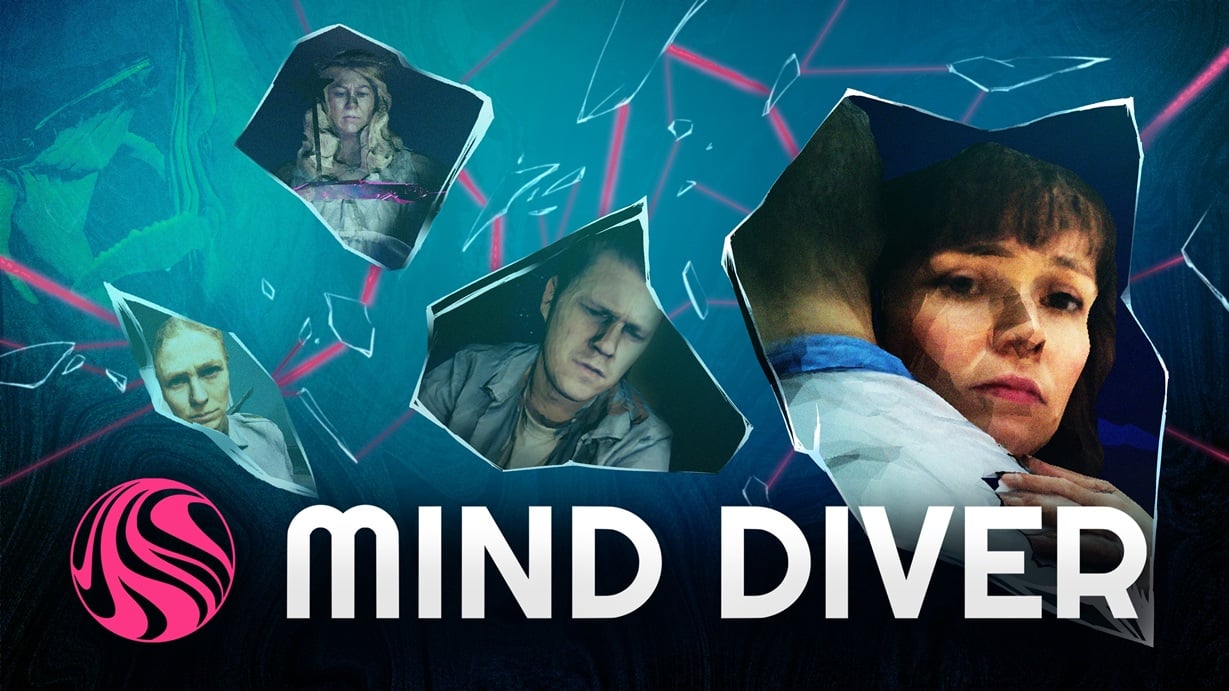
Summary:
Mind Diver is heading to Nintendo Switch 2 on August 27, 2026, giving Nintendo players the chance to investigate one of the more unusual missing-person mysteries around. Published by PLAYISM and developed by Copenhagen-based Indoor Sunglasses, the mystery adventure places us inside the deteriorating mind of Lina, whose boyfriend Sebastian has disappeared. Her rapidly fading memories may contain the answers, but recovering them means travelling through a strange subconscious landscape known as the Mind Ocean and repairing memories before crucial details disappear.
Rather than handing us a trail of conveniently labelled clues, Mind Diver asks us to listen, observe and make connections for ourselves. More than 130 Echoes contain voiced fragments of conversations, while over 700 objects can potentially be used to repair Memory Holes. The mystery stretches across eight deteriorating Regions, with new pathways opening as neural connections are restored. Case files and the Memory Log provide additional ways to compare suspects, conversations and events as the timeline surrounding Sebastian’s disappearance gradually takes shape.
The Nintendo Switch 2 version launches digitally for $17.99 alongside the PlayStation 5 release. Mind Diver originally appeared on PC in September 2025, and its move to new consoles brings the deduction-focused mystery to another audience. Its unusual 3D-scanned presentation, emotional story and emphasis on logical investigation make it particularly interesting for players who enjoy mysteries where finding the answer requires more than simply following a waypoint.
Mind Diver Launches on Nintendo Switch 2 on August 27, 2026
PLAYISM and developer Indoor Sunglasses are bringing Mind Diver to Nintendo Switch 2 on August 27, 2026, expanding the mystery adventure beyond its original PC release. It will arrive on Nintendo’s console alongside a PlayStation 5 version, while the PC edition has been available since September 2025. For Nintendo players who enjoy mysteries built around observation and deduction rather than combat, this is an especially intriguing addition to the Switch 2 library. Mind Diver doesn’t place us at a conventional crime scene filled with fingerprints, discarded weapons and yellow evidence markers. Instead, the investigation happens somewhere far less reliable: inside another person’s memories. That’s a troublesome place to search for the truth when those memories are rapidly disappearing, distorted and incomplete.
The premise immediately gives the investigation a different rhythm from a traditional detective mystery. We’re not simply trying to discover what happened to Sebastian. We’re also trying to determine whether Lina’s fragmented recollections can still be trusted and how seemingly unrelated moments fit together. The game revolves around examining these memories carefully, recovering missing details and gradually reconstructing the events surrounding Sebastian’s disappearance. There’s no magic button that announces which clue matters. A conversation that initially seems insignificant could become important much later, while an ordinary object sitting somewhere in a memory might provide the connection needed to understand what Lina actually experienced.

A Missing Person Case Hidden Inside Lina’s Deteriorating Memories
At the centre of Mind Diver is the relationship between Lina and her missing boyfriend Sebastian. The pair were deeply in love, but something went terribly wrong. Sebastian has disappeared and Lina is suffering from rapidly progressing memory loss, leaving investigators with an unusual problem. The person who may know what happened is steadily losing access to the very memories that could explain it. Traditional police work has reached repeated dead ends, so experimental technology offers another possibility. As a Mind Diver, we enter Lina’s subconscious and attempt to reconstruct her damaged recollections before they deteriorate beyond recovery.
That setup turns Lina’s memories into both the location of the investigation and the evidence we’re examining. Important moments include an unsettling confrontation outside a party, what happened when Lina woke the following morning and a fading recollection involving a visit to the police station. None of these scenes necessarily provides a neat answer on its own. Instead, they behave more like torn pages scattered across a room. We need to find the pieces, work out how they relate and determine what belongs between them. Somewhere among those broken recollections is the explanation for Sebastian’s disappearance, but Mind Diver expects us to earn that answer through careful observation rather than simply handing it over.
Exploring the Mind Ocean and Its Eight Deteriorating Regions
Lina’s subconscious is represented as the Mind Ocean, a surreal environment containing incomplete snapshots of different moments from her life. The investigation spreads across eight deteriorating Regions, creating a structure in which progress is directly connected to how successfully we repair Lina’s memories. Rebuilding neural connections can unlock additional Regions and open routes deeper into her subconscious, so solving one mystery may provide access to memories that were previously unreachable. It’s a clever way of making detective work feel like exploration. Instead of finding a key for a locked door, we’re finding the correct thought that allows Lina’s mind to reconnect another piece of her past.
The structure also suits the game’s central idea that human memory isn’t a perfectly organised archive. Memories overlap, details vanish and emotions can make some moments seem clearer than others. Mind Diver turns those imperfections into its landscape. A recollection isn’t necessarily useful simply because we’ve reached it. We still need to understand what we’re looking at, identify what is missing and connect what we learn with evidence encountered elsewhere. The result is an investigation where moving forward isn’t just about travelling somewhere new. Progress means understanding Lina a little better, restoring another connection and discovering why certain memories have become so important to the mystery surrounding Sebastian.
More Than 130 Echoes Turn Conversations Into Detective Clues
Conversation is one of Mind Diver’s most important sources of evidence. More than 130 Echoes can be scanned during the investigation, each preserving a fully voiced snippet of dialogue. These aren’t simply collectibles sitting around for completionists. They can reveal relationships, contradictions and details that help determine what belongs in Lina’s damaged memories. Listening carefully matters because a seemingly casual remark may take on an entirely different meaning once another piece of evidence provides context. Anyone who has ever remembered half of a conversation hours later and suddenly realised what somebody actually meant will recognise the basic idea, although hopefully without the accompanying missing-person investigation.
These Echoes encourage us to pay attention to what people say as well as what surrounds them. A clue can emerge from the words themselves, from who was present or from how a particular conversation connects to another moment. That makes investigation less mechanical. Rather than collecting information until the game automatically solves the problem, we’re expected to distinguish genuine clues from coincidences. Mind Diver’s mystery depends on those little connections, asking us to remember earlier conversations and reconsider them whenever new information appears. The more of Lina’s past we recover, the more those isolated voices begin to form a coherent picture of the people around her and the events that led to Sebastian’s disappearance.
More Than 700 Objects Can Fill the Gaps in Lina’s Memories
Broken memories contain Memory Holes where important details have disappeared, and repairing them requires selecting the correct objects from Lina’s surroundings. There are more than 700 potential objects involved across the experience, so simply guessing isn’t a particularly attractive strategy. The challenge comes from understanding the memory well enough to determine what belongs in the missing space. Sometimes the answer may be supported by a conversation. Elsewhere, something previously observed in another recollection could provide the missing connection. Each repaired memory reveals another piece of the past and can move the investigation closer to the truth.
This system gives ordinary objects unusual importance. Something that would normally serve as background decoration can become evidence when viewed in the right context. That’s where Mind Diver’s deduction-focused design becomes especially interesting. We aren’t searching rooms because every interactive object glows conveniently in detective vision. We’re trying to understand why a particular object makes sense within a specific recollection. The satisfaction comes from recognition: that moment when two previously disconnected pieces suddenly fit together and an incomplete memory becomes understandable. It makes solving the mystery feel less like checking tasks off a list and more like assembling a puzzle whose picture only becomes clear after enough pieces have found their proper places.
Case Files and the Memory Log Help Build a Complete Timeline
Keeping track of dozens of conversations, memories and suspicious characters could quickly turn an investigation into a desk covered with imaginary red string, so Mind Diver provides tools for organising what we’ve discovered. Case files contain information about the people connected to Lina and Sebastian, allowing us to examine where their paths intersect and consider possible motivations. Meanwhile, the Memory Log provides a way to cross-reference conversations gathered throughout the investigation. Together, these systems help us move beyond individual clues and start looking at the wider sequence of events surrounding the night everything changed.
The ultimate objective is to construct a timeline that explains what actually happened around the party and Sebastian’s disappearance. That’s important because individual memories can only show fragments of the story. A person may appear suspicious in one scene but entirely different information could emerge elsewhere. Someone’s explanation might initially sound convincing until another Echo contradicts it. By comparing case information with recovered conversations and repaired memories, we can gradually narrow the possibilities. Good detective mysteries make us feel clever when a theory finally clicks into place, and Mind Diver is built around giving players enough information to form those theories without simply highlighting the correct conclusion from the beginning.
Mind Diver Blends Detective Work With an Emotional Love Story
Although Sebastian’s disappearance gives Mind Diver its central mystery, the investigation is also about understanding his relationship with Lina. Their love story provides the emotional backbone beneath the puzzles, meaning every recovered memory potentially tells us something about who these people were before everything went wrong. That distinction matters. A mystery can easily become a collection of clever problems with little reason to care about the answer, but Mind Diver ties its deductions to a relationship that has already begun to fracture by the time we enter Lina’s subconscious. Solving what happened therefore means uncovering painful personal history as well as identifying the circumstances behind a disappearance.
Developer Indoor Sunglasses has described Mind Diver as a story about human connection and the unexpected ways life can go wrong. That perspective explains why the memory mechanic feels like more than a convenient excuse for puzzles. Memories are personal, imperfect and often inseparable from emotion. Revisiting them can change how we understand another person or even how we understand ourselves. Mind Diver turns that familiar experience into an investigation, asking us to examine conversations and moments whose significance may only become apparent much later. The mystery may pull us forward, but Lina and Sebastian’s relationship gives those discoveries weight beyond simply figuring out who did what and when.
Return of the Obra Dinn Helped Inspire Mind Diver’s Deduction
One of Mind Diver’s major inspirations was Return of the Obra Dinn, Lucas Pope’s celebrated deduction-focused mystery. The connection makes sense when looking at how strongly Mind Diver relies on players making their own logical connections instead of following a conventional trail of objectives. Indoor Sunglasses co-founder and lead developer Victor Breum has spoken about the importance of Pope’s work to the team, while Pope himself responded positively to Mind Diver during its development. The influence isn’t about copying another mystery game’s setting or presentation. It’s visible in the confidence that players can be trusted to examine evidence, form hypotheses and experience the satisfaction of reaching a conclusion themselves.
That approach can make a mystery far more memorable because the solution feels earned. When a game automatically marks every important clue and explains its meaning immediately, there’s little room left for actual investigation. Mind Diver instead gives us conversations, objects, memories and case information, then asks us to determine how everything connects. The result should appeal particularly to players who enjoyed the intellectual satisfaction of Return of the Obra Dinn and similar detective experiences. The mystery isn’t merely something happening around us while we perform unrelated tasks. Understanding it is the task, which means noticing a tiny detail can be every bit as valuable as discovering an entirely new location.
Mind Diver Uses 3D Scans to Create Its Unusual Visual Identity
Mind Diver’s mystery is supported by an unusual visual approach built using 3D scans of real actors and locations in Denmark, where Indoor Sunglasses is based. The technique gives Lina’s subconscious a distinctive appearance that suits a story about incomplete and deteriorating recollections. Real places and people become reconstructed digital spaces, which feels particularly appropriate when we’re exploring memories that aren’t completely intact. Instead of presenting Lina’s mind as a clean, realistic recreation of the world, the visual treatment reinforces the feeling that we’re wandering through something reconstructed from fragments.
All character dialogue is fully voiced in English, which becomes especially significant when so much of the investigation revolves around listening to Echoes and interpreting conversations. PLAYISM describes the experience as lasting around six hours, suggesting a relatively focused mystery rather than an enormous adventure padded with unrelated distractions. That tighter structure could work well for this type of detective design. When dozens of conversations and hundreds of potential objects can matter, keeping the investigation concentrated gives individual clues a better chance to remain memorable. The strange visual presentation and voice-driven evidence also help give Mind Diver an identity that stands apart from more traditional crime scenes and detective stories.
Mind Diver Switch 2 Price, Languages and Release Details
Mind Diver will launch digitally for Nintendo Switch 2 on August 27, 2026, priced at $17.99. The PlayStation 5 version arrives on the same date, while the PC version originally launched through Steam on September 28, 2025. PLAYISM lists support for English, Japanese, French, Italian, German, Spanish from Spain, Danish, Korean, Brazilian Portuguese, Russian, Simplified Chinese and Traditional Chinese. The game is designed for a single player, fitting its thoughtful investigation and narrative focus. A new platform trailer has also been released showcasing the Mind Ocean and the atmosphere players can expect when entering Lina’s memories.
For Nintendo Switch 2 owners, Mind Diver offers something considerably different from a conventional action-heavy mystery. Its biggest confrontations happen through observation, interpretation and deduction. More than 130 Echoes, over 700 potential objects, eight deteriorating Regions and a disappearing collection of memories stand between us and the truth about Sebastian. That’s a lot of mental clutter to sort through, but that’s also precisely the appeal. Mind Diver wants us to notice what others might overlook, remember conversations that seemed unimportant and gradually transform a broken collection of moments into a coherent explanation. On August 27, Switch 2 players will finally be able to see whether they can put Lina’s memories back together before the truth disappears with them.
Conclusion
Mind Diver brings an intriguing kind of detective work to Nintendo Switch 2 on August 27, 2026. Instead of placing evidence neatly in front of us, Indoor Sunglasses builds its investigation from fading memories, fragmented conversations and missing details that need to be reconstructed through logic. Lina’s deteriorating Mind Ocean creates a setting where every recovered recollection can change our understanding of Sebastian’s disappearance, while Echoes, Memory Holes, case files and the Memory Log give us different ways to examine the mystery. The emotional relationship between Lina and Sebastian also means there’s more waiting at the end than a simple answer to a police case. With its unusual 3D-scanned presentation, focused deduction systems and clear inspiration from games such as Return of the Obra Dinn, Mind Diver could be one to watch for Switch 2 players who would rather solve a mystery themselves than have the answer highlighted for them.
FAQs
- When does Mind Diver release on Nintendo Switch 2?
- Mind Diver launches digitally for Nintendo Switch 2 on August 27, 2026. The PlayStation 5 version is scheduled to release on the same date, while the game previously launched for PC through Steam in September 2025.
- How much does Mind Diver cost on Nintendo Switch 2?
- PLAYISM lists Mind Diver at $17.99 for Nintendo Switch 2. The game is being released digitally and is a single-player mystery adventure developed by Indoor Sunglasses.
- What is Mind Diver about?
- Mind Diver follows an investigation into the disappearance of Sebastian, whose girlfriend Lina is experiencing rapid memory deterioration. Using experimental technology, we enter Lina’s subconscious and reconstruct damaged memories in an attempt to discover what happened.
- How does the investigation work in Mind Diver?
- Players explore Lina’s Mind Ocean, examine more than 130 Echoes containing voiced conversations and repair Memory Holes using objects found throughout her memories. Case files and a Memory Log can also be used to compare people, events and conversations while building a timeline of the case.
- Which languages does Mind Diver support?
- PLAYISM lists support for English, Japanese, Simplified Chinese, Traditional Chinese, French, Italian, German, Spanish from Spain, Danish, Brazilian Portuguese, Russian and Korean. Character dialogue is fully voiced in English.
Sources
- Explore a Broken Mind to Solve a Dark Mystery… Mind Diver is coming to Switch 2 and PlayStation 5 on August 27!, PLAYISM, August 13, 2026
- Mind Diver, PLAYISM, 2026
- Mind Diver coming to PS5, Switch 2 on August 27, Gematsu, August 13, 2026