


Summary:
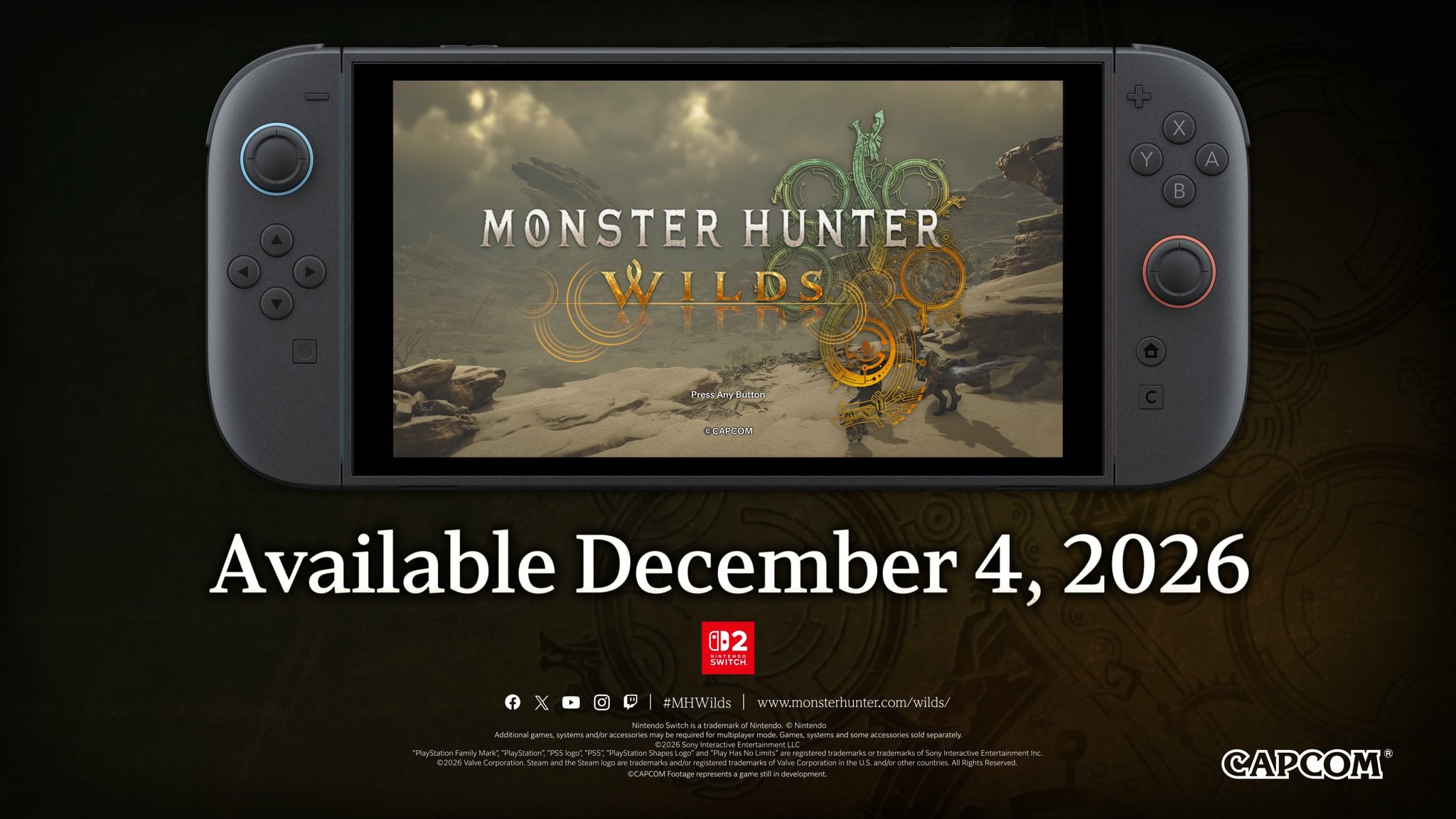
Recent hands-on footage and official details show Monster Hunter Wilds running on Nintendo Switch 2 with clear trade-offs: Capcom targets steady 30 FPS across multiple display profiles while using lower output resolutions that scale to the TV or handheld display. The Prologue Demo, published Oct 19-20, 2026, lets players carry over saves to the full release on Dec 4, 2026, and exposes how Capcom balances frame rate stability, asset detail and reflections. Empirical captures show an uncapped framerate option that can push well above 30 FPS in docked mode while Quality mode holds at 30 FPS. Visual concessions include lower-resolution textures in some areas, reduced shadow detail, and visible aliasing or shimmer in motion, but many clips suggest the Switch 2 version preserves overall scene detail better than expected. For hunters who prefer portable play and local co-op, the Switch 2 build looks promising, though obvious compromises remain compared with PS5 and high-end PC versions.
What the Monster Hunter Wilds Switch 2 Prologue Demo Shows
The Prologue Demo for Monster Hunter Wilds went live on Oct 19 Pacific Time / Oct 20 British time, and it’s the first public build that lets players judge how Capcom has prepared the game for Nintendo’s new hardware. The demo covers the early chapters and supports local multiplayer as well as save transfer to the full release on Dec 4, 2026. That means the demo serves two purposes: a hands-on preview for fans and a stress test for Capcom’s Switch 2 optimizations. The demo’s settings menu exposes multiple display modes in docked play and a single mode in handheld, and capture videos uploaded by technical channels give a sense of how those modes behave in the field. If you follow NintendoSwitch 2 coverage, the demo is the clearest signal yet of Capcom’s approach: prioritize a stable play experience for hunters while leaning on dynamic scaling and asset adjustments to keep performance locked where it matters most.
Video credits: Digital Foundry
Capcom’s Official Targets Versus What Players See in Captures
Capcom’s official materials list output resolution and frame rate targets for the Switch 2 build: two docked profiles – a resolution-priority profile and a frame-rate-priority profile – and a handheld profile that target 30 FPS as the baseline. Official numbers show higher output resolutions than previous handhelds, but Capcom also notes that resolution is dynamic and may scale down in demanding scenes. In practice, gameplay captures and independent footage indicate that the engine scales aggressively where necessary. That means the advertised output numbers are useful as a target, but actual internal rendering resolution can be lower and then upscaled to the final output, producing a softer image in motion. Several technical previews and comparisons demonstrate this behavior, showing a consistent 30 FPS in capped Quality mode while uncapped modes can run noticeably higher on less busy scenes. The takeaway is simple: Capcom aims for a steady framerate on Switch 2 and accepts resolution or asset-quality reductions to hold that line.
Frame Rate Modes and Real-World Performance on Switch 2
The demo exposes multiple frame-rate options and how they affect the experience. Docked play offers both a Quality profile (with a 30 FPS option) and a Framerate profile; handheld is limited to a single target. Capture tests show that the capped 30 FPS Quality mode is the most stable option for frantic hunts, with frame-time consistency that helps avoid judder during long fights. When players choose the uncapped Framerate profile, footage recorded on docked setups shows readings into the 40s, indicating the Switch 2 hardware can sometimes exceed the nominal targets when the scene is less demanding. However, the uncapped option also reveals more frequent dips and a less even distribution of frame times, so hunters who care about predictability may prefer the 30 FPS cap. Overall, the demo confirms Capcom’s stated priority: deliver a reliable 30 FPS baseline while offering an uncapped path for higher-but-variable frame rates in calmer encounters.
Visual Trade-offs – Textures, Shadows and Reflections
To reach that steady framerate, Capcom makes visible concessions: reduced texture resolution in some scenes, fewer or lower-quality shadows on distant objects, and selective use of screen-space reflections on Switch 2 where appropriate. The result is a presentation that can look less crisp than PS5 or high-end PC versions in fine detail, but still comfortably readable on the Switch 2 display and in handheld use. Some clips reveal shimmering in motion and aliasing at certain viewing angles, which are common artifacts when internal resolution is scaled up. On the flip side, comparisons indicate that Capcom kept more of the original scene detail where it counts – character features, monster silhouettes and environmental shapes remain recognizable even if the closest textures lose fidelity. That balance lets the game feel true to its design while being practical for a handheld-first platform.
How the Switch 2 Build Compares with Xbox Series S and PS5
Side-by-side comparisons uploaded by several creators suggest the Switch 2 port performs admirably against the Xbox Series S in a few measurable ways. Where the Series S struggles with frame drops or more aggressive texture reductions in some areas, Switch 2 footage often looks steadier thanks to Capcom’s targeted optimizations and dynamic scaling strategy. That does not mean Switch 2 beats PS5 or high-end PC across the board – those platforms still hold the edge in raw fidelity, highest-resolution textures and more robust shadowing and post-processing. But for players who value portability and local co-op, the Switch 2 version manages a credible compromise: better frame-rate consistency and a presentation that, while softer in places, keeps the core Monster Hunter identity intact. If you’re comparing versions, consider how often you play docked versus handheld and whether steady performance or peak visual fidelity matters more to your sessions.
Handheld Versus Docked – What Hunters Should Expect
The portable appeal of Monster Hunter Wilds on Switch 2 is one of the strongest selling points. In handheld mode the game targets a single profile aimed at balancing clarity and battery life, and the demo shows that the experience remains playable and visually coherent on the built-in display. Docked play provides selectable profiles that allow hunters to favor resolution or push for a higher uncapped framerate in calmer scenes, but docked modes also expose the limits of the port in busier fights where scaling can become more aggressive. Local co-op support in the demo is a particularly welcome inclusion for Monster Hunter fans who remember the franchise’s communal roots, and it underscores why many players will choose Switch 2 even if the visual quality lags behind the most powerful platforms. In short: handheld delivers a satisfying, portable way to hunt, while docked offers flexible choices depending on whether you want steadiness or higher peak framerate in quiet moments.
Should You Pick the Switch 2 Version?
Choosing whether to buy the Switch 2 release depends on how you play. If portable or local multiplayer sessions are central to your enjoyment of Monster Hunter, the Switch 2 build is compelling: it prioritizes stable performance and keeps the game’s structure intact while allowing players to take hunts on the go. If your priority is the absolute best graphical experience, a PS5 or well-spec’d PC will still deliver higher resolution textures, fuller shadowing, and smoother high-frame-rate options. For fans who want both options, the Switch 2 demo is useful because it lets you carry progress to the full game on Dec 4, 2026. Ultimately the Switch 2 port looks like a conscious, fan-friendly compromise rather than a rushed reduction – Capcom’s focus is on delivering an approachable Hunter experience that reflects how many players actually want to play.
Key Takeaways for Hunters
Monster Hunter Wilds on Switch 2 looks like a practical port that keeps the series’ gameplay intact while making clear visual concessions to secure stable performance. Expect a 30 FPS baseline in most modes, an uncapped option that can climb into the 40s in some scenes, and dynamic resolution or asset scaling that softens the image where it would otherwise drop frames. The demo’s local multiplayer and save transfer make it a great chance to test weapon feel and hunting flow on the new hardware before deciding. If you own a Switch 2 and value portability, this version should be on your radar; if you chase maximum fidelity, compare side-by-side footage and reviews before you commit to double-dipping. NintendoReporters will keep following updates between now and the Dec 4, 2026 release to track final performance and any post-launch improvements.
Conclusion
Monster Hunter Wilds on Nintendo Switch 2 demonstrates a pragmatic approach: Capcom is keeping frame rate stable for hunters while accepting lower output resolutions and selective asset reductions. The Prologue Demo released Oct 19-20, 2026 gives an early look at these trade-offs and confirms that Switch 2 owners get a solid portable experience, though with visual sacrifices versus PS5 and high-end PC. If you like portable hunting and local co-op, the Switch 2 build looks to be a worthwhile option. Stay tuned for the full release on Dec 4, 2026 and further patches that might refine resolution scaling and animation fidelity.
FAQs
- When did the Switch 2 Prologue Demo become available?
- The Prologue Demo launched on Oct 19, 2026 Pacific Time (Oct 20, 2026 BST) and allows save transfer to the full release on Dec 4, 2026.
- Does the Switch 2 demo run at 30 FPS?
- Yes – Capcom targets a stable 30 FPS baseline for most profiles, and the demo’s capped Quality mode holds at 30 FPS in capture footage.
- Are there different display modes on Switch 2?
- Docked play offers multiple profiles so you can favor quality or framerate, while handheld uses a single balanced profile in the demo.
- How does Switch 2 compare to Xbox Series S and PS5?
- Switch 2 makes visual compromises but often looks steadier than Series S and preserves key details; PS5 and high-end PC still hold the fidelity advantage overall.
- Will my demo progress carry over to the full game?
- Yes – progress made in the Prologue Demo can be transferred to the full Switch 2 release on Dec 4, 2026.
Sources
- The Switch 2 version of Monster Hunter Wilds gets a Prologue Demo next week, VGC, October 15, 2026
- Monster Hunter Wilds on Switch 2: How the Demo Runs, Handheld and Docked, GameTechPlanet, October 20, 2026
- Monster Hunter Wilds will target 30fps on Switch 2 with two visual modes docked and one handheld, RPG Site, September 18, 2026
- CAPCOM’s Monster Hunter Wilds on Switch 2 Trades Resolution for Stability, Yet Comparisons Show Detail Holds Up Against Bigger Consoles, Wccftech, October 20, 2026