














Summary:
Mouse P.I. For Hire has quickly become one of the more exciting indie success stories of the year, and it is easy to see why players have latched onto it. Fumi Games’ debut release combines the snap and swagger of a first-person shooter with a hand-drawn rubber hose animation style inspired by classic 1930s cartoons. That alone would make it stand out in a crowded release calendar, but the bigger surprise is how well the game appears to be performing commercially. Publisher PlaySide Studios has reported that Mouse P.I. For Hire has sold approximately 730,000 units across all platforms since launch, with console versions now representing about half of total sales. The publisher also says the game has generated strong revenue and recouped its major expenses, including milestone payments, publishing costs, and marketing costs. For a debut from Fumi Games, that is a remarkable opening act. It means Mouse P.I. For Hire is not just a stylish curiosity that looked good in trailers. It has become a genuine breakout, powered by memorable art direction, accessible shooter energy, noir atmosphere, and strong player curiosity across PC and console storefronts. Even better, continued wishlist growth suggests the little detective may not be done making noise yet.
Mouse P.I. For Hire proves that a bold visual identity can still break through
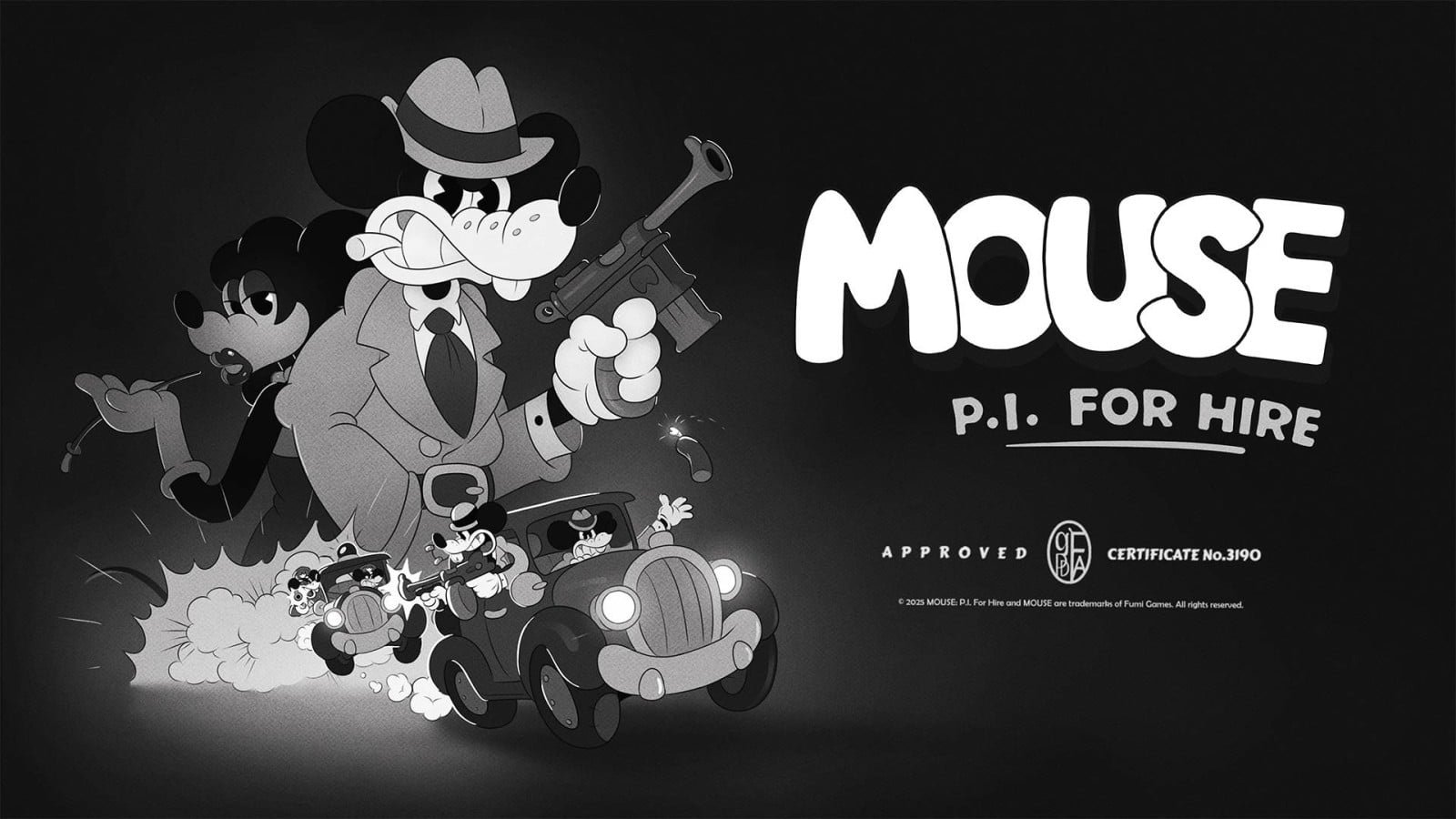
Mouse P.I. For Hire has the kind of look that makes people stop scrolling. In a market where many shooters can blur together like a crowded arcade cabinet left running overnight, Fumi Games’ debut immediately separates itself with black-and-white rubber hose animation, cartoon chaos, and a smoky noir mood. It looks old-fashioned on purpose, yet it feels sharp and fresh because the style is attached to fast-paced shooting rather than a safe nostalgic platformer. That contrast gives the game its hook. You are not just watching a 1930s-inspired cartoon come to life, you are running through it with weapons, attitude, and a detective case that clearly has teeth.
The commercial response shows how powerful that first impression can be when it is backed by solid play. Mouse P.I. For Hire has reportedly sold around 730,000 units across all platforms since launch, which is a huge number for a debut game built around such a distinct identity. Plenty of games have strong art direction, but fewer manage to turn that style into an actual buying decision for hundreds of thousands of players. Here, the visuals do more than decorate the screen. They tell players exactly what kind of strange, jazzy, chaotic ride they are getting into, almost like a neon sign blinking above a detective’s office door on a rainy night.
Fumi Games turns its debut into a serious success story
For Fumi Games, Mouse P.I. For Hire is not just a first release, it is a statement. A debut title always carries extra pressure because players, publishers, and industry watchers are all trying to figure out what a studio really is. Is it a one-trick concept team? Is it a studio with a strong production pipeline? Can it turn a great pitch into a finished game that people actually want to buy and recommend? With Mouse P.I. For Hire, Fumi Games has answered those questions with a pretty confident squeak, and yes, that pun was unavoidable.
The impressive part is that the game does not seem to be riding on one idea alone. The visual style got people through the door, but the sales suggest players found enough energy, charm, and playability to keep the conversation moving after release. That matters because debut games often have a harder road. They do not have a long-running brand name, years of built-in loyalty, or a character that fans already know from childhood. Mouse P.I. For Hire had to sell people on a new world, a new hero, and a new tone. Based on the reported numbers, it has done that job with surprising force.
PlaySide Studios reports around 730,000 copies sold across platforms
Publisher PlaySide Studios says Mouse P.I. For Hire has sold approximately 730,000 units across all platforms since launch. That number gives the game a much bigger footprint than a simple niche curiosity, especially because it has reached players across PC and consoles rather than leaning on only one audience. It also shows that the game’s appeal travels well. A stylized FPS about a mouse detective could have sounded too odd on paper, but the finished package clearly clicked with enough players to turn curiosity into sales.
Platform spread is especially important here. PlaySide has stated that console units have increased to 50 percent of total units sold, which suggests the game is not only living inside the PC indie bubble. That is a healthy sign for a title with strong visual branding, because console storefront visibility can keep a game in front of players long after launch-day chatter starts to fade. When a game looks this distinct in a store grid, it has a better chance of getting that second glance. Sometimes that second glance is all it takes before someone decides they need a cartoon detective shooter in their life.
The game has already recouped its major publishing and marketing costs
The sales figure is impressive on its own, but the financial detail makes the story even stronger. PlaySide Studios has reported that Mouse P.I. For Hire has recouped expenses tied to milestone payments, publishing, and marketing. In plain English, the game has already earned back the major money invested into getting it made, promoted, and sold. That changes the tone around the release from promising to genuinely profitable, which is a major milestone for any game, especially a new intellectual property from a debut developer.
That kind of performance gives the project breathing room. When a new game recoups costs quickly, it can shift the conversation toward continued sales, possible updates, long-term visibility, and what the studio might do next. It also gives PlaySide and Fumi Games a stronger foundation for future planning. Game development can be a brutal business where even clever ideas sometimes vanish under the weight of budgets, delays, and crowded release windows. Mouse P.I. For Hire appears to have dodged that trap. Instead of being remembered only as a cool-looking gamble, it now looks like a gamble that paid off.
Why the rubber hose cartoon style gives Mouse P.I. For Hire instant personality
The rubber hose animation style is the game’s loudest calling card, and it works because it is instantly readable. The stretchy limbs, expressive character shapes, vintage black-and-white presentation, and old cartoon energy give Mouse P.I. For Hire a visual rhythm that players understand almost immediately. It feels familiar without being plain. That balance is hard to pull off because nostalgia can easily become costume dressing, but here the look helps define the pace, tone, and attitude of the whole experience.
There is also a clever tension in using a charming cartoon style for a gritty shooter. The game is not simply cute. It has noir flavor, guns, danger, and a city full of trouble. That contrast gives the whole thing a mischievous spark, like watching a Saturday morning cartoon wander into a smoky back alley and come out carrying a tommy gun. Players can enjoy the novelty, but they also get a clear sense that the game has bite behind the smile. That makes Mouse P.I. For Hire more memorable than a shooter that simply chooses one mood and stays there.
The noir detective setup gives the action more flavor than pure shooting
Mouse P.I. For Hire benefits from having a detective framework around its action. Instead of simply dropping players into disconnected arenas, it gives them a hardboiled private investigator, a moody city, and a sense that every corner might be hiding another dirty secret. That noir setup adds flavor to the shooting because it gives the chaos a personality. You are not just clearing enemies, you are pushing deeper into a cartoon crime story where every streetlight, hallway, and suspicious character feels like part of the case.
This matters because shooters often need more than good weapons to linger in a player’s memory. Strong gunplay can make a game fun in the moment, but tone and setting are what make people talk about it afterward. Mouse P.I. For Hire has a clear identity built around Jack Pepper, Mouseburg, jazzy atmosphere, and old-school cartoon danger. It gives players something specific to describe when they recommend it. That kind of word-of-mouth is powerful. “It’s a noir cartoon mouse FPS” is a much easier sell than “it’s another shooter with some cool levels.”
Jack Pepper and Mouseburg help the game feel like more than a visual trick
Jack Pepper gives Mouse P.I. For Hire a center of gravity. A game this stylized needs a lead character who can carry the joke, the danger, and the attitude without feeling like a mascot slapped onto a genre template. Jack’s private investigator role fits the world neatly because it turns the city into a mystery box. Every case, enemy, weapon, and location can feed into that detective fantasy, which helps the game feel like a complete idea rather than a visual experiment that ran out of road.
Mouseburg also does a lot of heavy lifting. A good setting gives players somewhere to mentally return to, and Mouseburg has the advantage of being easy to picture before you even know every detail. It suggests corruption, jazz clubs, shadowy streets, crooked deals, and cartoon absurdity all at once. That makes it useful as both a playground and a brand identity. When a debut game can create a name, a hero, and a city that players remember, it has already cleared one of the hardest hurdles in modern game marketing without needing to shout about it.
Console and PC visibility appear to be working together
Mouse P.I. For Hire’s sales across multiple platforms show why a broad release can be so valuable for the right kind of game. PC players often help drive early conversation around distinctive indie projects, especially when a game has strong trailer appeal and a visual style that looks great in clips. Console players, meanwhile, can help extend the sales curve when storefront placement, wishlists, and recommendation systems keep the game visible. In this case, those audiences appear to be helping each other rather than pulling in separate directions.
The reported 50 percent console share is particularly notable because it suggests Mouse P.I. For Hire has avoided being boxed in as a PC-only curiosity. That broader reach gives the game more stability. It also means players on Nintendo Switch 2, PlayStation 5, Xbox Series X|S, and PC can all participate in the same conversation around its success. When a game has a strong visual hook, social clips, storefront thumbnails, and platform recommendations can all work together like little signposts pointing toward the same smoky detective office.
Strong storefront presence matters when players are spoiled for choice
Modern players have more games fighting for their attention than ever, so storefront visibility can make a huge difference. Mouse P.I. For Hire has one major advantage in that battle: it does not look like everything else. In a row of thumbnails, its black-and-white cartoon style jumps out immediately. That kind of instant recognition is valuable because players often make quick decisions while browsing. A game has only a few seconds to say, “Hey, look over here,” and Mouse P.I. For Hire says it with a grin full of trouble.
That does not mean style alone guarantees success. Players still need to feel confident that the game is worth buying, and the reported sales suggest the presentation, concept, and reception worked together. Storefront presence may get people to click, but the full package has to carry them from curiosity to purchase. Mouse P.I. For Hire seems to have done that by presenting a clear fantasy: become Jack Pepper, enter Mouseburg, and blast through a noir cartoon nightmare with enough personality to make the whole thing feel alive.
Wishlist growth suggests the sales story may still have legs
PlaySide has reported that wishlists across all platforms have grown to 3 million, up from the figure reported around launch. That is an encouraging sign because wishlists often represent future interest rather than finished sales. Not every wishlist turns into a purchase, of course. Anyone who has ever wishlisted twenty games during a sale and bought two knows how that goes. Still, a growing wishlist number suggests Mouse P.I. For Hire remains visible and continues to attract players who may be waiting for the right moment to jump in.
This is where the game’s long-term potential becomes interesting. If the player conversation stays healthy and storefront visibility remains strong, Mouse P.I. For Hire could continue selling beyond its initial launch wave. Games with distinctive styles often have a longer shelf life because they are easier to rediscover. A new trailer, discount, update, physical release, or platform promotion can bring fresh attention back to the game. For Fumi Games and PlaySide, that means the 730,000 figure may be less of a finish line and more of a very strong opening chapter.
What this success could mean for Fumi Games next
The success of Mouse P.I. For Hire puts Fumi Games in a fascinating position. A debut hit can open doors, but it also raises expectations. Players will now watch the studio more closely, not just because they liked this game, but because they want to know whether Fumi Games can build on its strengths. The studio has shown that it can create a striking world, sell a weird idea clearly, and turn visual personality into commercial momentum. That is not small. In a crowded industry, a recognizable creative voice is worth its weight in golden cheese.
The next step does not have to mean rushing into a sequel, although Mouse P.I. For Hire certainly feels like a world that could support more stories. Fumi Games could expand the current game, build another project with a similarly bold identity, or use this success to take bigger creative swings. The important thing is that the studio now has proof that players respond to its style and execution. That proof can make future pitches stronger and give the team more leverage when deciding what kind of game it wants to make next.
Conclusion
Mouse P.I. For Hire has gone from eye-catching oddity to real indie success, and the reported numbers make that clear. Around 730,000 units sold across platforms, recouped publishing and marketing expenses, strong console participation, and millions of wishlists all point to a debut that has landed with unusual confidence. The best part is that the success feels earned. Fumi Games did not simply make a shooter with a gimmick. It built a stylish noir cartoon world around Jack Pepper, Mouseburg, rubber hose animation, and energetic first-person action. That combination gave players something easy to understand, fun to share, and tempting to buy. For PlaySide Studios, it is a strong commercial result. For Fumi Games, it is an even bigger creative calling card. Mouse P.I. For Hire now feels less like a one-off surprise and more like the start of a studio people will want to follow closely.
FAQs
- How many copies has Mouse P.I. For Hire sold?
- PlaySide Studios has reported that Mouse P.I. For Hire has sold approximately 730,000 units across all platforms since launch. That figure includes sales across PC and console platforms.
- Who developed Mouse P.I. For Hire?
- Mouse P.I. For Hire was developed by Fumi Games. It is especially notable because the game is the studio’s debut release, making its early commercial success even more impressive.
- Who published Mouse P.I. For Hire?
- Mouse P.I. For Hire was published by PlaySide Studios. The publisher has shared sales and financial performance details showing that the game has already recouped major related expenses.
- What kind of game is Mouse P.I. For Hire?
- Mouse P.I. For Hire is a first-person shooter with a noir detective theme and a rubber hose animation style inspired by classic 1930s cartoons. Players follow private investigator Jack Pepper through the crime-filled city of Mouseburg.
- Why is Mouse P.I. For Hire getting so much attention?
- The game stands out because of its striking black-and-white cartoon look, fast shooter gameplay, noir atmosphere, and strong early sales. Its visual identity makes it instantly recognizable, while its commercial performance shows that players are responding to more than just the art style.
Sources
- Strong Performance of MOUSE: P.I. For Hire Continues, PlaySide Studios via Market Index, May 7, 2026
- Mouse: P.I. for Hire made all its money back in a month, selling 730,000 copies in “stronger-than-expected” launch with 94% positive Steam reviews, GamesRadar+, May 11, 2026
- Mouse P.I. For Hire Has Sold So Well That Publisher PlaySide Studios Has Already Recouped Its Investment, PlayStation Universe, May 11, 2026
- MOUSE: P.I. For Hire on Steam, Steam, April 16, 2026
- MOUSE: P.I. For Hire, Official Website, 2026