


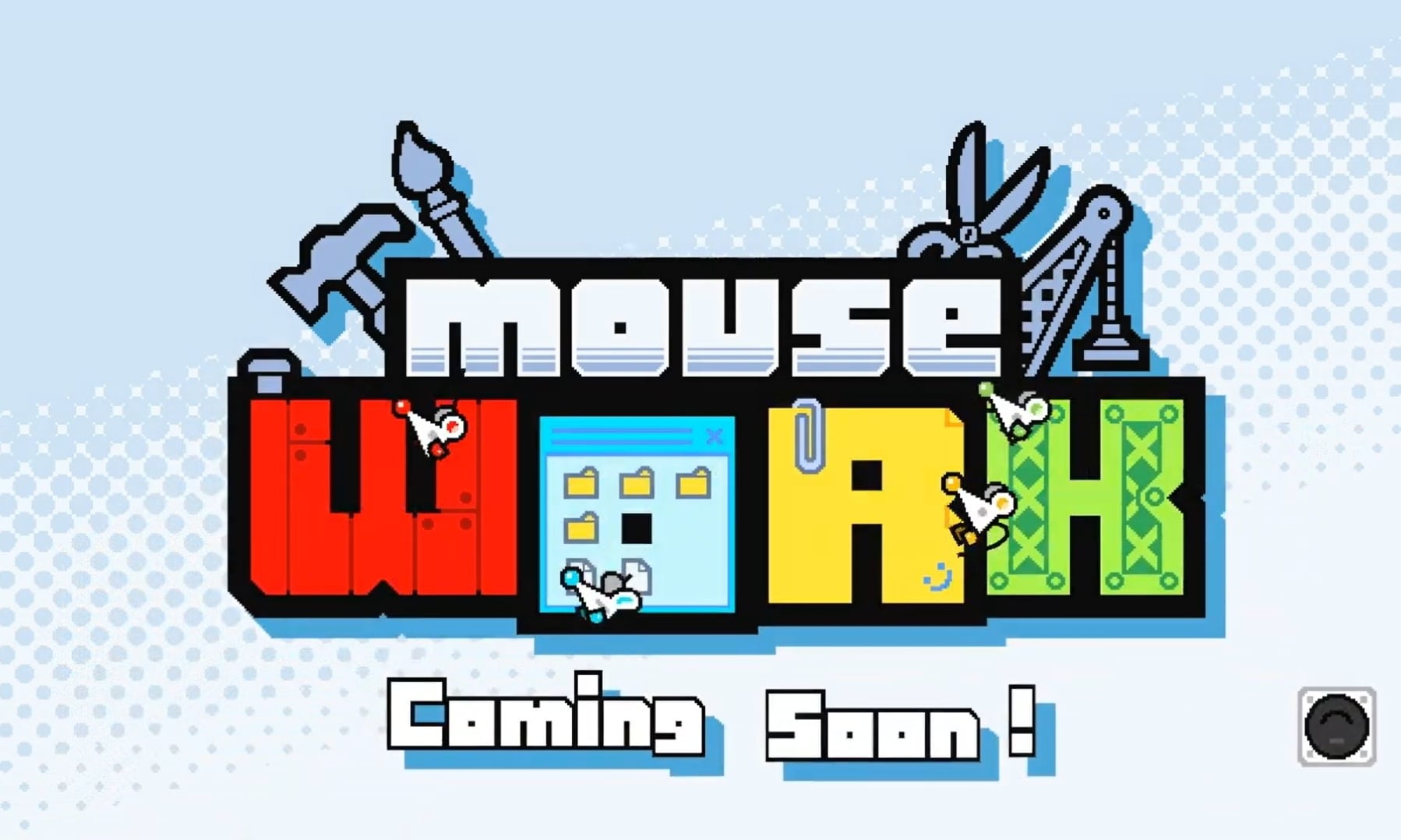
Summary:
Mouse Work, Nitrome’s mouse-driven party game built for Nintendo Switch 2, now has a confirmed Japanese eShop release date of December 7, 2026. That listing pins down price and scope details including a roughly 10+ hour campaign, over 50 stages, local and online multiplayer, and GameShare support. The studio first revealed Mouse Work around the Switch 2 announcement in April 2025 and later showed a second trailer in July 2025. The game leans into the system’s new Joy-Con 2 cursor functionality with a range of inventive job-themed mini-games designed for solo play or chaotic 2-4 player couch sessions. NintendoReporters looks at what is confirmed, how the mouse controls change the experience, and what Switch 2 owners should know before launch.
Mouse Work finally has a confirmed release date for Nintendo Switch 2
Mouse Work getting a confirmed date matters because it turns a long-promised experiment in mouse-first gameplay into something you can actually plan to buy. The Japanese eShop listing places the game on December 7, 2026 with a listed price of ¥2,200, and that entry adds concrete details beyond the trailers – campaign length, stage count and multiplayer support are now on the record. For fans who followed the initial April 2025 reveal and the July 2025 follow-up trailer, this is the moment those early teasers become real. If you like quick party sessions with inventive control twists or want to test the Joy-Con 2 cursor in a dedicated package, this release transforms Mouse Work from a concept into a holiday-season option you can add to your Switch 2 wishlist. You can read more about the console itself on our dedicated Nintendo Switch 2 page to get context for how this title fits the platform Nintendo Switch 2.
Who is Nitrome and why their take on mouse controls matters
Nitrome is an indie studio known for creative, bite-sized games and they have shipped titles on Nintendo hardware before, including Bomb Chicken and a collaboration on Shovel Knight Dig. Their background in tight, clever minigame design makes them a smart pick to experiment with Joy-Con 2 cursor input. Unlike a massive AAA team, Nitrome’s history shows they can iterate fast, craft memorable mechanics and lean into constraints to make something charming and accessible. That background explains why Nitrome chose to prototype Mouse Work even before getting a Switch 2 dev kit – the studio figured they could design mouse-first levels quickly and then polish once hardware access came. For players, that means the game is likely to prioritize smart, compact design over filler, and it’s also why Mouse Work could be a quick hit for local gatherings, especially if you enjoy games that trade complexity for immediate, silly fun.
What Mouse Work plays like – mini-games, jobs and the core loop
At its core Mouse Work casts players as adorable mice taking on short, job-themed mini-games to earn Cheddar. Each job is its own bite-sized challenge with rules that map neatly to cursor input, and the structure encourages replay – old jobs resurface with twists and new jobs unlock as you progress. The game highlights classic microgame rhythms: quick objectives, time pressure and one or two simple mechanics that chain together into surprising challenge. Examples shown in trailers include painting tasks, guiding climbers to holds, bouncing spherical objects in a gym-like minigame and a retro mouse-avoider section inspired by old-school designs. Because each job focuses on a single interaction type, Mouse Work aims for immediate learnability and chaotic fun when played with others, while also offering a reasonably sized single-player campaign for those who prefer to play solo or grind out stage completion and cosmetics.
How Switch 2’s mouse controls shape the gameplay and feel
The Joy-Con 2 cursor turns pointer movement into the primary input, and Mouse Work uses that to make gestures and dragging feel satisfying rather than tacked on. Jobs like the Climbing Instructor have you drag the hands of incompetent climbers to safety, which leans on smooth, responsive pointer motion and precise placement. Painting tasks ask you to complete an image within a timer window, which becomes a tactile exercise in quick strokes and accurate clicks. The mouse mode also enables asymmetric local interactions – while one player might be dragging objects around, another could be toggling switches or aiming a reticle, creating coordinated chaos. Importantly, cursor responsiveness and acceleration settings matter here, and expectations from PC mouse play will need to be translated into Joy-Con 2 behaviour so that actions don’t feel floaty or oversensitive on the Switch 2 hardware. The trailers and early developer notes indicate Nitrome built jobs around the cursor rather than shoehorning it in, which usually makes for a better play experience.
Examples of mini-games and job mechanics you can expect
Trailer footage and the developer blog highlight a pleasing variety of jobs that reuse cursor input in inventive ways. Some jobs test rhythm and timing by keeping a ball airborne, while others are puzzle-like – moving objects into position or painting a pattern under time pressure. There are utility-style jobs that mimic clicking through annoying pop-ups, and cooperative tasks where players must lift objects together or hold hands to form bridges. These shifts in mechanic keep each stage feeling fresh, and because many jobs are short they reward experimentation. Cosmetics and in-game currency – Cheddar – provide an extra loop by letting you customise your mouse with hats and accessories. The variety is important because it keeps a party session lively: one moment you’re gently painting, the next you’re frantically coordinating with a teammate to haul a heavy object across a level.
Local and online multiplayer – how Mouse Work turns chaos into teamwork
Mouse Work supports 1-4 players locally and has online features, including GameShare on Switch 2, which the eShop listing mentions. Local couch play is where the party vibe lives – asymmetric abilities and tied-together challenges can force players to negotiate and laugh through awkward controls. Expect modes that intentionally create collisions, such as players sharing cursor space or being required to cooperate to drag large objects, and modes that reward coordination like precise handoffs or simultaneous actions. Online support and GameShare mean friends who can’t be in the same room may still join the fun, although latency and online responsiveness will determine whether competitive or timing-based jobs hold up well online. Overall, the multiplayer design looks built to escalate mayhem rather than smooth it down, which is ideal for group sessions and for players who enjoy friendly sabotage.
Release details, pricing and regional availability notes
The confirmed Japanese eShop listing shows a December 7, 2026 release date with a price of ¥2,200, and it also lists campaign length of 10+ hours across 50+ stages along with online and local multiplayer support. Regional release dates beyond Japan are still indicated as TBA on storefront aggregators, so North American and European windows may follow the JP launch or share the same date after localisation checks. Pricing may vary by region, and the eShop entry often reflects an initial market price that gets translated differently elsewhere, so expect small regional differences. If you want to keep track of how this pans out for your region, check Nitrome’s official announcements and NintendoReporters’ Nintendo News section for updates and storefront links as they appear Nintendo News. Also remember that digital-only releases sometimes arrive simultaneously worldwide but occasionally stagger by region due to localisation, rating or storefront scheduling.
How to prepare for Mouse Work – what to check before launch
If you plan to pick up Mouse Work at launch on Switch 2, consider a few practical steps so your first session is smooth. Make sure your Switch 2 system firmware is up to date and that you understand how to set pointer sensitivity and button mapping for the Joy-Con 2 cursor in system settings. If you have multiple controllers, test how your household’s play area handles cursor interactions – different surfaces and distances can change tracking feel. For local parties, set aside time to customise sensitivity and try a few practice jobs to get everyone comfortable. If you want to use GameShare or online features, ensure your Nintendo account is linked and your network is stable. These small checks avoid early frustration and let everyone jump into the goofy jobs without time wasted in setup screens.
Conclusion
Mouse Work’s confirmation for December 7, 2026 moves it out of rumour territory and into a clear launch target for the Nintendo Switch 2 holiday window. Nitrome’s design sense and the game’s focus on Joy-Con 2 cursor controls mean Mouse Work could be a standout example of how new input options create fresh play ideas rather than being gimmicks. Whether you prefer solo runs through the campaign or chaos-filled couch parties for up to four players, the eShop listing’s details about stage count, campaign length and multiplayer support make it worth watching. Keep an eye on updates from Nitrome and NintendoReporters so you’ll know when regional storefronts confirm dates, pricing and availability for your country.
FAQs
- When does Mouse Work release on Nintendo Switch 2?
- The Japanese eShop lists Mouse Work for December 7, 2026. Regional dates for North America and Europe are still TBA and may be confirmed closer to launch.
- What platforms will Mouse Work be on?
- Mouse Work is currently listed for Nintendo Switch 2. There are no confirmed ports to other platforms at this time.
- How many players does Mouse Work support locally?
- The game supports 1-4 players locally, with additional online features such as GameShare listed on the eShop entry.
- Does Mouse Work require Joy-Con 2 mouse mode to play?
- Yes – Mouse Work is built around the Joy-Con 2 cursor functionality as the primary control method, which is central to the mini-games and mechanics.
- How much content does Mouse Work include?
- The eShop listing notes over 10 hours of campaign content across more than 50 stages, plus customisation options earned with in-game currency.
Sources
- Mouse Work Is Finally On Its Way To The Switch 2, Nintendo Life, November 10, 2026
- Mouse Work coming to Switch 2!, Nitrome Blog, December 22, 2025
- This Switch 2 Game Was Announced Before Its Developers Even Had A Dev Kit, GameSpot, April 16, 2025
- Mouse Work Reveal Trailer, Nitrome (YouTube), April 7, 2025