














Summary:
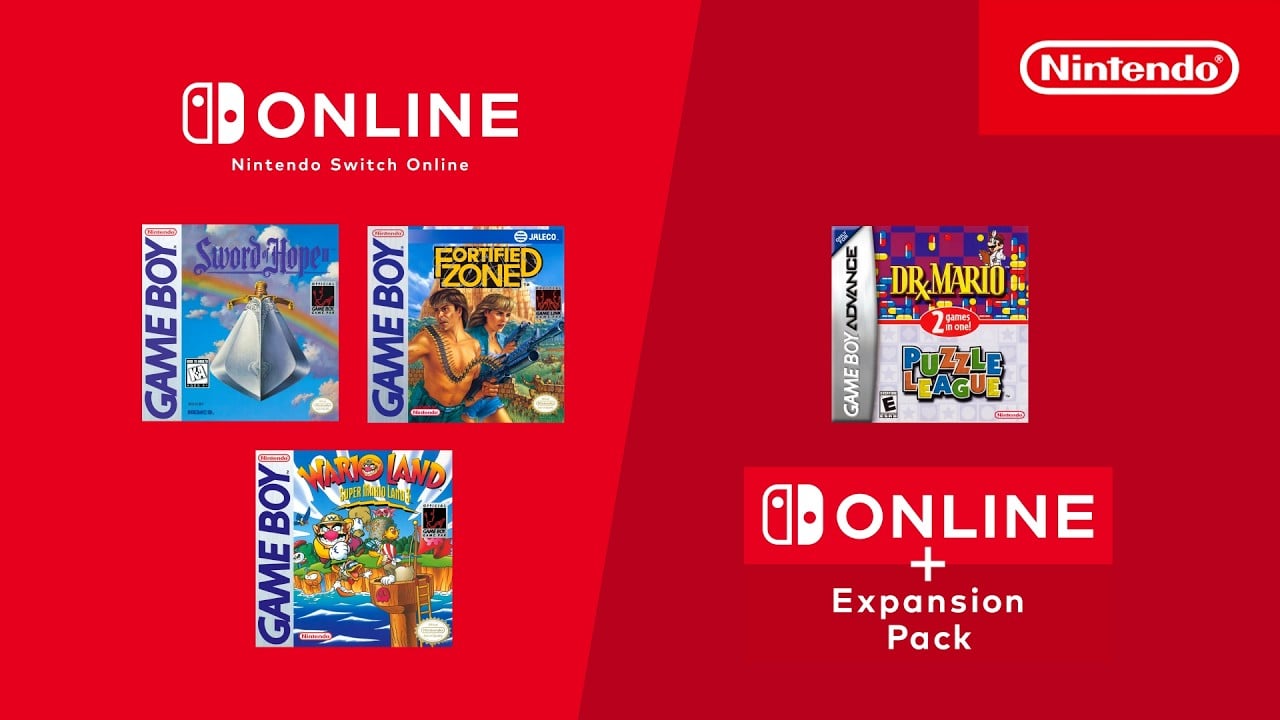
Nintendo has expanded its Nintendo Switch Online catalogue with four more games from its handheld history. Standard Nintendo Switch Online members can now play Fortified Zone, Wario Land: Super Mario Land 3 and The Sword of Hope II through the Game Boy – Nintendo Classics application. Subscribers with the Nintendo Switch Online + Expansion Pack membership also receive access to Dr. Mario & Puzzle League through the Game Boy Advance – Nintendo Classics application.
The selection offers a surprisingly varied mixture of genres. Wario Land: Super Mario Land 3 follows Mario’s greedy rival as he searches for enough treasure to finance a castle of his own. Fortified Zone swaps colourful platforming for a top-down military mission in which players can switch between two operatives with different abilities. The Sword of Hope II provides a slower, story-driven adventure filled with exploration, battles and fantasy role-playing elements. Dr. Mario & Puzzle League then rounds out the update with two distinct puzzle games packed onto one Game Boy Advance release.
All four games are available through the Nintendo Classics applications on Nintendo Switch and Nintendo Switch 2. The three Game Boy releases are included with the standard membership, while the Game Boy Advance addition requires the Expansion Pack tier. Nintendo has also released a trailer introducing the latest additions and showing each game in action, giving subscribers a handy preview before deciding which corner of handheld history to visit first.
Nintendo Switch Online Expands Its Classic Game Selection
Nintendo Switch Online has received another retro refresh, adding four games that originally appeared across the Game Boy and Game Boy Advance. The latest selection includes Fortified Zone, Wario Land: Super Mario Land 3, The Sword of Hope II and Dr. Mario & Puzzle League. Rather than filling the update with several games from the same genre, Nintendo has assembled a delightfully mixed bundle that moves between platforming, military action, fantasy role-playing and competitive puzzle solving. It is the gaming equivalent of opening an old drawer and finding a treasure map, a bottle of vitamins and military equipment sitting side by side. Strange combination? Absolutely. Entertaining? Very likely.
The additions are available through the Nintendo Classics applications on both Nintendo Switch and Nintendo Switch 2. Standard members can access the three Game Boy games, while Dr. Mario & Puzzle League is reserved for Nintendo Switch Online + Expansion Pack subscribers because it belongs to the Game Boy Advance library. Nintendo has also shared a trailer presenting all four releases, allowing players to see their distinctive visual styles and gameplay systems before downloading the relevant applications.

Three Game Boy Adventures Join the Standard Membership
The standard Nintendo Switch Online membership receives the largest part of this update, with three games joining the Game Boy – Nintendo Classics application. Each one represents a different side of the original handheld system. Wario Land: Super Mario Land 3 delivers bold platforming and treasure hunting, Fortified Zone offers action from an overhead perspective, and The Sword of Hope II focuses on exploration, storytelling and turn-based battles. It is a useful reminder that the Game Boy was never limited to simple platform games designed for brief bus journeys. Developers regularly squeezed ambitious ideas onto that modest monochrome screen, even when the hardware probably responded with the electronic equivalent of a nervous cough.
Subscribers do not need the Expansion Pack tier to access these three releases. Once the Game Boy – Nintendo Classics application has been downloaded, the games should appear as part of its growing library. Nintendo’s modern features, including save states and rewind support, can also make older games more approachable. Those conveniences are particularly welcome when revisiting releases from an era when games occasionally treated mercy as an optional extra.
Wario Land Gives Nintendo’s Greedy Antihero the Spotlight
Wario Land: Super Mario Land 3 is arguably the most recognisable name in the new selection. Originally released for the Game Boy in 1994, the platformer places Wario in the leading role after he previously appeared as Mario’s rival in Super Mario Land 2: 6 Golden Coins. Wario is not trying to rescue a princess or protect a peaceful kingdom. His motivation is far less noble and considerably more amusing: he wants enough wealth to acquire a castle that will make Mario jealous.
That wonderfully selfish objective sends him to Kitchen Island, where the Brown Sugar Pirates have gathered piles of valuable treasure. Wario must smash through enemies, explore stages and gather as many coins and riches as possible. His heavy movements and aggressive abilities immediately distinguish him from Mario. He feels less like a graceful acrobat and more like a runaway wardrobe with a shoulder charge. That physicality became an important part of his identity and helped establish a series that would continue evolving across later Nintendo systems.
Wario’s Treasure Hunt Introduced a Different Kind of Platforming
Although Wario Land retains the side-scrolling structure associated with the Super Mario Land games, its priorities are noticeably different. Reaching the end of a stage matters, but collecting treasure is just as important. The amount of wealth gathered during the adventure influences Wario’s eventual reward, encouraging players to search suspicious walls, explore optional paths and keep an eye out for valuable objects. It gives the platforming a mischievous scavenger-hunt flavour rather than presenting every level as a straightforward race to the exit.
Wario can also use several power-up hats that change his abilities. The Bull Helmet strengthens his charging attack and lets him stick to ceilings, the Jet Helmet allows him to fly horizontally, and the Dragon Helmet produces a stream of fire. These powers are not merely decorative. They affect how Wario moves through stages and how players approach enemies or obstacles. The result is a platformer that feels familiar enough to understand immediately while still developing its own swaggering personality. It is Mario-adjacent, certainly, but Wario makes sure everyone knows whose name is printed on the treasure chest.
Fortified Zone Brings Top-Down Combat and Character Switching
Fortified Zone offers a sharp change of pace from Wario’s colourful treasure hunt. This top-down action game follows operatives Masato Kanzaki and Mizuki Makimura as they infiltrate a dangerous fortified complex. Players navigate rooms, fight enemies, locate useful equipment and search for the route deeper into the base. The overhead perspective and maze-like environments give the adventure a tactical quality, although there is still plenty of immediate action when enemy soldiers and machines begin crowding the screen.
One of the game’s defining ideas is the ability to switch between its two playable characters. Masato is better suited to direct combat and can use a broader selection of weapons, while Mizuki has useful abilities that help with jumping and medical support. Success therefore depends on understanding when each operative is most valuable. Charging ahead with the same character may work for a while, but the game encourages players to think about the tools available to them. It is a simple system by modern standards, yet it adds welcome variety and gives Fortified Zone an identity beyond being another overhead shooter.
The structure mixes combat with exploration, so players must pay attention to their surroundings instead of simply firing at everything that moves. Rooms contain routes, items and hazards that gradually reveal how the fortress is connected. The modern rewind and save options available through Nintendo Classics may soften some of the original challenge, but the game still carries the tense rhythm of an early handheld action release. Every doorway feels as though it might contain supplies, enemies or a deeply inconvenient surprise.
The Sword of Hope II Offers a Traditional Fantasy Quest
The Sword of Hope II brings fantasy role-playing to the update. Players assume the role of Prince Theo, who must recover the stolen Sword of Hope and confront a renewed threat to his kingdom. Rather than presenting the world through an overhead map filled with tiny wandering characters, the game uses a first-person viewpoint for exploration. Locations appear as illustrated scenes, and players select commands to examine their surroundings, move between areas and interact with objects or characters.
This structure combines role-playing mechanics with elements of a traditional adventure game. Careful observation matters because useful objects, pathways and clues may be hidden within the environments. Battles unfold through turn-based commands, allowing Theo and his companions to attack, use magic or manage their resources. The pace is naturally slower than the other Game Boy additions, but that is part of its appeal. The Sword of Hope II is built for players who enjoy gradually unravelling a world, solving problems and watching a party grow stronger over time.
As a sequel, the story builds upon events from the original The Sword of Hope, but the central mission remains understandable for newcomers. Prince Theo once again faces a kingdom threatened by dangerous forces, and the stolen sword sits at the heart of the crisis. Players who enjoy old-school role-playing games should feel at home with its menu-driven encounters and deliberate exploration. Patience is rewarded, as is the willingness to inspect anything that looks even slightly suspicious. Fantasy heroes rarely find legendary artefacts by politely ignoring the dusty corner of a room.
Expansion Pack Members Receive a Game Boy Advance Puzzle Double Feature
Nintendo Switch Online + Expansion Pack members receive Dr. Mario & Puzzle League through the Game Boy Advance – Nintendo Classics application. As the title suggests, this release combines two complete puzzle experiences in one package. They share a focus on matching colours and clearing objects, but their rules and rhythms are very different. Dr. Mario asks players to position falling vitamin capsules, while Puzzle League revolves around swapping blocks within a steadily rising playfield.
The collection originally appeared on Game Boy Advance in 2005 and provided a convenient portable version of two established Nintendo puzzle favourites. Its arrival in the Expansion Pack catalogue adds considerable replay value because both games work well in quick sessions yet offer enough depth to support repeated attempts at higher scores. They are easy to understand, difficult to master and dangerously effective at turning a planned five-minute break into a much longer disappearance.
Dr. Mario Challenges Players to Eliminate Colourful Viruses
Dr. Mario follows a simple but enduring formula. Coloured viruses fill a bottle, and Mario drops two-part vitamin capsules from the top of the screen. Players rotate and position each capsule to create horizontal or vertical lines containing four matching colours. Completing a line removes the connected pieces, including any viruses caught within it. Clear every virus and the stage is complete. Let the bottle fill to the top and Mario’s medical licence begins to look increasingly questionable.
The challenge comes from planning ahead. Capsules often contain two different colours, so placing one half in a useful position may leave the other half blocking an important space. Strong players learn to build combinations, prepare future matches and avoid creating awkward piles that restrict movement. Higher speed settings make each decision more urgent, while larger virus counts demand more careful organisation. The rules can be explained in a few sentences, but the gap between understanding them and mastering them is enormous.
This Game Boy Advance version provides a clean portable interpretation of the classic puzzle game. Its inclusion alongside Puzzle League makes the package particularly useful for subscribers who prefer score-driven games over lengthy adventures. You can complete a round during a brief break, chase a personal record or become trapped in the familiar cycle of saying, “One more attempt,” until the clock quietly betrays you.
Puzzle League Rewards Quick Thinking and Clever Chains
Puzzle League uses a rising wall of coloured blocks. Players control a cursor that swaps two neighbouring blocks horizontally, aiming to form groups of at least three matching colours. Cleared blocks disappear, anything resting above them drops, and those falling pieces can create additional matches. These chained reactions are the key to high scores and competitive success. A carefully prepared arrangement can trigger several clears in succession, producing the deeply satisfying sensation of watching a plan unfold exactly as intended.
The pressure comes from the blocks continuously moving towards the top of the playfield. Clearing matches lowers the immediate danger, while mistakes create clutter that becomes increasingly difficult to manage. Puzzle League therefore demands both speed and foresight. Players must react to the current arrangement while imagining how the board will change after pieces fall. It feels a little like reorganising a cupboard during an earthquake, except the cupboard is colourful and rewards you for making four things vanish at once.
Despite sharing a cartridge with Dr. Mario, Puzzle League never feels like a minor bonus. Its rules support a different style of play, with greater emphasis on rapid swapping, chain reactions and managing a constantly rising field. Together, the two games form a strong puzzle package that can appeal to casual players and competitive score chasers alike.
The Latest Additions Offer Four Very Different Retro Experiences
The most appealing aspect of this Nintendo Switch Online update is its variety. Wario Land: Super Mario Land 3 provides character-driven platforming with an emphasis on treasure. Fortified Zone combines action, navigation and character switching. The Sword of Hope II slows things down with role-playing battles and first-person exploration. Dr. Mario & Puzzle League delivers two tightly designed puzzle games that can be played for minutes or hours.
That range makes the selection useful for several types of players. Someone interested in Nintendo history can revisit Wario’s first starring role, while fans of lesser-known Game Boy releases can discover Fortified Zone or The Sword of Hope II. Puzzle enthusiasts receive two established favourites in a single Game Boy Advance package. Not every subscriber will connect with every release, but the update does not expect them to. It presents several different doors into the handheld era and lets players decide which one looks the most inviting.
These additions also demonstrate why preservation through modern services matters. Original cartridges can be difficult or expensive to obtain, and older hardware is not always convenient to maintain. Making these games playable on current systems gives them another opportunity to reach people who missed them during their original releases. It also allows returning players to check whether their memories were accurate or generously polished by nostalgia.
How Subscribers Can Access the Newly Added Games
Players with an active Nintendo Switch Online membership can access Fortified Zone, Wario Land: Super Mario Land 3 and The Sword of Hope II through the Game Boy – Nintendo Classics application. The application can be downloaded from Nintendo eShop on Nintendo Switch or Nintendo Switch 2. Once installed and updated, the newly added games should appear alongside the existing Game Boy catalogue.
Dr. Mario & Puzzle League follows a slightly different requirement. Because it is a Game Boy Advance release, players need an active Nintendo Switch Online + Expansion Pack membership and the Game Boy Advance – Nintendo Classics application. A standard membership does not provide access to the Game Boy Advance library. Subscribers should therefore check their membership tier if the game does not appear among the available applications.
The Nintendo Classics applications include modern quality-of-life options that can make older releases easier to revisit. Save functionality allows players to pause progress without relying solely on the original game’s systems, while rewind support can help undo a poorly timed jump, an unfortunate tactical choice or the kind of puzzle mistake that becomes obvious half a second too late. These features are optional, so players seeking a more traditional experience can still approach the games without leaning on them.
Nintendo Continues to Build Its Handheld Classics Libraries
The Game Boy and Game Boy Advance applications have grown steadily as Nintendo adds first-party favourites, overlooked releases and games from third-party publishers. The latest update continues that pattern by pairing a familiar Nintendo name with less obvious selections. Wario Land: Super Mario Land 3 serves as the headline attraction, but Fortified Zone and The Sword of Hope II broaden the library beyond Nintendo’s best-known franchises. Dr. Mario & Puzzle League adds another polished puzzle option to the Game Boy Advance collection.
There are still many handheld releases that subscribers would happily welcome, of course. Retro libraries tend to inspire wish lists almost immediately, and every addition reminds players of several other games that remain absent. Even so, bringing these four releases to Nintendo Switch and Nintendo Switch 2 gives subscribers more reasons to explore the existing applications. Whether you want to shoulder-charge pirates, infiltrate a military base, recover a legendary sword or throw vitamins at viruses, the catalogue now has an answer.
Conclusion
Nintendo Switch Online has added a varied group of handheld classics with Fortified Zone, Wario Land: Super Mario Land 3, The Sword of Hope II and Dr. Mario & Puzzle League. The first three games are available to standard members through the Game Boy – Nintendo Classics application, while the Game Boy Advance puzzle collection requires a Nintendo Switch Online + Expansion Pack membership. Together, they offer platforming, action, fantasy role-playing and two distinct styles of puzzle gameplay. Wario may attract the most attention, but every release contributes something different to the growing catalogue. The only difficult part is deciding whether to hunt treasure, storm a fortress, save a kingdom or prescribe another dangerously colourful vitamin capsule.
FAQs
- Which games were added to Nintendo Switch Online?
- Fortified Zone, Wario Land: Super Mario Land 3 and The Sword of Hope II were added to the Game Boy catalogue. Dr. Mario & Puzzle League was added to the Game Boy Advance catalogue.
- Do standard Nintendo Switch Online members receive all four games?
- No. Standard members can access the three Game Boy games, but Dr. Mario & Puzzle League requires a Nintendo Switch Online + Expansion Pack membership.
- Can the games be played on Nintendo Switch 2?
- Yes. The Nintendo Classics applications and these newly added games are available on Nintendo Switch and Nintendo Switch 2 with the appropriate membership.
- What type of game is Wario Land: Super Mario Land 3?
- It is a side-scrolling platform game in which Wario explores Kitchen Island, battles enemies and gathers treasure to fund a castle of his own.
- Does Dr. Mario & Puzzle League contain two games?
- Yes. The Game Boy Advance release combines Dr. Mario’s capsule-matching puzzles with Puzzle League’s fast block-swapping gameplay.
Sources
- These Four Classic Games Are Now Available to Play, Nintendo of America, July 7, 2026
- Game Boy – Nintendo Classics Add The Sword of Hope II, Fortified Zone and Wario Land: Super Mario Land 3, Gematsu, July 7, 2026
- Nintendo Switch Online Adds Fortified Zone, Wario Land, The Sword of Hope II and Dr. Mario & Puzzle League, Nintendo Everything, July 7, 2026
- Wario Land: Super Mario Land 3, Nintendo, February 16, 2012
- Dr. Mario & Puzzle League, Nintendo, November 4, 2005