














Summary:
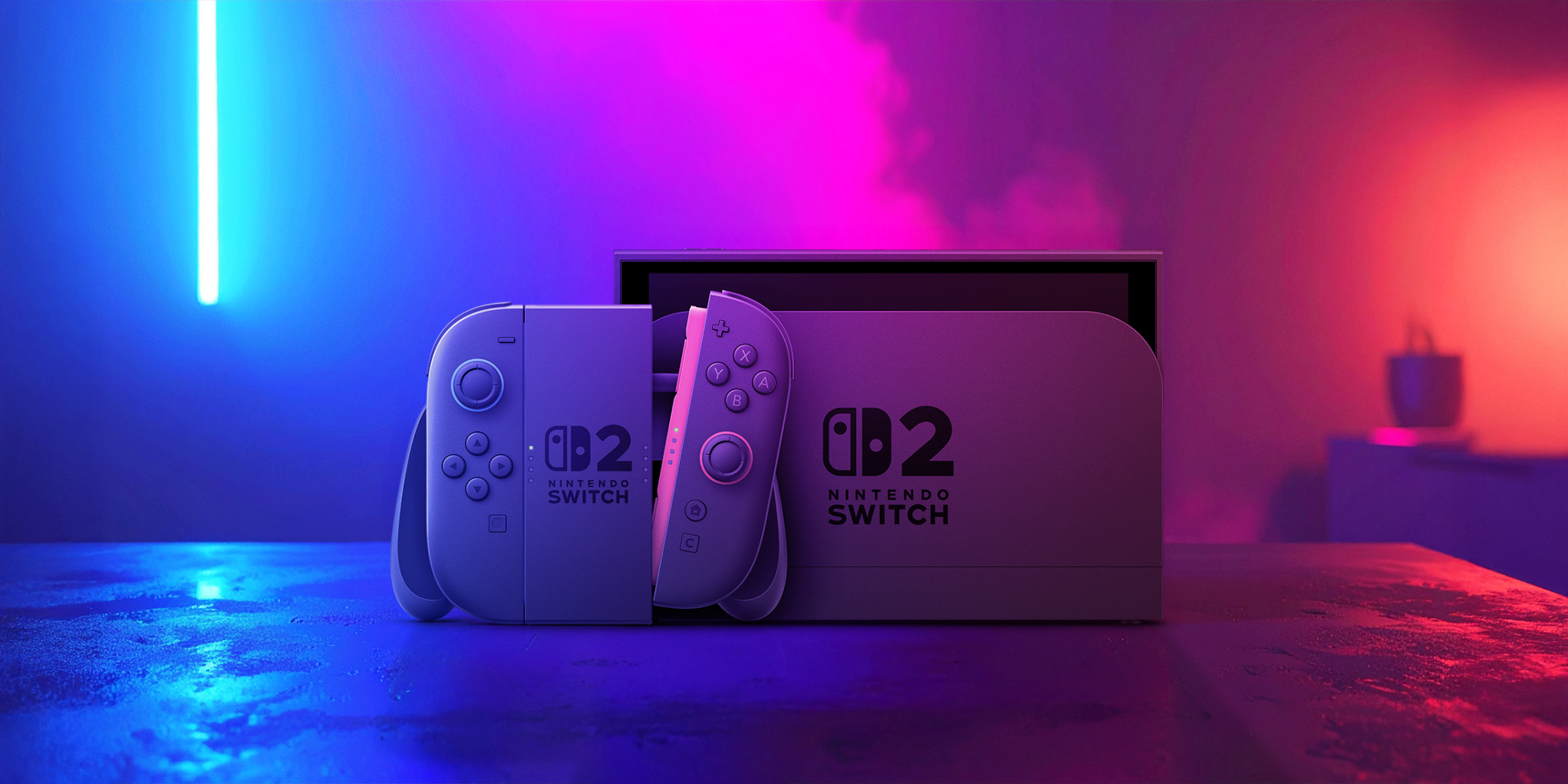
Nintendo president Shuntaro Furukawa has given investors a clearer idea of how the company views the future of Nintendo Switch 2, and the message is fairly simple: Nintendo wants its newest system to enjoy a long and healthy life, much like the original Nintendo Switch. Rather than treating Switch 2 as a short burst of launch excitement, Nintendo appears to be thinking in years. Furukawa’s comments suggest that the company wants to grow the hardware’s user base steadily while increasing software sales over time, which is the same broad rhythm that helped the original Switch remain relevant for so long. That matters because the first Switch did not succeed only because it launched well. It succeeded because Nintendo kept giving players reasons to come back, from major first-party releases to evergreen games that kept selling long after launch. Switch 2 now has to do something similar, although the market around it is different, prices are higher, and player expectations have shifted. The challenge is not just getting the system into people’s homes. The challenge is making sure it becomes part of their daily gaming habits. If Nintendo can balance strong hardware adoption, steady software releases, backwards compatibility, third-party support, and a clear reason for existing Switch owners to upgrade, Switch 2 could become another long-running Nintendo platform rather than a flashy successor that burns bright and fades quickly.
Nintendo wants Switch 2 to follow the original Switch’s long-lasting success
Nintendo Switch 2 is being positioned as more than a typical successor, and Shuntaro Furukawa’s recent comments to investors make that direction much clearer. Nintendo wants the system to have a lifespan similar to the original Nintendo Switch, which is a bold comparison when you consider how unusually durable the first Switch has been. That system launched in 2017 and remained a major part of Nintendo’s business for years, supported by a mix of blockbuster releases, family-friendly appeal, portability, and a huge library that kept growing like a well-fed garden.
The important detail is that Nintendo does not seem to be chasing a quick win with Switch 2. Instead, the company appears focused on building a platform that can keep expanding over time. Furukawa pointed to growing the user base and increasing both hardware and software sales as key parts of that long-term plan. In plain terms, Nintendo wants more people to buy the system, then wants those players to keep buying games. That sounds obvious, sure, but the original Switch proved how powerful that cycle can be when it works properly.
Furukawa’s investor comments point to a patient platform strategy
Furukawa’s message to investors sounds like classic Nintendo: steady, careful, and focused on long-term value rather than loud short-term promises. The company knows that a console’s lifespan is not decided in its first few months alone. Launch numbers matter, but they are only the opening lap. What happens after the early excitement fades is where a platform either becomes part of gaming culture or quietly slips into the background. Nobody wants a shiny new console that becomes a very expensive dust collector by next spring.
By talking about the Switch 2 user base and software growth together, Furukawa is also highlighting the relationship that defines a healthy console business. Hardware creates the audience. Software keeps that audience active. A larger installed base gives Nintendo and its partners more reasons to release games, while strong games give players more reasons to buy the hardware. It is a loop, and when that loop starts spinning smoothly, it can carry a system for years. The original Switch was a masterclass in that rhythm, and Nintendo clearly wants Switch 2 to find a similar groove.
Why the original Switch remains the obvious comparison
The original Nintendo Switch is the natural benchmark because it became one of Nintendo’s most successful systems ever, while also reshaping how many people think about console gaming. Its hybrid design made it flexible in a way that felt almost unfairly convenient. You could play on the TV, undock it, continue on the couch, take it on a train, or hand a Joy-Con to someone nearby. It was not just a device. It was a little gaming escape hatch, ready whenever life gave you ten spare minutes.
That long lifespan did not happen because of hardware alone. The Switch had The Legend of Zelda: Breath of the Wild at launch, then kept adding major releases across Mario, Pokémon, Animal Crossing, Super Smash Bros., Splatoon, Xenoblade Chronicles, Kirby, Metroid, and more. On top of that, several games kept selling for years instead of burning out after release. This evergreen effect gave Nintendo an advantage that many competitors would love to bottle and sell. For Switch 2, matching that kind of run means recreating the feeling that there is always something worth playing next.
Building the Switch 2 user base is Nintendo’s first big priority
A long lifespan starts with people actually owning the system, so building the Switch 2 user base is the first major step. Furukawa’s focus on expanding that base makes sense because every future decision becomes easier when more players are already on board. Developers see a bigger audience. Retailers see stronger demand. Nintendo can plan more confidently. Players feel like they are joining a lively ecosystem rather than buying into a quiet corner of the gaming market. Nobody wants to be the only person at the party, even if the snacks are excellent.
The challenge is that Switch 2 has to appeal to several groups at once. It needs to attract early adopters who always want the newest hardware, families who may be watching their budgets, longtime Nintendo fans who already own large Switch libraries, and casual players who might not upgrade unless the value is crystal clear. That means Nintendo has to make the system feel both fresh and familiar. Too similar, and people may ask why they should upgrade. Too different, and Nintendo risks losing the magic that made the original Switch so approachable.
Hardware momentum matters, but software keeps the platform alive
Hardware sales create the foundation, but games are what keep the lights on. Furukawa’s mention of both hardware and software sales is important because it shows Nintendo is not viewing Switch 2 as a box that simply needs to be sold. The company needs players to keep engaging with the system after purchase. That is where software becomes the heartbeat. A console without a steady flow of games is like a theme park with only one ride open. Fun at first, but not exactly somewhere you keep rushing back to.
Nintendo’s own financial materials show strong early Switch 2 hardware sales, while also pointing toward continued software growth as a key part of the next fiscal period. This is the balance Nintendo needs to maintain. If hardware adoption is healthy but software sales lag, the platform can feel strangely hollow. If software is strong but the hardware base grows too slowly, games may not reach their full potential. The sweet spot is a growing audience paired with a release schedule that keeps players checking the calendar with actual excitement.
Nintendo’s sales outlook shows confidence without overpromising
Nintendo’s recent financial materials suggest the company is trying to manage expectations carefully. Switch 2 had a strong launch-year sales performance, and Nintendo has forecasted continued adoption for the following fiscal year while acknowledging that sales may decline year over year after such a front-loaded start. That is not necessarily a warning sign. It is more like Nintendo saying, “The opening was big, but now the real work begins.” In console terms, the second year can be where long-term identity starts to take shape.
This measured tone matters because the original Switch did not become a long-term success overnight. Its story unfolded across multiple years, helped by strong software, word of mouth, and a clear everyday use case. Switch 2 now has to prove that it can do more than ride the excitement of being new. The next phase will be about turning early buyers into regular users, convincing hesitant Switch owners to upgrade, and giving developers a strong reason to keep supporting the system. A launch can create noise. A library creates loyalty.
A long lifespan depends on more than launch excitement
Launch excitement is powerful, but it fades quickly if the follow-up is weak. Every console gets its first wave of curiosity, reactions, unboxings, comparisons, and heated arguments online because gaming fans do love a good digital shouting match. Yet a long platform lifespan comes from what happens after that early glow wears off. Switch 2 needs recurring reasons for players to return, whether that means new first-party releases, upgraded versions of existing favorites, indie surprises, online features, or third-party games that feel properly suited to the hardware.
The original Switch was especially good at becoming part of daily life. It was not just the machine people played during big releases. It was the machine they picked up between tasks, brought on trips, shared with family, or used to revisit older favorites. Switch 2 needs to build that same kind of habit. If Nintendo can make the system feel like the natural place to play both new games and familiar favorites, the platform’s lifespan could stretch well beyond the early launch window.
Backward compatibility and existing Switch players could help
One of the biggest advantages Nintendo has with Switch 2 is the enormous audience built by the original Switch. When a successor can connect naturally to an existing player base, the upgrade path becomes much easier to understand. Players are not starting from zero. They are moving into the next room of a house they already know. That sense of continuity can make a big difference, especially for families or fans who have invested years into Switch games, accessories, digital libraries, and daily routines.
Backward compatibility and cross-generation support can help soften the transition, even if not every player upgrades immediately. Existing Switch owners may be more willing to consider Switch 2 if they feel their current library still matters. That emotional side should not be underestimated. People do not only buy hardware based on specs. They buy into comfort, trust, and the feeling that their past purchases still have value. If Nintendo handles that bridge well, Switch 2 can grow without making the original Switch audience feel abandoned.
First-party games will shape the Switch 2’s staying power
Nintendo’s first-party games remain the company’s strongest weapon, and Switch 2’s long-term future will likely depend heavily on how well Nintendo uses that advantage. Mario, Zelda, Pokémon, Animal Crossing, Splatoon, Kirby, Metroid, and other franchises are not just names on a release schedule. They are reasons people buy Nintendo hardware in the first place. A well-timed Nintendo release can make a console feel alive again almost overnight. It is the gaming equivalent of opening the curtains and letting sunlight flood the room.
The original Switch benefited from both massive new releases and games that kept selling long after launch. For Switch 2, Nintendo will need a steady rhythm rather than one big blast of excitement followed by long gaps. Players are patient when they trust what is coming, but that trust has to be earned. A strong first-party pipeline can give Switch 2 identity, momentum, and emotional pull. Without it, even impressive hardware can feel like a stage waiting for the performers to arrive.
Third-party support can make the platform feel active year-round
First-party games may sell the system, but third-party support helps fill the spaces between Nintendo’s own releases. That matters because no single publisher, not even Nintendo, can keep every type of player satisfied at all times. Some players want role-playing games. Others want sports, horror, farming sims, fighting games, cozy adventures, shooters, or strange indie gems where you play as a turnip with emotional baggage. A varied library gives Switch 2 a better chance of feeling active throughout the year.
Third-party publishers also benefit from a larger Switch 2 user base, which loops back to Furukawa’s comments about growing hardware and software sales. The more systems Nintendo sells, the more attractive the platform becomes for outside developers. Strong third-party support can also help Switch 2 avoid the feeling of being only a Nintendo machine. That identity worked better for some past systems than others, but the Switch era proved that Nintendo hardware can thrive when it becomes home to a broad mix of games.
Price revisions add pressure to Nintendo’s long-term plan
Nintendo’s wider pricing decisions add another layer to the Switch 2 story. Price revisions can affect how quickly some players decide to jump in, especially families and casual buyers who may be more sensitive to hardware costs. A higher price does not automatically stop a successful platform, but it does raise the bar for perceived value. When people spend more, they expect more. That means Switch 2 needs to make its case clearly through games, features, performance, convenience, and long-term support.
This is where Nintendo’s strategy has to be especially careful. The company can ask players to invest in new hardware, but the system must feel worth that investment over time. Strong games can soften price concerns. Clear upgrade benefits can help too. So can bundles, family appeal, and a library that feels rich enough to justify the purchase. The original Switch became valuable because it was used constantly. Switch 2 needs to earn that same place in players’ homes, backpacks, and lazy Sunday routines.
Why Nintendo’s patient strategy may suit Switch 2
Nintendo has never been at its best when simply trying to copy the rest of the hardware market. The company tends to succeed when it creates a clear reason for its systems to exist on their own terms. The original Switch worked because it solved a simple problem in a charming way: people wanted console-quality Nintendo games that could move with them. Switch 2 now has to build on that idea without making it feel stale. That is tricky, but not impossible.
A patient strategy may suit Switch 2 because Nintendo already has the foundation. There is a massive audience familiar with the Switch concept, a strong catalog of franchises, a proven hybrid format, and years of lessons from the previous system. Furukawa’s focus on growing the base and increasing software sales over time suggests Nintendo understands that longevity is built brick by brick. It is not glamorous, but it works. And for a company like Nintendo, slow and steady can still create fireworks when the right games arrive.
Conclusion
Furukawa’s comments make Nintendo’s Switch 2 ambition clear: the company wants its new system to enjoy a long lifespan, not just a loud launch. That goal depends on more than selling hardware quickly. Nintendo needs to grow the installed base, support steady software sales, maintain player excitement, keep existing Switch owners engaged, and give new buyers clear reasons to join. The original Switch set a very high bar, and matching its longevity will not be easy. Still, Nintendo has the brands, audience, and platform experience to give Switch 2 a strong chance. If the games keep coming and the system becomes part of players’ everyday habits, Switch 2 could have a long road ahead.
FAQs
- What did Shuntaro Furukawa say about the Nintendo Switch 2 lifespan?
- Furukawa indicated that Nintendo wants Switch 2 to have a lifespan similar to the original Nintendo Switch. The company aims to support that goal by building the system’s user base and increasing hardware and software sales over time.
- Why is Nintendo comparing Switch 2 to the original Switch?
- The original Switch had an unusually long and successful life, supported by strong hardware sales, major first-party games, and steady software demand. It remains the clearest benchmark for what Nintendo wants Switch 2 to achieve.
- How can Nintendo make Switch 2 last for many years?
- Nintendo can extend Switch 2’s lifespan by growing the installed base, releasing strong first-party games, encouraging third-party support, offering clear value to existing Switch owners, and keeping players active beyond the launch period.
- Why are software sales so important for Switch 2?
- Software sales show whether players are actively using the system after buying it. Strong game sales also encourage more releases, which helps keep the platform lively and gives players more reasons to stay invested.
- Could Switch 2 really last as long as the original Switch?
- It is possible, but it depends on Nintendo’s long-term execution. The original Switch benefited from a unique concept, a huge game library, and years of steady demand. Switch 2 will need similar consistency to match that success.
Sources
- Nintendo’s President Apparently Wants Switch 2 To Match The Long Lifespan Of The Original System, Nintendo Life, May 9, 2026
- Nintendo President Wants Switch 2 To Have Long Lifespan Similar To Original Switch, My Nintendo News, May 9, 2026
- Consolidated Financial Highlights, Nintendo, May 8, 2026
- Financial Results Explanatory Material, Nintendo, May 8, 2026
- Dedicated Video Game Sales Units, Nintendo, March 31, 2026
- Notice Regarding Price Revisions For Nintendo Products And Services, Nintendo, May 8, 2026