














Summary:
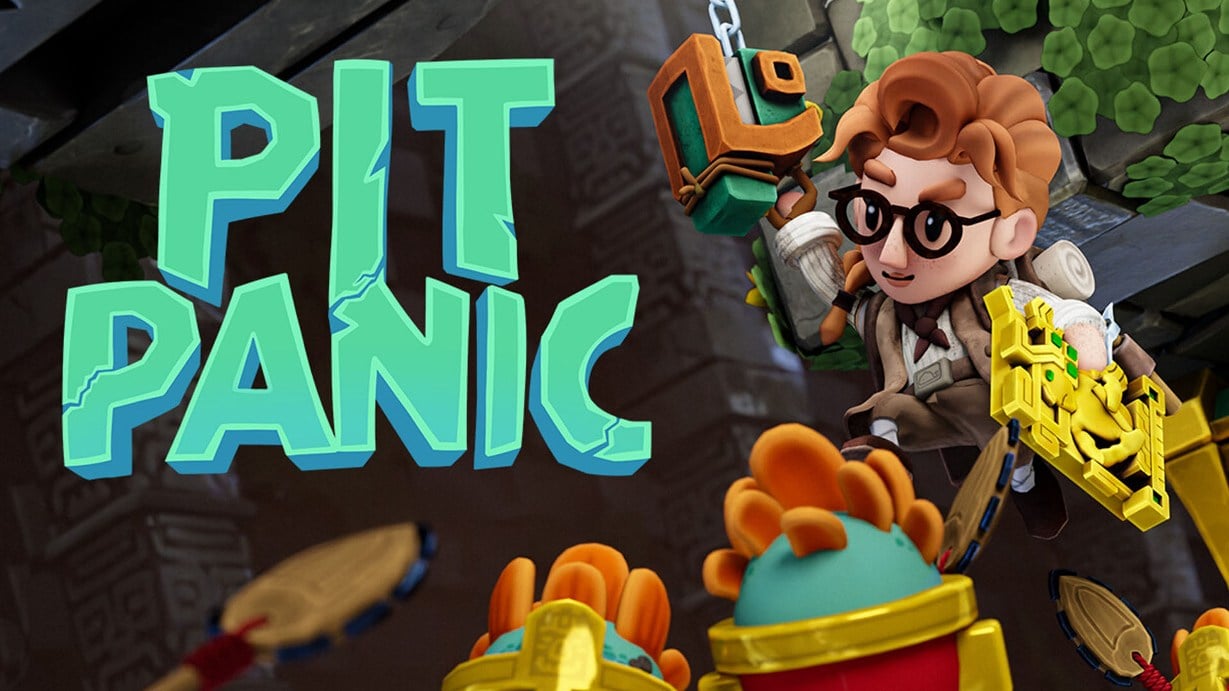
Pit Panic will bring its frantic blend of roguelike progression, precision platforming and environmental problem-solving to Nintendo Switch 2 on July 21, 2026. Developed and published by Flying Rat Studio, the game places players in the dusty boots of an adventurous archaeologist trapped inside a collapsing Aztec temple. Instead of carefully strolling through ancient ruins while admiring the masonry, players must dig, jump, climb and swing towards the surface before the structure swallows them whole.
The archaeologist’s most important tool is a mysterious hook that serves several purposes. It can break through blocks, uncover hidden treasure and help players swing across dangerous gaps. The surrounding environment also plays an active role in each escape attempt. Sand can become glass, jelly can be set on fire and bridges can be transformed into improvised weapons. Quick thinking is just as important as accurate movement, especially when traps, enemies and collapsing chambers leave little room for hesitation.
Pit Panic includes four distinct biomes and more than 1,000 handcrafted levels that can be combined to create varied runs. Players will encounter different puzzles, enemies, hazards and visual themes as they climb. A level-building feature will also let players create challenges for other adventurers. Once they have escaped the temple, they can compete for faster completion times, enter daily challenges and compare their performances on online leaderboards. Pit Panic is scheduled to launch for Nintendo Switch 2, Nintendo Switch, PlayStation 5, Xbox Series X|S and PC on July 21.
Pit Panic Launches for Nintendo Switch 2 on July 21
Flying Rat Studio has confirmed that Pit Panic will launch for Nintendo Switch 2 on July 21, 2026, giving players a firm date for their first reckless expedition into its collapsing temple. The game is also planned for Nintendo Switch, PlayStation 5, Xbox Series X|S and PC, making its frantic archaeological adventure available across a broad range of platforms. The premise is refreshingly direct: reach the surface before the ancient structure comes crashing down around you. Of course, that task becomes considerably less simple when the route is packed with traps, monsters, unstable terrain and environmental puzzles. Pit Panic combines the repeated attempts and unpredictable situations associated with roguelikes with the immediate demands of a rapid 2D platformer. Every leap matters, every shortcut carries a risk and every moment spent staring at a treasure chest gives the temple another opportunity to flatten its overly curious visitor. Archaeology has rarely looked this stressful.

Escape From a Crumbling Aztec Temple Before It Is Too Late
Pit Panic casts players as a curious archaeologist who has ended up at the bottom of a sinking Aztec temple. There is only one reliable direction of travel: up. Players must carve a route through the structure while jumping between platforms, climbing walls, avoiding traps and dealing with whatever ancient defenders stand between them and daylight. The constant upward pressure gives the game a different rhythm from platformers that encourage slow and careful exploration. You can still search for loot and hidden passages, but lingering for too long may turn a promising expedition into a very short history lesson. The temple is not merely a collection of static rooms. It behaves like an active threat, forcing players to react to collapsing pathways and rapidly changing situations. This creates a tug of war between curiosity and survival. Do you investigate that suspicious wall in search of treasure, or keep moving before the ceiling introduces itself to your hat? Pit Panic wants players to make those decisions quickly and live with the consequences.
The Mysterious Hook Changes Movement, Digging and Combat
The archaeologist’s mysterious hook is far more than a simple grappling device. Flying Rat Studio describes it as a powerful omnitool, and that label appears appropriate when considering how many problems it can solve. Players can use the hook to dig through blocks, swing across gaps and open routes towards hidden treasure. Its physics-driven movement should allow skilled players to preserve momentum and cross dangerous chambers without slowing down. The same tool can also help break interactive objects and manipulate parts of the environment, making it central to movement, exploration and puzzle-solving. Learning how the hook responds is likely to be one of the game’s most important challenges. A clumsy swing may deposit the archaeologist directly into a trap, while a well-timed release could produce a fast and satisfying escape. This flexibility gives the hook the potential to become more expressive as players improve. Beginners may use it simply to survive, while experienced adventurers can turn it into a precision instrument for chasing faster times and uncovering well-hidden rewards.
Environmental Interactions Turn Each Chamber Into a Puzzle
Movement alone will not carry players safely through every corner of the temple. Pit Panic includes environmental interactions that can change the properties and practical uses of nearby materials. Sand can be transformed into glass, jelly can be turned into fire and bridges may become weapons when a situation calls for a more destructive solution. These transformations add a puzzle layer to the platforming because the apparent purpose of an object may not be its only one. A bridge might offer a safe route across a gap, but destroying or repurposing it could eliminate an enemy or open a faster path. Players will need to observe their surroundings while still maintaining enough speed to stay ahead of the collapse. That combination should create plenty of lively mistakes. It is easy to imagine spotting the correct solution half a second after falling into the hazard it was supposed to prevent. Since the environments contain interactive blocks and multiple possible routes, experimentation should be rewarded even when it ends with another archaeologist-shaped mark on the temple floor.
More Than 1,000 Handcrafted Levels Keep Runs Unpredictable
Pit Panic features more than 1,000 handcrafted levels, providing a large collection of individually designed challenges that can be mixed across repeated attempts. Rather than relying entirely on computer-generated rooms, Flying Rat Studio has built each level with deliberate platform placements, puzzles, hazards and routes. Their changing combinations are intended to make every run feel different while preserving the purposeful design of handcrafted stages. This approach can offer a useful balance. Players receive the unpredictability expected from a roguelike, but individual chambers can still be shaped around specific movement tricks and environmental ideas. Familiarity will naturally grow over time, yet recognising a room does not mean the surrounding journey will unfold in the same way. The resources, health and upgrades carried into that chamber may be different, while the next level could demand a completely different strategy. With so many pieces available, players may need a substantial number of expeditions before they feel comfortable with everything waiting beneath the surface. The temple has plenty of ways to ruin a good run.
Four Distinct Biomes Introduce New Dangers and Visual Styles
The climb towards freedom leads through four distinct biomes, each featuring its own puzzles, enemies and artistic identity. These environments should help divide a run into recognisable stages while gradually changing the demands placed on the player. A movement technique that works beautifully in one biome may become considerably less useful when new hazards or enemy types appear. Different visual themes can also communicate mechanical changes, allowing players to read a room quickly even when the pressure is rising. That clarity matters in a fast platformer, where a delayed reaction can be the difference between an elegant escape and an embarrassing collision with ancient machinery. The biomes also give the journey a stronger feeling of progression. Players are not simply climbing through endless variations of the same brown stone corridor. Each area represents another step towards the surface and another test of their growing command over the hook. Reaching an unfamiliar biome should feel exciting, although that excitement may last only until its first trap sends the archaeologist back to the beginning.
Players Can Build Their Own Levels for Other Adventurers
Beyond the large selection of developer-made challenges, Pit Panic will allow players to construct their own levels. This feature could add an entirely different dimension to the game’s longevity because the community will be able to create new tests built around movement, traps and environmental manipulation. Some creators will probably design fair challenges that reward careful observation and precise use of the hook. Others may discover joy in placing hazards exactly where an unsuspecting player is most likely to land. That is simply the natural circle of life for any level editor. User-created stages can also highlight techniques that are less prominent during regular runs, such as advanced swinging patterns or unusual combinations of interactive materials. For players who enjoy building as much as escaping, the editor offers an opportunity to study how individual mechanics work and then arrange them into a coherent challenge. Sharing those creations with other adventurers turns the community into an ongoing source of fresh obstacles, clever puzzles and, almost inevitably, a few rooms designed by complete troublemakers.
Risk, Rewards and Sacrifices Shape Every Attempt
Every expedition through Pit Panic revolves around rapid decisions involving danger, treasure and survival. Players can gather loot while making their way upwards, but valuable rewards are rarely placed where they can be collected without effort. Leaving the safest route to chase treasure may provide an advantage later in the run, or it may end the attempt before that advantage can be used. The game also lets players sacrifice health in exchange for power-ups, creating another uncomfortable decision. Health is the resource keeping the archaeologist alive, yet spending some of it may provide the strength or mobility needed to escape a difficult area. These choices make progress more personal because two players facing the same chamber may approach it very differently. One might protect every remaining life and take a cautious route, while another trades safety for power and launches through the room like a grappling hook attached to a firework. Neither strategy guarantees success, and adapting to the current run will be more valuable than following one rigid plan.
Boss Battles Put Movement Skills Under Greater Pressure
Ancient bosses stand among the major obstacles awaiting players inside the temple. Although Flying Rat Studio has not revealed every detail about these encounters, the game’s movement systems suggest that agility will remain central when confronting them. The archaeologist’s hook, ability to break through terrain and command over environmental interactions should all play a part in surviving battles against larger threats. Bosses can serve as demanding examinations of the skills developed throughout a biome, asking players to combine movement, observation and fast reactions while dealing with attack patterns. Reaching one after a strong run may be tense because failure means losing hard-earned progress, but that pressure is part of the appeal. A successful victory should feel like more than simply reducing an enemy’s health. It represents proof that the player can remain calm while the screen fills with danger and the surrounding temple continues to behave like a building with a personal grudge. Each defeated boss brings the surface closer, even if several painful lessons are required first.
Daily Challenges and Leaderboards Extend the Competition
Escaping the temple is only part of the challenge. Pit Panic will let players compare their abilities through completion times, daily challenges and online leaderboards. Once the fundamentals are familiar, a successful run can become a race to remove every unnecessary movement and turn each swing into forward momentum. Daily challenges provide shared conditions that allow players to tackle the same test and see how their results compare. This can make failures strangely motivating. Finishing a challenge feels good, but discovering that another player completed it much faster immediately raises an awkward question: where did all those extra seconds go? Competitive systems can encourage players to revisit familiar mechanics with a more analytical eye, looking for shortcuts and more efficient uses of the hook. Precious rewards tied to daily challenges provide an additional reason to participate even for players who are less interested in claiming the highest position. The result is a structure that supports casual attempts as well as the relentless pursuit of near-perfect runs.
Pit Panic Could Be a Natural Fit for Nintendo Switch 2
The quick runs, readable 2D presentation and focus on repeated attempts could make Pit Panic particularly well suited to Nintendo Switch 2. Players can potentially complete a few chambers during a brief handheld session, then continue chasing a successful escape when they have more time. Precision platformers also tend to benefit from the immediate connection between input and movement, especially when advanced techniques become part of the experience. Pit Panic’s colourful environments and clear character animations should help players track the action while the temple becomes increasingly chaotic. The platform’s portable format may also complement daily challenges, making it easy to return regularly for another attempt. Naturally, the final experience will depend on how the Nintendo Switch 2 version performs and controls when it launches. Still, the core concept already sounds like a good match: rapid movement, compact challenges and the irresistible temptation to start one more run after the previous archaeologist met a completely preventable end.
Conclusion
Pit Panic is preparing to send Nintendo Switch 2 players racing through a collapsing Aztec temple on July 21, 2026. Its mixture of rapid 2D platforming, roguelike decision-making and environmental puzzles gives the escape a strong mechanical foundation. The mysterious hook supports digging, swinging and treasure hunting, while interactive materials create opportunities to solve problems in unexpected ways. More than 1,000 handcrafted levels, four biomes, player-created challenges and competitive daily events should provide plenty of reasons to keep climbing after the first successful escape. The central idea is simple enough to understand immediately, but its movement and risk-based systems appear capable of supporting considerable depth. Players who enjoy improving their times, mastering unusual tools and learning from spectacular mistakes may find plenty to appreciate. Just remember the temple’s most important rule: treasure is wonderful, but it is considerably less useful when buried beneath several tonnes of ancient stone.
FAQs
- When will Pit Panic launch for Nintendo Switch 2?
- Pit Panic is scheduled to launch for Nintendo Switch 2 on July 21, 2026.
- Will Pit Panic also be released for the original Nintendo Switch?
- Yes. Flying Rat Studio has confirmed Pit Panic for Nintendo Switch alongside the Nintendo Switch 2 version.
- What type of game is Pit Panic?
- Pit Panic is a fast-paced 2D roguelike platformer that combines climbing, digging, environmental puzzles, boss encounters and repeated escape attempts.
- How many levels are included in Pit Panic?
- The game features more than 1,000 handcrafted levels spread across four distinct biomes with different enemies, puzzles and visual styles.
- Does Pit Panic include competitive features?
- Yes. Players can compare completion times, enter daily challenges, earn rewards and compete through online leaderboards.
Sources
- Pit Panic Launches July 21 on PC and Consoles, GamesPress, July 4, 2026
- Roguelike 2D Platformer Pit Panic Announced for Nintendo Switch 2, Nintendo Everything, May 15, 2026
- Roguelike 2D Platformer Pit Panic Announced for PS5, Xbox Series, Switch 2, and PC, Gematsu, May 15, 2026
- Pit Panic Preview – Dig Your Way Out of Arcade Disaster, TheSixthAxis, May 20, 2026
- Pit Panic – Official Gameplay Trailer, Gamereactor, May 16, 2026