














Summary:
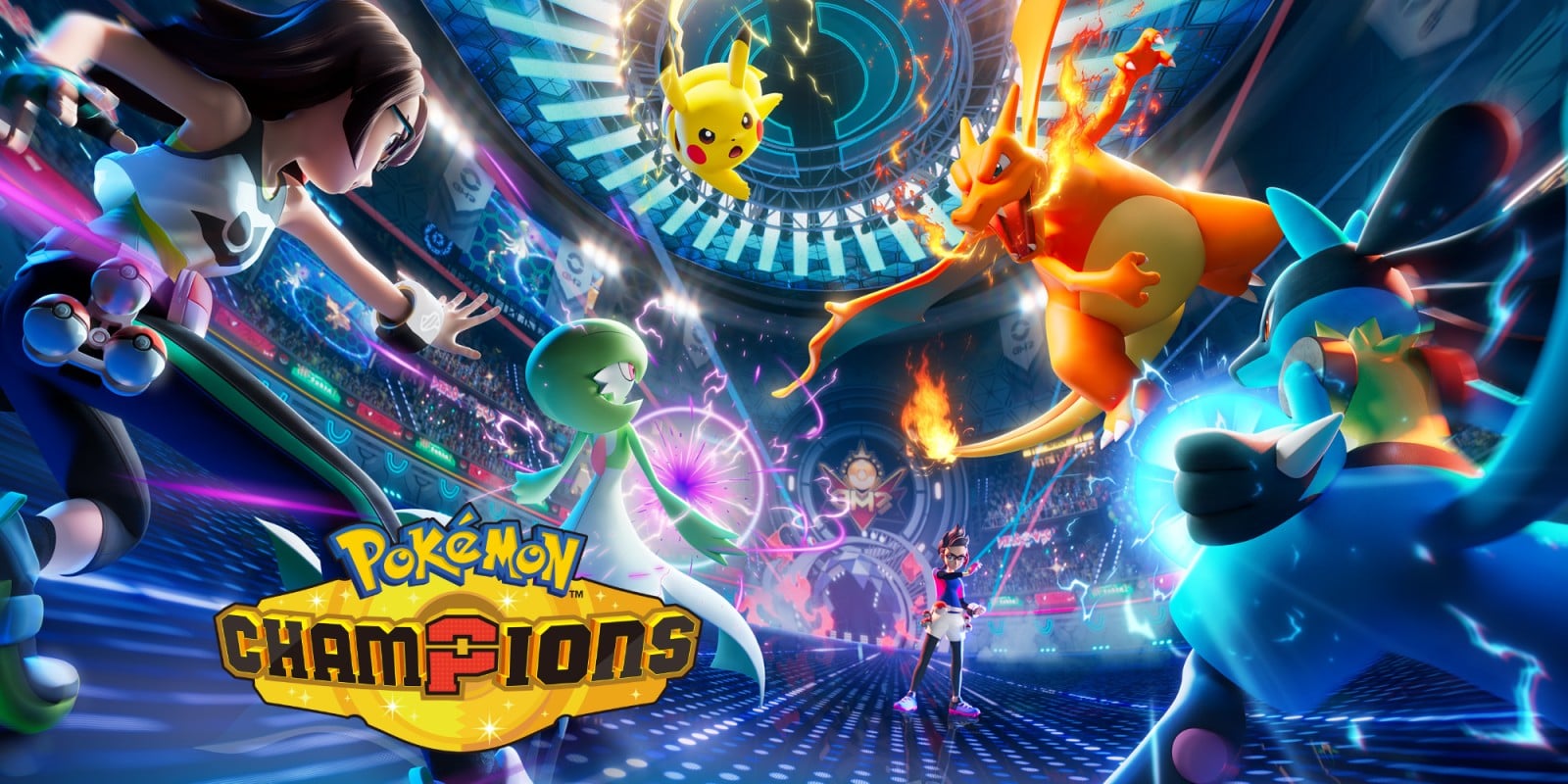
Pokémon Champions arrived on Nintendo Switch and Nintendo Switch 2 on April 8, 2026, but its launch has not been the smooth victory lap many fans expected. The battle-focused Pokémon release quickly became a talking point across the community, with players discussing its visual quality, animation work, bugs and the feeling that parts of the experience still needed more time in development. Producer Masaaki Hoshino has now responded to some of that criticism in an interview with Eurogamer Germany, explaining that the team understands the discussion and has tried to balance visual ambition with competitive fairness. His comments frame Pokémon Champions as a game built first around battles, traditional systems and a fair playing field, rather than a showcase designed purely to chase the sharpest possible graphics. Hoshino also pointed to his work on Pokkén Tournament, noting that the older fighting title had different demands because it only needed to show two Pokémon at once. Pokémon Champions, by contrast, has more constraints and more moving parts, especially as a modern competitive platform expected to run across Nintendo Switch systems and, later, mobile devices. Even so, Hoshino highlighted details like individual Pokémon shadows and newly created battle effects as areas where the team placed special care.
Pokémon Champions faces a rocky start after its Switch launch
Pokémon Champions launched on Nintendo Switch and Nintendo Switch 2 on April 8, 2026, and the reaction has been anything but quiet. For a game built around the core joy of Pokémon battles, the promise was easy to understand: quick access to competitive matches, familiar battle mechanics and a dedicated space where Trainers could test their strategies without the usual adventure structure wrapped around them. That idea has real appeal, especially for players who love the tactical side of Pokémon more than filling out maps, catching every creature or slowly building teams across a full RPG campaign.
Still, the launch conversation quickly shifted toward the parts that felt unfinished or underwhelming. Players pointed to rough animation, bugs, missing features and presentation choices that did not match what many expected from a modern Pokémon release on current Nintendo hardware. That reaction matters because Pokémon Champions is not just another side project. It is positioned as a battle-first platform with long-term competitive potential, which means the first impression carries extra weight. When a game asks players to treat its battles seriously, the surrounding polish needs to feel just as confident.
Why fans reacted so strongly to Pokémon Champions
The frustration around Pokémon Champions did not appear out of thin air. Pokémon fans have spent years debating the technical quality of the series, especially when newer releases have struggled with visual clarity, frame rate, animation quality or environmental detail. That history creates a very short fuse. When a new Pokémon title launches with visible rough edges, players do not judge it in isolation. They compare it to past promises, older spin-offs, mainline entries and even memories of games that felt more expressive despite running on older hardware.
With Pokémon Champions, that tension is even sharper because the game strips the experience down to battles. There are fewer distractions to soften the blow if an animation looks stiff or a move effect lacks punch. In a traditional Pokémon RPG, a player might forgive a rough battle scene because they are exploring a new city, discovering a story twist or searching for a rare creature in the grass. Here, the battle screen is the stage. If that stage feels plain, players notice every scuffed floorboard. That is why visual complaints can feel louder with a focused release like this one.
Masaaki Hoshino addresses the visual criticism
Producer Masaaki Hoshino has now spoken about the criticism, acknowledging that he understands why fans are discussing Pokémon Champions so intensely. His response did not frame the reaction as unfair or dismiss it as noise. Instead, he positioned himself as a Pokémon fan who can relate to the community’s concerns. That detail is important because it changes the tone of the conversation. Rather than saying players simply do not understand development, Hoshino recognized that the expectations around Pokémon are high for a reason.
Hoshino explained that the team tried to do its best with both graphics and gameplay, but he also made it clear that Pokémon Champions has priorities beyond visual spectacle. The game is built around competitive battles, and that means fairness, consistency and the traditional battle system have to remain steady. In other words, Pokémon Champions cannot simply throw every resource at shinier presentation if doing so risks the rhythm or reliability of matches. For players hoping for a stronger visual package, that answer may not erase the disappointment, but it does explain why the team is thinking about the game as a competitive platform first.
The battle system remains the team’s biggest priority
Hoshino’s clearest point is that Pokémon Champions is centered on battle fairness. That might sound obvious for a Pokémon game, but it becomes a much bigger deal when the entire release is designed around competitive play. Every animation, menu interaction, move effect and timing decision has to support a clear match flow. A flashy moment is fun, but if it slows down play, causes confusion or introduces inconsistency, it can become a problem for players who care about serious battles.
That focus helps explain why the team may have made choices that some fans see as visually conservative. Pokémon Champions needs to make each move readable, each Pokémon position clear and each turn understandable. Competitive games live or die on trust. Players need to feel that what they see on screen reflects what is happening mechanically, without muddy presentation getting in the way. That does not mean visuals are unimportant, of course. Nobody is asking for battles to look like a spreadsheet wearing a Pikachu hat. Still, Hoshino’s comments suggest that reliability sits at the heart of the project.
How Pokkén Tournament shaped Hoshino’s visual standards
Hoshino also brought up Pokkén Tournament, which gives his comments a useful frame of reference. Pokkén Tournament was a very different kind of Pokémon spin-off, built as a fighting game where the camera, animation and dramatic creature detail had room to shine. Hoshino said one of his goals on that project was to help create what he considered the best-looking Pokémon game of its time. That comparison is interesting because it shows that he is not indifferent to visuals. He has worked on a Pokémon release where presentation was a major selling point.
The catch is that Pokkén Tournament only needed to show two Pokémon at once during battle. That makes a huge difference. When the screen is focused on two fighters, the development team can spend more visual attention on those models, animations, effects and camera movements. Pokémon Champions has different demands, especially when battles can involve more Pokémon, broader compatibility goals and a platform structure designed to support ongoing competitive play. Comparing the two games is natural, but the workload behind the curtain is not the same. One is a spotlight duel. The other is closer to a busy tournament floor.
Why Pokémon Champions faces different technical limits
Pokémon Champions has to carry a heavier design burden than it may first appear. It is not simply a question of putting Pokémon into an arena and letting them attack each other. The game needs to support familiar mechanics, Abilities, moves, type interactions and a clear battle format that works for both newer players and experienced competitors. On top of that, Pokémon Champions is available on Nintendo Switch systems and is planned for mobile devices in 2026, which means scalability becomes a practical concern.
That does not excuse every bug or every rough-looking moment. Players are right to expect a polished release, especially from a franchise as large as Pokémon. But it does make the development picture more complicated. A game built to support multiple systems, a large roster, future updates and competitive standards has to make trade-offs somewhere. The difficult part is making those trade-offs invisible to the player. When they become visible, as they have here, the conversation turns quickly from battle strategy to technical frustration. Once that happens, even small issues can snowball into a much larger debate.
Shadows and spatial depth became a major visual focus
One of the visual details Hoshino specifically highlighted was the use of individual shadows for Pokémon. That may sound modest compared with the sweeping graphical upgrades some fans wanted, but shadows can do a lot of quiet work in a battle scene. They anchor characters to the ground, give the arena a stronger sense of depth and help each Pokémon feel less like a floating model placed on a flat surface. In a turn-based battle game, that kind of spatial grounding can make the scene easier to read.
Of course, shadows alone will not satisfy players who are unhappy with animation quality or missing features. They are not a magic spell that turns every complaint into applause. Still, Hoshino’s mention of them shows where at least some of the team’s visual attention went. Pokémon Champions seems to be aiming for a clear, readable style where depth and positioning support the battle system. Whether that priority feels exciting enough will depend on the player. Some will appreciate the practical detail, while others will still want more expressive animations and stronger creature personality during attacks.
Battle effects were built from scratch for Pokémon Champions
Hoshino also said the battle effects in Pokémon Champions were created from scratch, and that he personally reviewed every one of them. That is a notable claim because move effects are one of the most visible parts of any Pokémon battle. They carry the drama of an attack, the identity of a move type and the quick emotional reward that makes a turn feel satisfying. When a Fire-type move lands, players want heat. When an Electric-type move cracks across the screen, they want that sharp little jolt of impact.
Building those effects from scratch suggests that Pokémon Champions was not simply recycling everything without thought. The issue, though, is that player perception matters as much as production effort. A move can take a lot of work behind the scenes and still feel underwhelming if the timing, camera framing or animation pairing does not land. That is the tricky part of visual design. Effort is invisible unless the final result sings. Hoshino’s comments help explain the care involved, but the game still has to convince players through what they see and feel during battle.
The Nintendo Switch 2 version still carries big expectations
The Nintendo Switch 2 version of Pokémon Champions adds another layer to the discussion. Nintendo’s store listing notes a free update with visual improvements for players using the Nintendo Switch 2 system, and that naturally raises expectations. When players hear “improved graphics,” they do not just expect slightly cleaner edges. Many expect a version that feels meaningfully sharper, smoother and more modern. That expectation becomes even stronger when the same game is launching across two generations of Nintendo hardware.
This is where Pokémon Champions runs into a perception problem. If the Switch 2 version does not feel dramatically different to players, the conversation can quickly turn sour. Fans want to feel that the stronger hardware is being used in a way they can immediately recognize. Cleaner presentation is welcome, but it may not be enough for players who are already frustrated by bugs, animation choices or missing pieces. Pokémon Champions needs its Switch 2 presence to feel like more than a label on the store page. It needs to feel like the best version of the battlefield.
Pokémon Champions has to prove itself over time
Pokémon Champions is clearly being treated as a long-term battle platform, and that gives the game both a challenge and an opportunity. The challenge is obvious: first impressions stick. Players who bounced off the launch due to bugs, rough visuals or missing features may not return easily. In gaming, trust is like a Poké Ball thrown at a legendary with one HP left. Sometimes it clicks. Sometimes it shakes once and breaks your heart. Pokémon Champions has to earn that trust through visible improvements.
The opportunity is that a battle-focused platform can grow. Updates can address bugs, improve balance, add features, refine presentation and make the experience feel more complete over time. Since the game is also expected to reach mobile devices in 2026, the audience may continue expanding beyond the initial Switch launch. That future matters, but it cannot be used as a shield against launch criticism. Players are judging what is in front of them now. If Pokémon Champions wants to become the central home for competitive Pokémon battles, it needs steady support, clear communication and updates that players can feel immediately.
Conclusion
Pokémon Champions has entered the spotlight with a clear identity, but also with plenty to prove. Masaaki Hoshino’s response gives useful context for the team’s priorities, especially the emphasis on fairness, traditional battle mechanics, individual shadows and battle effects built from scratch. His Pokkén Tournament comparison also helps explain why Pokémon Champions faces different technical demands, even if that explanation will not satisfy every disappointed fan. The bigger question now is what happens next. A focused Pokémon battle platform can absolutely find its footing, especially if updates improve stability, polish and player confidence. For now, Pokémon Champions stands at a tricky crossroads: the idea is strong, the criticism is real and the path forward depends on whether future improvements can turn a rocky launch into a stronger long-term foundation.
FAQs
- When did Pokémon Champions launch on Nintendo Switch?
- Pokémon Champions launched on Nintendo Switch and Nintendo Switch 2 on April 8, 2026. The game is also planned for mobile devices later in 2026.
- Why are players criticizing Pokémon Champions?
- Players have criticized Pokémon Champions for visual quality, animation work, bugs and missing features. Much of the discussion comes from high expectations for a modern Pokémon battle-focused release.
- What did Masaaki Hoshino say about the graphics?
- Hoshino said he understands the fan discussion and that the team tried to do its best with both graphics and gameplay. He also explained that Pokémon Champions has different limitations than Pokkén Tournament.
- Why did Hoshino compare Pokémon Champions to Pokkén Tournament?
- Hoshino worked on Pokkén Tournament and used it as a comparison because that game only showed two Pokémon at once. Pokémon Champions has different technical demands and broader battle requirements.
- Does Pokémon Champions have visual improvements on Nintendo Switch 2?
- Nintendo’s store listing notes that Pokémon Champions has a free update with improved graphics for the Nintendo Switch 2 system, although player expectations around that version remain high.
Sources
- Pokémon Champions Is Now Available on Nintendo Switch and Nintendo Switch 2, Pokemon.com, April 8, 2026
- Pokémon Champions Releases on Nintendo Switch and Nintendo Switch 2 on April 8, 2026, Pokemon.com, March 24, 2026
- Pokémon Champions for Nintendo Switch, Nintendo, April 8, 2026
- Pokemon Champions producer comments on the game’s graphics, Nintendo Everything, April 25, 2026
- Pokémon Champions producer responds to graphics criticism: “We tried to do our best”, Nintendo Wire, April 27, 2026
- Pokémon Champions is coming to the Nintendo Switch on April 8th, The Verge, March 24, 2026