














Summary:
Pokémon Champions arrived recently as a free-to-start battle-focused game for Nintendo Switch and Nintendo Switch 2, with a mobile version planned for 2026. On paper, that sounds like a dream setup for players who care most about team building, competitive matches, familiar battle mechanics, and bringing selected partners forward through Pokémon HOME. In practice, the launch has been far bumpier than The Pokémon Company likely wanted. Bugs, patches, presentation concerns, and criticism of the game’s graphical style have all shaped the early conversation around Pokémon Champions, especially because the game is being positioned as a major home for Pokémon battles going forward.
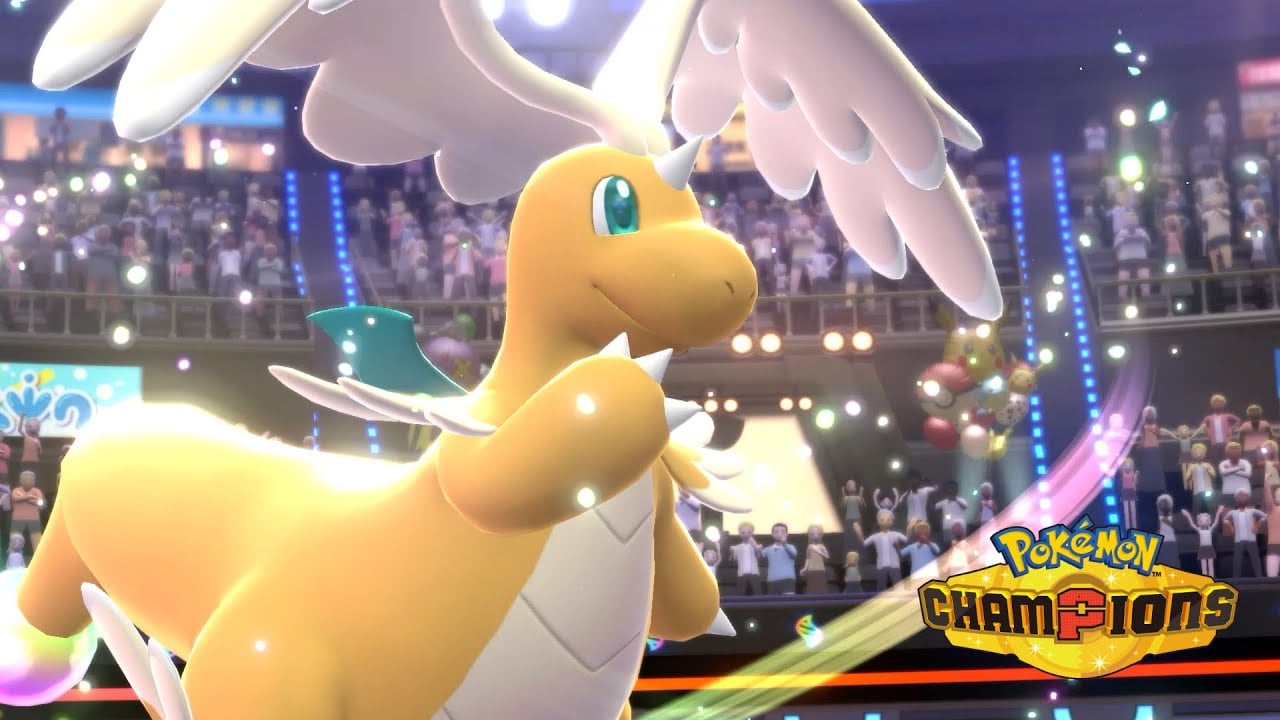
Producer Masaaki Hoshino has now addressed the visual criticism in an interview with Eurogamer Germany, explaining that he understands the discussion as a Pokémon fan himself. He pointed to the team’s work on graphics and gameplay, the challenge of building a fair competitive battle game, and the difference between a visually focused project like Pokkén Tournament and a wider battle simulator with more moving parts. Hoshino also highlighted details the team cared about, including individual Pokémon shadows and battle effects created from scratch. That explanation may not calm every frustrated player, but it does give us a clearer look at what the team prioritized, where limitations may have shaped the final result, and why Pokémon Champions now has to prove itself through updates, polish, and long-term competitive support.
Pokémon Champions faces a rougher launch than expected
Pokémon Champions recently launched as a free-to-start battle simulator for Nintendo Switch and Nintendo Switch 2, giving players a dedicated place to focus on Pokémon battles without the wider adventure structure of the mainline RPGs. That simple idea carries a lot of promise. For players who spend more time building teams than exploring towns, it sounds like a shortcut straight to the good stuff. Ranked Battles, Casual Battles, Private Battles, Pokémon HOME compatibility, familiar mechanics, and a clean competitive focus all make Pokémon Champions feel like a major shift for the series. Yet the first impression has not been smooth. Bugs, balance concerns, visual criticism, and frustration over the game’s presentation quickly became part of the launch conversation. When a Pokémon release centers almost entirely on battling, every animation, every menu, every move effect, and every technical hiccup is placed under a brighter spotlight. There is less room to hide behind exploration or story charm, so the battle experience has to carry the whole stage on its back.
Why fans are focusing so heavily on the game’s graphics
The criticism around Pokémon Champions graphics did not appear out of thin air. Fans have been discussing Pokémon visuals for years, especially as newer hardware has raised expectations for creature models, animation, lighting, battle arenas, and performance. When a game is released on Nintendo Switch 2, many players naturally expect a visible step forward. That expectation becomes even stronger when the game has a narrow focus. Pokémon Champions is not trying to be a giant open-world RPG filled with sprawling environments, towns, side quests, and hundreds of environmental details. It is built around battles. Because of that, players look more closely at the things directly in front of them: Pokémon models, attack effects, shadows, camera work, menus, and the way each battle feels in motion. If the presentation looks modest, the reaction can be sharp. Fans are not only asking whether the game works. They are asking whether a battle-only Pokémon release should look more polished, more expressive, and more alive than what they currently see.
Masaaki Hoshino responds as both producer and Pokémon fan
Masaaki Hoshino’s response is notable because he did not brush off the criticism as noise. He acknowledged that he understands the conversations taking place in the fan community and framed his answer partly from the viewpoint of someone who also cares about Pokémon. That matters. Players do not want to feel like their concerns are bouncing off a wall. Hoshino said the team tried to do its best with both graphics and gameplay, while also stressing that Pokémon Champions is built around competitive battles where fairness and reliable systems carry major importance. That is a careful answer, but it also reveals the tightrope the team is walking. A competitive battle game has to look good, but it also has to function clearly. Visual flair can’t get in the way of readability, timing, or consistency. Still, players are allowed to ask for both. Pokémon is not a tiny brand trying to scrape together coins behind the sofa. The expectations are naturally high because the series has earned that level of attention.
Why Pokkén Tournament became the natural comparison point
Hoshino also brought up Pokkén Tournament, and that comparison lands for a good reason. Pokkén Tournament was widely remembered as one of the better-looking Pokémon spin-offs of its time, partly because it placed a small number of Pokémon in focused, dramatic battles. The camera could frame the action closely, the effects could be built around a limited set of fighters, and the overall presentation could lean into spectacle. Hoshino said one of his goals with Pokkén Tournament was to make the best-looking Pokémon game at the time, and many fans would probably agree that the result had a strong visual punch. Pokémon Champions, however, is a different beast. It has to support a wider competitive structure, multiple battle formats, broader roster planning, online play, Pokémon HOME integration, and future mobile support. Comparing the two is understandable, but it is not a clean apples-to-apples matchup. It is more like comparing a boxing ring under perfect studio lights to a busy sports arena that has to host every possible matchup night after night.
The limits of showing more Pokémon in battle
One of Hoshino’s key points was that Pokkén Tournament only had two Pokémon visible on screen at once, while Pokémon Champions has more limitations because of its battle setup. That explanation gives us a useful clue about how development priorities may have shifted. A game that needs to display more creatures, more battle states, more move combinations, more UI feedback, and more online conditions has to budget its resources differently. Even if every player wants richer animations and sharper presentation, the team still has to decide where the technical ceiling sits. That does not mean every visual complaint disappears. Players can still look at the final result and feel disappointed. But it does explain why the game may not chase the same visual target as Pokkén Tournament. Pokémon Champions is not built like a showcase fighter where each creature gets a starring role in a tightly framed duel. It is closer to a competitive toolbox, and toolboxes are judged by how well they work as much as how shiny they look.
Shadows and depth show where the team focused its visual effort
Hoshino pointed specifically to Pokémon shadows as one visual feature he wanted to tackle. That may sound small compared with the larger complaints about graphics, but it reveals where the team tried to add weight and presence to the battles. Shadows help creatures feel planted in the arena instead of floating above the floor like stickers on a screen. They create spatial depth, give attacks a stronger sense of place, and make the battlefield easier to read. For some players, that kind of detail may not be enough to overcome broader concerns about models, animation quality, or performance. Fair enough. A shadow under a Pokémon is not a magic spell that fixes every visual issue. Still, it shows the team was not ignoring presentation entirely. The focus appears to have been on clarity, grounding, and battle readability rather than pushing every scene toward a more cinematic look. Whether that trade-off feels satisfying depends heavily on what each player expected Pokémon Champions to be.
Battle effects were rebuilt and reviewed one move at a time
Another detail from Hoshino’s comments is that the battle effects were developed from scratch, and he personally reviewed every single one. That is a big undertaking in a Pokémon game, because move effects are not a small side dish. They are the fireworks, the rhythm, and sometimes the comedy of battle. A move like Thunderbolt needs to feel snappy and electric. A heavy physical hit should feel like it has impact. A support move needs to communicate clearly without slowing the match to a crawl. When battle effects are weak, competitive matches can feel flat. When they are too busy, they can become distracting. Pokémon Champions has to find a middle ground where moves look distinct but remain readable during repeated play. That balance is not easy, especially with a wide move pool and different battle formats. Even so, fans will judge the finished experience with their eyes first. If a move feels underwhelming, the fact that it was reviewed carefully may not soften the reaction much.
Bugs and patches add extra pressure to the visual debate
The graphics discussion is only one part of the larger launch reaction. Pokémon Champions also faced criticism because of bugs and issues that needed patching after release. That matters because technical frustration tends to spill over into every other part of the conversation. When players are already annoyed by bugs, they become less forgiving about visuals. When they are already disappointed by presentation, they become less patient with balance problems or missing features. It all blends together into one loud stadium chant, and not the fun kind. For a free-to-start competitive game, early stability is especially important. Players want to know that matches are fair, mechanics behave as expected, and updates arrive quickly when something breaks. A visual style can grow on people over time, but trust is harder to rebuild once competitive players feel burned. Pokémon Champions can still improve, but its first patches and communication will play a big role in whether the launch roughness becomes a footnote or a lasting reputation.
Mobile support may explain some of the presentation choices
Pokémon Champions is also planned for mobile devices in 2026, and that detail may help explain why the game’s presentation feels more restrained than some fans expected from a Switch 2 release. A game built for both console and mobile needs to scale across very different hardware environments, screen sizes, performance targets, and player habits. That does not automatically mean the console version has to look limited, but it can influence design choices from the start. Developers may choose simpler scenes, cleaner effects, and more consistent systems so the experience remains recognizable across platforms. For players on Switch 2, that can feel frustrating. Nobody buys new hardware hoping a game will look like it was designed around the weakest device in the room. Still, cross-platform support is clearly part of the Pokémon Champions identity. The challenge is making the console version feel worthwhile without creating a divided experience that becomes difficult to maintain over time.
Competitive players need stability as much as spectacle
Pokémon Champions carries extra pressure because it is not just another casual spin-off. It is tied closely to the future of Pokémon battles, and competitive players are going to measure it differently from a traditional adventure. A beautiful battle simulator that misreads moves, glitches through matches, or creates unfair outcomes would be a disaster. At the same time, a stable game with lifeless presentation can still feel underwhelming, especially for a franchise built on beloved creatures with huge personality. The sweet spot is both dependable and exciting. Competitive players need fast menus, clear information, accurate mechanics, strong matchmaking, and predictable rules. Casual players need charm, energy, and a reason to stick around when they lose three matches in a row to someone who seems to calculate damage in their sleep. Pokémon Champions has to serve both groups without making either feel like an afterthought. That is a tricky balancing act, and right now, the game is still trying to prove it can hold that balance.
Pokémon Champions now has to earn long-term trust
The good news for Pokémon Champions is that a rough launch does not have to define the entire game. Free-to-start games live or die by updates, seasonal improvements, fixes, communication, and the feeling that the developers are actually listening. If Pokémon Champions becomes smoother, clearer, and more rewarding over time, the current criticism may eventually feel like an awkward opening chapter rather than the whole story. The harder part is that Pokémon fans have long memories. They remember promises, patch notes, missing features, strange decisions, and every moment where a favorite creature looked less impressive than expected. Hoshino’s comments give the team’s side of the graphics debate, but explanations only go so far. Players will want visible improvements. They will want bugs fixed quickly. They will want battle effects, performance, and competitive systems to feel worthy of Pokémon’s scale. A stadium can look modest and still become legendary, but only if the battles inside it are worth returning to.
Why the response may not satisfy every fan
Hoshino’s explanation is measured, but it probably will not satisfy everyone. Some fans want a clearer technical breakdown. Others want a stronger promise of future visual upgrades. Some simply do not care how hard development was because they only judge what is on the screen. That is not unfair. Players are not sitting in production meetings or balancing platform requirements behind the scenes. They download the game, start a match, and react to what they see and feel. If Pokémon Champions looks below their expectations, no interview can fully rewrite that first impression. Still, the response does add context. It shows that the team considered visual reality, shadows, battle effects, and competitive fairness while building the game. Whether those priorities were enough is the real debate. And honestly, that debate is not going anywhere soon. Pokémon fans can analyze a battle animation with the intensity of a detective staring at muddy footprints, and Pokémon Champions gives them plenty to inspect.
The bigger question is what improves next
The next stage for Pokémon Champions is not about one interview. It is about what changes after the criticism. If updates improve stability, smooth out bugs, refine battle flow, expand options, and make the game feel more rewarding, the conversation can shift. Players often forgive a rocky start when they see steady progress. But if the same complaints linger for months, Pokémon Champions could struggle to win over the very community it needs most. The game’s concept still has strong potential. A dedicated Pokémon battle platform with cross-platform support, familiar mechanics, selected Pokémon HOME compatibility, and ranked competition makes a lot of sense. The question is whether the final experience can feel as important as the role it is being asked to play. Pokémon Champions does not need to become the flashiest Pokémon project ever made, but it does need to feel polished, fair, and alive. Right now, that is the mountain it has to climb.
Conclusion
Pokémon Champions has entered the spotlight with a mix of promise and pressure. The idea of a dedicated battle simulator remains exciting, especially for players who want a clear place to test teams, climb ranks, and focus on strategy without extra clutter. Yet the launch has also shown how demanding the Pokémon audience can be when a game’s visuals, bugs, and competitive systems do not fully meet expectations. Masaaki Hoshino’s comments help explain the team’s thinking, from Pokkén Tournament comparisons to shadows, depth, and battle effects built from scratch. Even so, explanation is only the first step. Pokémon Champions now has to show improvement through updates and long-term support. If the team can sharpen the experience, fix issues, and keep competitive play stable, the game still has room to become an important pillar for Pokémon battles. If not, the visual debate may remain only one piece of a much larger frustration.
FAQs
- What is Pokémon Champions?
- Pokémon Champions is a free-to-start battle-focused Pokémon game available on Nintendo Switch and Nintendo Switch 2, with a mobile version planned for 2026. It focuses on Pokémon battles, including Ranked Battles, Casual Battles, Private Battles, familiar battle mechanics, and selected Pokémon HOME compatibility.
- Why are players criticizing Pokémon Champions graphics?
- Many players expected a stronger visual presentation, especially because the game is available on Nintendo Switch 2 and focuses mainly on battles. Since the game does not have a large adventure structure to distract from the arena experience, fans are paying close attention to models, effects, shadows, animations, and overall polish.
- What did Masaaki Hoshino say about the criticism?
- Hoshino said he understands the discussions as a Pokémon fan and explained that the team tried its best with both graphics and gameplay. He also pointed to competitive fairness, Pokémon shadows, spatial depth, and battle effects created from scratch as areas the team focused on.
- Why was Pokkén Tournament mentioned in the discussion?
- Hoshino compared Pokémon Champions to his earlier work on Pokkén Tournament because that game aimed to deliver especially strong Pokémon visuals at the time. He noted that Pokkén Tournament usually showed only two Pokémon at once, while Pokémon Champions faces different limitations because of its wider battle setup.
- Can Pokémon Champions improve after launch?
- Yes. Since Pokémon Champions is a free-to-start game, updates can improve stability, fix bugs, refine features, adjust balance, and potentially polish parts of the presentation. The key question is whether those improvements arrive quickly and clearly enough to rebuild trust with players.
Sources
- Pokémon Champions producer responds to graphics criticism: ‘We tried to do our best’, Nintendo Wire, April 27, 2026
- Pokemon Champions producer comments on the game’s graphics, Nintendo Everything, April 25, 2026
- Pokémon Champions, The Pokémon Company, April 8, 2026
- Get battling with the new free-to-start game, Pokémon Champions!, Nintendo, April 8, 2026
- Pokémon Champions for Nintendo Switch, Nintendo, April 8, 2026