














Summary:
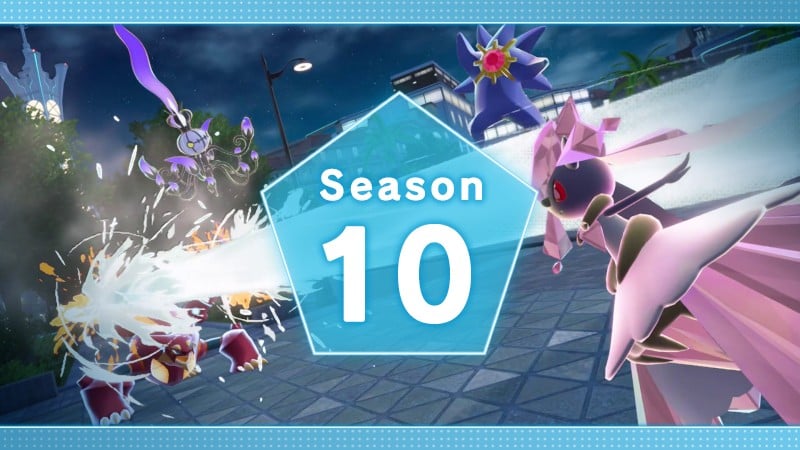
Pokémon Legends Z-A Ranked Battle Season 10 is shaping up to be a useful season for players who want to strengthen their roster without losing sight of the fun that makes online battling so addictive. The season begins on April 23, 2026, and runs until May 14, 2026, giving trainers a limited window to climb the ladder and claim a returning set of valuable Mega Stones. This time, the reward path stretches from Rank Y up to Rank S, with Greninjite, Delphoxite, Chesnaughtite, Baxcalibrite, Sceptilite, Swampertite, and Blazikenite all available through rank progression. That alone gives the season plenty of weight, especially for players who missed earlier distributions or want another shot at rounding out their options.
There is also a broader appeal here. Players who reach Rank E and above will receive Sport Balls at the end of the season, which means even those who are not chasing the very top of the ladder still have a reason to queue up and compete. On top of that, Legendary and Mythical Pokémon are allowed, which changes the tone of the season in a big way. Battles may feel sharper, heavier, and less forgiving, with stronger threats and more pressure on preparation. That kind of rule set can either feel like a brick wall or a playground, depending on how you approach it, and that is exactly what makes this season interesting.
For some players, Season 10 will be about rewards. For others, it will be about testing new teams, learning matchups, and seeing whether they can handle a format that looks wider and more dangerous than a stricter season. Either way, there is a clear reason to pay attention. The reward ladder is attractive, the rule set adds intrigue, and the timing makes this a strong moment for both returning players and regular competitors to step into Ranked Battles with a plan.
What Season 10 means for Ranked Battles in Pokémon Legends Z-A
Season 10 feels like one of those ranked periods that quietly does a lot at once. It is not only handing out useful rewards, but it is also giving players a format that can produce more volatile and memorable matches. When a season mixes returning Mega Stone rewards with broader team freedom, the ladder starts to feel less like a checklist and more like a pressure cooker. That is where the fun lives. You are not simply battling for a number beside your name. You are battling for tools that can shape future teams, future strategies, and future confidence. For players who missed earlier reward windows, this season can feel like a second chance knocking on the front door. For players already active in online battles, it is another chance to refine a style, test a favorite core, or prove that good planning still beats raw power. Ranked play always asks one honest question: are you ready for what other players are about to throw at you? Season 10 looks ready to ask that question loudly.
The Season 10 start date and end date players should know
Pokémon Legends Z-A Ranked Battle Season 10 begins on April 23, 2026, and runs until May 14, 2026. That window matters more than it might seem at first glance. A short season can make every early match feel important because there is less room to recover from bad runs, shaky experiments, or one of those miserable losing streaks that arrives like a rain cloud right over your weekend. Players who start early usually give themselves more breathing room. They can test teams, adjust to what the ladder is using, and settle into a rhythm before the pressure builds. Players who wait too long may still climb, but the margin for error shrinks. The calendar also makes preparation easier. You know exactly when the season opens and exactly when it closes, so there is no mystery there. It is a clean window, and clean windows reward players who treat preparation seriously instead of hoping instinct will carry the day.
The full Mega Stone reward path from Rank Y to Rank S
The headline reward structure for Season 10 is built around a returning set of Mega Stones tied to rank progression. Greninjite is earned at Rank Y, Delphoxite at Rank X, Chesnaughtite at Rank W, Baxcalibrite at Rank V, Sceptilite at Rank U, Swampertite at Rank T, and Blazikenite at Rank S. That progression creates a strong incentive to keep climbing because the rewards are not stacked at only one point near the top. Instead, the season feeds motivation in steps. Reach one rank and you get something useful. Reach the next and there is another reason to continue. It is the ranked equivalent of a trail of breadcrumbs, except these breadcrumbs are Mega Stones and the forest is full of highly trained teams. That kind of structure is smart because it respects different kinds of players. Some will aim for the full run to Rank S. Others may set a smaller target and still walk away happy. Either way, the reward ladder gives the season shape and purpose.
Why Greninjite, Delphoxite, and Chesnaughtite still matter
The Kalos starter Mega Stones remain some of the most eye-catching rewards because they carry a mix of nostalgia, identity, and practical value. Greninja, Delphox, and Chesnaught each speak to different player instincts. Greninja usually attracts players who love speed, pressure, and clever positioning. Delphox appeals to those who enjoy tricky tempo swings, ranged pressure, or a less common pick that can still bite hard. Chesnaught, meanwhile, has that bruiser energy. It feels like the kind of option that walks into a room, cracks its knuckles, and dares the opponent to do something about it. Putting these three stones low enough on the reward ladder to be reachable but high enough to feel earned is a smart move. It means the season does not hide all excitement behind the very top ranks. Even players with modest goals can chase something meaningful. That matters because rewards feel best when they are attainable without feeling cheap.
Baxcalibrite, Sceptilite, Swampertite, and Blazikenite raise the stakes
The higher end of the reward line brings even more heat. Baxcalibrite, Sceptilite, Swampertite, and Blazikenite give the upper ladder a sharper identity because these are the kinds of rewards that can make players push through a few extra matches when they would otherwise call it a night. Sceptilite, Swampertite, and Blazikenite also add that familiar Hoenn starter pull, which is always a strong motivator for long-time fans. Then there is Baxcalibrite, a reward that feels especially notable because Baxcalibur has a natural intimidation factor before Mega Evolution even enters the conversation. These stones are not just pretty trophies for a menu screen. They are rewards that can change how a player looks at future team options. A good ranked season should leave players feeling like the effort carried forward into the rest of the game, and these rewards do exactly that. They give the ladder bite, and they give climbing real emotional payoff.
Sport Balls give lower ladder progress real value
Not every player enters Ranked Battles dreaming about the very highest rank, and that is perfectly fine. Some just want useful rewards, a few close matches, and a reason to boot the game up after work without turning the evening into an esports boot camp. That is where the Rank E reward matters. Players who finish at Rank E or higher will receive Sport Balls at the end of the season, which gives the lower and middle ladder real value. This is important because healthy ranked systems should not only serve elite players. They should also reward participation, persistence, and reasonable improvement. A player who dips into the ladder, learns a few matchups, and stabilizes at Rank E still gets something worthwhile. That makes the season more welcoming. It says you do not need to be a ladder monster to come away with a prize. Sometimes that is exactly the push a hesitant player needs.
Legendary and Mythical Pokémon change how battles may unfold
One of the biggest talking points for Season 10 is that Legendary and Mythical Pokémon are allowed. That single rule can change the pace and feel of a season in an instant. Formats like this often become more explosive because the average threat level rises. Teams may hit harder, punish mistakes faster, and demand more focused answers in the builder. That does not automatically make the season worse. In many ways, it makes it more dramatic. Every choice starts to matter a little more. Your lead, your switching habits, your Mega timing, your understanding of pressure, all of it comes under the spotlight. It also means players should expect variety. Some trainers will lean into raw power, while others will build specifically to counter the monsters they expect to see everywhere. That tug-of-war can make a season feel alive. It is a little like walking into a chess match where a few pieces suddenly learned how to throw punches.
Team building matters more when the rules open up
When a rule set allows stronger and rarer Pokémon, team building usually becomes the real battleground before the first match even starts. It is tempting to grab the strongest names available and call it a day, but ranked ladders rarely reward lazy thinking for long. A team still needs structure. It still needs synergy, speed control, damage pressure, answers to bulky threats, and a plan when the match slips sideways. Season 10 looks like the sort of format where you will want a clear reason for every slot. Are you trying to overwhelm the opponent quickly, or are you building enough defensive backbone to weather a few nasty turns before turning the tide? Are you covering specific Mega threats, or are you spreading your answers more broadly? Those questions matter. A messy team can steal wins, sure, but over many matches it usually falls apart like a chair held together with hope and one loose screw.
Returning players have a real reason to jump back in
Season 10 is also appealing because it creates a practical landing spot for returning players. Maybe someone stepped away after the main adventure. Maybe they ignored online play for months. Maybe they looked at past ranked seasons and thought, not today, thanks. This season gives those players a clear invitation to come back. The reward list is recognizable and useful, the Sport Ball threshold gives a more approachable target, and the open rule set adds curiosity. Even players who do not intend to live on the ladder can get something meaningful from a limited run. There is also a psychological boost in joining a season where rewards are spread across multiple ranks. One good session can feel productive. One decent climb can feel worth it. That matters more than some people realize. Getting back into online battles is easier when the first few hours already feel rewarding instead of punishing.
What to do before April 23, 2026 to be ready for battle
The smartest way to enter Season 10 is with a short plan instead of blind optimism. First, make sure you understand how to access Ranked Battles in Pokémon Legends Z-A and confirm that your online setup is ready, because nothing kills momentum faster than technical friction when the season opens. Next, decide whether your goal is reward-focused or ladder-focused. Those are not always the same thing. A player aiming for Rank E can build and play differently from someone chasing Rank S. After that, test a small pool of Pokémon rather than trying to reinvent everything at once. Keep notes on what gives your team trouble. Watch for patterns. Are you struggling with speed, bulk, or specific threats? Finally, leave some room for adjustment once the season starts. The early ladder often reveals what people really want to use, and that information is gold. Preparation does not have to be dramatic. It just has to be honest. Bring a plan, keep your head, and let the season tell you what needs changing.
Conclusion
Pokémon Legends Z-A Ranked Battle Season 10 has the kind of setup that can appeal to several types of players at once. It offers a clear season window, a strong chain of Mega Stone rewards, a useful Sport Ball prize for Rank E and above, and a rule set that becomes more intriguing because Legendary and Mythical Pokémon are allowed. That combination gives the ladder both value and personality. If you are competitive, there is room to push. If you are returning, there is room to ease back in. If you only want the rewards, the season still respects your time. In other words, this is not just another ranked reset. It is a well-timed reason to build a team, queue up, and see how far you can climb before May 14, 2026 arrives.
FAQs
- When does Pokémon Legends Z-A Ranked Battle Season 10 start and end?
- Season 10 starts on April 23, 2026, and ends on May 14, 2026.
- What Mega Stones can players earn in Season 10?
- Players can earn Greninjite, Delphoxite, Chesnaughtite, Baxcalibrite, Sceptilite, Swampertite, and Blazikenite by reaching the required ranks from Rank Y through Rank S.
- Do players get any reward without reaching the top ranks?
- Yes. Players who finish the season at Rank E or above will receive Sport Balls at the end of the season.
- Are Legendary and Mythical Pokémon allowed in Season 10?
- Yes. Season 10 allows Legendary and Mythical Pokémon, which could make team building and match flow more intense than in stricter formats.
- Why is Season 10 a good time for returning players?
- It offers a useful set of returning rewards, a reachable lower-rank prize, and a fresh reason to revisit Ranked Battles with a clear goal in mind.
Sources
- Earn Mega Stones in Pokémon Legends: Z-A Ranked Battles Season 10, Pokemon.com, April 16, 2026
- How to Participate in Pokémon Legends: Z-A Ranked Battles, Pokemon.com, October 16, 2025
- Z-A – Ranked Battle + Pokémon Sleep, Serebii, April 16, 2026
- Pokémon Legends: Z-A Ranked Battle Season 10 Start Date And Rewards Revealed, Nintendo Life, April 17, 2026