














Summary:
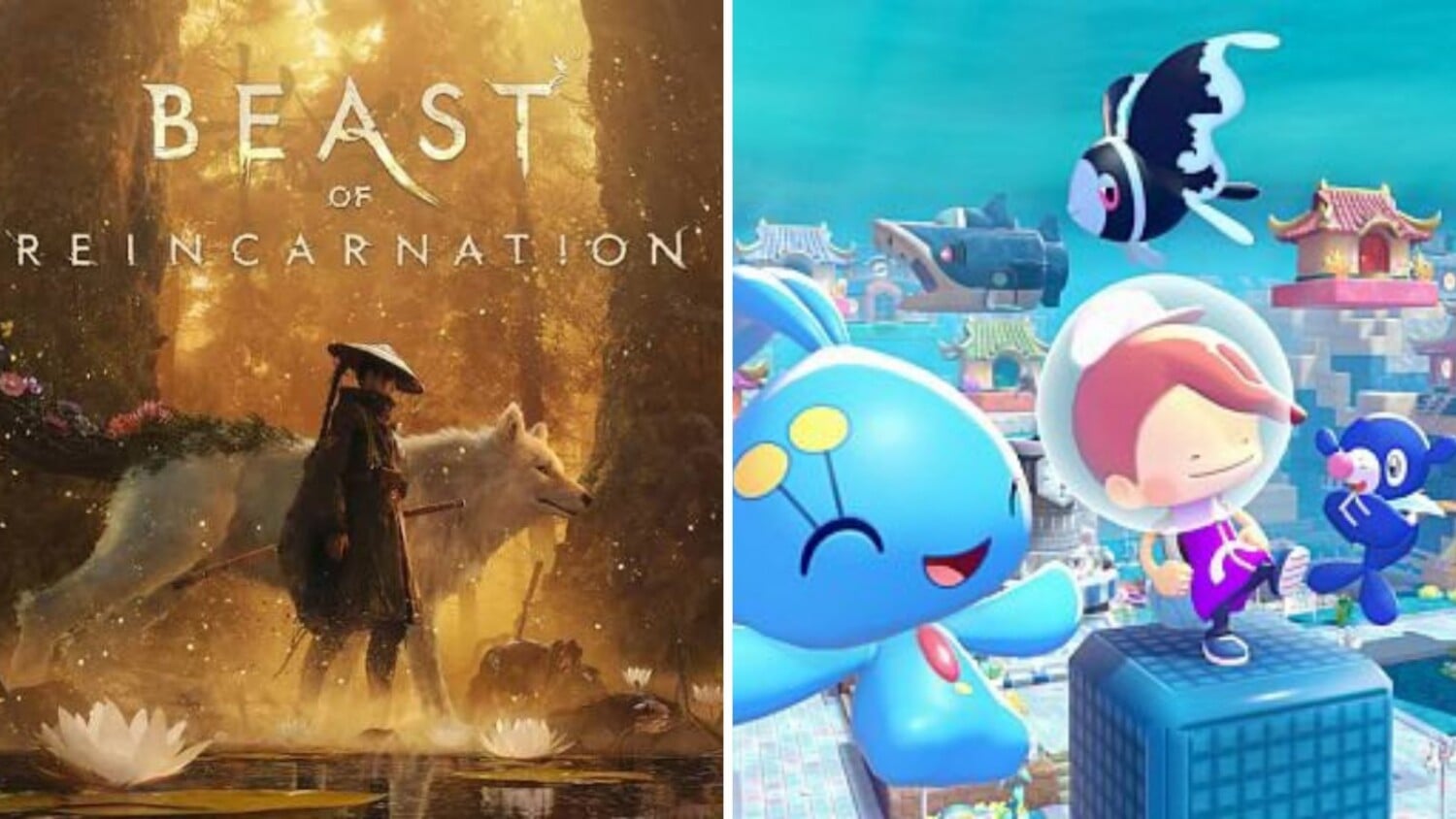
Game Freak has revealed an unexpected connection between Pokémon Pokopia and Beast of Reincarnation, confirming that both games originated through the studio’s internal Gear Project initiative. Shigeru Ohmori shared the detail while highlighting the recent release of Beast of Reincarnation and Pokémon Pokopia’s Bubbly Seafloor Town paid DLC. Despite looking almost nothing alike, the two games can therefore trace part of their development history back to the same internal system for encouraging new ideas.
Gear Project has existed at Game Freak for years as a way for developers to experiment with concepts beyond the studio’s usual Pokémon responsibilities. Previous projects associated with the initiative include HarmoKnight, Pocket Card Jockey, Tembo the Badass Elephant, Giga Wrecker and the game that eventually became Little Town Hero. Developers have previously explained that the initiative can give staff opportunities to work with unfamiliar genres, platforms and responsibilities before bringing that experience back into other Game Freak projects.
Pokémon Pokopia makes this latest revelation particularly interesting. Unlike Beast of Reincarnation, it ultimately became a Pokémon game, showing how an experimental idea born through Gear Project does not necessarily have to remain separate from Game Freak’s most famous franchise. Beast of Reincarnation sits at the opposite end of the spectrum, delivering an action RPG for PlayStation 5, Xbox Series X|S and PC. Together, the two releases offer a striking example of just how different ideas emerging from the same creative environment can become.
Game Freak reveals the shared origin of Pokémon Pokopia and Beast of Reincarnation
Pokémon Pokopia and Beast of Reincarnation could hardly look more different on the surface. One places Pokémon in a relaxed world-building experience where players reshape environments and create habitats, while the other sends players into a harsh post-apocalyptic Japan for demanding battles alongside a canine companion. Their audiences, visual identities and gameplay systems all head in dramatically different directions. Yet Game Freak has now confirmed that both can trace their origins to the same place inside the company. That common starting point is Gear Project, Game Freak’s long-running initiative for developing ideas outside its normal production routines. It is a fascinating connection because it demonstrates how broadly Game Freak’s internal experimentation can stretch. A peaceful Pokémon experience and a technically demanding action RPG may ultimately share more creative DNA than anyone would have guessed simply by looking at them.
Shigeru Ohmori confirms both games came from the Gear Project
Shigeru Ohmori revealed the connection while discussing two Game Freak releases arriving within days of one another. Beast of Reincarnation launched on August 4, 2026, while Pokémon Pokopia received its Bubbly Seafloor Town paid expansion on August 5. Ohmori explained that both games were created from Game Freak’s Gear Project and encouraged players to experience each of them. It is a short revelation with surprisingly large implications. Pokémon Pokopia had already represented an unusual direction for the Pokémon franchise, but identifying it as a Gear Project creation provides additional context for why its design feels so willing to rethink familiar expectations. At the same time, Beast of Reincarnation demonstrates the opposite path an experimental concept can take, abandoning Pokémon entirely in favour of an original world, new characters and a style of gameplay quite unlike Game Freak’s most famous releases.
What Game Freak’s Gear Project was created to accomplish
Gear Project was established to give Game Freak’s developers room to propose and develop original ideas rather than spending their entire careers working exclusively within Pokémon. Masayuki Onoue previously explained that the initiative encouraged creators to pitch projects during quieter periods and allowed staff to gain experience they might not otherwise encounter while working on Game Freak’s flagship franchise. That might mean exploring a different genre, taking greater responsibility for an entire game or developing for hardware outside Nintendo’s ecosystem. The benefit is not simply producing another game to sell. Developers can learn from those unfamiliar challenges and later carry that knowledge into other projects. For a studio so closely associated with a single global franchise, such an arrangement creates a valuable playground where experimentation is not merely tolerated but deliberately encouraged.
Developers can experiment beyond Game Freak’s familiar Pokémon formula
Pokémon games come with decades of history, established expectations and an enormous audience. That creates incredible opportunities, but it can also mean that experimentation takes place inside a framework players already recognise. Gear Project offers another route. A developer can pursue mechanics that would feel strange inside a traditional Pokémon RPG, investigate completely different genres or build something intended for platforms Game Freak does not normally target. Giga Wrecker, for example, combined action and physics-driven puzzle solving, while Pocket Card Jockey somehow turned solitaire and horse racing into compatible roommates. It sounds a little ridiculous when described that way, which is also part of the charm. Those projects demonstrate what can happen when developers are given permission to chase an unusual idea far enough to discover whether it actually works.
Small prototypes can eventually grow into full commercial releases
One of the most important aspects of Gear Project is that an idea does not need to begin as a gigantic production. Beast of Reincarnation director Kota Furushima originally brought the concept into Gear Project years before it became the finished action RPG released in 2026. Pokémon Pokopia similarly began from an experimental idea, with Ohmori previously discussing how he created an early prototype while exploring a different way of interacting with Pokémon and their habitats. That progression makes Gear Project resemble an internal workshop filled with rough sketches rather than a conveyor belt producing predetermined games. Some ideas may never leave that experimental stage. Others can evolve, attract collaborators and become something much larger. Beast of Reincarnation and Pokémon Pokopia demonstrate two very different destinations that can emerge from that process.
Pokémon Pokopia shows how Gear Project ideas can return to Pokémon
Pokémon Pokopia is perhaps the more surprising half of this revelation because Gear Project has traditionally been associated with Game Freak’s attempts to create experiences beyond Pokémon. Pokopia turns that assumption around. Its origins demonstrate that an experimental project can eventually become part of the Pokémon universe when the underlying idea suits it. The game asks players to transform environments, create habitats and watch Pokémon move into the world they have built. That concept has roots in Ohmori’s memories of designing maps for Pokémon Ruby and Sapphire, where placing patches of grass effectively created spaces from which Pokémon could appear. Years later, that simple observation grew into something much larger. Instead of merely walking through habitats designed by someone else, Pokopia hands players the tools to shape those spaces themselves. Gear Project gave that idea room to develop before it became tied firmly to Pokémon.
Beast of Reincarnation takes Game Freak into very different territory
If Pokémon Pokopia demonstrates how experimentation can feed back into Pokémon, Beast of Reincarnation shows how far Game Freak can travel in the opposite direction. Released for PlayStation 5, Xbox Series X|S and PC, the game takes place in a distant post-apocalyptic Japan and follows Emma and her canine companion Koo. Its battles blend real-time sword-based action with command-driven abilities for Koo, creating a system that mixes fast reactions with more deliberate decision-making. That alone places it miles away from the turn-based foundations most players associate with Game Freak. The tone is equally different, swapping colourful Pokémon towns for an unforgiving landscape shaped by strange creatures and environmental devastation. It feels like the sort of project Gear Project was designed to make possible – familiar developers stepping outside familiar territory and testing themselves against an entirely different set of creative problems.
Earlier Gear Project games established a history of experimentation
Beast of Reincarnation did not suddenly appear from a new initiative created for one ambitious project. Gear Project has produced unusual games for more than a decade. HarmoKnight mixed platforming with rhythm mechanics on Nintendo 3DS, while Pocket Card Jockey paired card-based solitaire with competitive horse racing. Tembo the Badass Elephant delivered side-scrolling action, and Giga Wrecker built puzzles around manipulating debris and environmental objects. Little Town Hero later offered another RPG experiment, this time centred on a single village rather than the sprawling journeys usually associated with the genre. Not every experiment achieved the same commercial reach or critical response, but that is almost beside the point. Experiments are valuable precisely because their outcome is not guaranteed. If every prototype had to resemble an already proven Game Freak success, Gear Project would lose much of the purpose that makes it interesting in the first place.
The connection highlights a broader creative role for Gear Project
The link between Pokémon Pokopia and Beast of Reincarnation also changes how Gear Project itself can be viewed. It is tempting to describe the initiative simply as Game Freak’s way of making games that are not Pokémon, but Pokopia proves that definition is too narrow. Gear Project is better understood as a place where ideas can develop before their final identity has necessarily been decided. Some concepts may become original properties. Others might eventually find a natural home inside Pokémon. The important element is the opportunity to test something different without requiring it to fit immediately into an established production template. That makes Gear Project useful even when the resulting game ultimately carries Pikachu and friends along for the ride. The distinction is less about Pokémon versus everything else and more about where developers receive the freedom to experiment before a project settles into its final form.
Pokémon Pokopia gives the initiative an unusual new success story
Pokémon Pokopia also gives Gear Project a particularly visible example of what its approach can produce. Earlier initiatives such as Giga Wrecker and Little Town Hero built their own audiences, but they inevitably existed in the enormous shadow cast by Pokémon. Pokopia does not face that same problem because Pokémon itself became part of the idea. That combination means an experimental concept can benefit from one of the world’s best-known entertainment properties without losing the unusual design philosophy that helped distinguish it in the first place. It also provides a useful reminder that innovation within a long-running franchise does not always need to come from changing its established formula piece by piece. Sometimes the more interesting route is to begin somewhere else entirely, develop an idea on its own terms and only later realise that Pokémon may be the perfect world in which to place it.
What the revelation could mean for future Game Freak projects
Game Freak has not indicated that every Gear Project experiment will follow either of these paths, and there is no reason to assume it will. That unpredictability is exactly what makes the initiative worth watching. One prototype could become another original property like Beast of Reincarnation, another could eventually transform into a Pokémon experience, and plenty of ideas may never progress beyond internal testing. What Pokémon Pokopia and Beast of Reincarnation demonstrate is the range of possibilities available when developers are allowed to pursue concepts that do not begin with a rigid destination. For players, that means Game Freak remains capable of producing surprises even after decades in which its name has been overwhelmingly associated with Pokémon. The next Gear Project creation might look familiar, completely alien or land somewhere wonderfully strange between the two.
Conclusion
The shared Gear Project origins of Pokémon Pokopia and Beast of Reincarnation provide an unusual glimpse into how Game Freak develops ideas behind the scenes. These are two dramatically different games, yet both emerged from an initiative designed to give developers opportunities to experiment and expand their experience. Pokémon Pokopia ultimately brought that experimentation back into the Pokémon universe, while Beast of Reincarnation became an original action RPG released across PlayStation 5, Xbox Series X|S and PC. Their connection shows that Gear Project is not merely Game Freak’s escape hatch from Pokémon. It can also function as an incubator where ideas are allowed to find their identity before anyone decides exactly where they belong. Considering what has already emerged from it, there is plenty of reason to remain curious about whichever strange prototype is currently taking shape behind Game Freak’s doors.
FAQs
- Did Pokémon Pokopia originate from Game Freak’s Gear Project?
- Yes. Shigeru Ohmori confirmed that Pokémon Pokopia was created from Game Freak’s Gear Project, the same internal initiative associated with several of the studio’s experimental projects.
- Was Beast of Reincarnation also a Gear Project game?
- Yes. Ohmori confirmed that Beast of Reincarnation and Pokémon Pokopia both emerged from Gear Project. Beast of Reincarnation eventually became an original action RPG rather than a Pokémon game.
- What is Game Freak’s Gear Project?
- Gear Project is an internal Game Freak initiative that encourages developers to propose and experiment with game ideas outside their regular responsibilities. It has helped staff explore different genres, platforms and development roles.
- Which other games came from Game Freak’s Gear Project?
- Games associated with Gear Project include HarmoKnight, Pocket Card Jockey, Tembo the Badass Elephant and Giga Wrecker. Little Town Hero also developed from Game Freak’s broader push toward original projects.
- When was Beast of Reincarnation released?
- Beast of Reincarnation launched on August 4, 2026, for PlayStation 5, Xbox Series X|S and PC. Game Freak developed the action RPG, with Fictions serving as its publisher.
Sources
- Shigeru Ohmori on Beast of Reincarnation and Pokémon Pokopia’s Gear Project Origins, Shigeru Ohmori, August 3, 2026
- Pokémon Pokopia und Beast of Reincarnation entstammen beide Game Freaks „Gear Project“, Nintendo Connect, August 6, 2026
- Game Freak Topics – Beast of Reincarnation Release Announcement, Game Freak, February 13, 2026
- Game Freak ‘prioritising’ original game projects, Video Games Chronicle, May 22, 2019
- Beast of Reincarnation launches on PS5 August 4, 2026, PlayStation Blog, February 12, 2026