














Summary:
Pokémon Pokopia has received its substantial Version 2.0.0 update, introducing underwater exploration, expanded building tools, smoother movement and a long list of practical improvements. The headline addition is Dive, a new move that allows players to travel freely beneath the water after completing a quest involving Manaphy. The Build specialty can also be used underwater, opening the door to submerged homes, aquatic settlements and creative projects that were previously impossible.
The update arrives alongside support for Bubbly Basin, the first part of the paid Pokémon Pokopia Expansion Pass. Expansion Pass owners can explore the new underwater town and meet the Pokémon living there, while the free update provides useful features for every player. These include bulk item transfers, additional hair colors, new emotes, camera settings designed to reduce motion sickness and finer control when placing windows and doors.
Version 2.0.0 also improves many existing systems. Pokémon can return more reliably to rebuilt habitats, companions can follow Ditto while using several traversal moves and lost relics can be appraised in larger batches. Surf, Rollout, Magnet Rise, Strength and Leafage have all received practical adjustments, while construction, crafting, painting and town management should feel less cumbersome. Numerous progression problems, multiplayer issues, visual errors and unusual Pokémon behaviors have also been corrected, making this one of Pokémon Pokopia’s most meaningful updates so far.
Pokémon Pokopia Version 2.0.0 introduces underwater exploration
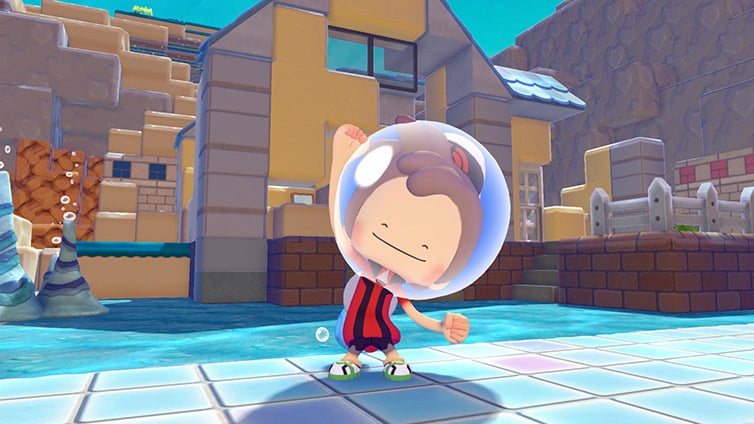
Pokémon Pokopia Version 2.0.0 significantly expands how players can explore and shape the world. The main attraction is Dive, a new move that allows Ditto to travel freely underwater. Rather than treating lakes and oceans as decorative boundaries, the update turns those watery spaces into places that can be entered, explored and developed. Players gain access to Dive after completing a quest with Manaphy, giving the mythical Pokémon an important role in unlocking this fresh layer of exploration. It feels like discovering that the floor of your familiar home has been hiding another room all along. Areas that once marked the edge of an adventure can now become the starting point for entirely different projects, settlements and routes.
Dive is included through the free Version 2.0.0 software update, so every Pokémon Pokopia owner can benefit from underwater movement. The feature also supports the wider ideas introduced by the Expansion Pass, particularly the aquatic setting of Bubbly Basin. That combination keeps the update from feeling like a simple gateway to paid material. Even players who do not purchase the Expansion Pass receive new abilities and improvements that affect the wider game. The result is an update that broadens the basic rules of exploration while leaving plenty of room for players to decide how deeply they want to engage with the new underwater possibilities.
Dive and underwater construction transform town building
Swimming beneath the surface is only part of the change. Version 2.0.0 allows the Build specialty to work underwater, meaning players can construct houses beneath the waves. That single adjustment has enormous creative potential. A small seaside settlement can now extend below the shoreline, while an empty underwater space can become a carefully planned neighborhood filled with buildings, pathways and decorations. Players who enjoy experimenting with architecture suddenly have an entirely different environment to consider, complete with new visual challenges and opportunities. Designing underwater is not simply the same process with a blue filter placed over it. Water levels, depth, surrounding terrain and the movement of aquatic Pokémon can all influence how a project looks and feels.
Strength can now be used underwater as well, making submerged exploration more consistent with movement on land. This should reduce moments in which players reach an obstacle but discover that a familiar tool has unexpectedly stopped working. Certain roof items can also block water following the update, giving builders more control over how liquid interacts with their designs. Together, these changes make underwater construction feel like a supported system rather than a novelty. It is the difference between being allowed to place a chair in a swimming pool and receiving the tools needed to design an actual underwater home.
Bubbly Basin expands the world through paid DLC
Bubbly Basin is the first major component of the Pokémon Pokopia Expansion Pass and introduces a new underwater town for players to develop. Access to the area requires ownership of the paid pass, but the related Version 2.0.0 update supplies the technical foundation needed to explore and build beneath the surface. Bubbly Basin is home to Pokémon suited to its aquatic environment, creating new reasons to collect materials, establish habitats and experiment with town layouts. Its submerged setting also gives the game a noticeably different atmosphere. Instead of open fields and sunny paths, players can expect a world framed by drifting bubbles, shifting water and the quiet charm of Pokémon living beneath the waves.
The area is especially well suited to Pokémon Pokopia’s relaxed structure. There is no need to race through the water or treat every visit as a high-pressure expedition. Players can gradually improve the town, meet its inhabitants and shape it according to their own ideas. That slower rhythm is important because it allows the underwater setting to become more than scenery. Bubbly Basin is another canvas, and the new building tools are the brushes. Expansion Pass owners can use the location to create something that feels distinct from their existing towns while still benefiting from familiar systems such as habitats, crafting, painting and Pokémon requests.
The free update and Expansion Pass support different players
The release separates its additions sensibly between the free update and paid Expansion Pass. Dive, underwater building and the broad collection of interface and gameplay refinements are available through Version 2.0.0. Bubbly Basin and the Pokémon associated with the new area belong to the Expansion Pass. This means players who are primarily interested in improving their current towns still receive meaningful changes without needing to purchase additional material. Meanwhile, those who want a new setting and more Pokémon have a clear reason to consider the pass.
This distinction matters because Version 2.0.0 includes far more than basic compatibility work. Storage management is faster, traversal moves are more flexible, companions behave more naturally and numerous bugs have been corrected. The free portion therefore stands on its own as a valuable update. Bubbly Basin then builds on those changes by providing a location designed around the newly expanded underwater mechanics. The two releases complement one another without making the existing experience feel abandoned. It is a balanced approach that gives returning players something useful while offering dedicated builders a much larger aquatic playground.
New items, customization options and building controls
Version 2.0.0 introduces several items, appearance choices and creative tools. New recipes include items such as the portal pod and safe, which can be purchased after raising Palette Town’s environment level. These additions provide more objects to use when furnishing homes or organizing themed spaces. The dynamic Ditto print pattern has also been added. Players can obtain it by speaking with Smearguru after acquiring the diploma, providing another reward for those who continue developing their skills and completing long-term goals.
Character customization has grown through five additional hair colors: orange, light pink, yellow-green, blue-green and brown. These choices may sound modest beside underwater construction, but small visual options often make a surprising difference in a game built around personal expression. New emotes provide another way to show personality. Lie Down and Ready, Set, Go! can be obtained in Bleak Beach and on Dream Islands. Pokémon that previously taught the player an emote will now react with that same emote when it is used, turning a simple animation into a shared moment. It is a charming touch that helps interactions feel less like pressing a menu command and more like communicating with a companion.
Painting and object placement provide finer creative control
Builders now have greater control when placing windows, doors and similar objects. Their depth can be fine-tuned, helping them fit more naturally into walls and carefully designed structures. This addresses the kind of tiny alignment issue that can become strangely distracting once you notice it. A doorway that sits slightly too far forward may not break a building, but it can make an otherwise polished design feel unfinished. More precise placement should make detailed projects easier to complete without repeatedly removing and replacing the same item.
The list of paintable objects has also expanded. Players can recolor the stylish stool, handrail, metal chain, workbench, vending machine, bike, bookcase, Pokémon Center counter, arrow sign and rope. Smearguru can learn patterns from photographs saved in References, while paint balloons now make their target item easier to see. The update also fixes situations in which paint was consumed incorrectly, applied to unchangeable sections or failed to alter the light color of a painted surface light. These refinements provide both additional freedom and greater predictability, which is exactly what a creative system needs.
Storage, crafting and town management become more convenient
Inventory management receives several welcome improvements. Players can move items in bulk between their bag and a storage box, reducing the time spent transferring materials one by one. Items stored inside objects such as garbage bins can also be deleted directly. These may not be the glamorous features that dominate a trailer, but they are likely to save regular players a great deal of time. Repeated menu actions can make even a relaxed game feel like paperwork, and nobody opens Pokémon Pokopia hoping to begin an unpaid career in warehouse administration.
Crafting has become more logical as well. When using a workbench, the game now consumes materials from the nearby storage box before using those carried in the bag. This allows players to maintain a personal supply while drawing from materials intentionally stored near a crafting area. Lost relics can be appraised in batches of up to 10, and actions such as Paint, Gather Honey and Collect can be repeated several times during the same interaction. Curved eaves now produce 10 pieces when crafted, while messages explaining insufficient 3D Printer materials have been improved. Each adjustment removes a little friction from activities players perform frequently.
Town displays and power systems support larger projects
Players working on elaborate towns have gained more room to experiment. The placement limit for power generators, excluding furnaces, has doubled from 64 to 128. This creates additional flexibility for builds that depend on powered devices, switches or automated components. Tidal Bells and Clear Bells can now be activated through laser sensors and switches, adding more possibilities for interactive constructions. Players who enjoy connecting devices can create systems that feel less like static decorations and more like working installations.
The number of different photographs displayed within a town has increased from 10 to 40. That change makes it easier to build galleries, memory walls or heavily personalized interiors without repeatedly reusing the same images. Items can now be placed on top of square plants, opening another small but useful avenue for decoration. Buildings can still be remodeled when objects such as the Ditto Flag are attached to roofs or walls, and the game now communicates this more clearly. These improvements encourage larger, more detailed projects while making the tools supporting those projects easier to understand.
Pokémon habitats and social interactions receive important refinements
Several changes focus on how Pokémon respond to habitats, furniture and the player. When a habitat is destroyed, its Pokémon can move back in after the same habitat is rebuilt within a suitable nearby area. Pokémon upset by removed furniture will also recognize more quickly when the object has been replaced. These adjustments should make remodeling less stressful. Players can renovate or correct mistakes without worrying that a temporary change has permanently disrupted the residents they worked hard to attract.
Conversation indicators have been reduced for ordinary interactions, allowing special conversations and requests directed at Ditto to stand out more clearly. This makes it easier to spot moments that require attention without covering the town in distracting symbols. Requests have also been corrected so Pokémon are less likely to ask for items they dislike. Pokémon that teach emotes now respond when the same gesture is performed, creating more visible feedback during social interactions. Individually, these are subtle changes. Together, they help the towns feel more responsive and make Pokémon behavior easier to read.
Finding Pokémon and travelling between towns is easier
Searching for a specific Pokémon through the Pokédex is now more convenient. When the target is located in another town, Return Home can transport the player to that location. This reduces unnecessary travel and helps players act on information provided by the Pokédex. An All tab has been added to both the Pokédex and Habitat Dex, making it easier to browse complete collections without jumping between several categories.
The update also addresses unusual movement behavior. Pokémon could previously fall into the ocean or tumble from cliffs when emerging from habitats. Honey did not always persuade Pokémon to return home, and creatures that dislike water could struggle to cross duckweed or flowering duckweed despite those plants covering the water’s surface. Suicune and Gholdengo could also have trouble travelling across water. Fixes for these problems should make residents appear more capable of navigating the towns created for them. After all, a carefully planned habitat loses some of its magic when its occupant immediately walks off a cliff.
Surf, Rollout and other moves become more versatile
Traversal receives a broad collection of refinements in Version 2.0.0. Pokémon companions can now follow the player while using Surf, Glide, Rollout or Magnet Rise. This helps journeys feel more connected, particularly for players who enjoy travelling with a favorite companion rather than watching it disappear whenever a special movement ability is activated. Surf can now be started from land by holding the focus button and pressing the Surf button, while the activation conditions for Surf and Waterfall have been adjusted to make both moves trigger more smoothly.
Rollout has become more practical during ordinary exploration. Players can inhale items and open their bag while rolling, reducing the need to cancel the move whenever something useful appears. Rollout can also destroy certain natural objects, including large boulders. Leafage can return farm soil to a normal soil block, giving players a straightforward way to reverse landscaping decisions, and Strength now works underwater. These updates make moves feel like flexible tools rather than abilities that work only in narrowly defined circumstances.
Camera settings and movement options improve accessibility
The update adds motion-sickness reduction settings for the camera, providing players with more control over how movement is displayed. Camera motion can affect people very differently, so additional options can make the difference between comfortably enjoying a long building session and needing to stop after only a few minutes. The settings menu also includes an option to keep moving while the move wheel is open. This allows players to select abilities without completely interrupting their momentum.
Another setting can hide the confirmation message displayed when canceling Magnet Rise. This is helpful for experienced players who understand the consequences and no longer need to approve the same action repeatedly. Hide-and-sneak can now be canceled before it finishes, giving players more freedom to change their minds. A short press while collecting liquid allows Ditto to hold it without immediately removing it from the environment, and released water automatically adjusts to nearby water levels. Together, these changes make movement and environmental editing feel more responsive to the player’s intentions.
Construction systems and environmental tools gain greater flexibility
Several improvements make building projects smoother behind the scenes. Pokémon not assigned to a construction role can now assist with cooking while a building is being created. This gives idle residents something useful to do and helps projects feel more communal. The update also improves explanations shown when building or relocation cannot be performed, reducing situations in which players are blocked without understanding the cause. Multiplayer construction problems that could prevent a project from being completed or canceled have been addressed as well.
Some fixes concern specific building kits and locations. Players other than a Cloud Island administrator should no longer be able to place a relocation kit. A building kit should no longer become impossible to recover while remodeling a house, and painted sections of the sand house should not unexpectedly reset under certain conditions. The game previously allowed more than one party cooking pot to be placed in the same town through a particular sequence of actions, which has also been corrected. These fixes protect towns from unusual states that could interfere with later construction.
Water, gathering and Dream Island systems behave more naturally
Environmental interactions have received close attention. When Ditto releases stored water, the resulting water level now matches nearby water automatically. Certain roof objects block water, helping enclosed structures behave more convincingly. The Dowsing Machine can uncover more treasure on Dream Islands, while treasures in Sparkling Skylands should no longer appear in locations where breaking the surrounding terrain would cause them to fall away. These changes make treasure hunting more rewarding and reduce the chance of discovering something that cannot be collected safely.
Loading problems associated with Dream Islands have also been corrected. Returning from one could previously fail to finish, send the player to Palette Town incorrectly or, under particular online conditions, transport the player to a Dream Island unexpectedly. Fixing these issues should make island visits feel much less risky. Event notifications shown at startup are now limited to specific remaining-day periods, preventing outdated or overly persistent notices from interrupting play. The adjustments are practical, but they also protect the relaxed rhythm that gives Pokémon Pokopia much of its appeal.
Performance improvements and bug fixes strengthen the experience
Version 2.0.0 includes improved performance for certain rendering processes and fixes several visual problems. Some objects could appear unnatural from a distance, while effects on other items vanished when viewed through glass. Both issues could undermine carefully designed spaces, particularly when players use transparent walls or inspect larger towns from farther away. Sound effects for the camping chair and sleeping bag have also been adjusted, while the timing of the high Do note played by the music mat has been corrected.
The update resolves several problems tied to quests and character movement. Slowpoke could stop during the Withered Wasteland request Clear the path!, while certain actions could prevent progress during Follow Tinkmaster! in Sparkling Skylands. Pokédex guidance during the Pokémon Center tour guide! request could point toward the town containing Tinkmaster’s habitat instead of Tinkmaster’s current location. These fixes are particularly important because progression errors can turn a peaceful task into a frustrating search for a solution that does not exist inside the game.
Multiplayer, Pokémon behavior and unusual edge cases are corrected
Multiplayer building should now be more reliable after fixes for situations in which construction could neither be finished nor canceled. The Cloud Island loading screen also received a localization correction for cases where the player’s gender pronoun appeared incorrectly in some languages. Several smaller issues have been resolved, including Pokémon failing to present options such as Follow me! while assigned to construction and Magnet Rise occasionally causing nearby Pokémon to scold the player without a valid reason.
Other corrected problems include Berry processing that failed to create paint properly, surface lights retaining the wrong color after painting and Rock Smash dramatically displacing Ditto when activated during a fall. The update also improves object rendering and corrects several placement, relocation and remodeling errors. Many of these bugs required unusual conditions, but that does not make them unimportant. Creative games encourage experimentation, and experimentation has a habit of finding every loose floorboard. Fixing those edge cases gives players more confidence to build, paint and rearrange their towns without wondering whether an unexpected action will cause lasting trouble.
Conclusion
Pokémon Pokopia Version 2.0.0 is more than a gateway to Bubbly Basin. Dive and underwater construction introduce a major new creative direction, while the supporting improvements make ordinary play more convenient. Bulk storage transfers, better crafting behavior, expanded painting options, smoother traversal and clearer town-management systems address frustrations that can accumulate during long sessions. Pokémon interactions feel more responsive, companions can remain present during movement and habitats recover more reliably after remodeling.
The lengthy collection of fixes is equally valuable. Quest blockers, multiplayer construction failures, Dream Island loading problems and unusual Pokémon movement have all received attention. Expansion Pass owners gain an aquatic town that takes direct advantage of the new mechanics, but players who remain in the existing areas still receive a stronger and more flexible experience. Whether you plan to build an underwater neighborhood or simply want your storage boxes to stop testing your patience, Version 2.0.0 offers plenty of reasons to return. What do you think of the update and Bubbly Basin? Let us know in the comments.
FAQs
- What does Pokémon Pokopia Version 2.0.0 add?
- The update adds Dive, underwater construction, new items, additional hair colors, new emotes, storage improvements, movement refinements, camera options and a large collection of fixes.
- How do you unlock Dive in Pokémon Pokopia?
- Dive becomes available after completing a quest involving Manaphy. Once learned, it allows Ditto to move freely underwater.
- Can every player build underwater?
- Yes. Underwater building is part of the free Version 2.0.0 update. The Build specialty can be used beneath the water after the relevant ability has been unlocked.
- Is Bubbly Basin included in the free update?
- No. Bubbly Basin is part of the paid Pokémon Pokopia Expansion Pass. Version 2.0.0 provides the free underwater mechanics and other improvements needed to support it.
- Does Version 2.0.0 improve performance and fix quests?
- Yes. The update improves certain rendering processes and corrects progression issues affecting several requests, Dream Island travel, multiplayer construction and Pokémon movement.
Sources
- Pokémon Pokopia Expansion Pass Paid DLC Part 1, Bubbly Basin, Is Set to Release on 5 August, Nintendo, August 3, 2026
- Launch Date and New Details Revealed for Pokémon Pokopia Expansion Pass, The Pokémon Company International, July 29, 2026
- Pokémon Pokopia Expansion Pass, The Pokémon Company International, 2026
- Pokémon Pokopia’s First DLC Bubbly Basin Arrives Next Week, GamesRadar+, July 30, 2026
- Pokémon Pokopia Gets New Bubbly Basin Biome This August Alongside Free Update, Game Informer, June 9, 2026