














Summary:
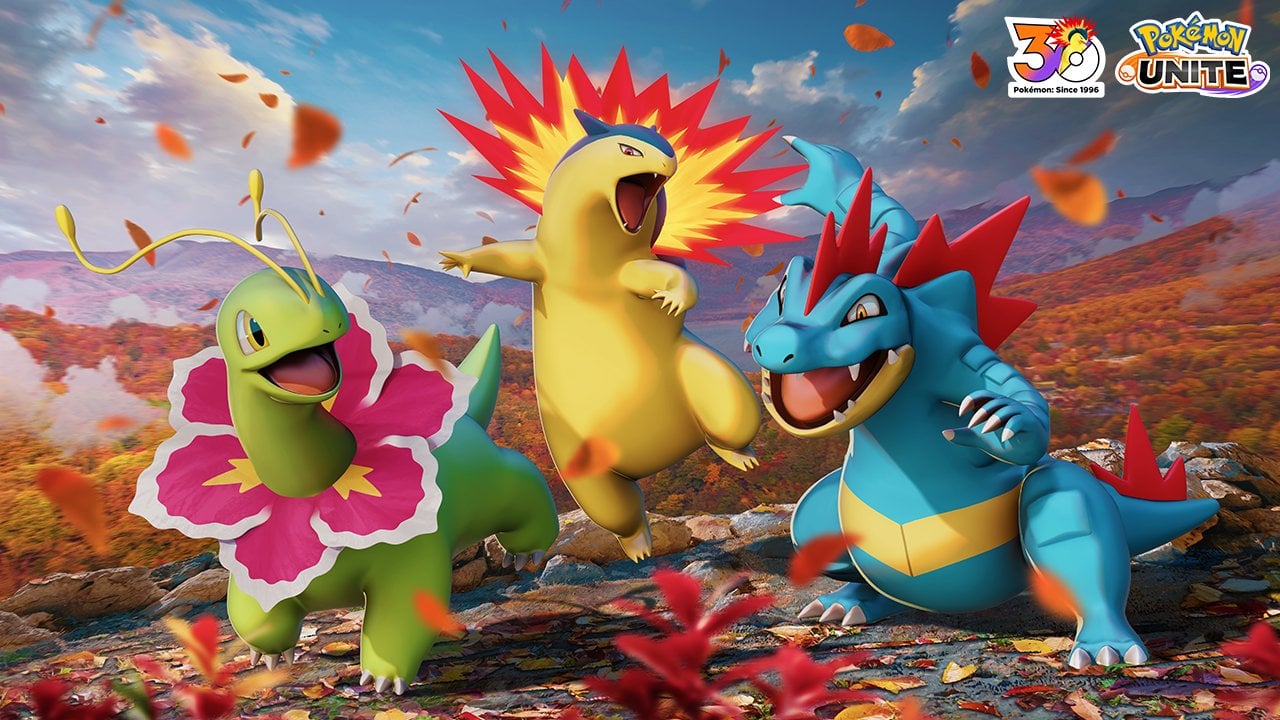
Pokémon UNITE has lined up a strong run of new roster additions, with Typhlosion, Feraligatr, and Meganium officially scheduled to join the game across late April and May. According to the official Pokémon UNITE social announcement, Typhlosion is set for April 24, Feraligatr follows on May 8, and Meganium arrives on May 22. That gives players a clear roadmap for what is coming next, and it also gives this free-to-play multiplayer title something every live-service game needs – momentum. A steady release cadence keeps the battlefield feeling alive, gives players something fresh to look forward to, and fuels conversation across Nintendo Switch, iOS, and Android communities.
What makes this reveal stand out is the choice of Pokémon. Typhlosion, Feraligatr, and Meganium are not random picks pulled from a hat. They are the fully evolved Johto starters, which means this update carries a built-in emotional hook for longtime Pokémon fans. For many players, Johto is not just another region. It is a memory, a favorite era, a soundtrack in their head, and a starter choice they argued about on the schoolyard or online years ago. Bringing all three into Pokémon UNITE in one scheduled wave feels deliberate, and it gives the rollout a theme people can instantly connect with.
The announcement does not yet reveal move sets, battle roles, or detailed gameplay breakdowns, but that silence is part of the appeal. It creates a little tension, a little curiosity, and a lot of room for speculation without muddying the confirmed facts. Right now, the key takeaway is simple and strong: three recognizable Pokémon are on the way, the dates are locked in, and more official information is expected soon. For players who like planning their return to the game, saving resources, or simply keeping an eye on the roster, that alone is worth paying attention to.
Pokémon UNITE confirms three major roster additions for April and May
Pokémon UNITE has officially revealed that Typhlosion, Feraligatr, and Meganium are the next three Pokémon set to join the roster, with release dates spread across late April and May. Typhlosion leads the charge on April 24, Feraligatr follows on May 8, and Meganium rounds out the trio on May 22. It is a neat, well-spaced rollout that gives each reveal room to breathe instead of tossing everything into one noisy pile. That matters more than it might seem at first glance. When a live multiplayer game announces several new arrivals in an organized sequence, it gives players a reason to stay tuned across multiple weeks rather than glancing once and moving on. The structure here feels intentional. It creates rhythm, it builds anticipation, and it gives the wider community plenty to talk about between drops. For a game like Pokémon UNITE, where fresh additions can reignite interest fast, that kind of pacing is gold. Not glitter thrown around for show, but actual useful gold.
Typhlosion arrives first and sets the pace for the next wave
Typhlosion is first in line, arriving on April 24, and that makes it the opening act for this Johto-themed stretch. There is something fitting about Typhlosion taking the lead. It is a Pokémon that naturally carries intensity, speed, and visual flair, so even without official gameplay details yet, its presence already adds heat to the conversation. Players know the name, know the look, and know the attitude. That kind of recognition helps an announcement hit harder. Being first also means Typhlosion will likely shape the tone of the whole rollout. Once it lands, discussion around battle feel, balancing, visual effects, and match impact will start immediately. In other words, Typhlosion does not just join the roster – it opens the door for everything that follows. The first reveal in a sequence often does the heavy lifting, and this one has the star power to do exactly that without breaking a sweat.
Typhlosion has the kind of identity that immediately grabs attention
Part of the reason Typhlosion stands out so easily is simple: it has a clean, memorable identity. Some Pokémon need a long explanation before casual fans lock in. Typhlosion is not one of them. It looks fierce, it feels iconic, and it carries the kind of energy that translates well into a competitive arena setting. Even before official move details appear, players can already picture the style and flair it might bring to matches. That instant clarity matters because it creates buzz without friction. You do not have to sell Typhlosion too hard. You just say the name and a lot of fans are already there, nodding like, yes, that one. In a roster-based multiplayer game, recognizability is not everything, but it absolutely helps. Typhlosion arrives with that advantage built in.
Its placement at the front of the schedule gives it a spotlight moment
There is also a practical advantage to Typhlosion arriving first. It gets an uncontested window of attention before Feraligatr and Meganium enter the picture. That means players, creators, and community channels can focus fully on one release at a time. It keeps the conversation cleaner and gives each addition a better chance to land. No overlap, no confusion, no feeling that one reveal got pushed into the corner while another stole the cake. Typhlosion gets its own spotlight, and that spotlight is likely to help carry the rest of the rollout forward.
Feraligatr follows with a release that keeps the momentum rolling
Feraligatr arrives on May 8, exactly two weeks after Typhlosion, and that timing is smart. It keeps the pace moving without rushing players through the experience of the previous release. Two weeks is enough time for the dust to settle a little, for early impressions to spread, and for attention to start drifting toward what is next. Then Feraligatr steps in and kicks the door open again. That is how you keep interest alive. Feraligatr also brings a completely different kind of appeal from Typhlosion. Where Typhlosion often feels sleek and explosive, Feraligatr carries brute force energy. It has the presence of a wrecking ball with teeth, which gives the wave some welcome contrast. That contrast matters because a trio lands better when each member feels distinct. Pokémon UNITE is not just adding three names here. It is adding three different flavors of fan recognition, and Feraligatr keeps that recipe from getting repetitive.
Feraligatr strengthens the middle of the release window
The middle release in a three-part schedule can easily become the forgotten one. It sits between the first big reveal and the final arrival that completes the set. Feraligatr should avoid that problem because it has a strong identity of its own and lands at exactly the point where player attention is ready for another jolt. In many ways, the middle entry is the one that proves whether a rollout has staying power. If interest holds there, the whole sequence feels stronger. Feraligatr has the kind of reputation and visual presence to keep that momentum from slipping. It helps the schedule feel like a continuing event rather than a one-day headline followed by silence.
Meganium closes out the trio and rounds out a memorable stretch
Meganium is scheduled for May 22, making it the final piece of this three-Pokémon rollout. That closing position matters because the last arrival often shapes how players remember the whole sequence. Meganium gives the schedule a satisfying sense of completion, especially because this is not just any three Pokémon. It is the full evolved Johto starter lineup. Ending with Meganium makes the rollout feel balanced and intentional, like a set that was designed as a set from the start. That kind of symmetry is satisfying in a way that is hard to fake. Fans notice it right away. Beyond that, Meganium brings a softer but no less important kind of recognition. Typhlosion and Feraligatr hit with immediate force, while Meganium adds a different note to the composition. It is the final chord in the song, and without it the whole thing would sound unfinished. Pokémon fans tend to care about that sort of roster poetry more than they sometimes admit.
Meganium completes the Johto starter theme in a clean way
There is a real appeal in seeing a theme carried through properly. Pokémon UNITE could have announced one Johto starter and stopped there. Instead, it confirmed all three and spaced them out across a little over four weeks. Meganium completing that lineup gives the reveal more weight because it turns the news into a coordinated wave rather than a single character drop. It tells players there is a plan behind the schedule. That makes the rollout easier to follow and more fun to anticipate. It is the difference between finding one matching sock and finding the whole pair. Small image, big truth.
Why Johto starters are such a smart fit for Pokémon UNITE
Typhlosion, Feraligatr, and Meganium carry a built-in emotional advantage because they come from Johto, a region with lasting nostalgic pull across the Pokémon fanbase. For many players, Johto represents a formative chapter in the series. The starter trio from that era has remained recognizable for decades, and that familiarity gives Pokémon UNITE a nice boost before any gameplay footage or role descriptions even enter the conversation. People are already invested. They already have preferences. They already have opinions. That is half the battle in any roster announcement. A themed wave like this also feels easier to remember. Players are more likely to keep the dates in mind when the releases connect to one another naturally. It is not just three separate names thrown onto a calendar. It is the Johto starter trio arriving in order across a single stretch. That has shape, and shape sticks in the mind.
Familiarity helps turn a simple announcement into a bigger moment
Recognition is powerful. In a crowded gaming landscape, not every reveal gets more than a quick glance. But when the names Typhlosion, Feraligatr, and Meganium appear together, they tap into years of player memory almost instantly. That emotional shorthand gives the announcement extra lift. Even players who have not checked in with Pokémon UNITE lately might pause when they see the lineup. Nostalgia can be a strong magnet, and in this case it works without feeling forced. The picks make sense on their own, and the shared Johto identity makes them feel even stronger together.
What this schedule says about Pokémon UNITE’s current release rhythm
The spacing between these releases suggests a steady, deliberate cadence. Typhlosion arrives on April 24, Feraligatr on May 8, and Meganium on May 22. That two-week pattern keeps things moving while still allowing each addition its own runway. It also lines up neatly with the broader idea that Pokémon UNITE wants to keep players engaged with regular additions rather than long quiet stretches. The game has leaned into ongoing roster growth for some time, and this new schedule reinforces that direction. Consistency is important in a title like this. Players do not just want surprises. They want reasons to believe there is always something else around the corner. A predictable but exciting rhythm does exactly that. It keeps the lights on in the conversation and stops the roster from feeling static. No multiplayer arena game wants to feel like a museum, no matter how polished the statues are.
The two-week rhythm gives each release breathing room
One of the smartest parts of this plan is that it avoids overcrowding. A tighter schedule might have made the reveals feel rushed, while a wider gap could have weakened momentum. Two weeks sits in that comfortable middle space. It gives time for reaction videos, community chatter, gameplay impressions, and the usual wave of player experimentation once a Pokémon goes live. Then, just as things begin to settle, the next date rolls into view. That is a strong cadence for keeping attention active without exhausting the audience.
The announcement keeps details light but interest high
Right now, the official reveal focuses on the essentials: the names of the incoming Pokémon and their release dates. More information is promised for later, but not yet provided. That limited-detail approach works because the names themselves do a lot of the heavy lifting. Players do not need an encyclopedia page to understand why this matters. They just need confirmation that the trio is coming and a calendar to mark. By holding back the finer gameplay details, Pokémon UNITE also creates room for follow-up announcements that can carry the conversation forward. First the dates. Then the breakdowns. Then the final pre-release push. It is a familiar rhythm, but it is familiar because it works. A good reveal does not always show every card at once. Sometimes it just fans the deck enough for everyone to lean closer.
That leaves room for role reveals, moves, and battle previews later
Because the current announcement is brief, the next round of official updates becomes easier to anticipate. Players will be watching for confirmation on roles, abilities, move effects, and overall play style. That next step is where the conversation usually shifts from broad excitement to serious analysis. For now, though, the lack of detail keeps the focus on the rollout itself and the significance of the trio being confirmed. Sometimes less really does create more noise, and this is one of those moments.
What players on Nintendo Switch, iOS, and Android should watch for next
Players across all supported platforms now have clear release dates to keep in mind, but the next official updates will likely be where practical interest really spikes. Once fuller details start to appear, players will be able to decide which of the three they want to prioritize and whether one of them looks likely to become a new favorite. That matters especially in a cross-platform game with an audience spread across Nintendo Switch, iOS, and Android. Different players engage in different ways. Some keep close track of balance and matchups. Others simply want to know when a beloved Pokémon is finally showing up. This announcement serves both groups well. It provides certainty without overloading the moment, and it gives everyone a shared timeline to follow over the coming weeks.
Official follow-up details are now the main thing to monitor
The clearest next step is simple: watch for the official gameplay breakdowns. Those follow-up reveals will determine how each Pokémon is framed within the battle system and how players begin planning around them. Until then, the dates are the key information. They give the rollout structure, and structure is exactly what fans need when trying to decide when to jump back in, save resources, or start paying attention again.
How these additions could refresh team variety and player excitement
Any new Pokémon entering UNITE has the potential to shake up team choices, match flow, and general player interest, even before the competitive impact becomes clear. Fresh roster additions bring curiosity, experimentation, and that familiar burst of excitement that comes from trying something new or facing it for the first time. With three arrivals scheduled so close together, that refresh effect could feel especially noticeable. Even players who only return in short bursts may see this as a good time to check the game again. That is one reason these announcements matter beyond simple fan service. They help create momentum inside the game itself. New arrivals do not just add names to a menu. They give players fresh reasons to queue up, test ideas, compare favorites, and argue with friends about who got the coolest entrance. The last part is not officially listed as a feature, but come on, we all know it happens.
The timing gives each Pokémon room to shine
Another strength of the rollout is that each Pokémon gets a defined spotlight window. Typhlosion gets the first burst of attention, Feraligatr carries the middle stretch, and Meganium closes things out. That separation helps each reveal feel meaningful on its own while still contributing to the larger Johto theme. If all three had arrived at once, the excitement might have been louder for a day but flatter overall. By spreading them out, Pokémon UNITE gives the conversation shape and staying power. Players can react to one, settle in, and then get pulled forward by the next. It is a bit like serving a good meal in courses instead of tossing everything onto the plate at once. Same ingredients, much better experience.
Why this news matters for longtime Pokémon fans
This announcement matters because it combines two things that Pokémon fans tend to love: recognizable favorites and a sense of shared history. Typhlosion, Feraligatr, and Meganium are not obscure picks meant only for trivia champions. They are starter evolutions from one of the series’ most beloved regions, and that gives the reveal emotional weight from the start. Longtime fans can look at this lineup and immediately connect it to older adventures, older teams, and older memories. That emotional bridge is powerful. Pokémon UNITE is a modern competitive game, but it still benefits from the larger history of the franchise, and this rollout uses that history well. It feels familiar without feeling stale, and it feels exciting without needing to oversell itself. Sometimes a name alone can do a lot of work. Three names like these can do even more.
What to expect from the next round of official updates
The most likely next phase is a series of individual reveals that explain how each Pokémon will function once it enters the game. That means players should be watching for official information on battle roles, signature moves, and visual showcases that highlight how Typhlosion, Feraligatr, and Meganium are meant to stand apart from the existing roster. Until those details arrive, the confirmed dates remain the most important part of the announcement. They give players certainty, and certainty is valuable. In a world of teases, hints, and endless vague promises, a clean schedule goes a long way. Pokémon UNITE has now given players exactly that. Typhlosion on April 24. Feraligatr on May 8. Meganium on May 22. Three dates, three major names, and a clear reason to keep watching.
Conclusion
Pokémon UNITE has set up a strong and easy-to-follow release wave with Typhlosion, Feraligatr, and Meganium arriving across late April and May. The announcement works because it is simple, specific, and built around a trio that already means something to Pokémon fans. Typhlosion opens the stretch on April 24, Feraligatr keeps the pace going on May 8, and Meganium completes the Johto starter set on May 22. That schedule creates momentum, gives each arrival its own spotlight, and keeps players across Nintendo Switch, iOS, and Android watching for the next official reveal. More details are still on the way, but even now the message is clear: Pokémon UNITE has a memorable few weeks ahead, and Johto fans have every reason to be smiling.
FAQs
- When is Typhlosion coming to Pokémon UNITE?
- Typhlosion is scheduled to join Pokémon UNITE on April 24.
- When does Feraligatr release in Pokémon UNITE?
- Feraligatr is set to arrive in Pokémon UNITE on May 8.
- When will Meganium be added to Pokémon UNITE?
- Meganium is planned for release on May 22.
- Has Pokémon UNITE revealed gameplay details for these three Pokémon yet?
- No. The official announcement confirmed the names and release dates, while noting that more information will be shared soon.
- Why are these additions getting so much attention?
- Because Typhlosion, Feraligatr, and Meganium are the fully evolved Johto starters, which gives the rollout a strong nostalgic pull and makes the schedule feel like a themed event rather than three unrelated reveals.
Sources
- New Pokémon are joining the fray in #PokemonUNITE soon!, Pokémon UNITE on X, April 14, 2026
- Pokémon UNITE Roster, Pokémon UNITE, ongoing official roster page
- Letter from the Producer—Pokémon UNITE’s 4th Anniversary, Pokémon UNITE, July 25, 2025
- New Pokemon announced for Pokemon Unite, My Nintendo News, April 14, 2026