














Summary:
Pragmata has quickly become one of Capcom’s most interesting recent success stories, and not just because it finally arrived after years of waiting. The sci-fi action-adventure reportedly sold more than one million copies in its first two days, giving the new IP a launch that many original games would happily frame and hang above the fireplace. That kind of early performance matters because Pragmata is not leaning on the decades of recognition that power names like Resident Evil, Monster Hunter, or Street Fighter. It had to win players over with its own world, its own characters, and its own unusual mix of action and puzzle-driven combat.
Capcom USA chief operating officer Rob Dyer has now suggested that Pragmata may have room to continue, describing it as another IP in Capcom’s arsenal that the company can keep exploring. That does not mean a sequel has been announced, and it would be too early to treat the game as a confirmed franchise. Still, the message is clear enough to make fans pay attention. Capcom appears pleased with the result, and Pragmata’s combination of lunar sci-fi, third-person action, hacking mechanics, and the partnership between Hugh and Diana gives the company a strong foundation to build on. For a game that once felt trapped in development limbo, that is a pretty impressive turnaround.
Pragmata’s strong start gives Capcom a new success story
Pragmata has landed with the kind of impact that makes people stop scrolling, raise an eyebrow, and ask whether Capcom has quietly opened the door to something bigger. The game arrived as a new sci-fi action-adventure built around Hugh, Diana, a lunar setting, and a strange fight to return to Earth. That already gave it a different flavor from Capcom’s better-known pillars, but the real spark came from its early sales momentum. For a completely new IP to reportedly clear one million copies in two days is not a small footnote. It is the kind of result that tells a publisher there may be more fuel in the rocket than expected.
Why one million sales in two days matters for a new IP
New games can have a rough time in the modern market, especially when they are not attached to a famous name, a beloved remake, or a long-running series with fans ready to show up on day one. Pragmata did not have that safety net. It needed players to care about a new world, learn new rules, and trust Capcom’s pitch after years of delays. That is why the reported sales figure matters so much. One million copies in two days suggests Pragmata did more than satisfy curiosity. It created urgency, pulled in early adopters, and proved that players still have an appetite for original ideas when the concept feels strong enough.
Rob Dyer’s comments point toward future potential
Rob Dyer’s remarks at the iicon event in Las Vegas have added a fresh layer of excitement around Pragmata’s future. Speaking about the game and Capcom’s wider development approach, the Capcom USA chief operating officer suggested the company now has another IP it can continue to explore. That is not the same thing as announcing Pragmata 2, of course. Game companies often speak carefully when discussing future plans, and there is a big difference between possibility and production. Even so, Dyer’s wording stands out because it frames Pragmata as something with ongoing value rather than a finished experiment placed neatly back on the shelf.
Capcom has not confirmed a Pragmata sequel yet
It is tempting to hear a quote like that and immediately start picturing a sequel trailer, a bigger moon base, new hacking tools, and a dramatic return for Hugh and Diana. That would be fun, and yes, the imagination can run faster than a panicked player being chased through a metal corridor. Still, the important detail is that Capcom has not officially announced a sequel or follow-up project. The current takeaway should be measured rather than exaggerated. Pragmata’s early sales and Capcom’s public comments make a future installment feel possible, but the company has not confirmed platforms, story plans, development status, or a release window for anything beyond the game that already launched.
The long road from reveal to release made the launch more meaningful
Pragmata’s launch carries extra weight because this was not a smooth, blink-and-it’s-here rollout. Capcom first revealed the game years before release, and the project became known for delays, silence, and long stretches where fans wondered what was happening behind the scenes. That kind of wait can damage excitement if the final product does not deliver. In Pragmata’s case, the delayed arrival seems to have created a different story. Instead of fading into the background, the game returned with a clearer identity and enough momentum to turn uncertainty into curiosity. It is the gaming equivalent of a spaceship disappearing behind the dark side of the moon, only to reappear with its engines glowing.
Hugh and Diana give Pragmata a clear identity
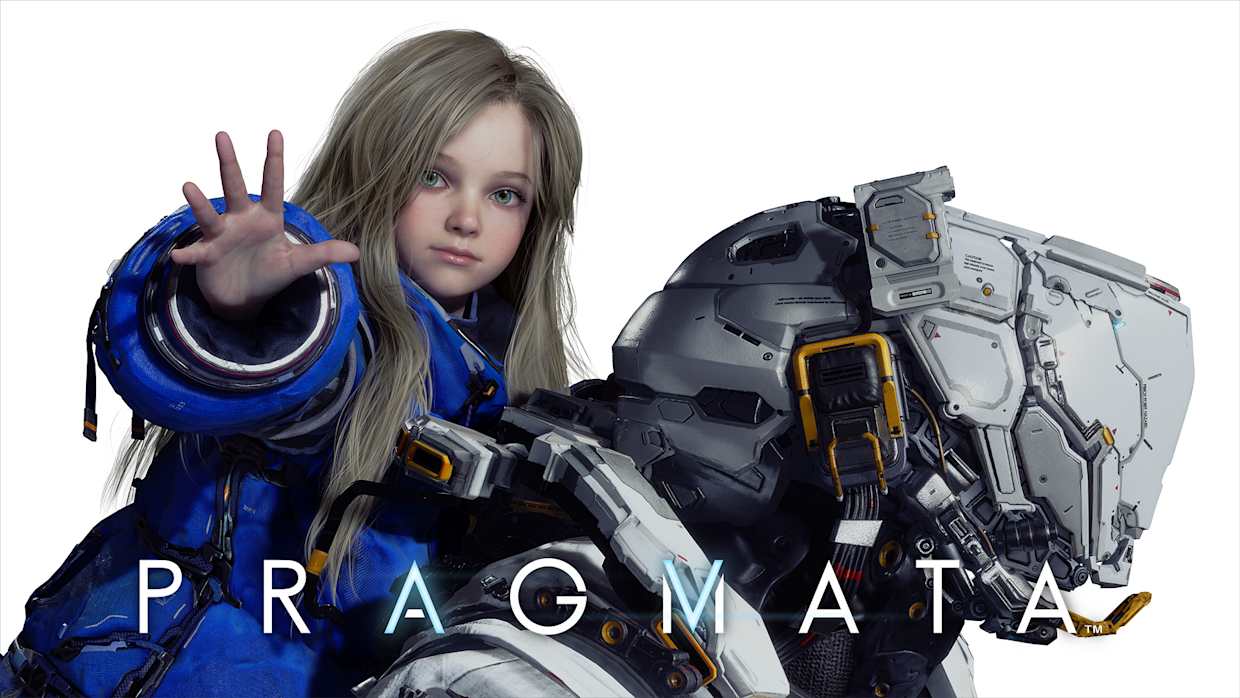
One reason Pragmata feels easier to imagine as a continuing series is the central pairing of Hugh and Diana. Capcom describes the game as a sci-fi action-adventure where the spacesuit-clad Hugh and android girl Diana work together while fighting their way back to Earth. That setup gives the game a human heart inside all the steel, data, and lunar danger. Players are not just moving through a cold research environment for the sake of shooting hostile machines. They are following a partnership. That matters because memorable characters can do a lot of heavy lifting for a new IP, especially when the world around them is strange, mechanical, and full of unanswered questions.
The gameplay mix helps Pragmata stand apart
Pragmata also benefits from not being easily boxed into a single familiar label. Capcom has positioned it as a sci-fi action-adventure that mixes puzzle and action elements, which gives the game a different rhythm from a straightforward shooter. That blend can be a strong advantage because it creates room for tension, timing, strategy, and character interaction rather than relying only on reflexes. The hacking element, in particular, gives the action a slightly different pulse. Instead of feeling like every encounter is simply about firing faster, Pragmata can play with pressure, pattern reading, and quick decision-making. That gives the experience its own texture, like a circuit board humming under a layer of moon dust.
Nintendo Switch 2 support strengthens Pragmata’s reach
Pragmata’s presence on Nintendo Switch 2 is another important piece of the puzzle. Capcom’s official materials list the game for PlayStation 5, Xbox Series X|S, Nintendo Switch 2, and PC, giving it a broad platform base from the start. That matters because a new IP needs visibility wherever it can get it. Nintendo Switch 2 support also puts Pragmata in front of players who may be hungry for ambitious third-party releases on newer Nintendo hardware. The wider the audience, the easier it becomes for a new name to stick. A sci-fi adventure has a better chance of becoming a familiar brand when players across different platforms can join the conversation at roughly the same time.
Capcom’s feedback strategy appears to have paid off
Dyer’s comments also point to another reason Pragmata may have connected: Capcom appears to have listened closely during development. Reports around his remarks mention focus tests, surveys, demos, and feedback from Western audiences, with Capcom’s Japanese development team taking that input seriously. That does not mean the game was designed by committee, which is often where creative spark goes to take a nap. Instead, it suggests Capcom tried to tune the experience for a global audience without sanding away its personality. When done well, that kind of feedback loop can help a strange new idea become more approachable while still keeping the weird, shiny edges that made it interesting in the first place.
What Pragmata could become next
If Pragmata does continue, Capcom has several natural paths it could explore without needing to force the idea. A sequel could expand the relationship between Hugh and Diana, introduce new environments beyond the moon, sharpen the hacking systems, or explore more of the AI-driven threat at the heart of the game’s world. It could also keep the same core identity while building a larger universe around it, which is often how new series grow from promising debuts into recognizable franchises. The key would be restraint. Pragmata’s appeal comes from its unusual tone, its sci-fi mystery, and the contrast between cold technology and emotional partnership. Bigger would not automatically mean better, but smarter could mean something special.
Pragmata’s future now feels worth watching
The most exciting thing about Pragmata right now is that it no longer feels like a question mark floating in space. For years, the game was a curiosity, a delayed project, and a promise waiting to become real. Now it has launched, reached a major early sales milestone, and drawn public comments from a senior Capcom USA executive about its potential as another IP the company can keep exploring. That is a serious shift. There is still no confirmed sequel, and fans should keep expectations grounded until Capcom makes an official announcement. Even so, Pragmata has done enough to make its future feel genuinely interesting, and that is a pretty strong place for any new game to be.
Conclusion
Pragmata’s early success gives Capcom a valuable new name at a time when original games often face an uphill climb. Selling one million copies in two days, paired with Rob Dyer’s comments about the IP’s future potential, suggests Capcom sees more than a one-time experiment here. Nothing has been confirmed beyond the current game, so talk of sequels should stay in the realm of possibility rather than certainty. Still, Pragmata now has momentum, recognizable characters, a distinct sci-fi identity, and a broad platform presence. For a project that spent years trying to escape development uncertainty, that is a strong and satisfying result.
FAQs
- Has Capcom confirmed a Pragmata sequel?
- No. Capcom has not officially announced a Pragmata sequel. Rob Dyer’s comments suggest the company sees future potential in the IP, but that is not the same as confirming a new game.
- How many copies did Pragmata sell at launch?
- Pragmata reportedly sold more than one million copies in its first two days, which is a strong start for a completely new Capcom IP.
- What kind of game is Pragmata?
- Pragmata is a sci-fi action-adventure game from Capcom that mixes action and puzzle elements. It follows Hugh and Diana as they work together in a near-future lunar setting.
- Which platforms is Pragmata available on?
- Capcom lists Pragmata for PlayStation 5, Xbox Series X|S, Nintendo Switch 2, and PC through Steam, giving the game a wide current-generation release.
- Why is Pragmata important for Capcom?
- Pragmata matters because it is a new IP that achieved strong early sales without relying on an existing franchise name. That gives Capcom another potential series to develop in the future.
Sources
- ‘We’ve got another IP’: Capcom hints Pragmata could see more games, VGC, May 2, 2026
- Capcom teases that Pragmata might have a future as a franchise, after at least 6 years in development hell pays off with 1 million sales in 2 days, GamesRadar+, April 30, 2026
- It Sounds Like Capcom Has Another Huge IP On Its Hands With Pragmata, Nintendo Life, May 4, 2026
- PRAGMATA, Capcom, April 2026
- All-new IP PRAGMATA to Launch on April 24, 2026!, Capcom, December 12, 2025