














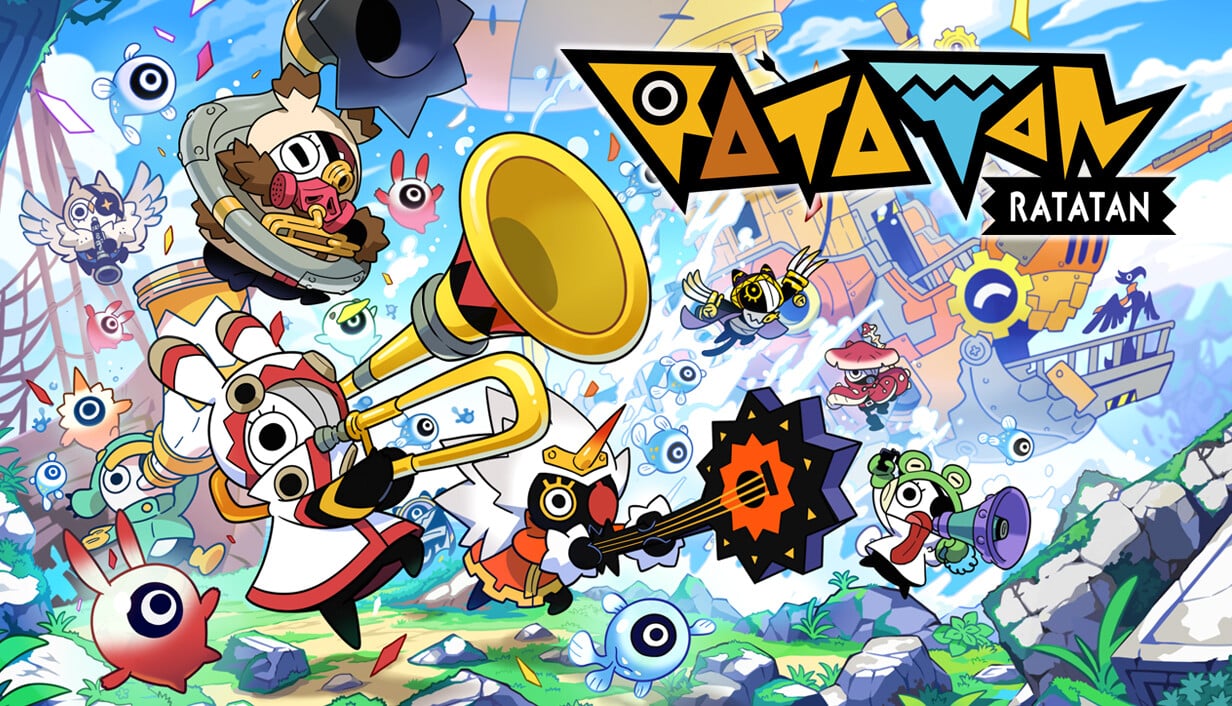
Summary:
Ratata Arts has delayed the full release of Ratatan, moving the rhythm-based action game from July 16 to October 15, 2026. The revised date applies to every planned version, including the Nintendo Switch 2 edition. According to the development team, the additional three months will be used to address bugs, improve online functionality, polish the overall experience and complete the work required to launch the game across several platforms at the same time.
The developers explained that the final stretch of production revealed more work than originally expected. That situation is hardly unusual in game development. A project can appear close to completion from the outside while dozens of interconnected systems still need testing behind the curtain. Fixing one problem can expose another, and online features introduce even more variables. Rather than pushing Ratatan through the door before it is ready, the team has chosen to extend development and aim for a stronger launch.
Executive producer Sakajiri Kazuto also addressed the Kickstarter community directly, thanking backers for making Ratatan possible and supporting the team throughout development. Early Access feedback reportedly encouraged Ratata Arts to make broader improvements than initially planned, but those changes also increased the amount of work needed. For Nintendo Switch 2 players, the news means a longer wait, although the game is still scheduled for a simultaneous October release alongside the other supported versions.
Ratatan moves from July to October 2026
Ratatan will no longer launch on July 16, 2026. Ratata Arts has officially moved the release to October 15, 2026, giving the team roughly three additional months to complete the game. The change covers all announced versions, so Nintendo Switch 2 players will be waiting alongside those planning to play on PlayStation 5, Xbox Series X|S and PC. Although a delay this close to release can sting, especially when players have already marked the date on their calendars, the developers have made it clear that the decision was based on the condition of the game rather than a change in its overall direction. Ratatan is still moving toward its full launch, only with a longer runway before takeoff.
The announcement follows a period of limited communication from the team. Ratata Arts acknowledged that updates had become less frequent as development approached its final stages. That silence was not caused by a lack of progress. Instead, the developers said they had been concentrating on bug fixes, unexpected technical issues and other tasks that tend to appear near the end of production. Games rarely travel from Early Access to a polished console release in a perfectly straight line. The final few steps can resemble untangling a box of cables in the dark, with every solved problem revealing another knot underneath.
Why Ratata Arts decided to delay the release
Ratata Arts said the delay became necessary after the team reviewed what remained to be completed before launch. Releasing in July would have left insufficient time to reach the quality level the developers want for Ratatan. The decision was therefore made to move every version to October rather than release the game in a condition that might disappoint players. That distinction matters. The game has not been delayed because its central concept is being rebuilt or because development has stopped. The team instead needs more time to complete the less glamorous but essential work that separates a promising game from a dependable finished release.
Delays often produce mixed emotions. Players may understand the reasoning while still feeling frustrated, particularly Kickstarter backers who have followed Ratatan for years. Ratata Arts appears well aware of that tension. Its statement does not treat the change as a minor calendar adjustment. The developers openly recognised that people have been waiting patiently and expressed regret about extending that wait. At the same time, they argued that releasing a weaker version merely to preserve the previous date would be the worse outcome. A release date can be changed. A poor first impression is much harder to patch away.
Bug fixing and final polish require more time
The most direct reason for the delay is the need for additional bug fixing and polish. As Ratatan nears completion, the developers are encountering problems that need to be investigated, reproduced and resolved across the entire game. Some bugs may be obvious, such as a crash or an enemy becoming stuck. Others can hide in less predictable situations, appearing only when certain abilities, characters or multiplayer conditions overlap. These problems can be especially difficult to solve because the visible symptom may be far removed from the system that actually caused it.
Polish also covers far more than removing technical faults. It can include refining controls, improving interface clarity, adjusting balance, smoothing animations and ensuring that audio and visual feedback communicate what is happening during hectic battles. Ratatan combines rhythm commands, side-scrolling action, large groups of characters and roguelike progression. When all those ingredients are moving at once, even a small timing or readability problem can affect how satisfying the entire encounter feels. The team now has more time to tune those details instead of hoping players will overlook the rough edges.
Online support adds another technical challenge
Ratatan supports online cooperative play for up to four players, and that functionality brings a separate collection of technical demands. A single-player encounter runs within one local environment, where the game can predictably manage inputs, enemies and effects. Online play must account for different connections, network delays, interruptions and hardware conditions while keeping each participant’s session synchronised. Add rhythm-based commands to that equation and the challenge becomes even greater. Timing is not merely decorative in Ratatan. It is woven into the way players issue orders and maintain momentum during battle.
The development team specifically identified online support as one of the areas contributing to the longer production schedule. That does not necessarily point to one dramatic problem. Multiplayer stability is often shaped by hundreds of smaller behaviours that need to be tested together. Matchmaking must work reliably, sessions must remain connected and every player needs to see an accurate version of the action. When more than 100 characters can appear in a large melee, the game has plenty of information to track. Giving the online systems more attention now could prevent October’s launch from turning into an accidental rhythm game where the main beat is the reconnect button.
Supporting several platforms increases the workload
Ratatan is being prepared for multiple systems, including Nintendo Switch 2, PlayStation 5, Xbox Series X|S and PC. Each platform has its own technical requirements, certification procedures, hardware behaviour and user interface expectations. A change that works correctly on one machine may produce an unexpected problem on another. The team therefore cannot simply finish a single version and assume that every other edition will behave identically. All supported releases need dedicated testing and optimisation before they can be submitted and approved.
This multiplatform approach is one reason the new October date applies to every version. Ratata Arts could theoretically have considered releasing individual editions at different times, but the team has instead retained a shared launch plan. That gives players across the supported platforms the same target date and should make it easier for friends to begin playing together. It also means the developers must coordinate several production pipelines at once. Imagine preparing the same performance for four theatres, each with a differently shaped stage and its own rulebook. The music may be identical, but the setup certainly is not.
Early Access feedback changed the development plan
Ratatan entered Steam Early Access in September 2025, allowing players to experience the game while development continued. That process produced substantial feedback concerning balance, roguelike progression, random events, multiplayer optimisation and other parts of the experience. According to Sakajiri Kazuto, the original development plan did not fully account for how extensively the team would revise Ratatan in response to those players. The developers did not merely collect suggestions for a future update. They adjusted the game more significantly than initially expected, helping Ratatan grow beyond its earlier design.
That additional work appears to be one of the delay’s more positive causes. The team believes the game has improved because of Early Access feedback, but implementing those ideas has consumed development time. Every new feature or adjustment must be designed, built, tested and integrated with the rest of the game. Even a seemingly simple balance change can affect enemy difficulty, item value, cooperative strategies and progression. When a project evolves during public development, the finish line can move while everyone is running toward it. Ratata Arts has chosen to follow that moving target rather than stop at the location marked on the original map.
The Early Access period also gives the developers information that internal testing alone cannot easily reproduce. Thousands of players approach games in unpredictable ways. They combine abilities that testers may not have paired, discover unusual progression routes and attempt multiplayer sessions under a huge range of network conditions. That behaviour can reveal weaknesses, but it can also show which ideas deserve to be expanded. Ratatan’s revised release schedule suggests that the team is treating those discoveries as an important part of development rather than as optional comments to be filed away.
Kickstarter backers remain central to Ratatan
Ratatan began its journey with support from a successful Kickstarter campaign, and Sakajiri used the delay announcement to speak directly to the people who helped fund it. He described the backers as essential to the game’s existence and thanked them for supporting the team through the difficulties of development. His message also acknowledged that these supporters have been waiting longer than ordinary customers. For someone who pledged money while Ratatan was still largely an idea, another delay naturally carries more weight than a routine schedule change for a newly announced release.
The producer’s statement emphasised that the developers do not view backers as distant customers. He described them as friends who helped build the game along the way. That language reflects the unusually close relationship created by crowdfunding, where supporters can follow a project through concept art, prototypes, setbacks and changing plans. It also raises expectations around communication. When progress updates become quiet, concern can spread quickly. Ratata Arts acknowledged its recent silence and explained that the team had been consumed by final development work, although backers will understandably hope for clearer updates as October approaches.
There is a delicate balance here. Backers want transparency, but developers also need uninterrupted time to solve problems. Posting an update does not require the same effort as building an entire game, yet preparing accurate announcements, translations, screenshots and platform details still pulls people away from production. The latest statement attempts to reconnect those two sides by explaining the reason for the silence and laying out the factors behind the delay. The next few months will show whether Ratata Arts can maintain that communication while completing the remaining work.
What the delay means for Nintendo Switch 2 players
For Nintendo Switch 2 owners, the most important detail is straightforward: Ratatan is now scheduled to arrive on October 15, 2026. The Switch 2 version remains part of the simultaneous multiplatform release, and the delay announcement does not indicate that its features or availability have been reduced. The original Nintendo Switch edition is no longer planned, with the developers previously explaining that its multiplayer performance did not reach the required quality. As a result, Nintendo players will need a Switch 2 to play the console edition when it launches.
The stronger hardware should give Ratata Arts more room to preserve Ratatan’s busy battles and online functionality. The game can place large numbers of colourful characters on screen while players issue commands to the beat, making performance consistency particularly important. A sudden slowdown in a conventional action game is annoying. In a rhythm-driven experience, it can disrupt the relationship between the music, the player’s input and the response on screen. The extra development time may therefore be especially valuable for a portable system expected to handle both docked and handheld play.
The October date also places Ratatan in a different part of the release calendar. That may change which games compete for players’ attention, but the team’s priority is clearly technical readiness rather than finding a quieter week. Nintendo Switch 2 owners who planned to play in July will have to rearrange their schedules, yet they should still receive the same core game as players on other platforms. Cross-platform functionality has not been detailed as part of the delay announcement, so players should wait for confirmed information before assuming how online communities will connect.
Why delaying Ratatan may benefit the finished game
A delay does not guarantee that a game will launch without problems. Three extra months cannot magically erase every risk, particularly in a project involving online systems and several platforms. It does, however, give the developers a better chance to address known issues before players encounter them. That difference is meaningful. Launch periods attract the highest level of attention, and technical problems can quickly dominate the conversation around a game. Players who arrive excited but meet crashes, disconnections or progression bugs may not return after those faults are repaired.
Ratatan also depends on rhythm and momentum to create its appeal. Its colourful presentation may look playful, but the systems underneath need precision. Inputs must feel responsive, commands must be readable and the action must remain understandable even when the screen becomes crowded. Additional polishing can improve that foundation in ways that are difficult to demonstrate in a trailer. A smoother interface or more stable connection may not create a dramatic headline, yet those details determine whether an evening of cooperative play ends with one more run or four people quietly closing the game.
The team’s willingness to incorporate Early Access feedback further supports the decision. Ratata Arts could have frozen development earlier, launched in July and saved broader adjustments for later patches. Instead, the developers expanded the work before version 1.0. That creates a longer wait, but it may also result in a full release that better reflects what players enjoyed and criticised during Early Access. The wisest measure of the delay will not be how disappointing it feels in June. It will be how Ratatan performs when October 15 finally arrives.
What players can expect before the October launch
Ratata Arts has not published a complete week-by-week plan for the extended development period. Based on the announcement, the team will concentrate on fixing bugs, improving online support, polishing the overall experience and preparing each platform version. Players should expect further communication concerning the launch as October approaches, particularly around pre-orders, physical editions and any platform-specific details that still need clarification. The developers may also continue updating the Steam Early Access build, although individual updates should only be treated as confirmed once Ratata Arts announces them.
The most useful approach for players is to follow official Ratatan channels and avoid treating store placeholders or retailer listings as final confirmation. Release plans can involve regional differences, shipping arrangements and certification timing that are not always visible to the public. The new date is October 15, 2026, but details such as exact unlock times, physical delivery schedules and potential bonuses may be communicated separately. Kickstarter backers should pay particular attention to campaign updates, as fulfilment instructions may differ from standard retail purchases.
For now, the central message is simple. Ratatan remains in active development, its console plans remain intact and the team believes the delay will produce a better game. Players are never required to celebrate a postponement, of course. Disappointment is a perfectly reasonable response when something anticipated moves further away. Still, the explanation offers a clear reason for the decision, and the revised date gives Ratata Arts a defined window in which to finish the job. The beat has paused, but the march continues.
Conclusion
Ratatan is now scheduled to launch on October 15, 2026, rather than July 16. Ratata Arts says the extra development time is needed for bug fixing, final polish, online support and the work involved in preparing the game for several platforms. Early Access feedback also encouraged the team to make more improvements than originally planned, extending the path toward version 1.0. Executive producer Sakajiri Kazuto thanked Kickstarter backers for their patience and stressed that their support remains fundamental to the project. Nintendo Switch 2 players face a longer wait, but the version remains planned for the same day as the other supported releases. Whether the delay proves worthwhile will depend on the finished game, though choosing additional development time over a hurried launch gives Ratatan a better opportunity to begin on the right beat.
FAQs
- What is the new Ratatan release date?
- Ratatan is now scheduled to launch on October 15, 2026. It was previously expected to release on July 16, 2026.
- Why was Ratatan delayed?
- Ratata Arts needs additional time for bug fixing, polish, online support, platform preparation and improvements inspired by Early Access feedback.
- Is the Nintendo Switch 2 version of Ratatan still planned?
- Yes. The Nintendo Switch 2 edition remains scheduled to launch alongside the other supported versions on October 15, 2026.
- Which platforms will receive Ratatan?
- The full release is planned for Nintendo Switch 2, PlayStation 5, Xbox Series X|S and PC. The original Nintendo Switch version is no longer planned.
- How did Early Access affect Ratatan’s development?
- Player feedback encouraged the developers to make broader adjustments to balance, progression, events and multiplayer functionality than the original plan anticipated.
Sources
- Ratatan delayed to October 15, Gematsu, June 25, 2026
- Ratatan pushed back to an October release, Nintendo Everything, June 25, 2026
- Ratatan needs more polishing, delayed on all platforms until October, WorthPlaying, June 25, 2026
- Release date announced for Ratatan, Ratatan Steam Community, March 3, 2026
- Ratatan on Steam, Steam, September 19, 2025