














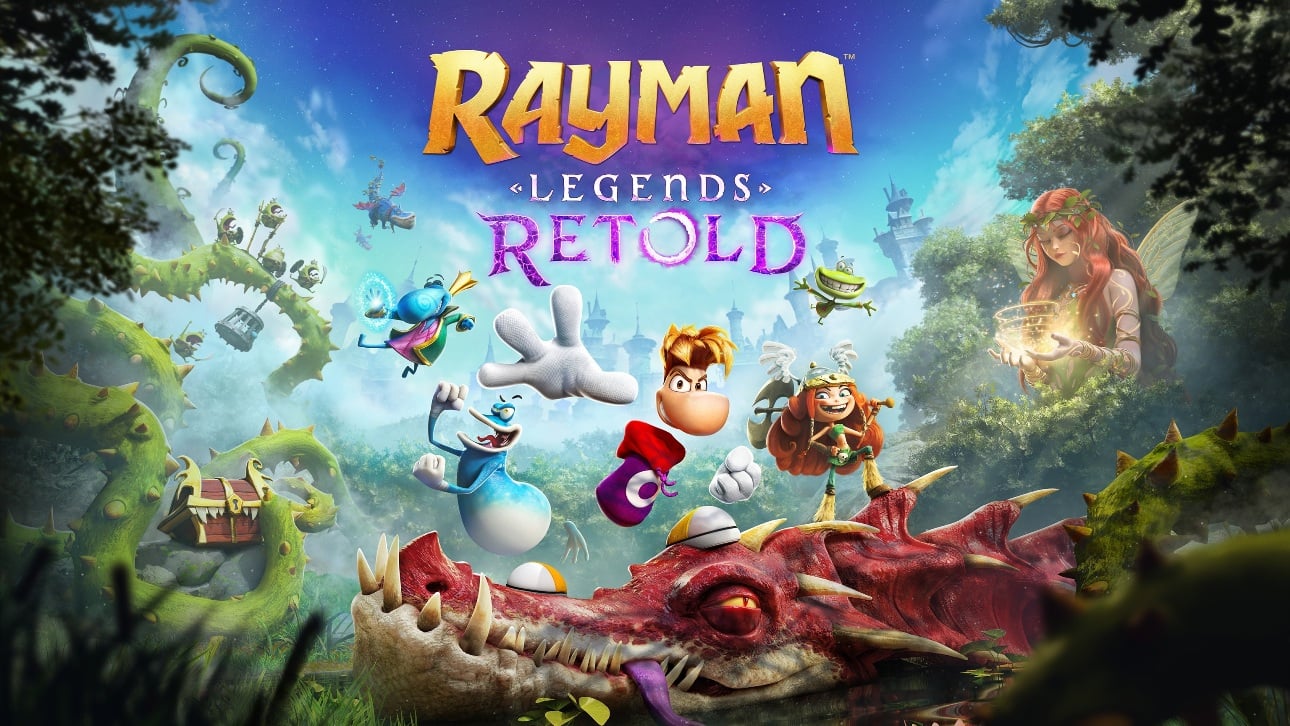
Summary:
Rayman Legends Retold marks one of Ubisoft’s most important platforming returns in years, not because Rayman ever stopped being loved, but because the series has spent a long time standing just outside the spotlight. This remake takes the acclaimed Rayman Legends and rebuilds it with 3D and 2.5D presentation, new story context, fuller world-building, voiced cinematics, dragon rides, fresh musical stages, and an evolved take on Kung Foot. For Nintendo Switch 2 players, Ubisoft is targeting 60 FPS and aims to keep the experience in line with other platforms, which is exactly the kind of news that makes fans perk up like someone just shouted “Teensie trouble” across the room. The project is being handled by Ubisoft Milan and Ubisoft Montpellier, with the team using Snowdrop for the updated visual side while retaining the spirit and feel of the original UbiArt-driven classic. More than a simple visual refresh, Rayman Legends Retold looks like Ubisoft planting a flag for the character’s future. It brings the Glade of Dreams back with more connective tissue, more personality, and a clearer sense of adventure. For longtime fans, it is a return to familiar magic. For newcomers, it may be the first proper handshake with one of platforming’s most charming heroes.
Rayman Legends Retold gives Ubisoft’s limbless hero a serious comeback
Rayman Legends Retold arrives with a sense of timing that feels almost cheeky. Rayman has been away from mainline releases for so long that his return does not just feel like a new launch, it feels like someone found a bright, bouncing treasure chest in the back of Ubisoft’s attic and finally remembered to open it. The original Rayman Legends released in 2013 and built a strong reputation through sharp platforming, expressive animation, clever level design, and those brilliant musical stages that made every jump feel like it belonged inside a living cartoon orchestra. Now Ubisoft is bringing that foundation back for modern platforms, including Nintendo Switch 2, with a major visual and structural overhaul.
The remake is not being treated as a quick polish job. Ubisoft is positioning Rayman Legends Retold as a broader reimagining that preserves what made the original so beloved while giving the Glade of Dreams more depth, more story, and more spectacle. That matters because Rayman is not just another mascot with floating hands and a good punch. He represents a very specific kind of platforming personality: playful, slightly strange, colorful, fast, expressive, and always a little unpredictable. When Rayman works, everything feels like a circus act balanced on a trampoline. One mistake and the rhythm collapses, but when the flow clicks, it is pure joy.
Why Ubisoft chose Rayman Legends as the foundation for Rayman’s future
Ubisoft’s choice to revisit Rayman Legends makes sense once you look at what the original already offered. It had refined platforming, memorable characters, strong co-op energy, and enough variety to keep each world from feeling like a simple reskin of the last. Instead of starting with a completely new entry, Ubisoft appears to be using Legends as a strong launchpad, giving players a familiar but expanded version of Rayman while rebuilding the series’ identity for a new audience. That approach is a little like restoring a beloved theme park ride before opening a whole new wing. You start with what people trust, then show them where things can go next.
The team has also made it clear that world-building is a major reason behind this remake. Rayman Legends had a colorful Glade of Dreams, but its story could feel scattered because players jumped between different areas without much connective tissue. Rayman Legends Retold aims to tie those places together with a more coherent sense of journey. That is an important shift. A platformer can absolutely survive on clever movement alone, but a stronger world gives each leap and chase more flavor. When the player understands where they are, why they are moving forward, and what makes each realm matter, the adventure starts to feel less like a playlist of stages and more like a strange, wonderful road trip.
How 3D and 2.5D reshape the Glade of Dreams without losing the original charm
The move to 3D and 2.5D is the most obvious change, and it is also the one most likely to make longtime fans raise an eyebrow. Rayman Legends was famous for its 2D animation style, where characters could stretch, squash, twist, and explode with personality in a way that felt hand-crafted and delightfully elastic. Translating that into 3D is not as simple as giving Rayman a shiny new model and calling it a day. In 2D, developers can cheat perspective, exaggerate poses, and hide awkward angles. In 3D, the camera sees more, the models need to hold up from different viewpoints, and every funny face has to survive being viewed from more than one side.
That challenge also creates new opportunities. With 3D staging, Ubisoft can bend levels, shift the camera, build stronger cinematic moments, and make the Glade of Dreams feel more like a place players are traveling through instead of a sequence of painted backdrops. This is where the remake’s visual ambition starts to matter. A curved path, a sweeping camera angle, or a close-up during a cutscene can make familiar characters feel more alive. Globox, Barbara, the Teensies, Murfy, and Rayman himself can carry more nuance when the presentation gives them room to breathe. The trick is keeping the snappy, readable platforming intact, because Rayman without crisp movement would be like a drum solo with soggy sticks.
Snowdrop and UbiArt help old-school precision meet modern presentation
Rayman Legends Retold uses Snowdrop for its updated visual presentation while also carrying the legacy of UbiArt Framework, the engine behind the original Rayman Legends. That combination is one of the more interesting technical details because it suggests Ubisoft is not simply throwing away the old feel in favor of modern shine. Instead, the remake appears to be using modern tools to expand the atmosphere, lighting, audio, camera work, and environmental depth while still respecting the platforming structure that made the original so satisfying. In other words, the new version wants bigger scenery without turning Rayman into something unrecognizable.
Snowdrop gives Ubisoft room to add modern visual features such as richer lighting, more dramatic environments, and more layered spaces. That matters in a world as surreal as the Glade of Dreams, where forests, castles, monsters, musical chaos, and fairy-tale nonsense all need to feel lively rather than sterile. Still, Rayman’s heart lives in movement. The best platforming moments are about instant readability: knowing where to jump, when to punch, when to glide, and when to sprint like the floor owes you money. If Rayman Legends Retold can combine modern visual depth with the original’s clean timing, it could hit a sweet spot between nostalgia and reinvention.
Nintendo Switch 2 owners can expect 60 FPS targeting and content parity
For Nintendo Switch 2 players, one of the most important early details is Ubisoft’s 60 FPS target. Platformers benefit enormously from smooth performance because timing is everything. A single missed input can turn a graceful run into a cartoon pancake moment, so a steady frame rate is not just a nice technical bullet point. It directly affects how the game feels in the hands. Ubisoft has not shared every technical detail yet, including final resolution or platform-specific features, but the 60 FPS target is a strong sign that the Switch 2 version is being treated seriously rather than treated as an afterthought.
The other key detail is Ubisoft’s aim for content parity with other platforms. That phrase matters because Nintendo players have seen plenty of ports arrive with missing features, reduced modes, or unclear compromises over the years. Rayman Legends Retold aiming to keep the same core offering across platforms should make Switch 2 owners feel more confident. The platform is especially fitting for Rayman anyway. Fast platforming, local co-op, musical stages, and quick sessions all fit Nintendo’s ecosystem like a glove. Add the portability factor, and suddenly the idea of playing Kung Foot or clearing tricky levels on the go sounds dangerously convenient.
New realms, dragon rides, hubs, and musical stages expand the adventure
Rayman Legends Retold is adding more than a fresh coat of visual paint. Ubisoft has confirmed new material, including a never-before-seen sixth realm, dragon rides, new Cave of Trials challenges, additional story elements, and four new musical stages. That is a meaningful list because Rayman Legends was already known for variety. Adding more to that formula gives the remake a clearer reason to exist, especially for players who already own or remember the original. Nobody wants to pay for the same cake with slightly newer frosting. The new ingredients need to change the flavor, and these additions suggest Ubisoft knows that.
The dragon rides may become one of the remake’s most memorable upgrades because they help connect the world in a more natural way. Instead of moving between areas through menus or simple portals, players can travel through the realms and see more of the Glade of Dreams as an actual place. That gives the remake a stronger sense of adventure. Hubs are also being reworked to make the player feel more present within the world, which should help the pacing between stages. The result could make Rayman Legends Retold feel less like a collection of brilliant levels and more like one wild, connected cartoon expedition.
New musical stages could become the remake’s loudest crowd-pleaser
The original Rayman Legends musical stages were some of the best rhythm-platforming sequences of their generation. They worked because they turned movement into music. Enemies, platforms, jumps, punches, and hazards all synced with the track, creating levels that felt like playable music videos with a mischievous platforming brain. Bringing that idea into a more 3D-staged world sounds tricky, because readability becomes even more important when the pace is high and the screen is packed with movement. If the player cannot instantly understand what is coming, the rhythm breaks, and nobody wants their perfect run ruined by visual confusion wearing a fancy hat.
That is why the new musical stages are so exciting. Ubisoft knows fans love them, and the team has suggested that it pushed some of the new sequences in playful directions. The potential here is huge. With 3D presentation, the camera can swing, the environment can react more dramatically, and the sense of performance can become even bigger. Imagine a stage where the background is not just scenery but a full stage production, with platforms, enemies, and set pieces hitting their marks like actors in a wonderfully chaotic musical. If Ubisoft gets the timing right, these new stages could be the moments everyone talks about first.
Kung Foot Evo turns a fan-favorite extra into something bigger
Kung Foot is returning, and this time it is being expanded as Kung Foot Evo. That is excellent news for anyone who spent far more time than expected turning Rayman’s platforming physics into a competitive ball-kicking frenzy. The original mode worked because it was simple, silly, and immediately understandable. Players jumped, punched, kicked, and scrambled after the ball in matches that could go from controlled strategy to living room shouting in about three seconds. It was not the main reason people bought Rayman Legends, but it became one of those extras that gave the game more personality and replay value.
Kung Foot Evo appears to build on that foundation with new animations, power-ups, changing arenas, improved controls, and customizable rules. That could make it feel closer to a proper party mode rather than a charming side dish. The danger with expanding a simple mode is making it too busy, but Rayman’s slapstick energy gives Ubisoft plenty of room to play. A changing arena can create surprise. Power-ups can tilt a match at just the right time. Better controls can make the chaos feel fair instead of random. If the balance lands, Kung Foot Evo could become the kind of local multiplayer mode that quietly steals the evening.
Michel Ancel’s limited involvement keeps the remake focused on Ubisoft Milan and Montpellier
Michel Ancel, one of Rayman’s original creators, was consulted early in the project but is not part of the creative process for Rayman Legends Retold. That detail is worth noting because fans naturally connect Rayman with Ancel’s name, but this remake is being shaped by Ubisoft Milan and Ubisoft Montpellier. Montpellier carries special weight because Rayman was born there, while Milan brings experience from projects such as Mario + Rabbids, a series that also knows how to mix charm, tactical design, and colorful character work. That combination gives the remake a strong development identity without leaning entirely on the past.
This also helps explain why Rayman Legends Retold feels like both a tribute and a reset. Ubisoft is not simply asking players to remember what Rayman used to be. It is asking them to see what Rayman can become under the current teams guiding him. That is a healthy place for a long-running series to be. Nostalgia can open the door, but it cannot carry the furniture forever. Eventually, the character needs fresh energy, fresh structure, and a reason to matter to new players. Retold seems designed to do exactly that, using a beloved foundation while giving the teams room to define Rayman’s next chapter.
Rayman’s future looks brighter after years of silence
One of the most interesting parts of Rayman Legends Retold is what it suggests beyond October 1, 2026. Ubisoft has described this remake as a starting point for Rayman’s future, and that wording is enough to make longtime fans sit up a little straighter. After years without a new mainline Rayman release, even careful optimism feels exciting. The character has never really disappeared from memory, but there is a difference between being fondly remembered and actively supported. Retold could be the bridge between those two states, giving Ubisoft a way to reintroduce Rayman before deciding where the series goes next.
Of course, a remake alone does not guarantee a wave of new games. Fans know better than to count chickens before the eggs have even learned to platform. Still, Rayman Legends Retold looks like more than a one-off nostalgia play. The added story, expanded world logic, new realm, updated hubs, and stronger presentation all suggest Ubisoft wants to establish a clearer Rayman identity for modern players. If the remake performs well and finds both returning fans and newcomers, it could make a brand-new Rayman adventure feel less like a dream and more like a sensible next step.
Conclusion
Rayman Legends Retold is shaping up to be more than a reminder that Rayman once ruled a very colorful corner of platforming. It is a carefully rebuilt return that keeps the original’s joyful movement while adding 3D presentation, stronger world-building, new story elements, fresh musical stages, dragon rides, expanded hubs, and Kung Foot Evo. For Nintendo Switch 2 owners, the 60 FPS target and planned content parity are especially encouraging, because Rayman thrives when the action feels quick, clean, and responsive. The biggest question is whether the remake can feel fresh enough for players who already know Rayman Legends inside out. If Ubisoft’s new realm, improved structure, and expanded modes deliver, Rayman Legends Retold could become the comeback fans have been waiting for, complete with flying fists, weird smiles, and just enough musical chaos to make the Glade of Dreams feel alive again.
FAQs
- When does Rayman Legends Retold release on Nintendo Switch 2?
- Rayman Legends Retold is scheduled to release on Nintendo Switch 2 on October 1, 2026. Ubisoft has also confirmed the game for PlayStation 5, Xbox Series X|S, PC, GeForce Now, and Blacknut.
- Is Rayman Legends Retold a brand-new Rayman game or a remake?
- Rayman Legends Retold is a remake and reimagining of Rayman Legends, the 2013 platformer. It keeps the foundation of the original while adding 3D and 2.5D presentation, new story material, new stages, and expanded features.
- Will Rayman Legends Retold run at 60 FPS on Nintendo Switch 2?
- Ubisoft has said it is targeting 60 FPS for the Nintendo Switch 2 version. Final resolution details and platform-specific features have not been fully shared yet.
- What new features are being added to Rayman Legends Retold?
- The remake adds 3D visuals, voiced cinematics, a new story, a sixth realm, dragon rides, new Cave of Trials challenges, four new musical stages, expanded soundtrack elements, and the evolved Kung Foot Evo mode.
- Is Kung Foot returning in Rayman Legends Retold?
- Yes, Kung Foot is returning as Kung Foot Evo. Ubisoft is expanding the mode with new animations, power-ups, changing arenas, improved controls, and customizable rules.
Sources
- Rayman Legends Retold Launching October 1, Ubisoft News, June 2, 2026
- Rayman Legends Retold announced for Nintendo Switch 2, Nintendo Everything, June 2, 2026
- Rayman Legends Retold targeting 60 FPS on Nintendo Switch 2, will have content parity with other platforms, Nintendo Everything, June 2, 2026
- Ubisoft explains why it’s remaking Rayman Legends, Nintendo Everything, June 2, 2026
- Rayman Legends Retold – Somehow, Legends Returned, But…Why?, Nintendo Life, June 2, 2026