














Summary:
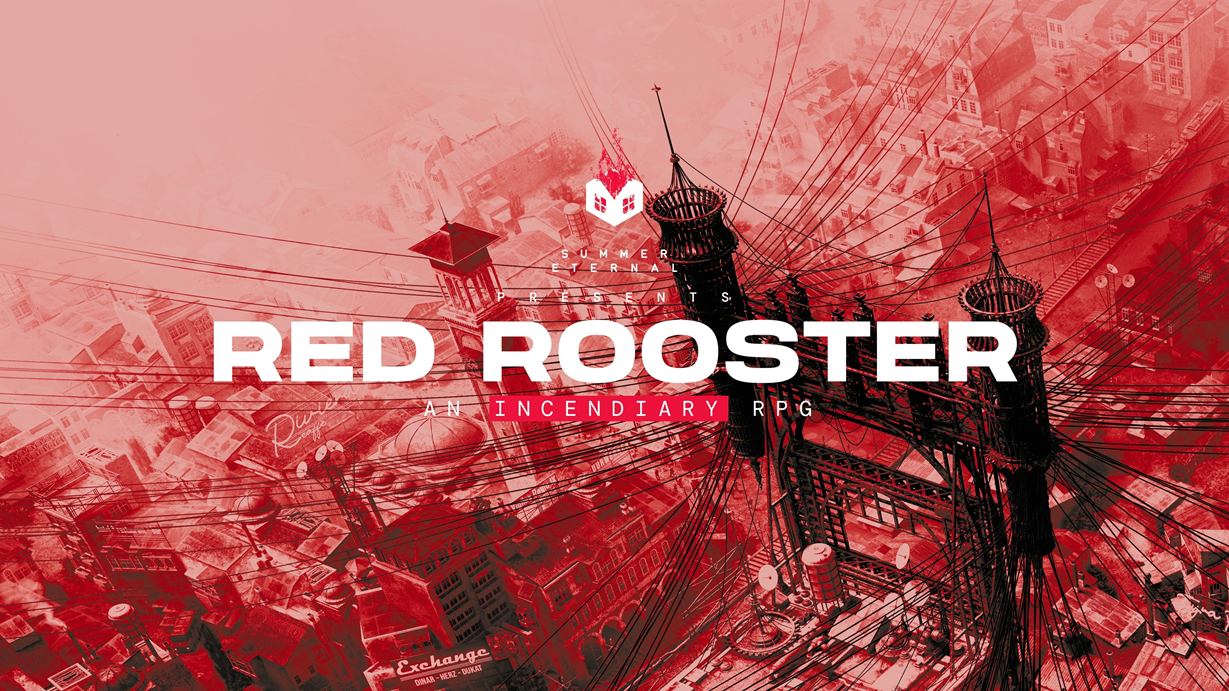
Red Rooster was recently unveiled by the worker co-operative Summer Eternal as an “incendiary, physics-driven RPG” from a team that includes former Disco Elysium developers. The reveal centers on a narrative-driven premise – you play Redrick Roost, a white-collar inmate recruited to investigate a string of suspicious fires that may link back to his brother, the city’s fire-chief – and promises a highly interactive world where objects behave and burn according to realistic physics. Summer Eternal paired the announcement with a 500-page Anthology and indicated the game will launch first on PC with versions for PlayStation 5, Xbox Series, and Nintendo Switch 2 to follow. There is no release date yet, but the project emphasizes player agency, emergent interactions and a move away from isometric constraints toward a fully 3D, reactive city. NintendoReporters will keep an eye on how the Switch 2 version shapes up, since a physics-first RPG raises interesting questions about performance, controls and design on Nintendo’s next-gen hardware.
What Red Rooster is and why it matters
Red Rooster positions itself as a different kind of role-playing experience – one that mixes dense worldbuilding and character-focused storytelling with a physics-first approach to the environment. That means the city and its objects are not just backdrops but tools and obstacles you can meaningfully interact with – from moving and stacking items to setting selective fires that spread realistically. For Nintendo fans this matters because the game aims to bring cinematic, reactive systems into a narrative-heavy RPG framework, which could alter how branching stories and player choices feel on a console like the Nintendo Switch 2. Beyond spectacle, Summer Eternal frames its ambition as advancing role-play by making the world respond to you in consequential ways – choices will likely have physical as well as narrative repercussions. The studio’s emphasis on a living city and psychological mechanics means Red Rooster could appeal to players who enjoy both thoughtful dialogue and emergent sandbox moments, blending the introspection associated with Disco Elysium-style writing with a tactile, physics-driven sandbox.
Story and characters
The narrative setup reads like a noir with a twist – you step into the shoes of Redrick Roost, a convict whose past mistakes and inner fractures make him an unreliable protagonist. Summer Eternal teases a cast that includes an opiate-dependent mathematician and a nunchaku-wielding bus driver, promising unusual party dynamics and voice-driven interactions. The plot thread about serial arson that points back to Redrick’s brother, the fire-chief, gives the story personal stakes and institutional tension at once – expecting politics, family drama and moral ambiguity. Importantly, the game will reportedly include a psychological mechanic called the “chicken coop,” where alternate selves or inner roosters vie for dominance and affect dialogue and abilities. That mechanic suggests party systems, dialogue branches and character progression deeply tied to identity and mental state, so expect choices to shape both who you are on paper and how the world reads you. For players who love nuance, that combination of external investigation and internal conflict promises rich role-play opportunities.
Gameplay and physics-driven systems
At the core of Red Rooster is an engine-driven emphasis on physicality – objects have weight, fragility and interactable properties, and fires spread with simplified but believable rules. That opens up creative problem solving beyond traditional RPG toolkits: blocking doors with furniture, burning evidence, or using heat and smoke to manipulate NPC behavior are possibilities the studio has highlighted. The game will run in real-time 3D, moving away from isometric presentation to a camera and action more akin to modern immersive sims. Expect a mixture of investigative sequences, environmental puzzles and combat scenarios where physics can be used offensively or defensively. The design raises obvious questions about balance and player agency – can you burn your way through objectives, or will the world punish careless destruction? Summer Eternal suggests the sandbox will be consequential rather than purely destructive, with systems intended to react to choices and escalate stakes in unpredictable ways. For players who enjoy emergent gameplay and experimentation, that’s an exciting proposition, but success will depend on careful tuning and clear feedback loops.
Platforms, release and what we know on availability
Summer Eternal confirmed that Red Rooster will launch first on PC, with PlayStation 5, Xbox Series and Nintendo Switch 2 versions planned afterwards. The studio has not given a release date, so timing remains TBA while the project moves through early pre-production. For Nintendo fans, the Switch 2 mention is notable – it places Red Rooster among the early third-party titles expected to target Nintendo’s next-gen hardware. If you want a quick reference on the Switch 2 and what it means for future games, see our Nintendo Switch 2 page for ongoing coverage and context. The announcement also came bundled with a physical Anthology – a 500-page book used as a narrative and worldbuilding pitch – which Summer Eternal shipped to backers and press as part of the reveal strategy. That analog-first reveal makes the project feel intentionally curated, which reinforces the studio’s world-building ambitions but also suggests the development timeline will be paced and deliberate.
Development team and origins
Summer Eternal was formed by a group that includes former writers and creatives from the team behind Disco Elysium, and the studio has framed itself as a worker co-operative with a public-facing Anthology. While the project naturally invites comparisons to Disco Elysium, the developers have explicitly resisted calling Red Rooster a successor or a clone – instead they point to different inspirations and a distinct technical direction that embraces physics and 3D space. The team’s pedigree explains the focus on strong narrative, layered dialogue and unusual characters, and the cooperative structure indicates a studio culture centered on creative control and community involvement. For NintendoReporters readers who follow the post-ZA/UM splinter studios, this project is one of the more narrative-driven experiments to take the Disco alumni heritage into a bold new technical direction. That background also suggests high expectations for writing quality and moral complexity, balanced by questions about funding, scope and production timelines.
Inspirations, engine and technical approach
Red Rooster cites inspirations ranging from Planescape: Torment and Bloodlines to physics-focused games like Dark Messiah and Exanima, while the studio says it is using Unreal Engine to leverage modern physics simulation. This mix indicates a hybrid design: old-school role-playing sensibilities combined with high-fidelity interaction systems. The technical choice of Unreal makes sense for real-time fire simulation, object manipulation and dynamic lighting, but it also places a premium on optimization – especially for console ports. On a platform like Nintendo Switch 2, the challenge will be delivering the same reactive experiences without sacrificing framerate or visual clarity, so platforms and porting strategy will be essential to watch. The studio’s focus on physicality implies more CPU and GPU load than a typical dialogue-heavy RPG, so how the team scales or scopes features per platform will shape the final experience. For fans and observers, the technical notes hint at an ambitious but risky balancing act between systems depth and platform performance.
What Nintendo fans should watch for
If you’re a Nintendo fan, the things to keep an eye on are how Red Rooster translates its physics-first systems to the Switch 2, how its control scheme handles tactile interactions, and whether the narrative tools that made Disco Elysium memorable survive translation into a 3D, physics-heavy space. Will inventory and dialogue remain crisp when the world itself is more manipulable? Can the game provide satisfying feedback when you set fires, push objects or alter the environment mid-scene? Also watch for announcements about performance modes, controller support, and system-dependent features that could affect play on Switch 2. Beyond the technical, keep an eye on the release plan: Steam-first launches with later console ports can leave fans waiting, so official platform windows and demos will matter. Finally, Summer Eternal’s approach to community involvement and the Anthology project suggests ongoing updates via direct channels, which is useful for players who want to follow development closely.
How Red Rooster could fit on Nintendo Switch 2
On paper, the Switch 2 is meant to bridge handheld convenience with console-level horsepower – a combination that could suit a game like Red Rooster if the porting work is handled carefully. The Switch 2 version will need to translate complex physics interactions into responsive input – whether using tactile haptics, gyro aiming or simplified interaction menus – and maintain performance during dynamic fire simulations and large object interactions. Nintendo’s hardware philosophy often favors gameplay that feels good on the go, so developers sometimes introduce scalable systems or alternate control layers to match the platform. If Summer Eternal optimizes rendering, physics fidelity and AI behavior for Switch 2, Red Rooster could become a standout narrative-sandbox on the platform. But until we see technical breakdowns or previews, the most realistic expectation is that the Switch 2 edition will be the result of careful scaling and selective fidelity choices to keep the reactive systems intact while running smoothly on Nintendo’s hardware.
Conclusion
Red Rooster is an ambitious pivot for a team with strong narrative roots – marrying psychological role-play and moral complexity with a physics-first sandbox is an intriguing bet. The announcement makes clear that the studio wants to put physicality at the heart of how stories unfold, offering novel ways to solve problems, shape relationships and reveal truth. For NintendoReporters readers, the Switch 2 mention is the headline takeaway – this is the kind of third-party experiment that could highlight what the platform can do with emergent systems and reactive worlds. There is a lot left unknown, most importantly the release date and how well the ambitious physics features will perform on consoles, but what we have now is a clear signal: Summer Eternal aims to build an RPG that feels alive, hazardous and full of narrative teeth.
FAQs
- When was Red Rooster revealed and who announced it?
- Red Rooster was revealed on October 14, 2026 by the worker co-operative Summer Eternal, who shared details via a physical Anthology and online announcements.
- What platforms is Red Rooster planned for?
- Summer Eternal said the game will launch first on PC, with PlayStation 5, Xbox Series and Nintendo Switch 2 versions planned to follow; no exact release windows were given yet.
- Is Red Rooster related to Disco Elysium?
- The game is developed by a team that includes former Disco Elysium developers, but Summer Eternal has said Red Rooster is not a direct successor and aims to be its own distinct experience.
- What does “physics-driven” mean for gameplay?
- It means objects have weight and properties you can manipulate – items can be moved, thrown or burned, and fire spreads according to material and context, creating emergent problem-solving opportunities.
- Should Nintendo Switch 2 owners be concerned about performance?
- Performance will depend on the porting approach; Summer Eternal uses Unreal Engine and plans a Switch 2 version, so expect optimizations and possible fidelity scaling to keep interactive systems running smoothly.
Sources
- Summer Eternal announces ‘incendiary, physics-driven RPG’ Red Rooster for PS5, Xbox Series, Switch 2, and PC, Gematsu, October 14, 2026
- Disco Elysium splinter studio’s Red Rooster is going to be an ‘incendiary, physics-driven RPG’, PC Gamer, October 15, 2026
- “We are here to give you something to believe in”: the former Disco Elysium devs of Summer Eternal reveal Red Rooster, Rock Paper Shotgun, October 14, 2026