











Summary:
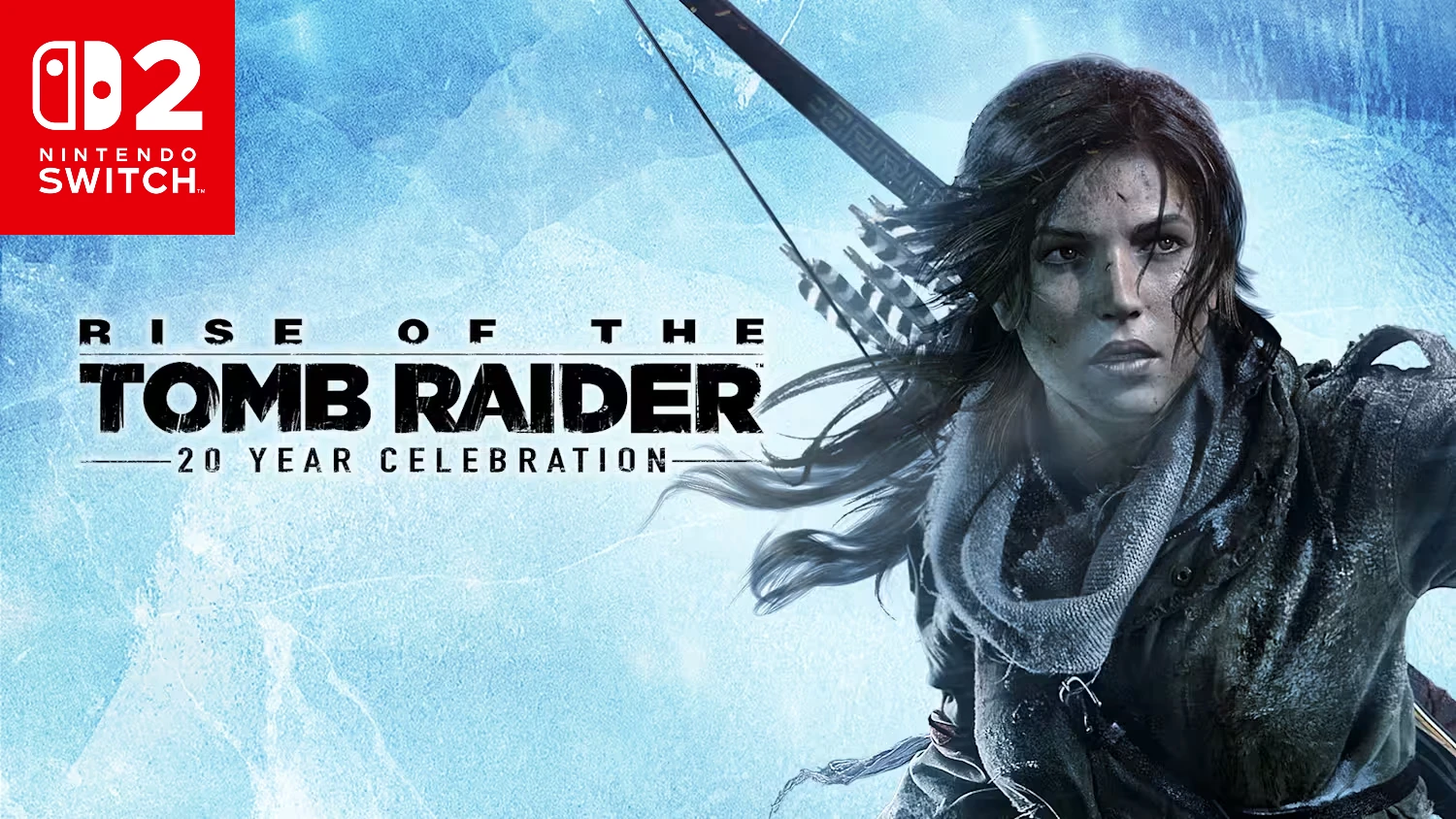
Aspyr has released the first major post-launch update for Rise of the Tomb Raider: 20 Year Celebration on Nintendo Switch 2. Version 1.0.2, also described by the publisher as the Day 30 Patch, addresses a broad collection of technical and gameplay issues reported across the main adventure, Expedition modes and downloadable expansions. The update places particular emphasis on performance, with frame rate improvements targeting the Siberian Wilderness, Geothermal Valley, Baths of Kitezh, Village map and several fast-travel transitions.
The patch also improves cinematic sequences, prevents a multiplayer Endurance crash and reduces lag when players enter Expedition modes. Gameplay corrections resolve problems involving the Holy Fire Card, prematurely displayed weapons and an experience-point exploit in the Soviet Installation. Aspyr has also cleaned up numerous visual oddities, including disappearing textures, invisible objects, floating cabbages, flickering character faces and Trinity soldiers trapped in an A-pose. Lara’s satchel should no longer vanish either, which is useful when you’re crossing Siberia and would rather not lose your luggage to a rendering bug.
Controls and interface behaviour receive meaningful attention as well. The update fixes a right Joy-Con freeze connected to the N-Mouse control scheme, stabilizes camera sensitivity, corrects duplicated subtitles and addresses an auto-centering camera problem. Several tombs, missions and checkpoints have been repaired to prevent blocked progression or inaccurate objectives. Behind the scenes, Aspyr has upgraded gyro and vibration initialization while completing targeted optimization work across Kitezh, Baba Yaga locations and Gulag Rescue maps.
Rise of the Tomb Raider Receives Its First Major Switch 2 Update
Rise of the Tomb Raider: 20 Year Celebration arrived on Nintendo Switch 2 as a full edition of Lara Croft’s Siberian adventure, complete with its major expansions, bonus outfits, additional weapons and Expedition features. Version 1.0.2 is its first substantial post-release update and touches nearly every part of that package. Rather than concentrating on one isolated problem, Aspyr has worked through performance drops, crashes, animation errors, missing assets, interface faults, progression blockers and engine-level systems. It is the sort of patch that reads less like a quick repair and more like someone walking through Croft Manor with a very long maintenance checklist.
The scale of the update matters because Rise of the Tomb Raider combines large exploration areas with scripted sequences, challenge tombs, survival mechanics and separate replay modes. A problem that looks minor in one location can become much more irritating when it interrupts a cutscene, hides a mission marker or blocks a route forward. Version 1.0.2 therefore aims to make the entire experience feel more dependable, whether you are continuing the main story, revisiting an earlier chapter or testing your luck in Endurance mode.
Performance Improvements Target Several Demanding Locations
Performance is one of the central priorities in version 1.0.2. Aspyr has addressed frame rate drops in several large or visually demanding areas, beginning with the Siberian Wilderness. Returning to this region after finishing the main story could previously result in reduced performance, but the new update is intended to keep the area running more consistently. Geothermal Valley also receives multiple fixes, including improvements when re-entering the cabin in the western part of the Village, moving through the Baths of Kitezh and returning from the North Acropolis.
These changes should be especially noticeable to players who spend time exploring beyond the main path. Rise of the Tomb Raider encourages you to revisit regions for collectibles, optional missions, upgrades and tombs, so stable performance after a story transition is just as important as smooth play during the opening visit. Aspyr has also corrected performance drops on the Village map in Expeditions and Remnant Resistance. A separate fix targets frame rate problems after fast travelling from Whirlpool Sanctuary to Riverside Landing, reducing the chance that a convenient shortcut turns into a bumpy landing.
Cinematics and Expeditions Receive Additional Optimization
Scripted scenes can place a different type of strain on a game because they combine camera movements, character animation, visual effects and carefully timed transitions. Version 1.0.2 improves several cinematics that could previously stutter or lose performance. The affected moments include a new gun sequence, the ending of a Siberian Wilderness cutscene and the scene following the “Return to Camp and Build a Fire” objective. The patch also resolves visibility lag during the mud tunnel slide in the Flooded Archives.
Further improvements apply to the cutscene connected to the “Find Your Way Up the Mountains to the Observatory” objective, which could stutter when it began. Two separate performance drops during a scene in The Acropolis have also been corrected. None of these fixes changes the story itself, but they should help important scenes land with the intended dramatic weight. Lara’s adventures already include collapsing ruins, avalanches and ancient traps. The frame rate does not need to join the list of hazards.
Multiplayer Stability and Expedition Loading Are Improved
The update tackles a specific crash in Multiplayer Endurance that could affect a client when the “Ready” button was pressed before the available game cards had finished loading. Version 1.0.2 now prevents that timing problem from bringing the session to an abrupt end. This is a useful correction for players who move quickly through setup screens and reasonably expect the game to keep pace with them.
Aspyr has also addressed lag that could occur when launching any Expedition mode. Expeditions provide alternative ways to replay stages, pursue objectives and modify the experience with cards, making them an important part of the complete edition. Smoother transitions into these modes should reduce friction for players who regularly switch between the campaign and score-focused challenges. Taken together, these fixes improve both the reliability of multiplayer preparation and the responsiveness of the broader Expedition interface.
Gameplay Fixes Address Combat Cards and Progression Exploits
Several gameplay systems receive targeted corrections in the new update. The Holy Fire Card in Expeditions did not always behave as described when Lara performed a stealth elimination. Nearby enemies could escape the expected fire ignition damage, weakening the card’s intended effect. Version 1.0.2 fixes that interaction, allowing a successful stealth attack to produce the proper fiery consequences. It is a small mechanical adjustment, but card effects are central to Expedition strategies, so consistency matters.
Aspyr has also closed an experience-point exploit in the Soviet Installation. The patch notes do not detail the method, but the correction should protect the intended progression balance. Another fix concerns Endurance outfit cards that could cause the Revolver and Pump-Action Shotgun to appear in the Basecamp menu before Lara had officially received them. The weapons were essentially arriving early to a party they had not yet been invited to. Their menu appearances should now match actual progression and unlock status.
Visual Improvements Polish Lara, Characters and Environments
Version 1.0.2 contains a lengthy collection of visual corrections covering objects, clothing, scenery, lighting and character models. Ropes attached to environmental beams in the Baba Yaga expansion should no longer disappear unexpectedly. The Acropolis has lost its mysterious floating cabbages, while a missing asset at the Research Base has been restored. Wall textures in the Soviet Hub should remain visible instead of intermittently vanishing, and Lara’s satchel should stay attached while using crafting and gear systems.
Additional fixes improve a barricade in Geothermal Valley that was only visible from one side and restore a white canister that could disappear in Copper Mill. Water in the lower areas of the Prophet’s Tomb should also render correctly instead of becoming completely invisible. These issues may not prevent progress, but they can break the illusion of a believable environment. Ancient ruins feel considerably less ancient and mysterious when a piece of scenery pops out of existence as soon as you turn around.
Environmental Assets and Lighting Behave More Reliably
A ruined building in the Geothermal Valley Hub could previously flicker between visible and invisible states. The update stabilizes that structure, while a cloth mesh in the Flooded Archives should no longer pass directly through wooden scenery. Aspyr has also corrected a persistent lighting problem in the Siberian Wilderness. Reloading a checkpoint during the “Explore the Forest for Signs of the Lost City” objective could leave a flare permanently illuminating the area, even when it should no longer have been active.
Croft Manor receives a Level of Detail correction for the office pinboard, improving the way the object changes as the viewing distance shifts. Character presentation has been polished as well. Lara’s face should no longer show texture glitches or flickering while she wears the Classic Angel of Darkness outfit, and a low-quality hair rendering artifact has been fixed. Sophia’s shadows should display more consistently, while an unwanted lighting effect on Konstantin’s face has also been removed.
NPC Animation Fixes Remove Several Distracting Glitches
Characters and creatures should behave more naturally after the update. A problem connected to the Kitezh Hub: Ascension sequence in The Lost City has been repaired, although Aspyr’s notes do not provide additional detail about the exact behaviour. Trinity soldiers in the Soviet Installation should no longer become trapped in a repeating A-pose, a rigid animation state that can make even an intimidating enemy look as though it has forgotten how arms work.
The update also fixes a looping animation affecting a tundra wolf. Alongside those character improvements, Aspyr has corrected rendering artifacts visible across exit doors, furniture, clothing and paintings in the Soviet Installation. A broader day-and-night bug has been resolved too. These changes help keep visual distractions from pulling attention away from exploration and combat, especially in locations where atmosphere plays an important role in building tension.
Controls and Interface Fixes Improve the Switch 2 Experience
Several changes focus specifically on controls and on-screen information. The Armor-Piercing Arrows Gear could fail to appear in the inventory display, leaving players without a clear indication that the equipment was available. That listing should now appear correctly. The N-Mouse control scheme receives three separate fixes, including a game freeze associated with the right Joy-Con and inconsistent camera sensitivity or movement speed.
The mouse cursor should also disappear properly during the Blood Ties expansion when using this control setup. Aspyr has corrected the “Auto-Center Camera” toggle, making the option behave more reliably for players who prefer manual camera control. Duplicated subtitles should no longer stack on the screen, and the card-shuffling display used during Cold Darkness loading has been repaired. These are practical improvements rather than dramatic additions, but they influence actions players repeat throughout the adventure. A stable camera and readable interface can make the difference between feeling in control and feeling as though Lara is arguing with the controller.
Tombs and Optional Missions Become More Reliable
Exploration receives some of the update’s most important fixes. A softlock in the Flooded Archives could occur when a player reloaded a save from a particular checkpoint. Because a softlock can prevent progress without necessarily crashing the game, it is especially frustrating. Version 1.0.2 resolves the problem and should allow affected players to continue without becoming trapped by the save state.
Aspyr has also closed an exploit in the Catacomb of Sacred Waters Challenge Tomb, restored missing collision to a damaged wall and corrected an out-of-bounds camera clipping issue. The House of the Afflicted Tomb once again displays the correct proximity prompts and map tracker icons. These interface elements may sound modest, but they help players identify where an interaction is possible and understand whether a location has been properly discovered.
The optional mission “A Hearty Meal” receives a corrected green objective beacon and a mathematical fix for its progress bar. The previous calculation could add an incorrect extra unit, creating a mismatch between the displayed requirement and the player’s real progress. Chapter Replay Elite also benefits from fixes in the Leader’s Tomb. An audio-visual problem has been resolved, and an invisible wall that blocked the route forward has been removed. Invisible barriers belong around the edge of a playable map, not in the middle of Lara’s path.
Engine Changes Strengthen Gyro, Vibration and Optimization
Some of the most technically significant changes operate behind the scenes. Aspyr has added a per-level toggle that lets the development team quickly enable or disable custom shadow parameter overrides. This sounds more like a tool for developers than a player-facing feature, but greater control over level-specific shadows can make future troubleshooting and visual adjustments easier to manage.
The gyroscope system parameters have been upgraded, while the underlying initialization structure for device vibration modules has been improved. The patch notes stop short of promising entirely new control features, so these changes are best understood as technical improvements to the systems already supporting motion input and controller feedback. They may also provide a stronger foundation for subsequent refinements.
Aspyr has completed targeted optimization passes across Kitezh Hub, the Baba Yaga expansion maps and Gulag Rescue locations. This work focuses on frame rates, memory leaks and visual asset cleanup. Optimization at this level is not always obvious in a single screenshot, but it can influence how steadily a location performs during longer sessions. Memory management is particularly important in an adventure that regularly moves between open areas, interiors, scripted action and detailed environmental effects.
What Version 1.0.2 Means for Nintendo Switch 2 Players
Rise of the Tomb Raider version 1.0.2 does not introduce a new story chapter or headline feature, but it improves the foundations supporting the entire game. Players can expect fewer frame rate drops in several major locations, smoother cinematics, more reliable Expedition modes and a lower risk of crashes or progression blockers. Visual repairs also make characters, scenery and equipment behave more consistently.
The update is particularly valuable for players who explore every optional area or return to regions after completing the story. Many of the corrected problems involved revisiting locations, reloading checkpoints, entering tombs or using alternate modes. Those are precisely the activities that extend the adventure beyond a straightforward campaign run. With its combination of performance work, control fixes and environmental polish, version 1.0.2 makes the Nintendo Switch 2 edition a more stable way to follow Lara’s search for Kitezh.
Conclusion
Aspyr’s first major update for Rise of the Tomb Raider on Nintendo Switch 2 addresses an unusually wide range of issues. Version 1.0.2 improves frame rates in key locations, removes cinematic stutters, fixes an Endurance crash and repairs several gameplay interactions. It also clears away dozens of visual distractions, from invisible water and disappearing textures to floating vegetables and looping character poses.
The most meaningful changes may be the ones that protect progress. Fixes for the Flooded Archives softlock, missing collision, misleading mission progress and an invisible wall reduce the possibility of exploration ending in frustration. Combined with improved Joy-Con behaviour, camera controls, gyro initialization and level optimization, the patch gives Lara’s Siberian expedition a sturdier technical base. Players beginning the journey or returning to collect every relic should find a smoother and more dependable adventure waiting for them.
FAQs
- What is included in the Rise of the Tomb Raider version 1.0.2 update?
- The update includes performance improvements, crash prevention, visual corrections, gameplay fixes, interface repairs, control updates, mission adjustments and engine-level optimization.
- Does the update improve performance on Nintendo Switch 2?
- Yes. Aspyr has addressed frame rate drops in the Siberian Wilderness, Geothermal Valley, Baths of Kitezh, Village map, several cinematics and selected fast-travel transitions.
- Does version 1.0.2 fix any progression-blocking problems?
- Yes. The update resolves a Flooded Archives softlock, restores missing collision, removes an invisible wall in the Leader’s Tomb and repairs several tomb and mission indicators.
- Were the Nintendo Switch 2 controls improved?
- Yes. The patch fixes a right Joy-Con freeze, inconsistent camera sensitivity, an auto-centering camera issue and a cursor problem in the Blood Ties expansion.
- Does the update add new Rise of the Tomb Raider DLC?
- No new DLC is listed. Version 1.0.2 focuses on improving the campaign, existing expansions, Expedition modes, controls, visuals, stability and performance.
Sources
- Rise of the Tomb Raider – Day 30 Patch Notes, Aspyr Support, July 16, 2026
- Rise of the Tomb Raider 1.0.2 Update Out Now, Patch Notes – Improved Performance and Much More, Nintendo Everything, July 17, 2026
- Rise of the Tomb Raider: 20 Year Celebration, Nintendo, June 9, 2026