














Summary:
Screamer could be preparing to bring its neon-soaked racing tournament to Nintendo Switch 2. Milestone has not announced a version for Nintendo’s console, but the game has appeared in a classification connected to Nintendo Switch 2 through Germany’s Unterhaltungssoftware Selbstkontrolle, better known as the USK. Ratings do not guarantee that a game will be released, yet they often emerge when a publisher is taking practical steps toward launching a product in a particular market.
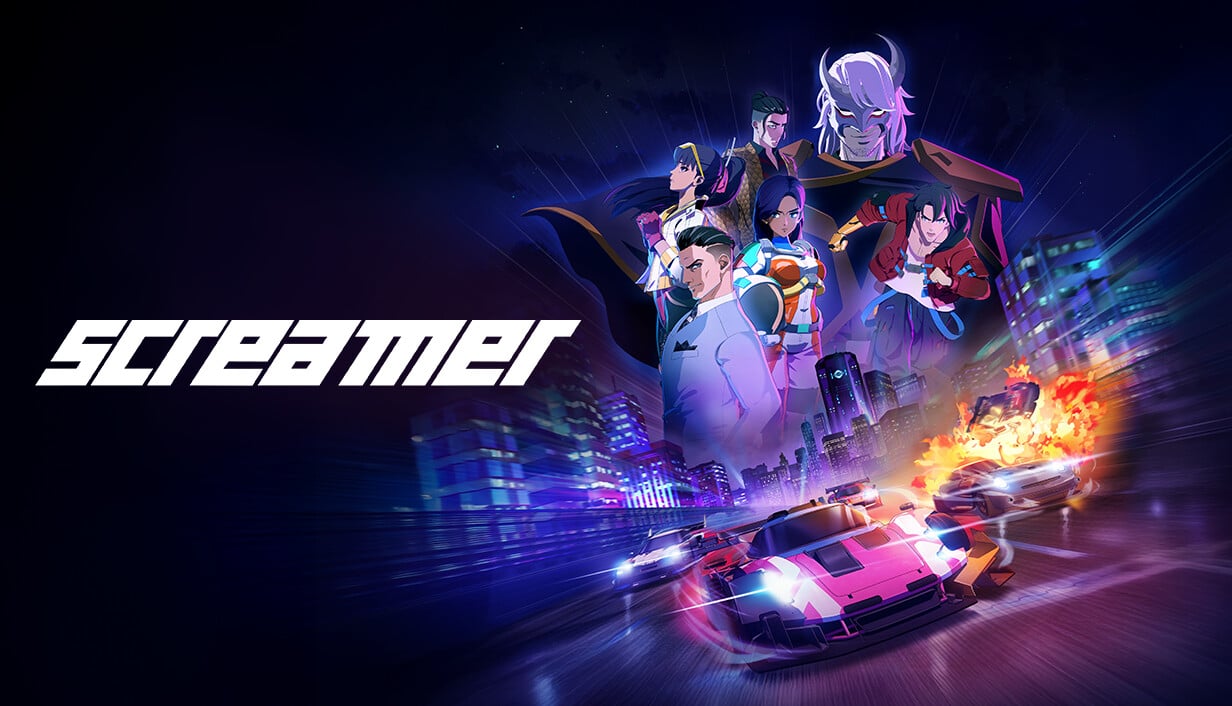
Milestone originally released Screamer for PlayStation 5, Xbox Series X|S, and PC on March 26, 2026. The arcade racer combines high-speed driving with direct vehicle combat, character-specific abilities, and a dramatic tournament storyline influenced by anime from the 1990s. Instead of asking players to focus solely on clean corners and perfect racing lines, Screamer introduces the ECHO system. This technology powers Boost, Shield, Strike, and Overdrive abilities, turning every contest into a fast-moving struggle for position and survival.
A Nintendo Switch 2 edition would give the console another distinctive racing experience while expanding Milestone’s support for the hardware. The developer is also bringing Hot Wheels Infinite Rush to Nintendo Switch 2, demonstrating that it is already working with the platform. Until Milestone or its publishing partners provide confirmation, however, Screamer’s Nintendo appearance should be treated as a strong possibility rather than a confirmed release.
Screamer receives a Nintendo Switch 2 rating in Germany
Screamer has surfaced in connection with Nintendo Switch 2 through Germany’s USK ratings system, creating fresh expectations that Milestone’s arcade racing game could be heading to the console. The listing is notable because Screamer is currently promoted for PlayStation 5, Xbox Series X|S, Steam, and the Epic Games Store. Nintendo hardware is not included among the platforms displayed on Milestone’s official Screamer page, meaning the classification points toward a version that has not yet been publicly introduced. Ratings boards examine games before they can be marketed or sold with an age classification in their territories, so a listing usually reflects real preparation behind the scenes. Even so, it is important to keep both hands on the steering wheel here. Milestone has not issued a press release, published a Nintendo Switch 2 trailer, opened an eShop page, or shared a release date for the possible edition.

Why the USK classification matters without confirming a release
A ratings-board appearance can be one of the clearest early signs of an unannounced port, but it should never be mistaken for an official reveal. Publishers may submit software for classification before final marketing plans are ready, allowing regional requirements to be completed while development, testing, and scheduling continue. In some cases, a rating appears only days before an announcement. In others, plans change and the classified version remains unreleased. That uncertainty applies to Screamer as well. The USK listing supports the idea that a Nintendo edition exists or has been considered seriously enough to enter the classification process, but it does not tell us when it might arrive, how it will perform, or whether it will include all existing updates. For now, the most accurate description is simple: a Nintendo Switch 2 version looks increasingly plausible, but it has not been confirmed by Milestone or Nintendo.
Milestone has already released Screamer on other platforms
Screamer launched on March 26, 2026 for PlayStation 5, Xbox Series X|S, and PC, reviving a racing name with roots stretching back to 1995. Milestone developed the original game while the Italian studio was still known as Graffiti, making the modern release a return to one of its earliest creations. Rather than recreating the old experience with shinier cars and little else, the studio transformed Screamer into a narrative-led combat racer set inside an anime-inspired dystopian world. The result blends traditional arcade speed with fighting-game ideas, carefully timed abilities, rival takedowns, and a large cast whose personal conflicts unfold around the tournament. Milestone has continued supporting the game since launch through patches, accessibility improvements, and additional online functionality. That continuing support could make a later Nintendo Switch 2 edition more polished than the original launch build, provided the rumored port ultimately reaches the starting grid.
A character-driven tournament gives every racer a motive
The Screamer tournament is not presented as a friendly weekend competition where everyone shakes hands and heads home with a participation trophy. Every driver has a personal reason to risk everything, with longing, ambition, vengeance, and survival pulling the cast toward the same dangerous event. A mysterious figure controls the competition from the shadows, using the tournament as the focal point where soldiers, scientists, criminals, celebrities, and powerful business figures collide. This structure gives the races more emotional weight than a standard sequence of championships. You are not simply selecting the vehicle with the most appealing statistics. You are choosing a driver whose personality, history, visual identity, and special ability influence the experience. Each car reflects the person behind the wheel through its shape, decoration, handling, and combat advantages, making vehicles feel like extensions of their owners rather than interchangeable machines parked in a menu.
Five teams bring conflicting ambitions onto the track
Screamer organizes its competitors into five teams, each carrying a different motivation into the tournament. Their interests do not align neatly, and that tension helps transform the competition into something closer to an ensemble anime drama played out at several hundred kilometres per hour. Alliances can matter during team-based events, yet every participant remains tied to personal goals that may conflict with the needs of those around them. That creates a fitting backdrop for a game where cooperation and destruction can occupy the same few seconds. A teammate might help secure points by reaching the finish line, while another focuses on removing rivals through direct attacks. The team structure also gives players several identities and driving approaches to explore instead of relying on one central hero. Like choosing a fighter in a competitive brawler, selecting a Screamer involves balancing personality, mechanical strengths, preferred tactics, and the wonderfully scientific question of which vehicle looks coolest under neon lighting.
The 1990s anime influence shapes Screamer’s futuristic world
Screamer wears its anime inspiration proudly. Its world combines towering city structures, scorched deserts, wooded routes, glowing technology, and dramatic character designs with the visual energy associated with animated science-fiction productions from the 1990s. Bright colours cut through dark environments, cars leave sharp trails of light behind them, and combat effects erupt across the road like attacks in a mechanical duel. The presentation is not merely decorative. It supports the heightened tone of a tournament where drivers carry personal grudges and vehicles can destroy one another at full speed. Animated storytelling and character-focused scenes help establish the people behind each machine before the competition throws them into another dangerous event. On Nintendo Switch 2, that distinctive identity could help Screamer stand apart from realistic motorsport simulations and cheerful kart racers. It occupies a stranger, louder middle ground where drifting, drama, and vehicular aggression share the same lane.
ECHO technology turns ordinary races into vehicle battles
The fictional ECHO system is the mechanical heart of Screamer. Installed within every tournament vehicle, ECHO transforms movement and precise driving into resources that can be spent on speed, protection, and attacks. Players generate Sync while racing, then use that energy to activate Boost or Shield. Spending Sync produces Entropy, which fuels offensive abilities such as Strike and the far more dangerous Overdrive. This creates a repeating rhythm in which good driving prepares combat options, combat creates new tactical opportunities, and every decision affects what you can do several seconds later. Holding resources can leave you vulnerable in the present, while spending everything too early may leave you powerless when an opponent attacks. The system makes a race feel like a moving duel rather than a simple sprint from one line to another. You still need to learn the tracks, but survival also depends on reading rivals and choosing the right moment to act.
Boost, Shield, Strike, and Overdrive reward tactical driving
Boost offers a direct burst of acceleration, while careful timing can produce a stronger Perfect Boost that lasts longer and helps open a gap. Shield provides brief invulnerability, making it useful when an opponent prepares to attack or when the road ahead becomes especially dangerous. Strike spends Entropy on a short offensive burst capable of knocking out a rival, giving aggressive players a way to clear traffic without waiting politely for an overtaking lane. Overdrive sits at the top of this system as the most powerful and hazardous option. Filling the Entropy bar allows a driver to trigger enormous speed, temporary protection, and the ability to eliminate opponents through contact. Once that protection ends, however, a collision can become disastrous. Overdrive is therefore less like pressing a traditional turbo button and more like lighting a rocket beneath the car while hoping the next corner does not have plans of its own.
Multiple modes test more than raw racing speed
Screamer includes several modes built around different uses of its racing and combat systems. Standard races still reward reaching the finish line ahead of the competition, but other events alter the priorities. Team Races calculate success through both finishing positions and rival takedowns, encouraging teammates to divide their attention between speed and aggression. Checkpoint events, Time Attack challenges, Score Challenges, and Overdrive-focused competitions place additional pressure on particular skills. A player who can follow the fastest route may struggle when asked to maintain an unstable powered-up state, while a talented attacker may need to improve their cornering before climbing a leaderboard. This variety prevents the ECHO mechanics from becoming an optional trick used only when another driver happens to be nearby. Each mode pushes players toward a different balance of control, timing, defence, and calculated chaos, allowing Screamer’s central systems to remain useful across its wider selection of events.
Online and split-screen play broaden the competition
Multiplayer is an important part of Screamer’s appeal. The game supports online competition as well as local split-screen play for up to four participants on its existing platforms. That local option could be particularly welcome on Nintendo Switch 2, where shared multiplayer remains a major part of the console’s identity. Combat racing tends to become even more entertaining when every reckless attack, mistimed Shield, and unfortunate wall collision produces an immediate reaction from someone sitting nearby. Online play offers a different kind of pressure, especially when experienced drivers understand how to manage Sync and Entropy efficiently. Human opponents are less predictable than computer-controlled racers and may save attacks for decisive moments instead of using them as soon as they become available. Milestone has also expanded the existing online experience through updates, including support for ranked team races, showing that competitive play remains part of the studio’s continuing plans for Screamer.
What a Nintendo Switch 2 edition could offer
A Nintendo Switch 2 release could give Screamer access to a new audience while adding another visually distinctive racer to the system’s library. The hybrid format would also suit shorter tournament events and individual challenges, letting players complete races away from a television before returning to a larger display for local multiplayer. However, no technical details have been shared for the possible version. Resolution targets, frame rates, loading times, graphical settings, storage requirements, GameChat support, and potential mouse controls all remain unknown. It is equally unclear whether Milestone would release the game digitally, physically, or through both formats. Existing updates could potentially be included from the beginning, but that has not been promised. Any discussion of Nintendo Switch 2 features therefore remains speculative until an official announcement provides firm specifications. The rating gives us a useful signal, not a fully assembled vehicle with a confirmed list of parts.
Milestone’s support for Nintendo Switch 2 makes the rating believable
The possibility of Screamer reaching Nintendo Switch 2 is strengthened by Milestone’s existing work on the platform. The studio has confirmed Hot Wheels Infinite Rush for Nintendo Switch 2, with that game scheduled to launch on September 10, 2026. Developing another modern racing project for the system means Milestone already has practical experience with Nintendo’s hardware, certification process, and performance requirements. That does not automatically confirm Screamer, since every project presents different technical demands. Screamer uses complex environments, high-speed effects, vehicle combat, animated sequences, and online multiplayer, all of which would need to run reliably on the console. Still, the developer’s active Nintendo support makes the USK classification easier to understand. This would not be a studio unexpectedly approaching the platform for the first time. It would be an established racing developer potentially expanding the availability of a game that has already received several months of updates elsewhere.
An official announcement remains the missing piece
Despite the encouraging evidence, Screamer should not yet be placed on anyone’s confirmed Nintendo Switch 2 release calendar. Milestone’s official website continues to list PlayStation 5, Xbox Series X|S, Steam, and the Epic Games Store as the available platforms. Nintendo has not added the game to its published schedule, and no Nintendo Switch 2 trailer or eShop listing has appeared. The next meaningful step would be a formal announcement from Milestone, publisher PLAION, or Nintendo. Such a reveal should clarify whether the rating represents a finished port, an edition still in development, or a release planned for a later window. It could also explain whether existing owners on other systems receive any related updates and whether online play supports cross-platform competition. Until that happens, the USK classification remains the strongest public clue. It is a bright green light in the distance, but the starting signal has not sounded.
Conclusion
Screamer appears increasingly likely to race onto Nintendo Switch 2 after receiving a classification connected to the platform through Germany’s USK. The discovery is meaningful because the game is currently available only for PlayStation 5, Xbox Series X|S, and PC, while Milestone has not publicly announced a Nintendo edition. Its combination of anime-inspired storytelling, futuristic environments, tactical vehicle combat, and varied multiplayer modes could make it a distinctive addition to the Nintendo Switch 2 racing selection. The ECHO system also gives each contest a strategic edge, asking players to balance Boost, Shield, Strike, and Overdrive rather than relying entirely on raw speed. For now, patience is required. A rating can reveal preparations, but only Milestone or Nintendo can confirm the platform, release date, technical features, and launch format. Screamer may be approaching the Nintendo starting grid, although it has not officially joined the race.
FAQs
- Has Screamer been announced for Nintendo Switch 2?
- No. Milestone and Nintendo have not officially announced a Nintendo Switch 2 edition. A German USK classification has indicated that a Nintendo version may be planned.
- When was Screamer originally released?
- Screamer launched on March 26, 2026 for PlayStation 5, Xbox Series X|S, Steam, and the Epic Games Store.
- What kind of racing game is Screamer?
- Screamer is an anime-inspired arcade racing game that combines high-speed driving with vehicle combat, character abilities, team competition, and a narrative-driven tournament.
- What is the ECHO system in Screamer?
- ECHO is the technology powering Screamer’s racing and combat mechanics. Players generate and spend resources to use Boost, Shield, Strike, and Overdrive abilities.
- Does Screamer support multiplayer?
- Yes. Existing versions support online competition and local split-screen play for up to four players, although the features of a possible Nintendo Switch 2 edition have not been confirmed.
Sources
- Anime-inspired arcade racing game Screamer could be bound for Nintendo Switch 2, Nintendo Everything, July 31, 2026
- The Anime-Inspired Racer ‘Screamer’ Has Been Rated For Switch 2, Nintendo Life, August 1, 2026
- Screamer, Milestone, March 26, 2026
- Screamer – Gameplay Mechanics, Milestone, November 3, 2025
- Hot Wheels Infinite Rush – Explore a New Hot Wheels World, Milestone, June 5, 2026