














Summary:
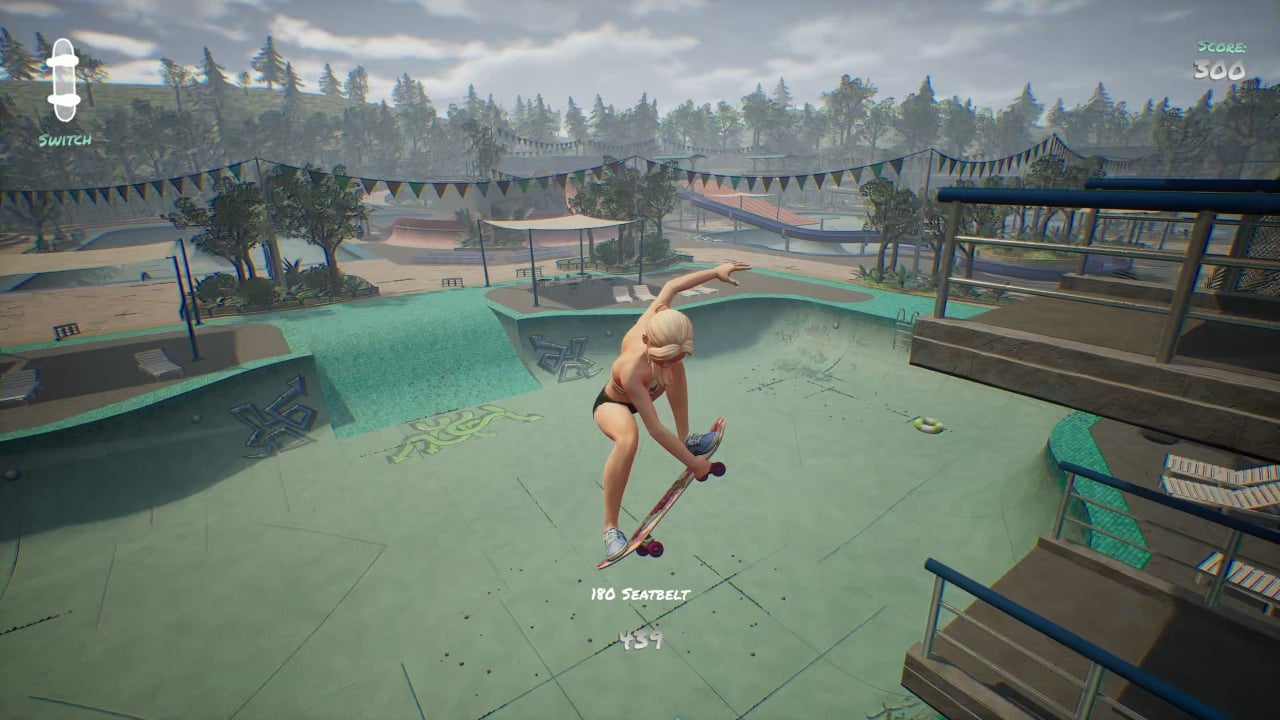
Skatesterre has officially rolled onto Nintendo Switch 2, and its launch trailer offers another look at the fast-moving arcade skateboarding experience from developer Goon Squad and publisher Headup. Released on August 13, 2026, the game puts players in control of Dutch skateboarder Sterre Meijer, also known as Surfsterre, across sizeable environments filled with rails, ramps, gaps, hidden routes and opportunities to build increasingly ambitious trick combinations.
Rather than chasing a strict skateboarding simulation, Skatesterre embraces the energetic arcade approach associated with classic skateboarding games. Players can combine kickflips, grabs, manuals, grinds and other moves while searching for creative lines and pushing toward bigger score multipliers. Missions provide additional objectives throughout the levels, while successful progression opens up new fashion items and outfits that can be used to customize Sterre’s appearance.
The game’s presentation leans heavily into skate culture as well. An energetic soundtrack filled with underground skate punk and skate rock accompanies the action, reinforcing the late-1990s and early-2000s influence behind the experience. With tight movement, score chasing, secrets to uncover and environments built around experimentation, Skatesterre is aimed squarely at players who miss the quick, replayable rhythm of traditional arcade skateboarding games. The title is available now for Nintendo Switch 2 through the Nintendo eShop.
Skatesterre Launch Trailer Marks Its Nintendo Switch 2 Release
Skatesterre is now available on Nintendo Switch 2, giving players another way to scratch that arcade skateboarding itch. Developed by Goon Squad and published by Headup, the game launched on August 13, 2026, alongside versions for PC, PlayStation 5 and Xbox Series X|S. Its arrival is accompanied by a launch trailer that puts the emphasis exactly where you would expect: fast movement, tricks, rails, ramps and the constant temptation to squeeze one more maneuver into a combo before everything comes crashing down. Anyone who spent countless hours replaying levels in classic skateboarding games should immediately recognize what Skatesterre is trying to capture. This isn’t presented as a slow simulation concerned with measuring every movement against reality. The focus is speed, rhythm, creativity and that familiar feeling of spotting a line through an environment and wondering whether you can actually pull it off.

Sterre Meijer Takes Center Stage as Surfsterre
Rather than introducing a fictional skater, Skatesterre places Dutch skateboarder Sterre Meijer at the heart of the experience. Better known as Surfsterre, Meijer isn’t simply a name attached to the game for marketing purposes. Headup has explained that the game was created in collaboration with her, with her skateboarding experience helping shape its identity and sense of authenticity. That gives Skatesterre a noticeably personal foundation. Players take control of Surfsterre while skating through streets, parks and urban environments packed with potential routes. Her presence also fits neatly with the game’s balance between classic arcade inspiration and a younger generation of skate culture. It’s an interesting combination. Skatesterre clearly looks backward for some of its mechanical inspiration, yet putting a contemporary Dutch skateboarder in the starring role prevents it from feeling like a game interested only in nostalgia.
Arcade Skateboarding Returns With Speed and Big Combos
The core of Skatesterre is built around the wonderfully simple question that has powered arcade skating games for decades: how much can you squeeze into a single run? Players can perform kickflips, grabs, manuals, grinds and numerous other tricks, then combine them to build larger combos and increasingly valuable score multipliers. The controls are designed to be approachable while still leaving room for players to improve, which is crucial for this type of game. Landing a basic trick should feel satisfying immediately, but mastering the systems should take considerably longer. That’s where the real appeal begins. A rail that initially looks like scenery can become part of a combo route. A gap that seemed awkward on your first attempt might suddenly connect two sections perfectly. Before long, you’re no longer simply skating through a level. You’re mentally drawing invisible lines across it, turning architecture into your own improvised playground.
Levels Reward Creative Lines and Constant Experimentation
Skatesterre’s environments are designed around more than reaching the other side of a map. Rails, ramps, gaps and hidden routes are scattered throughout the stages, encouraging players to approach familiar areas from different angles and discover new possibilities. That sense of experimentation is an important part of arcade skateboarding. The first time through an environment, you might simply follow whatever route seems obvious. Several attempts later, you’re likely to notice a rail connecting to a ramp, a gap hiding behind a corner or another route that could keep your combo alive for several precious seconds longer. The environment effectively becomes part skate park and part puzzle. Instead of asking where you should go, Skatesterre asks what you can do with the space around you. That distinction matters because it gives repeat visits a purpose beyond merely improving a score. Learning the layout is itself a form of progression.
Missions Give Every Skate Session Another Goal
High scores may be one of the biggest attractions, but Skatesterre doesn’t expect players to spend every minute staring at a leaderboard number. Mission-based objectives are spread across multiple levels, providing additional challenges and reasons to investigate different corners of each environment. These objectives complement the game’s score-driven structure because they can encourage players to break away from familiar routes and try something different. Perhaps you’ve developed one reliable path that produces strong combos. A mission can disrupt that comfortable routine and send you somewhere else, forcing you to learn another part of the map. That’s exactly the sort of gentle push that keeps arcade games interesting over repeated sessions. Some players will naturally obsess over perfect runs, while others may prefer ticking off objectives and unlocking rewards. Skatesterre leaves room for both approaches instead of insisting that every player chase the same goal.
Unlockable Fashion Lets Players Shape Surfsterre’s Style
Completing mission objectives also feeds into Skatesterre’s customization system. Players can unlock fashion items and outfits for Sterre as they progress, gradually building a different look for Surfsterre. It’s a relatively straightforward reward system, but it fits the subject matter particularly well. Skateboarding has always been tied closely to personal style, from the tricks someone favors to the clothes and gear they wear. Giving players fashion pieces to unlock therefore feels more natural than simply handing out arbitrary collectibles. It also creates another small incentive to keep tackling missions and exploring each level. High scores provide bragging rights, while new outfits provide something more immediately visible. Put both together and there is a satisfying rhythm of mechanical and cosmetic progression without distracting from the most important part of the experience: getting back on the board and trying that ridiculous combo one more time.
Underground Skate Punk Fuels Every Run
A fast arcade skateboarding game needs the right soundtrack, and Skatesterre leans into underground skate punk and skate rock to keep its levels moving. The musical direction deliberately channels the energy associated with skate culture and skateboarding games from the late 1990s and early 2000s. Anyone familiar with that period will know how important music can be to the overall experience. A strong track doesn’t merely sit quietly behind the action. It changes the rhythm of a run, makes failed attempts easier to shrug off and can turn a successful sequence of tricks into something that feels far more dramatic than the score counter alone would suggest. Skatesterre appears to understand that relationship. Its soundtrack isn’t presented as background decoration but as another ingredient in the game’s personality, reinforcing the rebellious, high-energy atmosphere while players hunt for lines and throw themselves toward increasingly dangerous-looking combinations.
Skatesterre Looks Back to Skateboarding Gaming’s Golden Years
Skatesterre makes no secret of where its inspiration comes from. Headup describes the game as being influenced by the golden era of skateboarding games, particularly the arcade-focused titles that defined the genre around the turn of the millennium. That philosophy is visible throughout the design. Runs are fast, controls are intended to feel responsive, trick combinations are central to scoring, and levels are built to be replayed rather than simply completed once and forgotten. It is a style of skateboarding game that became less common as parts of the genre moved toward more realistic simulations. Skatesterre heads in the opposite direction. It wants players to see a ridiculous sequence of rails, ramps and gaps and immediately wonder whether they can somehow link all of them together. Reality can take five minutes off. There’s a multiplier waiting.
That old-school philosophy also makes sense for a portable system such as Nintendo Switch 2. Arcade skating naturally lends itself to short sessions because a single run can be satisfying even when you don’t have much time. At the same time, mastering a stage can easily become an evening-long obsession once you start shaving mistakes from your route. One missed grind becomes another attempt. Another attempt becomes ten. Suddenly that route you thought was impossible begins to look manageable, and then you’re right back at the starting point trying to make it cleaner. It’s an addictive structure when executed well because improvement is easy to feel. The level hasn’t changed. Your understanding of it has.
There’s also plenty of personality wrapped around that mechanical foundation. Playing as Surfsterre gives the experience a recognizable central figure, while customizable clothing lets players gradually adjust her appearance. The soundtrack draws from underground skate punk and skate rock rather than settling for something safer or more generic. Even the environments are designed to invite mischief, hiding routes and possibilities that aren’t necessarily obvious during the first run. These elements work together to establish a game that isn’t simply copying the outward appearance of older skateboarding titles. Instead, Skatesterre appears interested in recreating the rhythm that made them difficult to put down.
For Nintendo Switch 2 owners, the result is a distinctly arcade-driven alternative within the sports genre. Skatesterre supports single-player play and occupies around 1.3 GB according to Nintendo’s European listing, making it a relatively modest download. The Nintendo listing describes the game across action, sports and arcade categories, which neatly reflects how difficult it is to squeeze this particular style into a single box. Yes, it’s skateboarding, but the appeal is less about faithfully reproducing the sport than turning it into a playground of tricks, scores and experimentation.
The launch trailer serves as a fitting introduction to that approach. Rather than overcomplicating the pitch, it showcases the speed, environments and trick-focused gameplay that define Skatesterre. That’s probably the best way to sell a game like this anyway. Arcade skateboarding is something that makes considerably more sense once you see a skater flying toward a rail, grinding around a corner and launching directly into another trick. Numbers and feature lists can explain the mechanics, but movement sells the fantasy.
Whether Skatesterre ultimately becomes a new favorite will depend on how satisfying those repeated runs feel once players begin digging into its trick system. The ingredients are certainly familiar: large environments, hidden routes, missions, unlockables, high-score chasing and enough ramps and rails to make every health-and-safety inspector nervous. More importantly, those ingredients have been assembled around a clear philosophy. Skatesterre wants to bring back the immediacy and energy of arcade skateboarding without pretending that the past simply needs to be recreated exactly as it was.
With Sterre Meijer taking the starring role, Goon Squad developing the experience and Headup handling publishing duties, Skatesterre now has the opportunity to find an audience among both longtime skating-game fans and players discovering this style for the first time. The board is ready, the punk music is playing and the levels are packed with tempting lines. All that’s left is deciding whether that enormous combo is worth the risk. Of course it is.
Conclusion
Skatesterre is available now on Nintendo Switch 2 following its August 13, 2026 release, bringing a deliberately old-school style of arcade skateboarding to Nintendo’s latest system. With Surfsterre in the starring role, players can explore sizeable urban environments, complete missions, discover hidden routes, unlock fashion items and chase increasingly ambitious scores through a flexible combo system. Its underground skate punk soundtrack and emphasis on quick, replayable runs reinforce the game’s late-1990s and early-2000s influences without reducing the experience to nostalgia alone. For players who miss skating games built around experimentation, outrageous lines and that irresistible urge to restart after one tiny mistake, Skatesterre has rolled onto the Nintendo eShop ready to make a case for the arcade side of the genre.
FAQs
- When was Skatesterre released for Nintendo Switch 2?
- Skatesterre was released for Nintendo Switch 2 on August 13, 2026.
- Who is the playable skateboarder in Skatesterre?
- Players take control of Dutch skateboarder Sterre Meijer, better known as Surfsterre.
- What type of skateboarding game is Skatesterre?
- Skatesterre is a fast-paced arcade skateboarding game focused on tricks, large combos, missions, high scores and exploring creative routes through its levels.
- Who developed and published Skatesterre?
- Skatesterre was developed by Goon Squad and published by Headup.
- What can players unlock in Skatesterre?
- Completing mission objectives allows players to unlock fashion items and outfits that can be used to customize Sterre’s appearance.
Sources
- Skatesterre – OUT NOW!, Headup Games, August 13, 2026
- Skatesterre, Nintendo UK, August 13, 2026
- Skatesterre: Where Classic Arcade Skateboarding Meets a New Generation, Xbox Wire, August 13, 2026