














Summary:
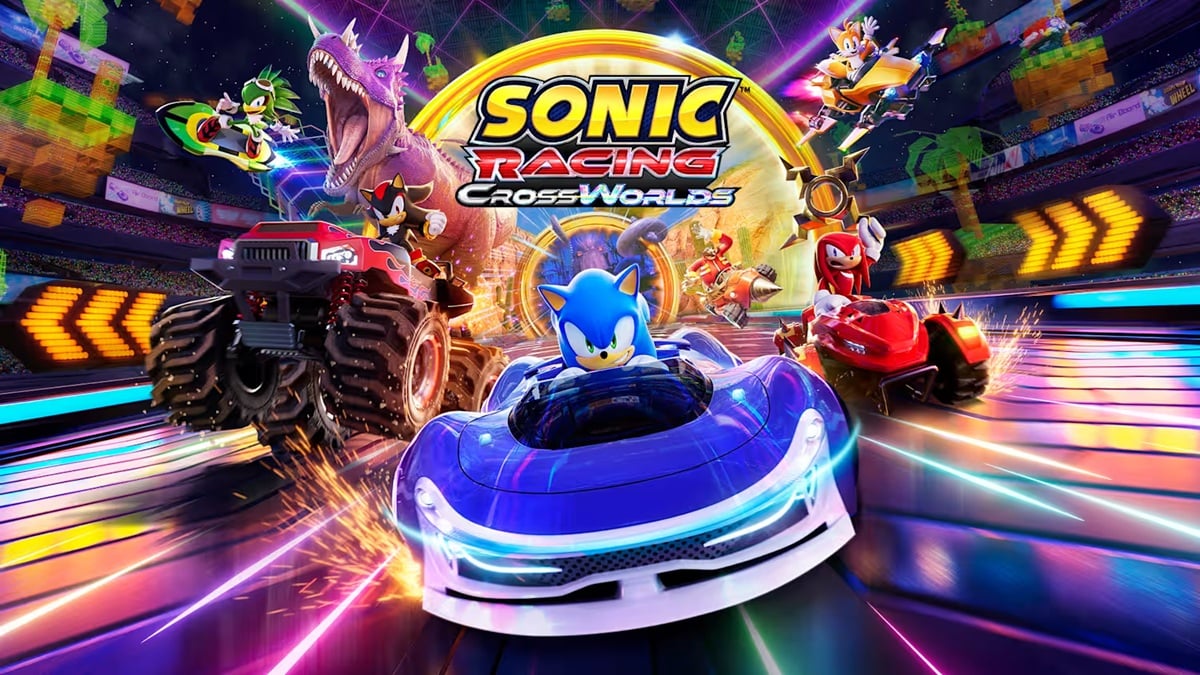
SEGA has acknowledged that Sonic Racing: CrossWorlds and Shinobi: Art of Vengeance did not meet the company’s initial sales expectations, even though both releases earned a warm response from critics and players. The update appeared in materials prepared for SEGA Sammy’s Management Meeting 2026, where the company discussed the commercial performance of several major games. SEGA indicated that both titles started reasonably well, but their sales momentum weakened after launch instead of continuing steadily.
The disappointing results do not mean SEGA is abandoning either game. Sonic Racing: CrossWorlds is heading into another year of downloadable support, with six additional DLC packs planned for Season Pass 2. Godzilla and Evangelion collaborations have already been revealed, while further details will follow later. Existing plans also include Teenage Mutant Ninja Turtles and Avatar Legends additions, giving SEGA several recognizable brands with which to attract returning and first-time racers.
Shinobi: Art of Vengeance is also receiving another chance to reach a wider audience. A native Nintendo Switch 2 edition is scheduled to launch on September 24, 2026, featuring an updated resolution and a sharper handheld presentation. Together, these plans show that SEGA still sees commercial potential in both games. Rather than quietly moving on after a weaker-than-expected launch period, the publisher is using additional platforms, technical improvements, and recognizable crossover partners to keep the two releases visible.
SEGA says two acclaimed releases missed sales expectations
SEGA has delivered a candid assessment of Sonic Racing: CrossWorlds and Shinobi: Art of Vengeance, confirming that both games fell short of the company’s original commercial expectations. The admission appeared in SEGA Sammy’s Management Meeting 2026 materials, which examined the performance of the publisher’s major releases and its plans for future growth. It is a notable update because neither game suffered from an obviously poor critical reception. In fact, both were generally praised, making their weaker sales performance a reminder that good reviews and strong craftsmanship do not automatically turn into blockbuster numbers.
For players, that disconnect may initially seem strange. Sonic is one of SEGA’s most recognizable characters, while Shinobi: Art of Vengeance marked the return of a respected action series with striking hand-drawn visuals. On paper, both appeared well positioned to succeed. Yet the market rarely behaves like a neat checklist. A game can look polished, play beautifully, and still struggle to remain visible after its opening weeks. Release timing, competition, pricing, platform availability, audience habits, and long-term marketing all influence whether initial interest becomes sustained demand.
Strong opening sales did not produce lasting momentum
SEGA’s comments suggest that the problem was not necessarily a complete lack of interest at launch. The company indicated that both games experienced reasonably strong initial sales before momentum began to fade. That distinction matters. A weak debut can point to limited awareness or poor pre-release enthusiasm, but a solid start followed by a sharp slowdown suggests that the games did not maintain the pace SEGA expected. They entered the race with plenty of fuel, but the engine began coughing before the final lap.
Publishers increasingly depend on games continuing to sell for months or even years, particularly when downloadable additions, promotional events, upgrades, and multiple platform versions are part of the business plan. A healthy launch is valuable, but sustained sales often determine whether a release meets its broader financial target. Sonic Racing: CrossWorlds was designed with ongoing collaborations and additional racers in mind, while Shinobi had the potential to reach nostalgic fans and newcomers across several systems. When those audiences do not expand quickly enough, even a respectable opening can look disappointing against internal forecasts.
Critical praise could not guarantee commercial success
Both games received favorable reviews, which makes SEGA’s assessment especially interesting. Shinobi: Art of Vengeance was widely praised for its fluid action, hand-drawn presentation, responsive combat, and confident revival of Joe Musashi. Sonic Racing: CrossWorlds also earned positive attention for its fast racing, track-changing CrossWorld mechanic, broad character roster, and extensive vehicle customization. These were not games limping out of the garage with a wheel missing. They arrived with clear strengths and generally encouraging word of mouth.
Reviews, however, are only one part of a much larger equation. High scores can reassure interested players, but they cannot force people to buy a game immediately. Some may wait for a discount, complete other releases first, or decide that a familiar genre already has enough representation in their library. Others may enjoy what they see without feeling an urgent need to own it. The challenge becomes even greater when a publisher expects sales beyond the established fan base. Critical approval can open the door, but sustained marketing and a compelling reason to act are still needed to persuade a wider audience to walk through it.
Sonic Racing faced a highly competitive racing market
Sonic Racing: CrossWorlds entered a part of the market where players already had several major alternatives competing for their attention. The release arrived during a period that included prominent racing games and powerful Nintendo properties, creating an environment in which even a polished Sonic racer had to fight for every sale. Family-friendly racing games can appear broadly accessible, but that does not mean their audiences will automatically purchase several similar experiences close together. Many players choose one main racer and stick with it for months.
The comparison with Nintendo’s racing catalogue was especially difficult to avoid. Mario Kart World benefited from the enormous reach of the Mario Kart name and its close association with Nintendo Switch 2 hardware, while Kirby Air Riders offered another recognizable Nintendo option. Sonic Racing: CrossWorlds was available across more platforms, but broad availability is not a magical sales button. It can increase the potential audience, yet it also requires marketing strong enough to reach players on every system. SEGA needed CrossWorlds to stand out in a noisy starting grid where some competitors arrived with exceptionally loyal audiences already buckled into their seats.
CrossWorlds must keep players returning over time
The long-term challenge for Sonic Racing: CrossWorlds is turning its steady flow of additions into renewed attention rather than merely serving the players who already own it. Crossover characters and themed courses can certainly spark conversation, especially when they involve unexpected properties. Still, each announcement must give new buyers a convincing reason to join rather than simply reminding existing racers to reinstall the game for an evening. Maintaining interest is a little like keeping a theme park busy after opening month. New attractions help, but people must believe the whole visit remains worth the ticket price.
SEGA’s continued support suggests that the publisher believes the game can still build a longer sales tail. Additional DLC gives retailers, digital storefronts, creators, and gaming communities repeated opportunities to discuss CrossWorlds. Bundles and discounts could also make the expanding package more appealing to players who hesitated at launch. The central question is whether the new collaborations can push the game beyond Sonic’s established audience. If Godzilla, Evangelion, Teenage Mutant Ninja Turtles, and Avatar fans become curious enough to try the racer, its second year may look healthier than its first.
SEGA responds with another year of crossover DLC
SEGA is not responding to the disappointing sales update by reducing support for Sonic Racing: CrossWorlds. Instead, the company has announced a second season pass containing six additional DLC packs. The precise contents of every pack have not yet been revealed, but Godzilla and Evangelion are already confirmed as major collaborations. More information about Season Pass 2 is expected later in 2026, allowing SEGA to spread announcements across several promotional moments rather than revealing everything at once.
The commitment is significant because long-term DLC requires development resources, licensing agreements, marketing coordination, and ongoing technical support. Continuing with those plans indicates that SEGA still believes the racer can attract more players and generate further revenue. The publisher may also view the initial sales result as a problem of momentum rather than quality. CrossWorlds already has a solid foundation, so expanding it may be less risky than replacing it with an entirely new racing project. The strategy is clear: keep the wheels moving, introduce surprising guests, and give undecided players fresh reasons to look again.
Godzilla and Evangelion could broaden the audience
Godzilla and Evangelion are particularly eye-catching choices for Sonic Racing: CrossWorlds because neither property feels like an obvious fit for a cheerful kart racer. That is precisely why the collaborations could work. Unexpected combinations create curiosity, memes, social media clips, and the kind of cheerful confusion that encourages people to share an announcement. A giant monster and biomechanical units joining Sonic’s racing universe sounds wonderfully absurd, which is often a useful quality in a crossover-driven game.
SEGA has said the second year of support will bring more worlds alongside the new collaborations, while the Godzilla and Evangelion packs are expected to feature themed material suited to their larger-than-life identities. Exact details remain limited, so it is better not to imagine Godzilla politely squeezing into a compact racing seat just yet. What is certain is that these brands can introduce CrossWorlds to audiences beyond traditional Sonic fans. Their involvement also gives SEGA strong visual material for trailers, events, and promotional campaigns. A dramatic crossover cannot guarantee higher sales, but it can create the renewed visibility the game currently needs.
Shinobi receives another opportunity on Nintendo Switch 2
Shinobi: Art of Vengeance will receive a native Nintendo Switch 2 edition on September 24, 2026. The new release provides SEGA with another opportunity to place the game in front of players who may have skipped the original version or were waiting for an edition designed specifically for Nintendo’s newer hardware. A new platform launch can function like a second opening night, complete with renewed storefront placement, fresh reviews, promotional trailers, and discussion among players building their Switch 2 libraries.
The timing could be valuable for a series that does not command the same immediate recognition among younger audiences as Sonic. Shinobi has a respected history, but many modern players may know Joe Musashi primarily by reputation. Art of Vengeance needs time and repeated exposure to rebuild that connection. The Switch 2 edition gives SEGA another reason to highlight the game’s hand-drawn environments, fast combat, platforming challenges, and distinctive ninja abilities. It is not a complete relaunch, but it can help the game escape the crowded release window in which its original edition first appeared.
The Switch 2 edition offers sharper handheld presentation
SEGA has confirmed that the Nintendo Switch 2 version of Shinobi: Art of Vengeance will feature an updated resolution, including a 1080p presentation in handheld mode. That improvement should suit a game defined by detailed hand-drawn artwork, precise animation, and fast visual feedback during combat. Cleaner image quality can make backgrounds, enemy movements, attack effects, and environmental details easier to appreciate on the portable screen. When a game’s artwork is one of its strongest attractions, sharper presentation is more than a tidy number on a specification sheet.
The native release also avoids presenting the Switch 2 audience with only a backward-compatible version made for the original hardware. Players purchasing games for a newer system often expect software to make visible use of its increased capabilities, even when the underlying experience remains unchanged. The improved resolution gives SEGA a straightforward benefit to communicate without pretending the game has been rebuilt from scratch. Existing owners and prospective buyers will still need to consider pricing and upgrade options, but the technical improvement strengthens the case for revisiting Joe Musashi’s latest adventure.
Long-term support may help both games find new buyers
Neither Sonic Racing: CrossWorlds nor Shinobi: Art of Vengeance should be treated as commercially finished simply because their early results missed expectations. Modern game sales can change considerably through platform launches, seasonal discounts, downloadable additions, subscription services, physical releases, bundles, and renewed word of mouth. A title that looks disappointing after its initial months can gradually build a healthier audience, particularly when players consistently praise its quality. The path may be slower than SEGA hoped, but it is not necessarily closed.
CrossWorlds has the advantage of recurring DLC announcements that can repeatedly return it to the spotlight. Shinobi has a new Switch 2 edition that can reach players at a different moment in the hardware’s life. Both approaches depend on visibility. Good games do not sell themselves while quietly sitting in a digital shop among thousands of alternatives. They need reminders, attractive offers, and a reason for players to care now rather than someday. SEGA appears willing to provide those reminders instead of treating the initial performance as the final verdict.
What the results mean for SEGA’s broader strategy
The sales update highlights the difficult balance SEGA faces as it revives established properties and expands its major franchises. The company wants to draw value from recognizable names while also reaching audiences who may have little attachment to their history. Shinobi: Art of Vengeance demonstrates the creative potential of that strategy, pairing a classic series with Lizardcube’s hand-drawn style and modern action design. Sonic Racing: CrossWorlds takes a different route by combining a familiar mascot racer with live support, customization, and a growing catalogue of licensed collaborations.
Strong reviews show that SEGA’s development choices were not fundamentally misguided, but commercial expectations must match the realities of crowded release schedules and changing player habits. The publisher now has an opportunity to study where interest weakened and which promotional efforts produce meaningful results. Continued support may prove that these games simply needed more time. It may also help SEGA refine how future revivals and multiplayer-focused releases are marketed. Either way, the company is not hiding from the outcome, and its willingness to keep investing makes the next stage worth watching.
Conclusion
SEGA’s latest assessment makes it clear that Sonic Racing: CrossWorlds and Shinobi: Art of Vengeance did not sustain the sales momentum the company expected, despite both receiving positive reviews. That disappointment is real, but it is not the end of either game’s story. CrossWorlds will continue through a second season pass featuring six DLC packs, with Godzilla and Evangelion among the confirmed collaborations. Shinobi will gain renewed exposure through its native Nintendo Switch 2 edition on September 24, 2026, complete with an updated resolution and sharper handheld visuals.
These plans reflect a patient response rather than a retreat. SEGA appears to believe that additional visibility, new audiences, and stronger platform support can improve the long-term picture. Whether those efforts are enough to reach the company’s targets remains to be seen, but players are not watching two abandoned releases disappear into the shadows. One is charging ahead with monsters, anime icons, and crossover chaos, while the other is preparing to draw its katana on Nintendo’s newer hardware. That is certainly a livelier outcome than quietly accepting defeat.
FAQs
- Did Sonic Racing: CrossWorlds meet SEGA’s sales expectations?
- No. SEGA stated that Sonic Racing: CrossWorlds fell short of its initial sales expectations. The game reportedly started reasonably well, but its sales momentum weakened after launch.
- Did Shinobi: Art of Vengeance also underperform?
- Yes. SEGA grouped Shinobi: Art of Vengeance with Sonic Racing: CrossWorlds when discussing games whose initial commercial performance did not meet expectations, despite favorable critical reception.
- Is SEGA ending support for Sonic Racing: CrossWorlds?
- No. SEGA has announced Season Pass 2, which will contain six additional DLC packs. The publisher plans to reveal more information about the second year of support later in 2026.
- Which new collaborations are coming to Sonic Racing: CrossWorlds?
- Godzilla and Evangelion have been confirmed for the game’s second year of DLC. Teenage Mutant Ninja Turtles and Avatar Legends additions are also part of the wider DLC schedule.
- When will Shinobi: Art of Vengeance launch on Nintendo Switch 2?
- The native Nintendo Switch 2 edition is scheduled for September 24, 2026. It will feature an updated resolution, including a 1080p presentation while playing in handheld mode.
Sources
- SEGA SAMMY Management Meeting 2026, SEGA SAMMY Holdings, June 15, 2026
- SHINOBI: Art of Vengeance Is Coming to Nintendo Switch 2, SEGA, June 18, 2026
- SHINOBI: Art of Vengeance, Nintendo, June 2026
- Sonic Racing: CrossWorlds Season Pass 2 Announced, Includes Six New DLC Packs, Nintendo Life, June 24, 2026
- SEGA Says Sonic Racing: CrossWorlds and Shinobi: Art of Vengeance Sales Haven’t Met Its Expectations, Nintendo Everything, June 22, 2026