














Summary:
Star Fox is flying back into the spotlight on Nintendo Switch 2, and this return is already turning heads for more than one reason. The remake has drawn plenty of attention because of its unusually realistic presentation, a style that feels bold for a Nintendo series famous for space animals, radio chatter, and barrel rolls that live rent-free in gaming history. With the game scheduled to launch on June 25, players can now try an early portion through a demo on the Nintendo eShop, giving fans a clearer feel for the updated visuals, staging, and gameplay flow before release. The reveal that Velan Studios is handling development adds another interesting layer, especially because the studio previously worked with Nintendo on Mario Kart Live: Home Circuit and has a reputation for playful technical ideas. Original Star Fox character designer and Star Fox 64 art director Takaya Imamura has also weighed in positively, praising the remake’s visual direction and reflecting on how far the series has come since the Nintendo 64 days. His reaction matters because Star Fox has always been tied to technology, from polygonal SNES ambition to cinematic N64 dogfights. Now, with Switch 2 hardware behind it, the remake appears to blur the old boundary between pre-rendered presentation and real-time play in a way that feels like a full-circle moment for the franchise.
Star Fox Switch 2 brings Fox McCloud back with a striking new look
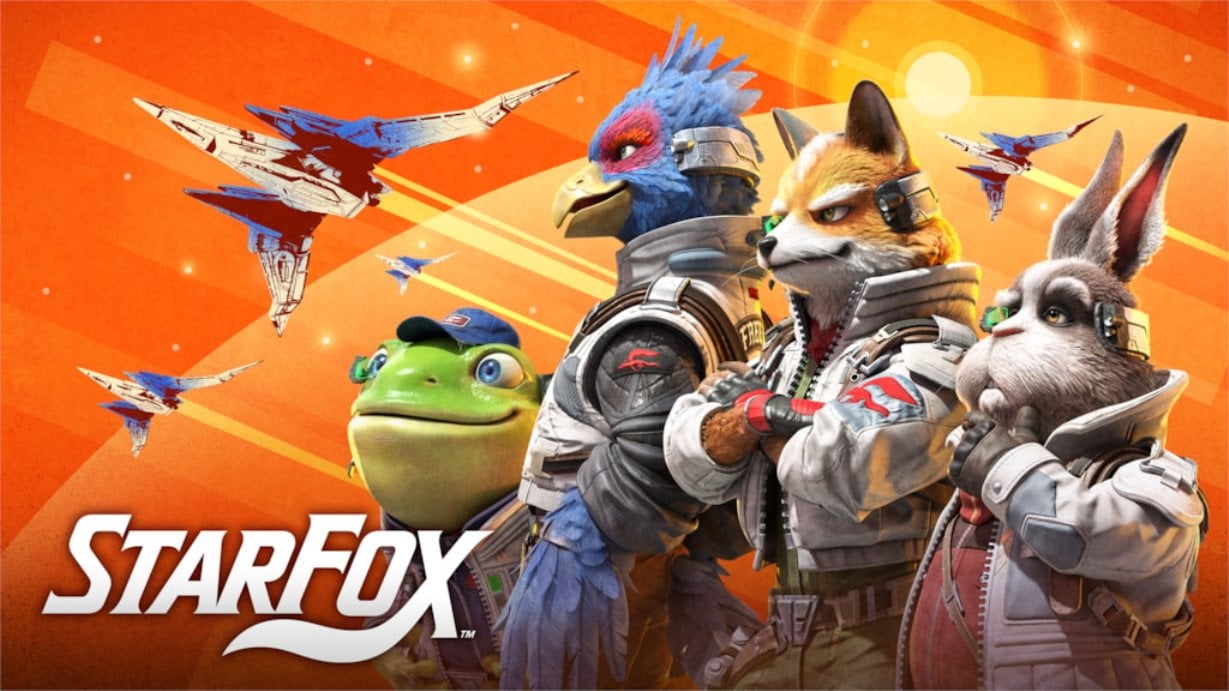
Star Fox has never been a quiet franchise, even when Nintendo leaves it parked in the hangar for years at a time. The moment Fox McCloud returns, fans start checking the cockpit, inspecting the Arwing, and asking the same familiar question: is this finally the comeback the series needs? On Nintendo Switch 2, the answer is already more interesting than expected because this remake is not simply leaning on nostalgia. Its realistic visual style gives the familiar cast a sharper, more textured presence, making Fox, Falco, Peppy, and Slippy look less like clean cartoon mascots and more like characters built for a glossy sci-fi film. That choice has sparked discussion, but it has also made the game hard to ignore.
The new presentation gives the remake a different identity
The realistic direction makes Star Fox on Switch 2 feel like a deliberate reintroduction rather than a routine touch-up. That matters because Star Fox 64 has already been revisited before, and fans know the bones of this adventure well. To make the remake feel fresh, Nintendo and Velan Studios needed more than cleaner textures and smoother frame rates. They needed a visual identity with enough personality to make longtime players stop scrolling and pay attention. The result is a game that appears to treat its space opera roots with a more cinematic eye, placing expressive character models, dramatic lighting, and polished environments at the front of the experience.
The character designs may be the biggest conversation starter
Fox McCloud’s updated appearance is the sort of thing that naturally divides a room. Some players want their Star Fox characters bright, charming, and closer to the rounded style seen in older promotional art. Others enjoy the bolder, puppet-like realism because it gives the cast a tactile quality, almost as if they could step out of a miniature film set. That tension is part of what makes this remake fascinating. Nintendo franchises often survive by preserving instantly recognizable silhouettes, but Star Fox has always had a little more room to experiment because its identity is tied to performance, spectacle, and hardware showmanship.
The realistic style gives Star Fox a feature-film flavor
What makes the Switch 2 version stand out is not only that the characters look more detailed. It is how the entire presentation seems built around a cinematic rhythm. Cutscenes, in-game action, cockpit chatter, enemy flybys, and boss encounters all appear to share a more unified visual language. That can make the transition from story moment to player control feel smoother, like the game is trying to keep the camera rolling instead of clearly separating spectacle from action. For a series that once amazed players with polygonal ships and dramatic space battles, that kind of flow feels very fitting.
The Nintendo eShop demo gives players an early taste before launch
The newly released demo on the Nintendo eShop gives players a practical reason to look beyond screenshots and debate threads. Seeing a visual style in motion often changes the conversation, especially with a game as fast and camera-driven as Star Fox. A still image can make a character model look strange, but a playable sequence can show how expressions, lighting, animation, and radio chatter work together. The demo arrives ahead of the full June 25 release, giving curious players a chance to test the handling, presentation, and pace before deciding whether this return to the Lylat system belongs on their launch calendar.
The demo helps answer the most important question
For Star Fox, the most important question is simple: does it feel good to fly? Visuals can pull players in, but the series lives or crashes based on movement, aiming, responsiveness, and that satisfying sense of threading an Arwing through danger by the width of a wingtip. The demo gives players an early opportunity to judge whether this remake captures the old arcade-like flow while still benefiting from modern hardware. That is especially important because Star Fox 64 is remembered as much for its rhythm as its levels. The best stages feel like a roller coaster with lasers, and nobody wants that coaster to move like a shopping cart with a broken wheel.
Early access may soften the visual debate
When a game’s art direction becomes the headline, a demo can be the best possible counterweight. It lets players form opinions through play rather than through cropped images, reaction posts, or one dramatic screenshot of Fox looking especially intense. Movement can make realistic designs feel more natural, particularly when the characters are framed inside cockpit communication windows or animated during high-pressure sequences. The demo also helps the remake stand on its own terms. Instead of asking whether the new look matches a player’s memory, players can ask whether it works inside the full presentation Nintendo and Velan Studios are building.
Velan Studios adds an unexpected name to the Star Fox story
The developer reveal has added a fresh wrinkle to the conversation. Velan Studios is not a random name pulled from a hat, even if many fans did not expect to see it attached to Star Fox. The studio was founded in 2016 by Karthik Bala and Guha Bala, industry veterans associated with Vicarious Visions, and it has already worked with Nintendo on Mario Kart Live: Home Circuit. That previous collaboration matters because Mario Kart Live was not a normal racing game. It mixed physical toys, camera feeds, and Switch software into something unusual, showing that Velan is comfortable with projects that need technical confidence and a playful understanding of Nintendo’s style.
Velan’s Nintendo history makes the pairing less surprising
Star Fox may look like a strange match for Velan at first, but the connection becomes easier to understand when looking at the studio’s previous work. Mario Kart Live: Home Circuit required Velan to build software around a very specific Nintendo idea: make the living room feel like a racetrack. That kind of design demands precision, charm, and a willingness to support a concept that could easily collapse if the technology gets in the way. Star Fox is different, of course, but it also depends on technical presentation serving a clear fantasy. Players need to feel like they are inside a fast, readable, cinematic space battle.
The studio reveal gives fans another angle to watch
Knowing the developer can change how players read a remake. It gives them clues about priorities, strengths, and possible surprises. With Velan Studios involved, fans may look more closely at how the remake handles camera movement, control options, set-piece design, and visual polish. The studio’s background suggests a team that is not afraid of unusual technical challenges, which makes sense for Star Fox. This franchise has often been Nintendo’s playground for showcasing what hardware can do. From the Super FX chip era to Star Fox 64’s cinematic staging, Fox McCloud has a long history of arriving with a little tech magic tucked under the wing.
Takaya Imamura’s reaction gives the visual shift extra weight
Takaya Imamura’s positive reaction matters because he is not just another nostalgic observer. He helped shape the look and personality of Star Fox during its formative years, and his work on Star Fox 64 helped define how many players still picture the crew today. When someone with that connection responds emotionally to the remake’s graphical leap, it adds context that fan debate alone cannot provide. Imamura has reflected on how the Nintendo 64 team worked to make real-time scenes feel impressive next to pre-rendered visuals, which was no small task during that hardware generation. Those limitations shaped the original game’s theatrical personality.
The Nintendo 64 comparison makes the praise more meaningful
During the Nintendo 64 era, developers had to use clever staging to create drama within tight technical limits. Star Fox 64 did not have the luxury of modern lighting, dense character models, or seamless cinematic transitions, so it leaned on strong camera angles, memorable voice lines, and clear action beats. That is why Imamura’s comments feel so fitting. The Switch 2 remake appears to chase the same goal from the opposite direction. Instead of making limited real-time graphics feel cinematic, it can now make real-time gameplay approach the polish once associated with pre-rendered scenes. That is not just a prettier coat of paint. It is a technological loop closing after nearly three decades.
The praise connects old ambition with modern hardware
Star Fox has always been about more than animals in spaceships, charming as that elevator pitch may be. The franchise is also about Nintendo using technology to sell speed, danger, and spectacle. Imamura’s reaction highlights that continuity. The remake’s realistic visuals may seem like a sharp break from the past, but they can also be read as a continuation of what the original developers wanted to suggest within earlier limits. Back then, imagination had to do a lot of heavy lifting. Now, the hardware can shoulder more of that weight, letting the remake show details that once had to live in concept art, memory, or pure player enthusiasm.
Why the realistic art style stands out for Nintendo
Nintendo often favors stylized visuals because they age gracefully, read clearly, and carry personality without chasing photorealism. That is why Star Fox’s more realistic Switch 2 look feels so unusual. It sits in an interesting space between Nintendo polish and cinematic science fiction. The characters are still expressive and recognizable, but the extra fur detail, lighting, and puppet-like texture make them feel less like simple mascots. For some players, that is exciting. For others, it may take a few minutes to adjust. Either way, it gives the remake a visual hook, and in a crowded release calendar, a strong hook is worth its weight in gold rings. Wrong mascot, sure, but the point stands.
The style may help Star Fox escape nostalgia’s shadow
One of the biggest challenges facing any Star Fox 64 remake is familiarity. Many fans already know Corneria, the branching routes, the team banter, and the thrill of pulling off a well-timed maneuver. Nostalgia can be powerful, but it can also become a cage with very shiny bars. A bold visual direction helps the remake feel less trapped by the original. It gives returning players something new to process while still preserving the core identity of Star Fox. That balance is tricky, because too much change can alienate fans, while too little can make the project feel unnecessary. The Switch 2 version seems determined to make people react.
Realism can work when it supports clarity and emotion
The risk with realistic redesigns is that they can become distracting. If characters look too busy or too strange, players may focus on the redesign instead of the scene. Star Fox has an advantage here because its cast often appears through communication windows during action, where expressive faces and quick reactions can add energy without overwhelming the screen. If the remake uses its realism to strengthen emotion, tension, and humor, the style could become one of its defining strengths. After all, a panicked Slippy callout lands differently when the animation sells every ounce of chaos. Poor Slippy never gets an easy workday.
Star Fox 64’s legacy still shapes the remake
Star Fox 64 remains the gravitational center of the franchise. Even when Nintendo experiments with new ideas, the N64 classic keeps pulling the conversation back. Its branching paths, quotable dialogue, tight arcade pacing, and cinematic mission structure created a template that fans still love. That legacy gives the Switch 2 remake both an advantage and a burden. It starts with a design that has already proven itself, but it also invites constant comparison. Players will not only ask whether the remake looks better. They will ask whether it understands why Star Fox 64 worked in the first place.
The remake needs to preserve the rhythm fans remember
Star Fox 64 had a snappy tempo that made repeated playthroughs feel rewarding. Missions were short enough to replay, routes changed based on performance, and medals encouraged mastery without turning the game into homework. A modern remake can enhance that structure with better presentation, smoother controls, and added accessibility, but it should be careful not to sand away the arcade spirit. Star Fox is at its best when a stage feels like a quick burst of danger, confidence, and mild panic. The remake’s challenge is to make the experience feel modern without turning it into something slower, heavier, or overloaded with unnecessary systems.
Branching paths remain one of Star Fox’s smartest ideas
The branching route structure has always been one of Star Fox 64’s secret weapons. It gives the game replay value without needing a massive open world or endless side tasks. A player can finish one run and immediately wonder what would have happened if they had saved a teammate, defeated a boss differently, or found a hidden route. That kind of design feels refreshingly direct today. In an age where many games stretch themselves thin, Star Fox can stand out by staying focused. A remake that respects those branching choices could remind players that replayability does not always need a giant checklist.
The line between cutscenes and gameplay feels thinner than ever
One of the most interesting ideas surrounding the Switch 2 remake is how closely its real-time gameplay appears to match its cinematic presentation. In earlier console generations, players could usually tell when a game switched from gameplay to a more polished scene. The gap was part of the language of games. With Star Fox on Switch 2, that gap seems far narrower, which fits perfectly with Imamura’s reflection on the old struggle between pre-rendered footage and real-time graphics. The remake appears to aim for a feature-film quality while still preserving the immediacy of player control.
That visual consistency can make missions feel more dramatic
When gameplay and cutscenes share the same level of polish, the whole experience can feel more cohesive. A mission briefing, a dramatic flyover, a sudden ambush, and a boss introduction can all flow into one another without the visual seams that once separated them. For Star Fox, that is especially useful because the series already plays like an interactive space cartoon with a military radio channel taped to the side. The smoother those transitions become, the easier it is for players to stay immersed in the mission. It can make every “good luck” and every desperate teammate call feel like part of the same continuous ride.
Star Fox benefits from spectacle that does not slow things down
Cinematic ambition can sometimes become a trap. If a game stops too often to show off, players may start wishing the director would hand the controller back. Star Fox needs spectacle, but it also needs momentum. The best version of this remake will use its visual power to heighten action rather than interrupt it. Explosions, enemy formations, camera sweeps, and character reactions should feed the pace instead of pausing it. That is where real-time presentation matters. When the game can deliver drama while players are still flying, shooting, dodging, and saving teammates, Star Fox feels alive in the way it always wanted to.
What the demo suggests about the final release
The demo’s biggest value is that it turns curiosity into hands-on judgment. Before release, players can test whether the remake’s visual ambition is matched by responsive play. That matters for every Star Fox fan who has ever replayed a mission just to shave seconds off a run, chase a medal, or prove that yes, they absolutely meant to fly through that tiny gap and it was not luck. The demo also gives Nintendo a chance to build confidence before June 25. When a game has a divisive visual style, letting people play it early can be smarter than letting the internet argue from screenshots alone.
The final game still needs to deliver beyond first impressions
A demo can sell the feel, but the full release has to prove the structure. Star Fox needs memorable stages, satisfying routes, lively teammate interactions, and enough challenge to make repeat runs worthwhile. The remake’s presentation may attract the spotlight, yet the long-term verdict will depend on how well the full game balances respect for Star Fox 64 with meaningful updates. If it simply looks better, some fans may enjoy it and move on. If it feels better, flows better, and makes the old adventure feel newly exciting, it could become a much more important release for the series.
June 25 gives the remake a clear moment to make its case
The June 25 launch gives Star Fox a defined landing zone on Nintendo Switch 2. By releasing a demo ahead of time and confirming Velan Studios as the developer, Nintendo has given fans several reasons to keep talking about the game before it arrives. That conversation matters because Star Fox has spent years as a beloved but uneven franchise, often remembered more for its potential than its recent output. A polished remake will not automatically solve every question about the series’ future, but it can remind players why the formula mattered in the first place.
Why this remake could matter for the future of Star Fox
Star Fox needs more than a successful remake. It needs renewed confidence. The series has had brilliant highs, divisive experiments, and long silences, which makes every return feel loaded with hope. The Switch 2 remake could act as a reset point if it lands well. It can reintroduce Fox McCloud to players who missed the older releases while giving longtime fans a polished version of the adventure that shaped the franchise’s identity. More importantly, it can show whether there is still a strong appetite for focused, replayable, cinematic space shooting in Nintendo’s modern lineup.
A strong remake could open the door to new missions later
If the Switch 2 version finds an audience, it could give Nintendo a clearer foundation for whatever comes next. That does not mean the next step has to be another remake. It could be a new Star Fox built around the same sharp mission design, branching structure, and cinematic energy, but with new planets, new threats, and new reasons to keep the team together. The remake can serve as a test flight. If the engines hold, the controls feel right, and players respond to the updated style, Nintendo may have a better sense of how to move the franchise forward without losing what made it special.
Star Fox still has a unique place in Nintendo’s lineup
Nintendo has plenty of platformers, adventures, racers, and role-playing favorites, but Star Fox occupies a different lane. It offers fast sci-fi action with arcade roots, memorable characters, and a mission-based structure that does not need to become massive to feel satisfying. That makes it valuable. Not every game needs to be a hundred-hour commitment with seven crafting menus and a backpack full of suspicious mushrooms. Sometimes players want a sharp, exciting run through danger with a team of space pilots shouting advice in their ears. Star Fox can still deliver that feeling better than almost anything else Nintendo owns.
Conclusion
Star Fox on Nintendo Switch 2 is already doing what a good remake should do: it has people talking, debating, testing, and remembering why the series mattered in the first place. The eShop demo gives players an early chance to judge the feel for themselves, while the Velan Studios reveal adds an unexpected but credible development story behind the project. Takaya Imamura’s praise gives the visual shift extra emotional weight, especially because the remake appears to fulfill an old ambition from the Star Fox 64 era: making real-time action feel as polished and dramatic as pre-rendered spectacle. The realistic look may not please everyone immediately, but it gives this return a clear identity. If the final release on June 25 delivers the speed, replay value, and cinematic energy fans expect, Fox McCloud’s latest flight could become more than a nostalgic victory lap. It could be the start of a stronger future for Star Fox.
FAQs
- When does Star Fox launch on Nintendo Switch 2?
- Star Fox is scheduled to launch for Nintendo Switch 2 on June 25. The demo is already available through the Nintendo eShop, giving players an early chance to try part of the remake before the full release.
- Who is developing Star Fox for Nintendo Switch 2?
- Velan Studios is developing Star Fox for Nintendo Switch 2. The studio previously worked with Nintendo on Mario Kart Live: Home Circuit and is also known for games such as Knockout City and Hot Wheels: Rift Rally.
- Why are fans talking about the Star Fox Switch 2 visuals?
- The remake uses a more realistic visual style than many players expected from a Nintendo franchise. The updated character models, cinematic lighting, and film-like presentation have made the game one of the more visually discussed Switch 2 releases.
- What did Takaya Imamura say about the remake?
- Takaya Imamura, who helped define the original Star Fox look and worked as art director on Star Fox 64, responded positively to the remake’s visuals. His comments connected the Switch 2 presentation to the ambitions the team had during the Nintendo 64 era.
- Is the Star Fox Switch 2 demo worth trying?
- Yes, especially for players who are unsure about the new look. The demo gives a better sense of how the visuals, controls, mission pacing, and cinematic presentation work in motion, which is far more useful than judging the remake from screenshots alone.
Sources
- Star Fox Developer Revealed, As Free Demo Barrel Rolls Onto Switch 2, Nintendo Life, June 9, 2026
- Star Fox developer revealed as American studio, VGC, June 9, 2026
- Knockout City Makers Velan Studios Revealed as the Team Behind Star Fox, Demo Now Live on Nintendo Switch 2, Wccftech, June 9, 2026
- OG Star Fox designer may prefer the Mario Galaxy Movie design, but says the Switch 2 game designs are “exactly the visuals” he had in mind for the Nintendo 64 classic, GamesRadar+, May 11, 2026
- Vicarious Visions co-founders form experimental game dev, Velan Studios, Game Developer, November 21, 2016