














Summary:
Star Ocean: The Second Story R recently received a dedicated Nintendo Switch 2 version, giving Square Enix’s acclaimed RPG a noticeable technical upgrade over its original Nintendo Switch release. The biggest improvement is the jump from 30 frames per second to 60 FPS. That change makes exploration feel smoother, but its impact becomes especially clear during combat, where characters dash across arenas, abilities fill the screen and carefully timed attacks can decide the outcome of a difficult encounter.
Resolution has also increased substantially. The Nintendo Switch 2 release runs at 1080p in both docked and handheld play. By comparison, the original Nintendo Switch version rendered at 864p while docked and 576p in portable mode. That is a particularly meaningful improvement for handheld players, since character sprites, environments, menus and battle effects now appear much cleaner on the system’s display.
Square Enix has made several smaller graphical adjustments as well. The new version features higher-resolution textures, improved shadow quality and additional objects throughout its environments. These refinements support the distinctive 2.5D presentation, which combines nostalgic pixel characters with detailed three-dimensional locations.
The adventure itself remains the same ambitious blend of science fiction and fantasy. Players can follow Claude or Rena, recruit different allies, build relationships through Private Actions and experience multiple endings. Fast combat, deep skill systems, extensive item creation, dual-language voice acting and Motoi Sakuraba’s rearranged soundtrack all return, now presented through a smoother and sharper Nintendo Switch 2 release.
Star Ocean The Second Story R Receives a Dedicated Nintendo Switch 2 Release
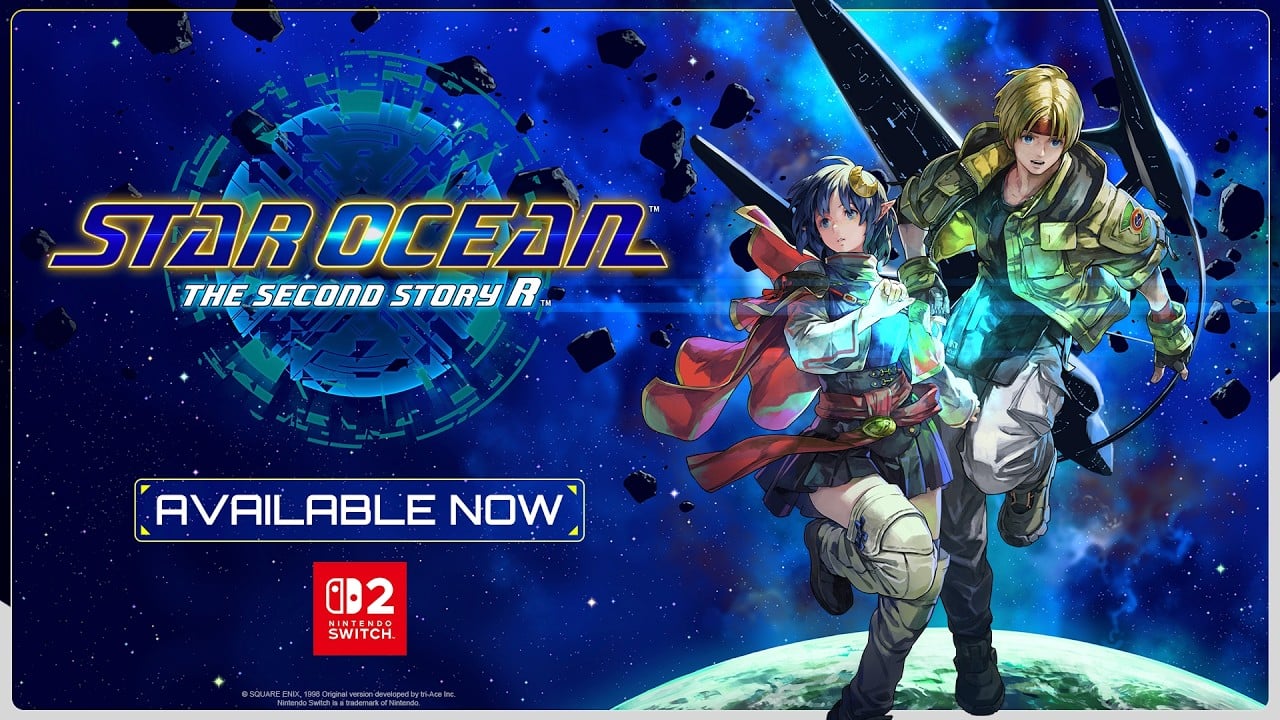
Square Enix recently expanded its Nintendo Switch 2 catalogue with a dedicated version of Star Ocean: The Second Story R. The release arrived with little advance explanation, leaving players to wonder whether it was simply the existing Nintendo Switch edition running through backward compatibility or a genuinely upgraded version. The technical details now make the distinction clear. This is a separate Nintendo Switch 2 release with higher performance targets, increased resolution and several visual enhancements designed around the newer hardware. The underlying adventure hasn’t been reinvented, but its presentation has been polished in areas that players will notice almost immediately. For anyone who enjoys taking large role-playing adventures on the road, those changes matter. A smoother frame rate and clearer portable image can turn a good handheld conversion into one that feels much closer to the experience offered on more powerful platforms.
Nintendo Switch 2 Doubles the Frame Rate to 60 FPS
The most significant improvement is the move to 60 frames per second. Star Ocean: The Second Story R targeted 30 FPS on the original Nintendo Switch, while the Nintendo Switch 2 version doubles that target. Numbers alone can sound dry, but the effect is easy to understand once the game is moving. Characters travel through towns and dungeons with greater fluidity, camera movement feels cleaner and animated effects flow more naturally. The improvement also helps the game’s mixture of pixel characters and three-dimensional environments appear more cohesive. Pixel art can look wonderfully crisp, but uneven motion around it may stand out like a squeaky wheel on a polished cart. At 60 FPS, movement better matches the remake’s colourful presentation and energetic pace. It is the kind of upgrade that may seem modest in a screenshot yet becomes difficult to surrender after playing for an hour.
Faster Battles Benefit Most From the Smoother Performance
Combat is where the frame-rate increase earns its keep. Star Ocean: The Second Story R uses real-time battles in which characters run freely around an arena, attack enemies, activate abilities and react to rapidly changing situations. When several party members, enemies and spell effects appear together, smoother performance makes the action easier to follow. Inputs also feel more immediate because the screen updates more frequently. That responsiveness can help when repositioning a vulnerable character, closing the distance to an enemy or avoiding an incoming attack. The battle system is deliberately more energetic than a traditional turn-based encounter, so it benefits directly from cleaner motion. You are not calmly selecting every command from a menu while the monsters politely wait. The battlefield can become a fireworks display with swords attached, and the 60 FPS target helps ensure that spectacle remains readable rather than turning into visual soup.
Assault Actions and Break Mechanics Feel More Responsive
The remake introduced mechanics that encourage players to stay aggressive while still thinking strategically. Continually damaging an enemy can trigger a Break, creating an opening in which the target becomes vulnerable. Players can also use Assault Actions to call allies into battle for powerful follow-up attacks. These systems rely on timing, positioning and a clear understanding of what is happening across the arena. A smoother frame rate does not change the rules, damage values or available abilities, but it improves the feedback surrounding them. Enemy reactions are easier to read, attack animations appear more fluid and transitions between actions feel less abrupt. That can make the rhythm of battle more satisfying, particularly when a carefully prepared combination falls into place. Breaking an enemy’s defence before unleashing a coordinated assault already feels rewarding. Seeing the entire sequence unfold at twice the previous frame-rate target adds a welcome layer of polish.
Stable Performance Strengthens the Portable Experience
Reaching 60 FPS in handheld mode is especially valuable because portability remains one of the platform’s defining strengths. Long RPGs often fit naturally into portable play. You can complete a dungeon during a quiet evening, manage equipment from the sofa or squeeze in a few Private Actions without taking over the television. The Nintendo Switch 2 version allows those smaller sessions to retain the smoother presentation available while docked. There is no need to accept a lower frame-rate target merely because the system has left its dock. That consistency gives the release a stronger identity as a portable edition rather than a heavily compromised alternative. Star Ocean: The Second Story R can demand dozens of hours, depending on how thoroughly you explore its systems and optional events. When you are spending that much time with an adventure, reliable motion and responsive controls are not decorative extras. They shape nearly every minute of play.
Resolution Reaches 1080p in Docked and Handheld Play
Resolution receives an equally clear upgrade. The Nintendo Switch 2 release runs at 1080p whether the system is docked or being used as a handheld. The original Nintendo Switch version operated at 864p while docked and 576p in handheld mode. That means portable players receive the largest jump, moving from a relatively soft presentation to a full 1080p image. The difference should be visible across character portraits, menus, environmental details and the sharp edges of the game’s pixel sprites. Text clarity is important in an RPG filled with equipment descriptions, skills, dialogue and crafting menus, so a higher resolution can improve usability as well as appearance. The docked upgrade is smaller by comparison, yet it still provides a cleaner image on larger displays. Combined with the 60 FPS target, the Nintendo Switch 2 release delivers a more consistent technical profile across both ways of playing.
Sharper Textures, Better Shadows and Additional Objects Improve the World
Square Enix has not limited the improvements to frame rate and output resolution. The Nintendo Switch 2 version also includes higher-resolution textures, improved shadow resolution and additional objects within its environments. Individually, these changes may sound subtle, but together they can make locations feel richer and more grounded. Sharper textures allow surfaces such as stone walls, roads, buildings and natural scenery to retain more detail when viewed on a high-resolution display. Better shadows help characters and objects sit more convincingly within each scene instead of appearing disconnected from the ground beneath them. Additional environmental objects can make towns, fields and interior spaces feel busier without changing their layouts. These are supporting upgrades rather than a wholesale graphical remake of the remake, but that is perfectly reasonable. The visual direction was already strong. The Nintendo Switch 2 release simply gives it more room to breathe, like cleaning a window rather than rebuilding the house behind it.
The 2.5D Presentation Remains One of the Remake’s Defining Features
Star Ocean: The Second Story R stands apart through its blend of two-dimensional pixel characters and three-dimensional environments. The approach preserves the identity of the original release while surrounding its heroes with modern lighting, detailed scenery and dramatic visual effects. Dangerous caves, peaceful villages and busy towns resemble miniature theatrical sets, with pixelated performers moving through spaces that have genuine depth. This contrast should not work as naturally as it does, yet the remake turns it into a defining strength. The higher resolution on Nintendo Switch 2 helps preserve the sharpness of the sprites while revealing more detail in the environments around them. Improved shadows and textures also reinforce the illusion that both visual styles belong in the same world. Rather than replacing the past, the presentation frames it carefully. It feels like finding a treasured old photograph displayed inside a newly crafted frame, familiar at its centre but refreshed by everything surrounding it.
Claude and Rena Offer Two Perspectives on the Same Adventure
The adventure begins in Space Date 366 and allows players to choose between Claude C. Kenny and Rena Lanford. Claude is a Federation officer who finds himself transported to the planet Expel, far from the advanced technology and familiar structure of his own life. Rena is a young woman from the village of Arlia who possesses unusual healing abilities and questions surrounding her past. Their paths soon cross, pulling both characters into a conflict connected to an ancient prophecy and a growing threat to the planet. Choosing a protagonist changes more than the opening sequence. Certain perspectives, scenes and recruitable companions depend on the selected hero, encouraging another playthrough for anyone who wants to see how the other side unfolds. The broader destination may be familiar, but the route changes. It is a little like hearing the same strange story from two friends who stood on opposite sides of the room.
Combat, Skills and Item Creation Give Players Plenty of Freedom
Beyond its central storyline, the remake offers a dense collection of systems that allow players to shape their party. Characters can develop skills connected to combat, statistics and practical specialties such as Cooking, Art and Metalcraft. Raising the right abilities opens new options and feeds into the enhanced Item Creation system, where players can craft equipment with different properties and effects. This freedom can become delightfully dangerous to anyone who enjoys tinkering. You may sit down intending to progress the story, only to realise an hour later that you have been cooking meals, improving specialties and chasing materials for a stronger weapon. Party relationships add another layer through Private Actions, which allow characters to interact away from the main group. Choices made during these events can influence bonds and help unlock different endings. The result is an RPG that rewards curiosity, experimentation and the occasional decision to ignore the obvious road forward.
Voice Acting and Motoi Sakuraba’s Music Complete the Presentation
The remake includes full Japanese and English voice acting for its event scenes, giving players flexibility over how they experience the cast. It also incorporates dialogue associated with Star Ocean: Second Evolution, allowing longtime fans to choose an audio presentation that feels familiar. Voice acting carries extra weight in a character-focused adventure with multiple protagonists, recruitable allies and relationship-driven events. The right performance can turn a quiet conversation into a memorable moment or give an explosive confrontation the energy it deserves. Music plays an equally important role. Composer Motoi Sakuraba rearranged the soundtrack with fuller instrumentation, including band performances and strings, while exploration and cinematic themes received new recordings. The result respects the melodies players remember while giving them additional scale and texture. Much like the visual presentation, the audio does not discard the game’s history. It takes recognisable material and lets it ring out with more confidence.
Three Difficulty Settings Welcome Newcomers and Experienced Players
Players can select from three difficulty modes, making the adventure approachable without removing its sharper edges. Earth is intended for those who want a more relaxed journey, making it suitable for newcomers, story-focused players or anyone who prefers experimenting without constant punishment. Galaxy offers a more balanced challenge and should feel comfortable for many players familiar with action RPGs. Universe sits at the other end of the scale, demanding stronger preparation, better equipment and a more confident understanding of the battle system. The range works well because Star Ocean: The Second Story R contains many interconnected mechanics. Some players will want to test every crafting path and optimise their party until enemies barely have time to complain. Others may simply want to meet the cast and follow the story. By offering clear difficulty choices, the game allows both approaches without pretending everyone enters an RPG with the same goals or patience.
The Switch 2 Release Is a Stronger Portable Version of the RPG
The Nintendo Switch 2 edition does not change the core design of Star Ocean: The Second Story R, and it does not need to. Its purpose is to present the existing remake with fewer technical compromises. Running at 60 FPS makes exploration and combat smoother, while the 1080p resolution produces a much cleaner image in handheld mode and a sharper result on a television. Higher-resolution textures, stronger shadows and additional environmental objects provide further polish without disturbing the carefully chosen 2.5D direction. Together, those upgrades make this version particularly appealing to players who value portability but do not want that flexibility to come with visibly softer graphics or reduced fluidity. The RPG’s dual protagonists, branching recruitment options, Private Actions, skill development and item creation already offer plenty of reasons to spend time on Expel. Nintendo Switch 2 simply makes that time look and feel better.
Conclusion
Star Ocean: The Second Story R arrives on Nintendo Switch 2 with a focused set of improvements that address the biggest technical limitations of the original Nintendo Switch release. The move from 30 FPS to 60 FPS benefits nearly every part of the experience, but its influence is most obvious during the game’s rapid real-time battles. A 1080p resolution in docked and handheld modes also creates a cleaner image, especially for players accustomed to the original version’s 576p portable output. Higher-quality textures, improved shadows and additional environmental objects provide smaller visual refinements that complement the remake’s striking mixture of pixel characters and three-dimensional scenery. Underneath those upgrades remains an absorbing science-fantasy RPG filled with recruitable companions, relationship events, crafting options, explosive battles and multiple endings. For anyone seeking a portable version with smoother performance and sharper visuals, the dedicated Nintendo Switch 2 release is now the stronger way to experience Claude and Rena’s adventure.
FAQs
- What frame rate does Star Ocean: The Second Story R run at on Nintendo Switch 2?
- The dedicated Nintendo Switch 2 version targets 60 frames per second. The original Nintendo Switch release targeted 30 FPS, making the newer edition noticeably smoother during exploration and combat.
- What resolution does the Nintendo Switch 2 version use?
- Star Ocean: The Second Story R runs at 1080p in both docked and handheld modes on Nintendo Switch 2. The original Nintendo Switch version ran at 864p while docked and 576p in handheld mode.
- Does the Nintendo Switch 2 release include graphical improvements?
- Yes. Alongside its higher resolution, the Nintendo Switch 2 version includes increased texture resolution, improved shadow resolution and additional objects within the environments.
- Can players choose between Claude and Rena?
- Yes. Players select either Claude or Rena as the main protagonist. The choice changes the perspective of certain events and affects which allies can be recruited during the journey.
- Is Star Ocean: The Second Story R available digitally on Nintendo Switch 2?
- Yes. The dedicated Nintendo Switch 2 version is available through the Nintendo eShop, allowing players to download and begin the adventure digitally.
Sources
- Star Ocean: The Second Story R, Nintendo, July 15, 2026
- Star Ocean: The Second Story R Nintendo Switch 2 Tech Improvements Detailed, Nintendo Everything, July 18, 2026
- Star Ocean The Second Story R for Switch 2 Is a Great Port, RPG Site, July 18, 2026
- Star Ocean The Second Story R Gets Surprise Switch 2 Version, Vooks, July 16, 2026
- Star Ocean: The Second Story R Gets Switch 2 Edition, Game Informer, July 16, 2026