














Summary:
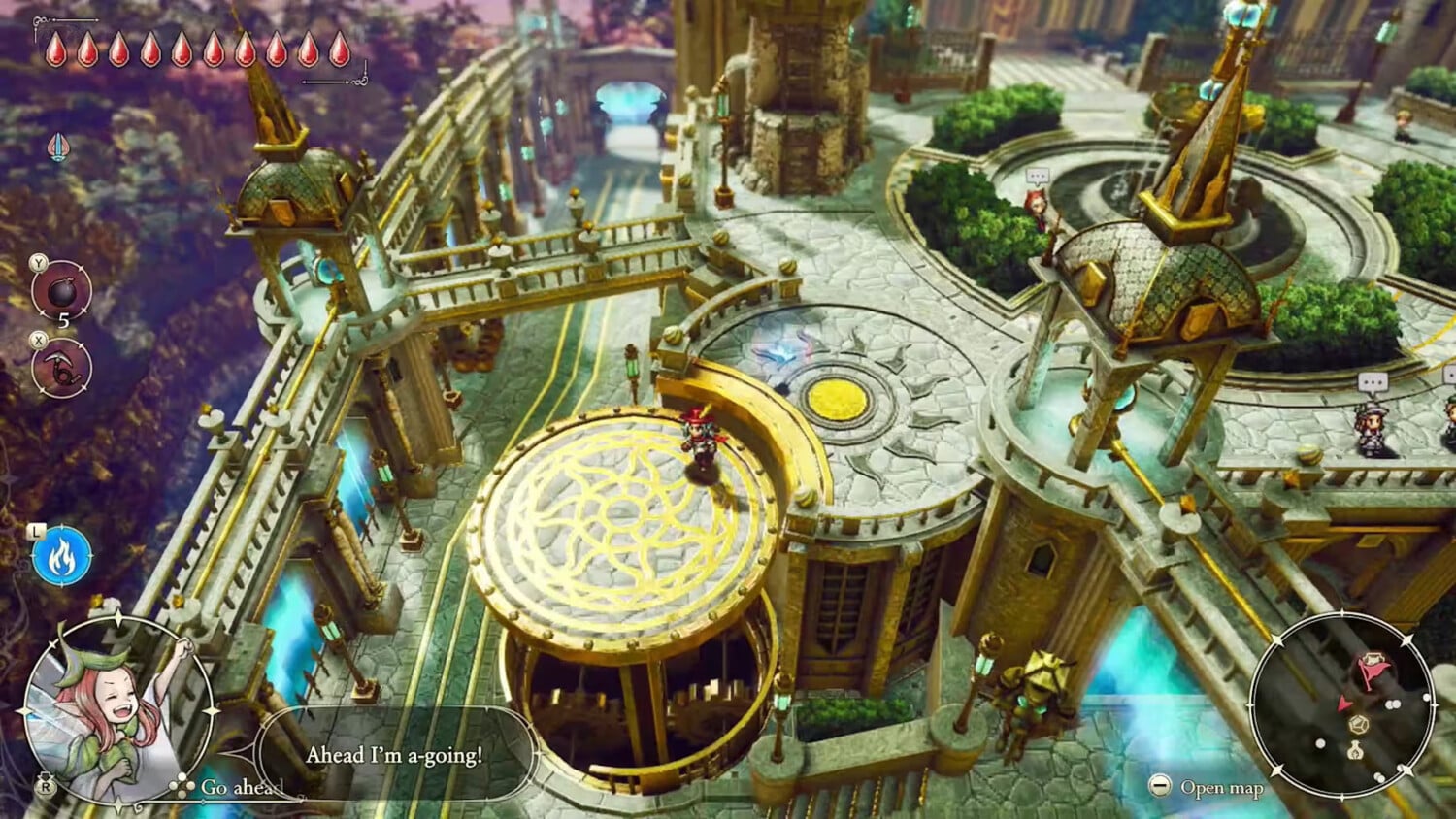
Square Enix has released update 1.1.0 for The Adventures of Elliot: The Millennium Tales, introducing a setting that many players have wanted since spending time with the game’s talkative fairy companion, Faie. The new option allows support character voices to be disabled completely, giving players greater control over how much spoken assistance they hear while exploring dungeons, fighting monsters and travelling through the game’s different eras.
The change is especially notable because earlier settings could reduce the frequency of Faie’s comments without fully silencing her. Some players enjoyed her enthusiasm and childlike personality, while others felt that her repeated observations disrupted exploration or became distracting during longer sessions. Update 1.1.0 now accommodates both preferences rather than forcing everyone to experience the adventure in exactly the same way.
The patch also adjusts tutorial behaviour, fixes frame-rate drops that could occur on certain PC configurations when Faie was present and addresses several smaller bugs. The update launched first through Steam, with Square Enix indicating that it would reach other platforms as soon as possible.
The timing carries a playful connection to The Legend of Zelda: Ocarina of Time, which is receiving a Nintendo Switch 2 remake in 2026. Faie has frequently been compared with Navi, the fairy companion famous for calling Link’s attention to nearby objectives. More than two decades later, Square Enix has delivered the kind of fairy mute button that many Zelda players once wished they had.
The Adventures of Elliot Update 1.1.0 Finally Adds a Faie Voice-Off Option
The Adventures of Elliot: The Millennium Tales has received a small but meaningful quality-of-life improvement with update 1.1.0. Square Enix has added an option that allows players to turn off support character voices, meaning Faie no longer needs to comment aloud during every journey. It may look like a modest toggle tucked inside a settings menu, but it directly changes the rhythm of exploration for anyone who prefers quieter adventures. Instead of hearing regular spoken prompts, players can focus on the soundtrack, environmental sounds and whatever danger happens to be lurking around the next corner. Sometimes the smallest switches have the biggest effect. A grand new dungeon is exciting, of course, but a button that restores a little peace and quiet can feel equally heroic after several hours of enthusiastic fairy commentary.
Update 1.1.0 also includes adjustments to tutorial behaviour, a PC performance fix connected to Faie and a selection of minor bug repairs. Square Enix initially released the patch through Steam and stated that the same changes would arrive on other platforms as soon as possible. Nintendo Switch 2 players may therefore need to wait for the relevant platform update before finding the new setting in their version. The patch does not radically alter Elliot’s adventure or rewrite how Faie functions, but it offers players more control over the presentation. That is often exactly what a useful update should do: remove friction without disturbing the systems that already work.
Square Enix Responds to Feedback About Its Talkative Fairy Companion
Faie has been a talking point since players first met her in the debut demo. As Elliot’s fairy companion, she provides advice, reacts to discoveries and helps communicate important information during the adventure. Her bright personality fits the colourful fantasy world, yet repeated voice lines can become tiring when players are trying to explore at their own pace. One person’s charming travel companion can quickly become another person’s tiny airborne commentator. That difference in taste explains why requests for a proper voice-off option continued after release, even though the full game already included settings intended to reduce how often support dialogue occurred.
The earlier solution softened the issue without completely resolving it. Players could hear fewer comments, but they could not fully remove the accompanying voice. Update 1.1.0 closes that gap by giving users a clear choice. Those who enjoy Faie’s performance can leave everything untouched, while those who would rather read quietly or depend on visual cues can disable the spoken support. This approach avoids declaring either preference correct. It simply recognises that people absorb information differently. Some appreciate repeated reminders, especially when returning after a break. Others remember objectives easily and would rather hear the rustling trees than another suggestion about where to go next.
How the New Support Character Voice Setting Changes the Experience
Disabling Faie’s voice does not remove her from the story or eliminate her gameplay functions. She remains Elliot’s companion and continues to play an active role throughout the adventure. The setting is focused on spoken support, allowing players to reduce the auditory interruptions without losing the character herself. That distinction matters because Faie is more than a floating hint system. She contributes to puzzle-solving, exploration and combat, so removing her entirely would leave a fairy-shaped hole in several important mechanics. The new option instead works like lowering the volume on a chatty passenger without asking them to leave the vehicle.
The result should be a calmer experience for players who enjoy wandering without constant commentary. The Adventures of Elliot encourages curiosity through hidden routes, ruins, treasure and environmental puzzles. Quiet moments can help those discoveries breathe. When every cave entrance receives a spoken reaction, exploration may feel more directed than spontaneous. Turning off support voices lets players study the world on their own terms and decide which landmarks deserve their attention. It may also benefit streamers, players listening to podcasts or anyone replaying the game after already learning its systems. During a second journey, repeated guidance rarely carries the same value it had during the first.
Tutorial Adjustments Should Make the Opening Hours Flow More Smoothly
Update 1.1.0 also adjusts tutorial behaviour, although Square Enix’s brief patch notes do not describe every change in detail. It is therefore safest to view this as a general refinement rather than assume that specific instructions, encounters or menus have been rewritten. Tutorial pacing can have a surprising impact on an action RPG. Too little guidance leaves players fumbling through basic systems, while too much makes the opening feel like someone is holding the handlebars long after you have learned how to ride. A well-paced tutorial quietly teaches the essentials and then gets out of the way before impatience starts tapping its foot.
The Adventures of Elliot combines real-time combat, multiple weapons, fairy abilities, equipment choices and environmental interaction. New players have plenty to absorb before the wider journey opens up. Refining tutorial behaviour could help instructions appear at more appropriate moments or reduce situations where familiar guidance is repeated unnecessarily. Even without detailed notes, the inclusion of tutorial adjustments suggests that Square Enix is watching how players move through the early game. First impressions matter, especially in an adventure built around freedom and discovery. When instructions arrive naturally, they feel helpful. When they interrupt too often, they can make a magical world feel like mandatory workplace training with swords.
PC Players Receive a Faie-Related Performance Fix
The PC version receives another notable improvement through a fix for frame-rate drops that could occur on certain setups when Faie was present. Square Enix has not publicly listed the affected hardware configurations, so there is no reason to assume that every PC player encountered the issue. Still, a performance problem linked to a companion who spends much of the game nearby could become disruptive for those affected. Frame-rate instability can make movement and combat feel less responsive, particularly when action becomes busy or precise timing matters.
Addressing the problem in the same patch as the voice setting gives PC players two different reasons to install update 1.1.0. One change improves personal comfort, while the other targets technical stability. Faie may be small, but apparently she had enough power to trouble both ears and graphics hardware. The fix should help affected systems maintain smoother performance when she appears, attacks or assists Elliot. Players who experienced unexplained drops may want to test familiar areas after updating to see whether the issue has been resolved on their configuration. As always, performance can vary between systems, but an acknowledged correction is a positive step.
Minor Bug Fixes Add Another Layer of Polish
Square Enix rounds out the patch with minor bug fixes. No individual problems were identified in the published notes, which means players should not expect a detailed list of corrected quests, visual glitches or interface issues. Even so, smaller repairs contribute to a smoother overall experience. A misplaced effect, delayed prompt or unusual interaction may not ruin an adventure, but enough tiny problems can add grit to the gears. Regular maintenance keeps those rough edges from accumulating.
The concise wording also suggests that version 1.1.0 is primarily a quality-of-life and stability update rather than a major expansion. There are no new regions, weapons, bosses or story chapters listed. Its value comes from improving systems already present. For players who wanted Faie to speak less, that single option may feel more useful than an extra decorative item or bonus challenge. Updates do not always need fireworks. Sometimes they simply need to notice an irritation, fix a technical hiccup and leave the game a little more pleasant than it was the day before.
The Update Highlights Elliot’s Familiar Zelda-Like Structure
The discussion surrounding Faie naturally leads back to comparisons with The Legend of Zelda. The Adventures of Elliot uses a top-down perspective, real-time combat, puzzle-filled locations and a fairy companion, so the similarities are easy to recognise. Reviews have regularly described the game as Zelda-like, although its developers have explained that Square Enix’s own action RPG history was a major source of inspiration. In particular, the team has pointed toward the Mana series and Final Fantasy Adventure rather than presenting the game as a direct attempt to copy Nintendo’s formula.
Both observations can be true. Players may recognise familiar Zelda-style ideas while the developers build from Square Enix traditions that stretch back decades. The result blends dungeon exploration, weapon-based combat and time travel with the studio’s HD-2D presentation. That visual style mixes detailed pixel characters with modern lighting, depth and environmental effects. The world looks nostalgic without feeling trapped inside an old cartridge. It is rather like finding a childhood storybook that has somehow learned new lighting tricks while sitting on the shelf.
Faie Remains an Important Part of Exploration and Combat
Reducing or disabling Faie’s spoken support should not obscure how central she is to the game’s mechanics. She can help Elliot interact with the environment, solve puzzles and approach combat situations in ways that would not be possible alone. Her abilities are woven into the adventure rather than added as a decorative reference to famous fairy companions. Players can use her powers during exploration, while certain abilities also create tactical options in battle. One example allows Faie to copy Elliot’s actions, briefly duplicating his attacks and increasing the impact of an offensive sequence.
This active role separates her from companions who exist mainly to deliver hints. Faie is both a character and a tool, which explains why the new option targets her voice rather than her presence. Players can quiet the commentary while continuing to rely on her abilities. That is a sensible compromise. Anyone who likes her personality can keep the original presentation, while those who find the voice distracting do not have to sacrifice useful mechanics. Choice is the real improvement here. The update does not tell players how they should feel about Faie. It lets them shape the experience around their own tolerance for fairy chatter.
The Ocarina of Time Remake Makes the Timing Particularly Amusing
The timing of this update is difficult to ignore because Nintendo has officially announced a remake of The Legend of Zelda: Ocarina of Time for Nintendo Switch 2. The remake is scheduled for 2026, although Nintendo has not provided a specific release date. Ocarina of Time introduced many players to Navi, the fairy famous for alerting Link with repeated calls for attention. Her reminders became one of gaming’s most recognisable running jokes, even among people who adored the original adventure.
Faie is not Navi, and The Adventures of Elliot is not Ocarina of Time, but the comparison practically writes itself. Square Enix has added a fairy voice toggle just as Nintendo prepares to revisit the game that made talkative fairy companions famous. Whether the Ocarina of Time remake will include expanded audio options remains unknown. Nintendo has revealed very little about its modernisation beyond the platform and 2026 release window. Still, players returning to Hyrule may look at Elliot’s settings menu with a hint of envy if Navi remains as persistent as ever. History has a sense of humour, and apparently it occasionally says, “Hey, listen.”
Conclusion
The Adventures of Elliot: The Millennium Tales update 1.1.0 responds to a clear player request by adding an option to disable support character voices. Faie remains part of the story, exploration and combat, but players can now decide whether they want to hear her regular spoken comments. The patch also adjusts tutorial behaviour, addresses Faie-related frame-rate drops on certain PC setups and includes minor bug fixes.
None of these changes transform the game’s foundations, yet they make the experience more flexible and polished. The voice option is particularly welcome because it supports two groups without taking anything away from either one. Players who enjoy Faie can continue listening, while those who prefer silence can explore without repeated interruptions. With an Ocarina of Time remake also heading to Nintendo Switch 2 in 2026, Square Enix’s fairy mute button could hardly have arrived at a more entertaining moment.
FAQs
- What does The Adventures of Elliot update 1.1.0 add?
- The update adds an option to turn off support character voices, adjusts tutorial behaviour, fixes frame-rate drops on certain PC setups when Faie is present and addresses minor bugs.
- Can Faie’s voice now be completely disabled?
- Yes. Version 1.1.0 adds a setting that allows players to disable support character voices rather than merely reducing how often they are heard.
- Does disabling the voice option remove Faie from the game?
- No. Faie remains an important companion with roles in exploration, puzzle-solving, combat and the story. The setting only changes the spoken support.
- Is update 1.1.0 available on Nintendo Switch 2?
- The patch launched first on Steam. Square Enix stated that the update would come to other platforms as soon as possible, so availability may differ by platform.
- When will The Legend of Zelda: Ocarina of Time remake launch?
- Nintendo has confirmed that the Ocarina of Time remake is planned for Nintendo Switch 2 in 2026. A specific release date has not been announced.
Sources
- Version 1.1.0 Release Notice, SteamDB, July 10, 2026
- Adventures Of Elliot Patch Lets You Remove The Incessant Voice Support, Nintendo Life, July 10, 2026
- The Adventures of Elliot: The Millennium Tales, Nintendo, June 18, 2026
- Square Enix Veterans Anticipated Their New JRPG Would Be Compared to Zelda, GamesRadar+, May 19, 2026
- The Legend of Zelda: Ocarina of Time, Nintendo, June 9, 2026