














Summary:
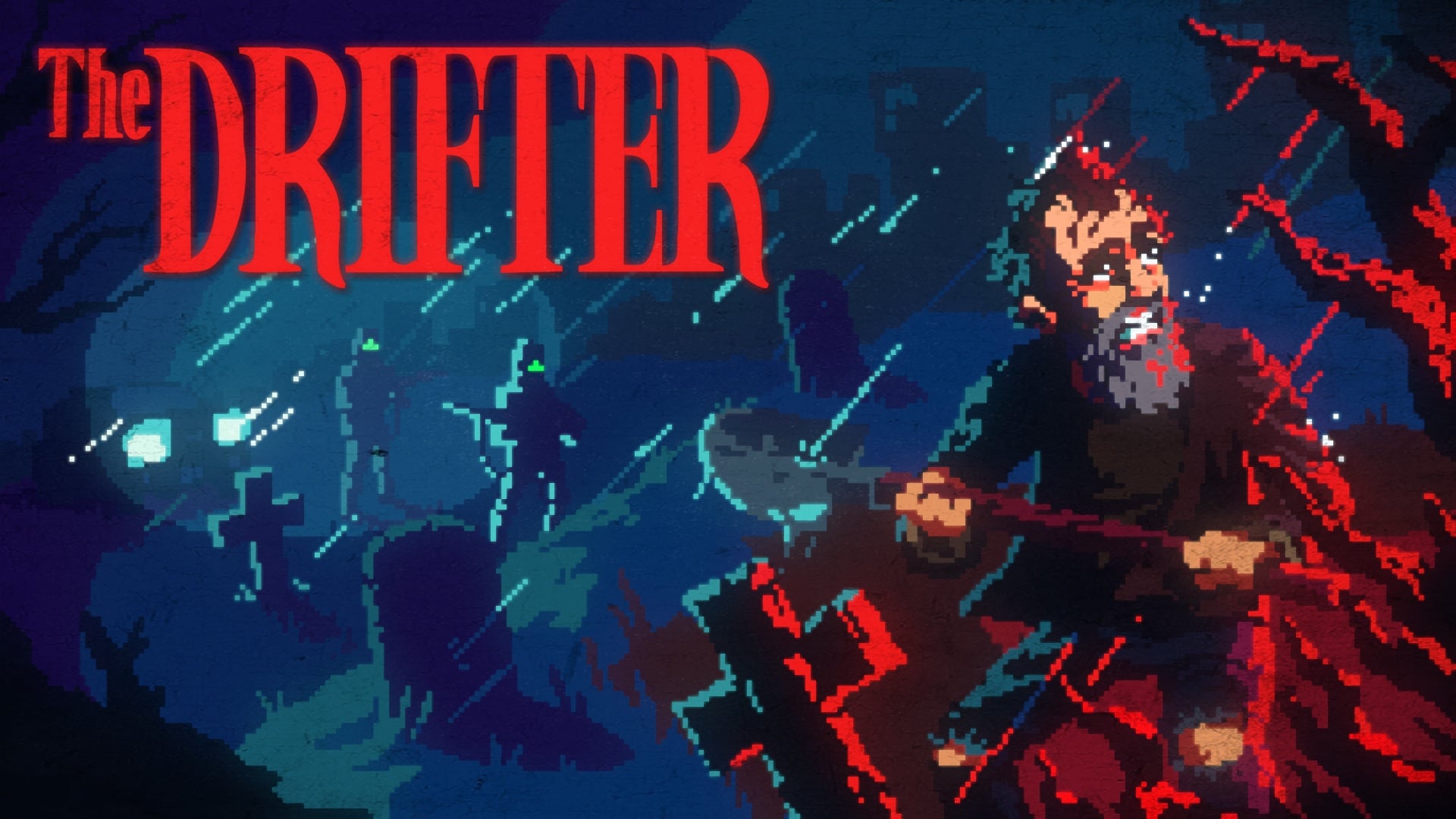
The Drifter is officially heading to Nintendo Switch 2 and Nintendo Switch on June 22, 2026, bringing Powerhoof’s acclaimed point-and-click thriller to Nintendo players after years of anticipation. The announcement matters because this isn’t just another late port quietly slipping onto the eShop. The Drifter has already built a strong reputation through its PC release, its awards recognition, and its bold mix of pixel art, hard-boiled storytelling, sci-fi horror, conspiracy, murder, and character-driven mystery. At the center of it all is Mick Carter, a restless drifter who witnesses a brutal killing, gets hunted by advanced soldiers, is drowned, and then wakes up again moments before death. That hook alone has enough bite to pull curious players in, but the real appeal seems to come from how tightly Powerhoof connects narrative momentum with investigative puzzles. On Nintendo Switch 2, the release also gets meaningful upgrades, including support for up to 4K 120 FPS and Joy-Con 2 mouse controls. That combination could make the new console version especially appealing for players who want classic point-and-click interaction without being tied to a desk. With its brooding synth score, crunchy pixel animation, full voice acting, and award-winning visual and narrative design, The Drifter looks ready to bring a grimy, fast-moving mystery to Nintendo’s hybrid ecosystem.
The Drifter finally sets a Nintendo Switch 2 and Switch release date
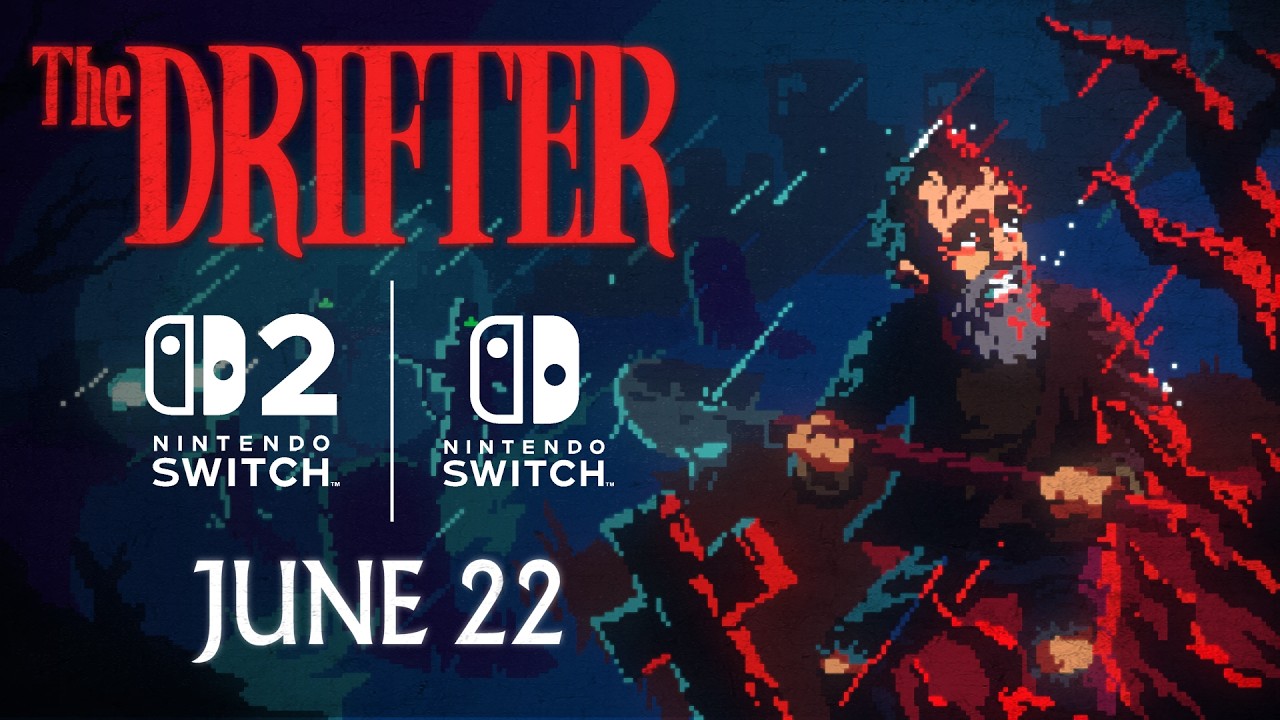
The Drifter now has a confirmed release date for both Nintendo Switch 2 and Nintendo Switch, with Powerhoof bringing the game to Nintendo platforms on June 22, 2026. That date gives adventure fans a clear moment to circle on the calendar, especially those who have been following the game since its earlier console plans first surfaced years ago. Some releases arrive with a polite knock at the door. The Drifter feels more like it kicks the door open, drenched in rain, carrying a mystery it probably shouldn’t talk about in public. The simultaneous launch across both Switch systems also helps keep things simple, since players won’t have to wonder whether the newer hardware is getting priority while the original Switch waits somewhere in the shadows.
Why The Drifter has kept Nintendo players waiting for so long
The long wait is part of why this release carries more weight than a routine platform announcement. The Drifter had previously been connected to Nintendo Switch plans years ago, so its eventual arrival has the feeling of a loose thread finally being tied off. For players who enjoy point-and-click adventures, that patience may pay off because Powerhoof has not positioned The Drifter as a slow, dusty throwback. Instead, the game takes a familiar genre and pushes it with stronger pacing, darker stakes, and a tone that feels closer to a midnight thriller than a cozy puzzle box. Waiting years for a game can make expectations wobbly, like stacking too many plates on one arm, but The Drifter’s reception and award wins suggest there is real substance behind the anticipation.
The story follows Mick Carter into murder, memory, and something worse
The Drifter centers on Mick Carter, a man who has spent years moving from place to place and job to job without putting down roots. His return to his old hometown should be a personal reckoning, but it quickly becomes something far more dangerous. After witnessing a violent murder, Mick is pursued by high-tech soldiers, framed for the killing, and thrown into a reservoir where he drowns. Then the real nightmare begins. Just before his consciousness fades, he is thrust back into his body and wakes alive again, seconds before death. It is a sharp, nasty premise that gives the story immediate urgency. There is no slow warm-up here. Mick is not simply solving a case from the outside. He is trapped inside it, accused by it, and possibly changed by it.
Mick Carter’s return home turns into a nightmare
Mick’s status as a drifter gives the story a strong emotional base before the conspiracy machinery kicks in. He is not a polished hero with a clean mission briefing and a shiny gadget belt. He is tired, unsettled, and carrying a past that seems to press against him from every side. That makes the return home feel less like a homecoming and more like walking back into an old bruise. When the murder happens, it doesn’t just create a plot problem. It forces Mick into contact with the parts of his life he may have been trying to outrun. That kind of setup can make a thriller feel more personal, because the external chase and internal guilt start moving in the same direction. Convenient for tension, terrible for Mick’s blood pressure.
The resurrection hook gives the mystery a nasty pulse
The moment Mick comes back from the edge of death adds a supernatural and psychological charge to the mystery. It is not only a question of who committed the murder or why shadowy forces are chasing him. The bigger question is what happened to Mick when he died, what followed him back, and whether he can trust his own sense of reality. That is where The Drifter seems to lean into pulp thriller territory with confidence. The setup suggests a story built around paranoia, trauma, and the terrifying idea that survival may come with a price tag hidden in the fine print. It is the kind of premise that invites players to keep clicking, keep questioning, and keep wondering whether the next answer will make things clearer or much, much worse.
How The Drifter modernizes the point-and-click adventure format
The Drifter takes cues from the modern revival of adventure games, but it does not appear interested in slowing the player down just for tradition’s sake. Classic point-and-click design can sometimes feel like searching for one invisible spoon in a room full of beautifully drawn furniture. The Drifter aims for a tighter shape, where investigative puzzles connect major story beats rather than blocking them with obscure logic. That matters because pacing is everything in a thriller. If the story is racing ahead but the player is stuck trying every item on every object, the tension can leak out like air from a punctured tire. Powerhoof’s approach seems focused on keeping the puzzles grounded, readable, and satisfying while letting the narrative stay sharp.
Investigative puzzles keep the pace moving without getting in the way
The best adventure puzzles make players feel clever without making them feel like they need to interrogate the designer’s dreams. The Drifter’s puzzle design appears to follow that philosophy by using investigation as connective tissue between tense narrative moments. Players still get to examine scenes, piece together clues, and interact with the world, but the design aims to avoid turning every room into a wall of frustration. That balance is especially important for a story with murder, conspiracy, and resurrection at its core. If the game wants players to feel hunted, haunted, and under pressure, the puzzle flow needs to support that mood instead of derailing it. Nobody wants to pause a life-or-death mystery because a drawer refuses to open unless they combine gum, string, and emotional damage.
Why couch play matters for this kind of thriller
Point-and-click games have traditionally lived comfortably on PC, where a mouse makes interaction feel natural and precise. The Drifter’s console focus matters because it suggests Powerhoof has thought carefully about how this style of game should feel away from a desk. Couch play changes the rhythm. You settle in, the lights dim, the soundtrack creeps under your skin, and suddenly a pixel-art thriller can feel like an interactive late-night movie. That is a strong fit for a game built around mood and narrative momentum. When controls fade into the background, the story can step forward. For Nintendo players, that means The Drifter has the chance to feel native to the platform rather than like a PC experience squeezed awkwardly into a controller-shaped box.
What the Nintendo Switch 2 version adds for players
The Nintendo Switch 2 version is getting more than a simple platform label. Powerhoof has confirmed support for up to 4K 120 FPS on the newer system, alongside Joy-Con 2 mouse controls. Those features matter because they speak directly to both sides of the experience. The higher visual and performance ceiling can make the crunchy pixel art cleaner and smoother on modern displays, while mouse-style control support gives players another way to interact with the world. The original Switch version remains important because it opens the door for the existing install base, but the Switch 2 release clearly has a few extra tricks hiding in its trench coat. For a game with strong visual identity and investigative interaction, those upgrades feel practical rather than decorative.
4K 120 FPS support gives the pixel art extra bite
Pixel art can be wonderfully expressive when it is handled with confidence, and The Drifter leans into raw, crunchy visuals with high-impact animation. On Nintendo Switch 2, support for up to 4K 120 FPS gives that art style room to breathe on larger screens. This does not mean the game suddenly becomes glossy in a way that fights its identity. The appeal is more about clarity, motion, and atmosphere. Smooth parallax, crisp scene composition, and sharp animation can help the world feel more immediate, especially during dramatic moments. For a thriller, presentation is not just decoration. It is mood, timing, and tension. When the visuals hit with the right rhythm, every flicker of light and every shadowed alley can feel like it knows something you don’t.
Joy-Con 2 mouse controls make point-and-click feel at home
Joy-Con 2 mouse controls may be one of the most interesting additions for The Drifter on Nintendo Switch 2. Point-and-click adventures rely on pointing, selecting, inspecting, and reacting, so a mouse-style option can make the game feel more natural for players who enjoy classic adventure interaction. It also gives the Switch 2 version a distinct identity. Rather than forcing every player into one control setup, The Drifter supports a style that can bridge the gap between PC precision and console comfort. That flexibility is valuable because adventure fans can be wonderfully particular about controls. Give them a clumsy cursor and they will notice immediately. Give them a setup that feels clean and responsive, and they can forget the interface exists while the mystery tightens around them.
The Drifter’s award history gives the Switch release extra weight
The Drifter’s Nintendo launch arrives with a strong reputation already behind it. The game won multiple honors at the 2025 Australian Game Developer Awards, including Game of the Year, Excellence in Narrative, Excellence in Visual Art, and Excellence in Sound Design. Those categories line up neatly with the areas that matter most for a story-driven thriller. Narrative gives the player a reason to keep pushing forward. Visual art creates the mood. Sound design fills the silence with dread, impact, and texture. Winning across all of those fields suggests that The Drifter is not relying on one strong hook while the rest of the package tags along in the back seat. It points to a game where the major creative pieces are pulling in the same direction.
Powerhoof’s pulp style has already made a mark
Powerhoof is known for games with strong personality, and The Drifter looks like another clear expression of that identity. The game’s influences include pulp fiction, conspiracy thrillers, sci-fi horror, and gritty cinematic storytelling. References to Stephen King, Michael Crichton, John Carpenter, and 70s Australian grindhouse give players a rough idea of the flavor, but The Drifter’s real appeal comes from how those inspirations are shaped into something playable. This is not just mood wallpaper. The story, sound, art, and puzzle design all seem built to keep pressure on the player. There is a particular joy in a game that knows exactly what kind of trouble it wants to cause. The Drifter looks ready to cause that trouble with a cigarette burn, a synth line, and a corpse that refuses to stay simple.
Why The Drifter could be a strong fit for Nintendo’s audience
Nintendo platforms have always had room for unusual adventures, from cozy curiosities to darker narrative experiments. The Drifter fits into that wider space by offering something moody, sharp, and story-led without demanding a giant open world or dozens of upgrade trees. That can be refreshing. Not every strong game needs to hand players a map the size of a small country and say, “Good luck, see you in sixty hours.” The Drifter seems more focused on tight narrative propulsion, which could make it appealing for players who want a memorable mystery with a clear pulse. Its single-player structure also suits portable and TV play, letting players move through a tense story at home, on the couch, or wherever they prefer to get emotionally ambushed by pixel art.
A tense story-driven game for players who like sharp pacing
The Drifter’s emphasis on a tight, razor-sharp narrative makes it stand out in a genre sometimes associated with slower exploration. That does not mean it abandons investigation or thoughtful interaction. Instead, the game appears to use those elements in service of forward motion. For players who enjoy stories that grab the collar and do not let go, that could be the main draw. Mick’s situation has built-in momentum because he is accused, hunted, haunted, and uncertain about what happened to him after death. Each of those pressures creates a reason to push ahead. Good pacing in this kind of game is like a drumbeat under the floorboards. You may not always notice it directly, but you feel it pushing you from room to room.
A darker change of rhythm on the Switch library
The Drifter also adds a welcome darker tone to the Switch and Switch 2 lineup. Nintendo players have no shortage of colorful worlds, charming mascots, and cheerful adventures, and there is always room for those. Still, sometimes you want the lights low, the music brooding, and the story to look you in the eye like it knows your secrets. The Drifter seems ready to provide that shift in mood. Its mix of murder mystery, conspiracy, psychological unease, and pulp energy gives it a different flavor from many platform highlights. That contrast can make the game especially appealing for players who use their Switch as a library of moods. One night it is comfort food. The next, it is a shadowy thriller with a pulse like a bad decision.
The new trailer shows how the mood comes together
The new trailer for The Drifter on Nintendo Switch 2 and Nintendo Switch gives players another look at how the game’s atmosphere, animation, voice work, and dark synth score combine. For a thriller like this, a trailer is not only about showing features. It has to sell a feeling. The Drifter’s identity depends on tension, grime, momentum, and the sense that reality has come slightly unstuck. The footage helps communicate that mixture through its pixel art, cinematic framing, and high-impact animation. It also gives Nintendo players a better sense of how the game may feel in motion, especially on Switch 2 where visual clarity and smoother performance are part of the pitch. In a genre where mood can make or break the experience, that first impression matters.
Conclusion
The Drifter’s arrival on Nintendo Switch 2 and Nintendo Switch on June 22, 2026 gives adventure fans a strong reason to pay attention. Powerhoof’s thriller brings together a gripping premise, a haunted lead character, investigative puzzles, professional voice acting, pixel art with attitude, and a dark synth score that sounds tailor-made for late-night play. The Switch 2 version adds extra appeal with support for up to 4K 120 FPS and Joy-Con 2 mouse controls, making it especially interesting for players who want classic point-and-click precision in a console-friendly setup. After years of waiting, The Drifter looks set to bring its award-winning mystery to Nintendo platforms with style, tension, and just enough menace to make every click feel like it might uncover something terrible.
FAQs
- When does The Drifter launch on Nintendo Switch 2 and Switch?
- The Drifter launches for Nintendo Switch 2 and Nintendo Switch on June 22, 2026. Both versions are planned to arrive on the same date.
- What is The Drifter about?
- The Drifter follows Mick Carter, a man who witnesses a murder, is hunted by high-tech soldiers, is drowned, and then wakes alive again seconds before death. From there, he becomes trapped in a conspiracy involving murder, trauma, and something that may have followed him back from the other side.
- What makes the Nintendo Switch 2 version different?
- The Nintendo Switch 2 version supports up to 4K 120 FPS and Joy-Con 2 mouse controls. Those features are designed to improve visual clarity, motion, and point-and-click interaction on the newer hardware.
- Is The Drifter a traditional point-and-click adventure?
- The Drifter uses point-and-click adventure foundations, but it focuses on a faster, more cinematic thriller pace. Its investigative puzzles are designed to support the story rather than slow it down with overly obscure solutions.
- Has The Drifter won any awards?
- Yes. The Drifter won several honors at the 2025 Australian Game Developer Awards, including Game of the Year, Excellence in Narrative, Excellence in Visual Art, and Excellence in Sound Design.
Sources
- The Drifter incoming for both Nintendo Switch 2 and Switch, Nintendo Everything, June 12, 2026
- Pulp Thriller ‘The Drifter’ Launches on Switch and Switch 2 on June 22, Bloody Disgusting, June 12, 2026
- The Drifter Switch and Switch 2 release date confirmed, Loot Level Chill, June 11, 2026
- The Drifter will be released on Switch and Switch 2 on 22 June, OutNow, June 11, 2026
- IGEA announces the 2025 Australian Game Developer Awards winners, Australian Game Developer Awards, October 8, 2025